
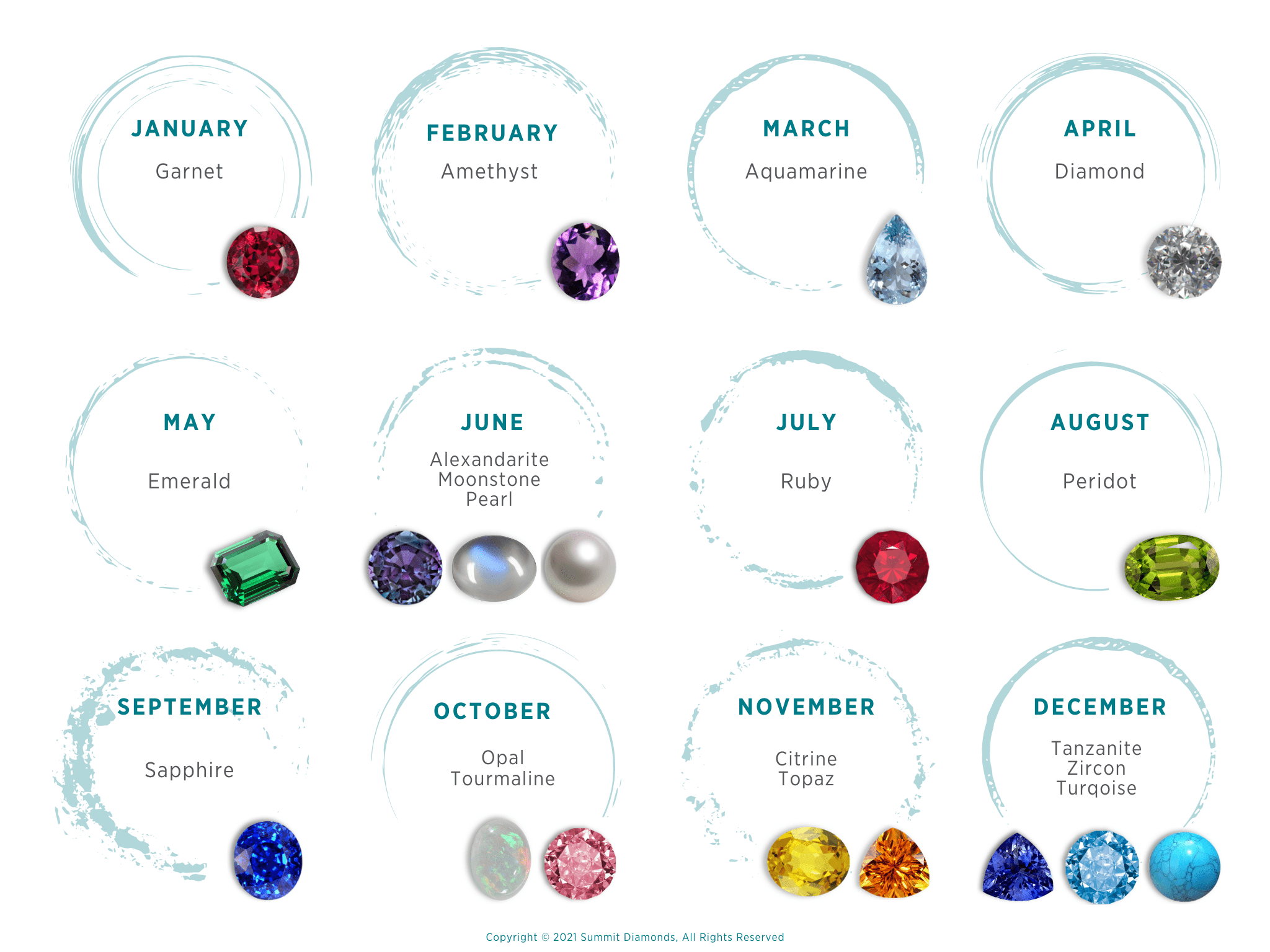
April, a month synonymous with renewal and vibrant beginnings, holds a gemstone that perfectly encapsulates these sentiments: the diamond. Far beyond its dazzling beauty, the diamond is a symbol of strength, resilience, and enduring value, making it not just a celebratory birthstone but also a significant asset with deep-rooted financial implications. This article delves into the multifaceted world of April’s birthstone, exploring its origins, its intrinsic qualities, and its undeniable place within the realm of personal finance and investment.
The Allure of the Diamond: More Than Just a Pretty Face
The diamond’s allure is undeniable, a captivating sparkle that has mesmerized humanity for millennia. However, its appeal extends far beyond its aesthetic qualities, stemming from its unique physical and chemical properties that contribute to its enduring value.
Genesis of Brilliance: The Formation and Rarity of Diamonds
Diamonds are born deep within the Earth’s mantle, under immense pressure and extreme heat, over billions of years. This geological crucible transforms pure carbon atoms into a crystalline structure that is the hardest substance known to man. This incredible hardness, a Mohs scale rating of 10, is the fundamental reason for the diamond’s durability and resistance to scratching and abrasion, making it an ideal material for both adornment and industrial applications.
The rarity of gem-quality diamonds, particularly those with exceptional clarity, color, and cut, plays a crucial role in their perceived and actual value. While diamonds are found in various locations across the globe, the process of mining, extracting, and refining them into the polished gemstones we see in jewelry is complex and resource-intensive. This inherent scarcity, coupled with the significant effort required to bring them to market, contributes to their premium pricing.
The Four Cs: Defining Diamond Value
The value of a diamond is not an arbitrary figure; it is meticulously assessed through a standardized system known as the “Four Cs”: Cut, Color, Clarity, and Carat Weight. Understanding these factors is paramount for anyone considering diamonds as a significant purchase or investment.
- Cut: This refers to how well a diamond has been faceted and polished, influencing its sparkle and brilliance. A well-cut diamond reflects light internally and externally, creating its signature fire and scintillation. The proportions, symmetry, and polish of a diamond are critical in maximizing its light performance.
- Color: Diamond color ranges from colorless (graded as ‘D’) to light yellow or brown (graded as ‘Z’). While a completely colorless diamond is the rarest and most valuable, subtle shades of yellow or brown can be desirable and more affordable. Fancy colored diamonds, such as pink, blue, or green, are exceptionally rare and can command astronomical prices.
- Clarity: This measures the presence of internal inclusions (imperfections within the diamond) and external blemishes (surface irregularities). Diamonds are graded on a scale from Flawless (FL) to Included (I), with fewer and less visible imperfections indicating higher clarity and value.
- Carat Weight: This is the unit of measurement for a diamond’s mass, with one carat equaling 0.2 grams. While larger diamonds are generally more valuable, the relationship is not linear. A two-carat diamond is not simply twice as valuable as a one-carat diamond; the other Cs significantly influence its overall worth.
Diamonds as an Investment: A Tangible Asset in a Digital World
In an era dominated by digital assets and fluctuating market trends, diamonds have historically held their ground as a tangible store of value. Their inherent scarcity, durability, and global demand make them an attractive option for portfolio diversification and wealth preservation.
The Historical Precedent: Diamonds as a Store of Wealth
For centuries, diamonds have been sought after by royalty, the elite, and astute investors as a means to safeguard and grow wealth. Their portability, discretion, and resistance to devaluation during economic downturns have made them a favored asset class. Unlike paper currency, which can be subject to inflation, the intrinsic value of a diamond, derived from its rarity and intrinsic qualities, tends to be more stable over the long term.
Furthermore, the global nature of the diamond market ensures a consistent demand, irrespective of regional economic fluctuations. Diamonds are recognized and valued internationally, making them a liquid asset that can be traded and appreciated across borders.
Diversifying Your Portfolio: The Role of Diamonds in Wealth Management

Adding diamonds to an investment portfolio can offer a unique form of diversification. Their low correlation with traditional assets like stocks and bonds means that they can act as a hedge against market volatility. When other assets are experiencing downturns, diamonds may retain or even increase their value, providing a stabilizing influence on overall portfolio performance.
However, it’s crucial to approach diamond investment with informed strategy. Unlike stocks, which generate dividends or capital appreciation through company performance, diamonds primarily derive their investment value from their appreciation in scarcity and demand. Therefore, understanding the market dynamics, the quality of the diamonds being acquired, and the optimal channels for purchase and sale are essential.
Navigating the Diamond Market: Smart Purchasing Strategies
Investing in diamonds requires diligence and a discerning eye. Simply purchasing the most expensive stone does not guarantee a profitable investment. Several strategic considerations can help optimize your diamond acquisition for both personal enjoyment and potential financial appreciation.
- Focus on Investment-Grade Stones: For purely investment purposes, prioritize diamonds that possess exceptional qualities within the Four Cs. This typically means focusing on colorless or near-colorless stones (D-G color), with high clarity (VVS to VS clarity), excellent cut, and significant carat weight. While smaller, high-quality diamonds can also be valuable, larger stones with superior characteristics tend to hold their value and appreciate more significantly.
- Understand the Supply Chain: The diamond industry has a complex supply chain. Purchasing directly from reputable dealers, certified gemologists, or established auction houses can help ensure authenticity and fair pricing. Be wary of overly aggressive sales tactics or deals that seem too good to be true, as these can often indicate lower quality or counterfeit stones.
- Seek Independent Certification: Always insist on a grading report from a reputable gemological laboratory, such as the Gemological Institute of America (GIA) or the American Gemological Society (AGS). These independent certifications provide an objective assessment of a diamond’s Four Cs, ensuring that you are purchasing what you believe you are.
- Consider the Future Market: While diamonds are a long-term investment, market trends and consumer preferences can shift. Staying informed about the global diamond market, including supply and demand dynamics, geopolitical factors affecting mining, and emerging trends in diamond cutting and design, can inform your investment decisions.
- The Role of Recycled Diamonds: The growing emphasis on ethical sourcing and sustainability has led to an increased interest in recycled diamonds. These are diamonds that have been previously owned and are now being resold. While they may not carry the same “virgin” allure for some, they can represent a more accessible entry point into diamond ownership and investment, often at a more competitive price.
Beyond Adornment: The Practical and Industrial Applications of Diamond
While the dazzling beauty of diamonds captivates our attention, their extreme hardness and durability lend themselves to a surprising array of practical and industrial applications, further solidifying their intrinsic value beyond mere aesthetics.
Industrial Diamonds: The Unsung Heroes of Manufacturing
The vast majority of diamonds mined are not gem-quality but are industrial-grade diamonds. These stones, often imperfect in color, clarity, or cut, are nonetheless invaluable due to their unparalleled hardness. They are essential in numerous manufacturing processes, powering industries and driving technological advancement.
- Cutting and Grinding: Diamond-tipped tools are used for cutting, grinding, and polishing a wide range of materials, from concrete and stone to glass and metals. Their ability to efficiently abrade even the hardest substances makes them indispensable in construction, automotive manufacturing, and precision engineering.
- Drilling: Diamond drill bits are used in exploration for oil, gas, and minerals, as well as in the construction of tunnels and boreholes. Their strength allows them to penetrate rock and other geological formations with remarkable efficiency.
- Polishing and Lapping: In the electronics industry, diamond abrasives are used to polish semiconductor wafers and other precision components to incredibly smooth surfaces, crucial for their functionality.
- Wire Drawing: Diamond dies are used to draw metal wire down to extremely fine gauges, a critical process in the production of electrical conductors and other wire products.
The Future of Diamond Technology: Innovation and Application
The unique properties of diamonds continue to drive innovation across various scientific and technological fields. Researchers are exploring new applications that leverage diamond’s exceptional characteristics.
- Quantum Computing: Diamond defects, known as nitrogen-vacancy (NV) centers, are being investigated as promising qubits for quantum computers due to their ability to store and process quantum information.
- Advanced Electronics: The high thermal conductivity and electrical insulating properties of diamond make it an ideal material for advanced electronic devices, particularly in high-power and high-frequency applications where heat dissipation is a critical challenge.
- Biomedical Applications: Biocompatible diamond coatings are being explored for medical implants and prosthetics, offering enhanced durability and resistance to wear and corrosion. Diamond-based sensors are also being developed for medical diagnostics.
- High-Performance Optics: The transparency of diamond across a wide spectrum of electromagnetic radiation, coupled with its hardness, makes it suitable for high-performance optical components used in lasers, infrared imaging, and scientific instrumentation.
Conclusion: April’s Diamond – A Symbol of Enduring Value
The diamond, April’s birthstone, stands as a powerful symbol of strength, purity, and everlasting love. However, its significance extends far beyond emotional resonance. Its intrinsic qualities – rarity, unparalleled hardness, and captivating beauty – have cemented its position as a valuable tangible asset, a cornerstone of personal finance strategies, and a driver of technological innovation.
Whether worn as a personal adornment, considered as a strategic investment, or utilized in cutting-edge industrial applications, the diamond’s enduring appeal and inherent value remain undisputed. For those born in April, or for anyone seeking a tangible asset that embodies both timeless beauty and lasting worth, the diamond offers a brilliant and multifaceted proposition. It is a testament to the Earth’s incredible power, a jewel of immense personal significance, and a prudent choice for astute financial planning in a dynamic world.
aViewFromTheCave is a participant in the Amazon Services LLC Associates Program, an affiliate advertising program designed to provide a means for sites to earn advertising fees by advertising and linking to Amazon.com. Amazon, the Amazon logo, AmazonSupply, and the AmazonSupply logo are trademarks of Amazon.com, Inc. or its affiliates. As an Amazon Associate we earn affiliate commissions from qualifying purchases.