
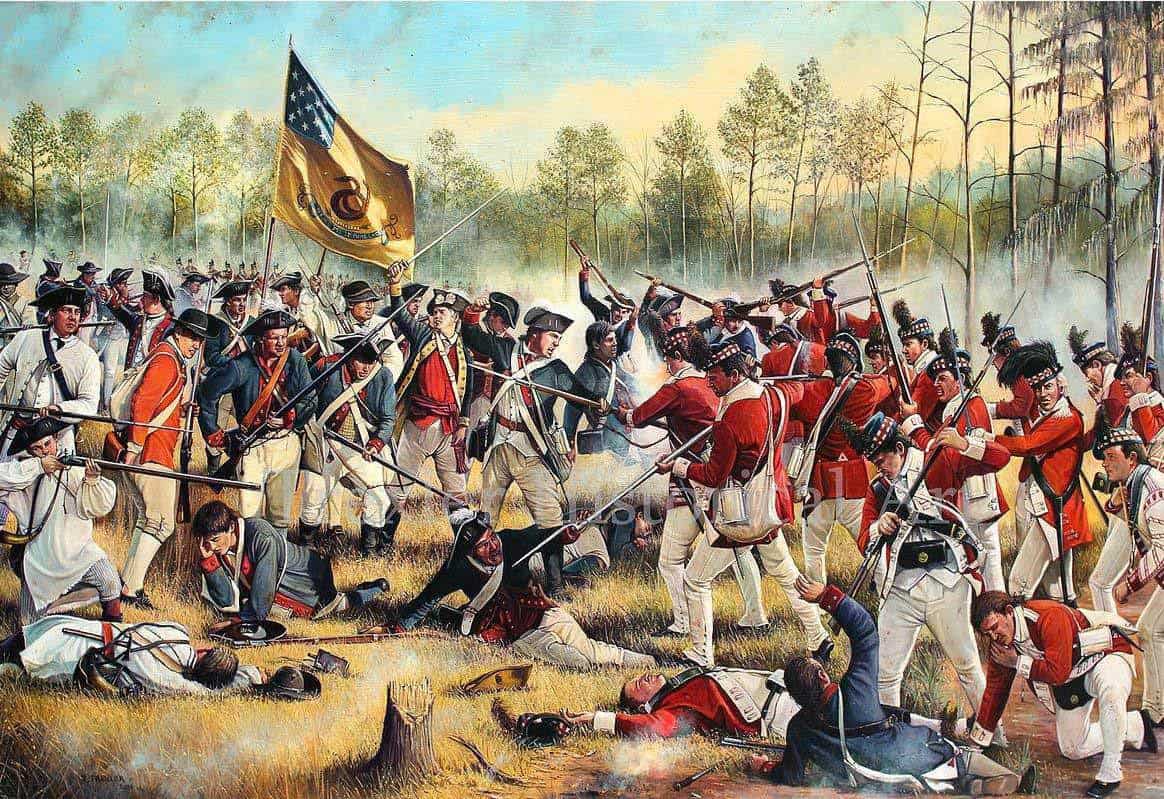
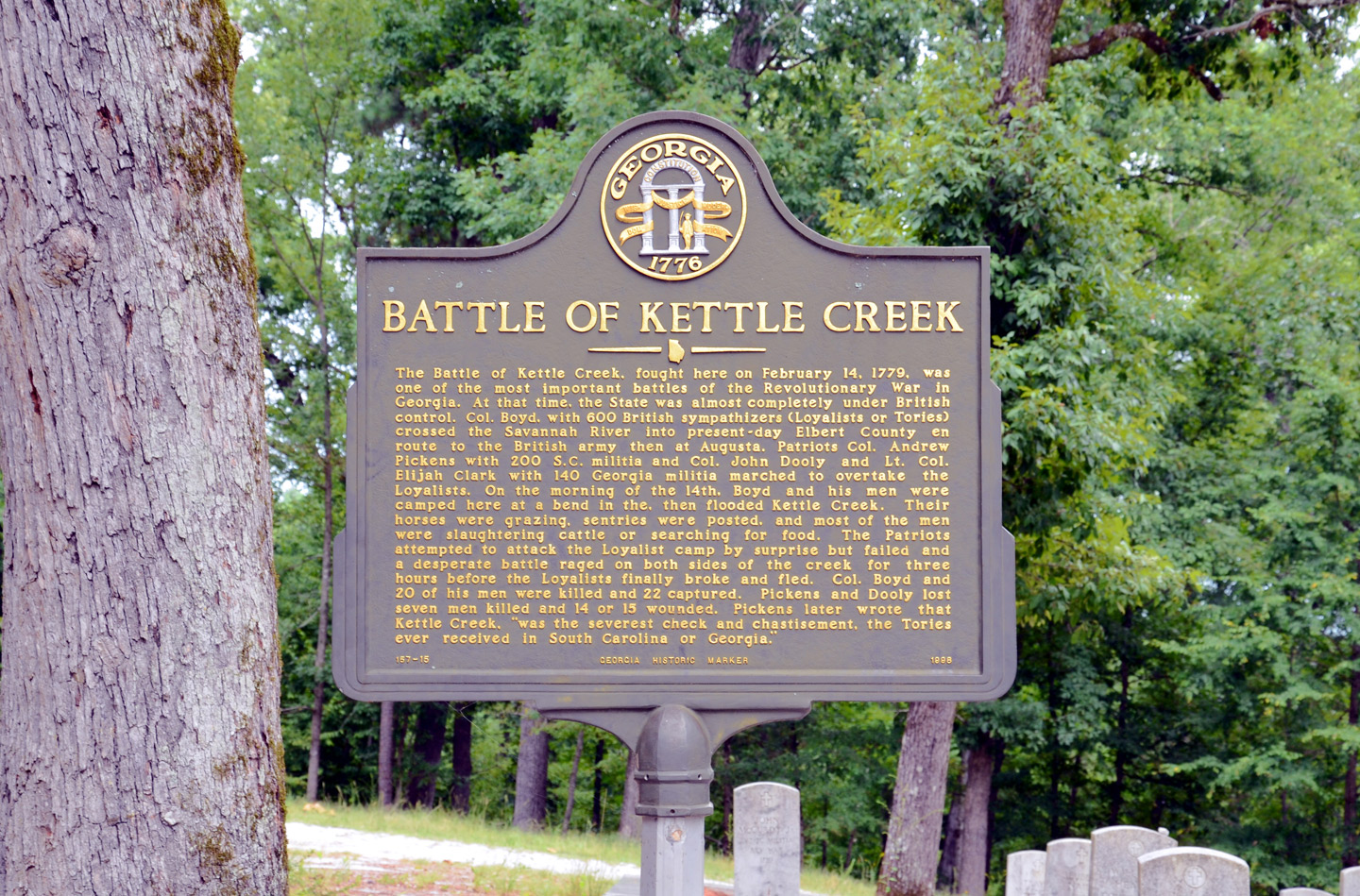
The annals of history are replete with tales of conflict, and while many are confined to military strategy, some offer profound lessons that transcend the battlefield. The Battle of Kettle Creek, fought on February 14, 1779, during the American Revolutionary War, is one such event. While seemingly a localized skirmish in the Southern theater, its tactical brilliance and the strategic considerations involved provide a compelling case study for understanding competitive advantage, resourcefulness, and the enduring impact of decisive action – principles that resonate deeply within the realm of brand strategy and business development. Examining this battle through a strategic lens reveals how understanding one’s terrain, leveraging distinct capabilities, and executing with precision can lead to disproportionate success, even against seemingly overwhelming odds.
The Unseen Battlefield: Understanding Terrain as a Strategic Asset
In the complex landscape of brand building and market penetration, understanding the “terrain” – the market environment, competitive forces, and consumer perceptions – is paramount. The Battle of Kettle Creek offers a stark illustration of how an intimate knowledge of the geographical environment can be transformed into a decisive strategic advantage. The Patriot forces, led by Elijah Clarke and Andrew Pickens, faced a significantly larger Loyalist contingent under Lieutenant Colonel John Boyd. Their initial disadvantage in numbers was, however, mitigated by their astute understanding of the terrain surrounding Kettle Creek.
Mastering the Landscape: The Power of Local Knowledge
The battleground itself, a densely wooded and hilly area in Georgia, was a crucial element. The Patriot militia, largely composed of local frontiersmen, were intimately familiar with the woods, ravines, and natural cover. This local knowledge was not merely a passive advantage; it was actively exploited. The Patriots chose to engage the Loyalists in this challenging terrain, a decision that immediately neutralized the Loyalist advantage in cavalry and disciplined formations, which would have been more effective in open fields.
Strategic Deployment and Concealment
The terrain facilitated the Patriots’ ability to employ guerrilla tactics. They utilized the natural undulations of the land for concealment, effectively blending into the environment. This allowed them to establish advantageous firing positions and surprise the advancing Loyalist forces. The ability to move unseen and strike from unexpected angles is a powerful metaphor for how brands can leverage market nuances and customer insights to gain a competitive edge. Just as the Patriots used the woods for cover, modern brands can utilize niche markets, unmet customer needs, or overlooked channels to establish a strong presence before larger competitors can react.
Denying the Enemy’s Strengths
By drawing the Loyalists into the dense woods, the Patriots effectively denied them the ability to deploy their superior numbers and training to their full potential. The open formations of the Loyalists became a liability, making them easy targets for the well-positioned Patriot marksmen. This highlights a core principle of brand strategy: identifying and neutralizing a competitor’s core strengths by strategically positioning your offering in areas where their advantages are minimized. Understanding the “battlefield” of consumer perception and market dynamics allows a brand to create its own optimal engagement zone.
Resourcefulness and Adaptability: The Ingenuity of the Underdog
A central theme in the Battle of Kettle Creek is the remarkable resourcefulness and adaptability displayed by the Patriot forces. Facing a numerically superior and better-equipped enemy, they did not despair. Instead, they capitalized on their strengths and innovated with the resources at hand. This spirit of ingenuity is a cornerstone of successful brand building, particularly for emerging businesses or those seeking to disrupt established markets.
Leveraging Irregular Warfare: The Advantage of Agility

The Patriot militia operated as irregular forces, a stark contrast to the more conventional, disciplined Loyalist troops. This irregularity, often perceived as a weakness, became a strength. Their decentralized command structure and individual initiative allowed for rapid adaptation to changing battlefield conditions. They could maneuver more quickly, change tactics on the fly, and exploit fleeting opportunities.
The Importance of Skilled Personnel
A significant factor in the Patriots’ success was the quality of their soldiers. Many were experienced hunters and frontiersmen, skilled in marksmanship and familiar with woodland combat. This highlights the critical importance of having the right “talent” – skilled individuals with relevant expertise – within an organization. A brand’s success is not solely dependent on its marketing budget, but on the caliber of its team and their ability to execute strategy with precision. The individual skill of a Patriot rifleman was amplified by their tactical deployment.
Improvisation and Innovation in Tactics
The Patriots employed tactics that were effective given their limitations. They used the terrain for cover, employed flanking maneuvers, and engaged in volley fire from concealed positions. This level of improvisation and tactical innovation, born out of necessity, allowed them to overcome the limitations of their equipment and numbers. In the business world, this translates to creative problem-solving, finding novel ways to reach customers, and developing unique value propositions that differentiate a brand from its competitors. Disruptive innovation often stems from a deep understanding of constraints and a creative approach to overcoming them.
The Ripple Effect: Strategic Outcomes and Enduring Legacies
The Battle of Kettle Creek, though a relatively small engagement, had significant strategic implications for the Southern campaign and beyond. Its outcomes underscore the power of a well-executed strategy and its ability to create a lasting impact, mirroring how a successful brand launch or a pivotal marketing campaign can redefine a company’s trajectory. The victory boosted Patriot morale, secured crucial supplies, and demonstrated the effectiveness of frontier militia in the war effort.
Morale and Momentum: The Psychological Impact of Victory
The Patriot victory at Kettle Creek provided a vital surge of morale for the Continental Army and the wider Patriot cause in the South. In an era where news traveled slowly, such a decisive win served as a powerful propaganda tool, demonstrating that the Loyalists, despite their initial successes, were not invincible. For brands, achieving key milestones, securing significant partnerships, or winning over influential customers can create similar positive momentum, inspiring internal teams and attracting external validation. This psychological advantage can be a critical differentiator in a competitive market.
Securing Vital Resources: The Tangible Benefits of Success
Beyond morale, the battle resulted in the capture of significant supplies, including arms, ammunition, and horses, which were desperately needed by the Patriot forces. This practical gain directly contributed to their ability to continue the fight. Similarly, for businesses, strategic victories – whether securing a major client, launching a successful product, or optimizing operational efficiency – often translate into tangible benefits like increased revenue, market share, or access to capital, all of which fuel further growth and development.
A Testament to Decentralized Leadership and Local Resilience
The Battle of Kettle Creek also served as a powerful testament to the effectiveness of decentralized leadership and the resilience of local communities. The Patriot forces were largely composed of citizen-soldiers, driven by a commitment to their cause. Their ability to organize, strategize, and execute under local leadership demonstrated the strength that can be found in empowering individuals and communities. This resonates with modern brand philosophies that emphasize agility, employee empowerment, and community engagement. Brands that foster a strong internal culture and connect authentically with their customer communities often exhibit a similar resilience and adaptability.
In conclusion, the Battle of Kettle Creek, when viewed through a strategic lens, transcends its historical military context. It serves as a potent reminder that understanding one’s environment, maximizing limited resources through ingenuity, and executing with precision are timeless principles for achieving success. These lessons are as relevant to the strategist charting a brand’s course in the modern marketplace as they were to the Patriot militia fighting for their freedom in the Georgia backcountry. By internalizing the strategic wisdom embedded within such historical events, businesses and brands can forge their own paths to competitive advantage and lasting impact.
aViewFromTheCave is a participant in the Amazon Services LLC Associates Program, an affiliate advertising program designed to provide a means for sites to earn advertising fees by advertising and linking to Amazon.com. Amazon, the Amazon logo, AmazonSupply, and the AmazonSupply logo are trademarks of Amazon.com, Inc. or its affiliates. As an Amazon Associate we earn affiliate commissions from qualifying purchases.