
Purchasing a car is often one of the most significant financial decisions an individual makes, second only to buying a home. While the excitement of a new vehicle can be intoxicating, the underlying financial mechanics – particularly the interest you’ll pay – are often overlooked or misunderstood. Understanding how interest is calculated on a car loan is not merely an academic exercise; it’s a fundamental aspect of responsible financial management that can save you thousands of dollars over the life of your loan. This knowledge empowers you to make informed decisions, negotiate better terms, and ultimately drive away with a deal that truly benefits your wallet, not just the dealership’s bottom line.
Interest is essentially the cost of borrowing money. Lenders provide you with a lump sum to purchase a car, and in return, they charge you a percentage of that amount as a fee. This fee is spread out over the loan term, added to your monthly payments, and can significantly impact the total cost of your vehicle. Far too many consumers focus solely on the monthly payment amount, inadvertently agreeing to loan terms that accumulate excessive interest. By demystifying the calculation process, this article aims to equip you with the insights needed to navigate the complex world of car financing with confidence and financial acumen.
Understanding the Fundamentals of Car Loan Interest
Before diving into the specifics of calculation, it’s crucial to grasp the foundational concepts that underpin car loan interest. These elements work in concert to determine how much you’ll ultimately pay for the privilege of borrowing.
What is Interest and APR?
At its core, interest is the price paid for borrowing money, or money earned by lending money. In the context of a car loan, it’s the percentage charged by the lender on the principal amount you borrow. Most car loans operate on a simple interest basis, meaning the interest is calculated only on the remaining principal balance. This is distinct from compound interest, where interest is calculated on both the principal and previously accumulated interest. However, what you’ll typically see quoted by lenders is the Annual Percentage Rate (APR).
The APR is a more comprehensive measure of the cost of borrowing, as it includes not only the interest rate but also certain other fees and charges associated with the loan, such as origination fees. While the interest rate tells you the cost of borrowing the principal, the APR provides a more holistic view of the total annual cost expressed as a percentage. Understanding the difference is vital: a lower interest rate might look appealing, but a higher APR due to additional fees could make the loan more expensive overall. Always compare APRs when shopping for a loan, as it gives you the most accurate basis for comparison between different lenders.
Key Components of a Car Loan
To calculate interest effectively, you must understand the core variables that define your loan agreement.
- Principal: This is the initial amount of money you borrow to purchase the car. If the car costs $30,000 and you make a $5,000 down payment, your principal loan amount is $25,000.
- Interest Rate/APR: As discussed, this is the percentage charged by the lender on the principal. It’s the primary driver of the interest cost.
- Loan Term: This refers to the duration over which you agree to repay the loan, typically expressed in months (e.g., 36, 48, 60, 72, or even 84 months). The longer the term, the lower your monthly payments might be, but crucially, the more interest you’ll likely pay over the life of the loan.
- Monthly Payment: This is the fixed amount you pay back to the lender each month. A portion of this payment goes towards reducing the principal, and another portion covers the accrued interest for that period. In the initial stages of a loan, a larger portion of your payment goes towards interest, gradually shifting to principal as the loan matures.
The Role of Your Credit Score
Your credit score is arguably the most significant factor determining the interest rate you’ll be offered. Lenders use credit scores to assess your creditworthiness – your perceived ability and likelihood to repay borrowed money. A higher credit score (typically above 700) indicates a lower risk to lenders, which usually translates into a lower interest rate offer. Conversely, a lower credit score suggests a higher risk, leading lenders to charge a higher interest rate to compensate for that increased risk. Building and maintaining a strong credit history before applying for a car loan can have a profound impact on the total cost of your vehicle. Regularly checking your credit report for errors and understanding factors that influence your score are essential preparatory steps.
The Different Methods of Calculating Car Loan Interest
While online tools simplify the process, knowing the underlying calculation methods provides a deeper understanding and allows for verification.
Manual Calculation: The Simple Interest Formula
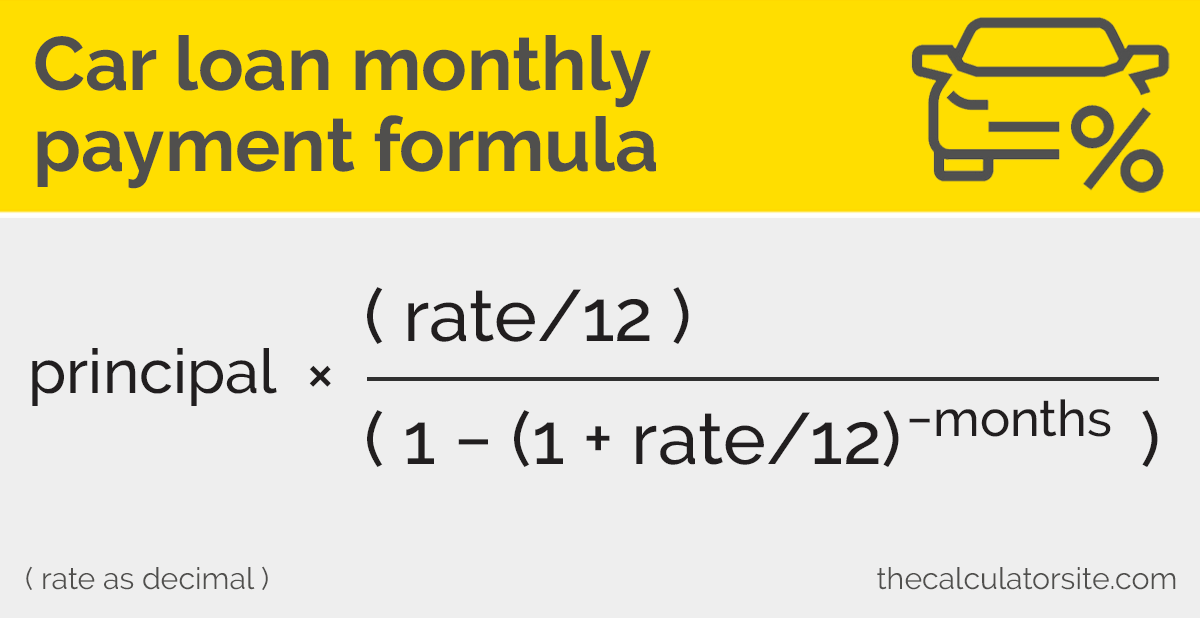
Most car loans use simple interest, which is relatively straightforward to calculate for a single period. The basic formula for calculating simple interest for one period (e.g., one month) is:
Interest = Principal Balance × Interest Rate × Time
Let’s break this down with an example:
Suppose you have a car loan with an original principal of $25,000, an annual interest rate of 6% (or 0.06 as a decimal), and you’re making monthly payments.
-
Convert Annual Rate to Monthly Rate: Divide the annual interest rate by 12.
Monthly Interest Rate = 0.06 / 12 = 0.005 -
Calculate Interest for the First Month: Multiply the current principal balance by the monthly interest rate.
Interest for Month 1 = $25,000 (Principal) × 0.005 (Monthly Rate) = $125
So, in your first month’s payment, $125 would go towards interest. If your total monthly payment is, say, $475, then $475 – $125 = $350 would go towards reducing your principal balance. Your new principal balance for the next month would be $25,000 – $350 = $24,650. This process repeats each month, with the interest portion of your payment decreasing as your principal balance shrinks.
Using an Amortization Schedule
An amortization schedule is a table detailing each payment over the life of a loan. It breaks down how much of each payment goes towards interest and how much goes towards the principal balance. This schedule is an invaluable tool for understanding the long-term impact of your loan.
An amortization schedule typically includes:
- Payment Number: A sequential number for each payment.
- Beginning Balance: The principal balance at the start of that payment period.
- Interest Paid: The portion of the payment that covers interest for that period (calculated using the simple interest formula on the beginning balance).
- Principal Paid: The portion of the payment that reduces the principal balance.
- Ending Balance: The principal balance after the payment has been made.
By reviewing an amortization schedule, you can clearly see how the distribution between principal and interest shifts over time. In the early stages of a loan, a larger percentage of your payment goes towards interest. As you progress through the loan term, more of your payment is applied to the principal, accelerating your debt repayment. Lenders often provide an amortization schedule with your loan documents, and many online calculators can generate one for you.
Online Car Loan Calculators
For most consumers, online car loan calculators are the most practical and efficient way to calculate interest and understand loan scenarios. These tools typically require you to input the principal loan amount, interest rate (APR), and loan term. In return, they instantly provide:
- Your estimated monthly payment.
- The total interest you will pay over the life of the loan.
- The total cost of the car (principal + total interest).
- Often, they can also generate a full amortization schedule.
The benefits of using these calculators are immense: they save time, eliminate manual calculation errors, and allow you to quickly compare different scenarios (e.g., how a shorter term or a higher interest rate impacts your total cost). Many reputable financial websites, bank sites, and even car manufacturer sites offer these tools for free. They are excellent for preliminary research and for verifying figures provided by lenders.
Factors Influencing Your Car Loan Interest Rate
Several variables play a critical role in determining the interest rate you are offered, and understanding these can help you secure a more favorable deal.
Your Creditworthiness
As previously mentioned, your credit score and history are paramount. Lenders want to mitigate risk, and a high credit score (e.g., FICO scores above 740) indicates a responsible borrower with a strong track record of repayment. This often qualifies you for the lowest available interest rates. Conversely, a low credit score signals higher risk, leading to higher interest rates to compensate the lender for that perceived risk. Improving your credit score by paying bills on time, reducing existing debt, and avoiding new credit applications before seeking a car loan can significantly reduce your interest costs.
Loan Term Length
The length of your loan term has a direct impact on the interest rate. Shorter loan terms (e.g., 36 or 48 months) typically come with lower interest rates because the lender’s money is tied up for a shorter period, reducing their exposure to risk. While shorter terms mean higher monthly payments, they result in substantially less total interest paid over the life of the loan. Longer loan terms (e.g., 72 or 84 months) often have higher interest rates, and despite lower monthly payments, you’ll pay considerably more interest overall because the loan accrues interest for a longer duration. Always balance affordability with the total cost of interest when choosing a loan term.
Down Payment Amount
Making a larger down payment reduces the principal amount you need to borrow. A smaller loan principal means less risk for the lender, which can sometimes translate into a lower interest rate offer. Furthermore, a substantial down payment reduces the total amount of interest you’ll pay simply because you’re borrowing less money. It also helps you avoid being “upside down” on your loan, where you owe more than the car is worth, a common issue with small down payments on depreciating assets like cars.
Vehicle Type and Age
The type of vehicle you’re buying can also influence your interest rate. New cars often qualify for lower interest rates due to special financing incentives from manufacturers and because they generally retain their value better in the initial years, making them less risky collateral for lenders. Used cars, while potentially more affordable upfront, often carry slightly higher interest rates due to greater depreciation and perceived higher risk. Additionally, the age of a used vehicle can play a role; older cars might be seen as higher risk, leading to higher rates.
Market Conditions and Lender Competition
Broader economic conditions, such as prevailing interest rates set by central banks, can affect car loan rates across the board. When interest rates are generally low, car loan rates tend to follow suit. Conversely, in a rising interest rate environment, car loans become more expensive. Furthermore, the competitive landscape among lenders can influence rates. A highly competitive market might see lenders offering more attractive rates to attract customers. Shopping around and getting quotes from multiple lenders (banks, credit unions, and online lenders, not just the dealership) is crucial to find the most competitive rate available to you.
Strategies to Minimize Car Loan Interest Costs
Armed with an understanding of interest calculation and influencing factors, you can actively implement strategies to reduce your overall borrowing costs.
Boosting Your Credit Score
This is perhaps the most impactful long-term strategy. Before you even start car shopping, check your credit report. Dispute any errors, pay down existing credit card debt to lower your credit utilization, and make all payments on time. Even a modest improvement in your credit score can move you into a better rate tier, saving you hundreds or thousands of dollars in interest. Aim for a score of 700 or above for the best rates.
Making a Larger Down Payment
The more money you put down upfront, the less you need to borrow, directly reducing the total interest you’ll pay. A substantial down payment also strengthens your application and may qualify you for a lower interest rate, as the lender’s risk is minimized. Financial experts often recommend aiming for at least a 20% down payment, especially for new cars, to cushion against immediate depreciation.
Opting for a Shorter Loan Term
While a longer loan term offers lower monthly payments, it drastically increases the total interest paid. If your budget allows, choose the shortest loan term you can comfortably afford. For example, a 60-month loan will almost always result in significantly less total interest than a 72- or 84-month loan, even if the interest rate is the same or marginally higher for the shorter term. Calculate both options using an online tool to see the stark difference in total interest.
Shopping Around for the Best Rates
Never accept the first loan offer you receive, especially from a dealership. Dealerships often mark up interest rates to increase their profit. Instead, get pre-approved for a loan from multiple sources – your bank, credit unions, and online lenders – before you even step foot in a showroom. This gives you leverage during negotiations and a benchmark against which to compare any financing offered by the dealership. Remember, pre-approvals typically have a limited window (e.g., 30 days) during which multiple inquiries won’t negatively impact your credit score significantly, so shop around within that timeframe.
Considering Bi-Weekly Payments or Extra Payments
If your loan agreement allows (check for prepayment penalties), making extra payments can dramatically reduce the total interest paid and shorten your loan term. One effective strategy is to switch to bi-weekly payments. By paying half your monthly payment every two weeks, you’ll end up making an extra full payment each year (26 bi-weekly payments equal 13 monthly payments). This additional payment directly reduces your principal, meaning less interest accrues over time. Even small, occasional extra payments can make a difference.
Beyond the Calculation: What Else to Consider
While calculating interest is crucial, several other factors can impact the true cost and flexibility of your car loan.
Understanding APR vs. Interest Rate
As noted earlier, the APR is often a better comparison tool than the stated interest rate alone. It encompasses the interest rate plus certain fees (like application or origination fees) expressed as an annual percentage. Always ask for the APR and use it to compare offers from different lenders to get a true “apples-to-apples” comparison. A loan with a slightly higher interest rate but no fees might have a lower APR than a loan with a lower interest rate but substantial fees.
Prepayment Penalties
Before signing any loan agreement, meticulously read the fine print regarding prepayment. Some lenders impose prepayment penalties if you pay off your loan early, designed to recoup lost interest revenue. While less common with simple interest car loans today, they still exist. Knowing if a penalty applies allows you to factor it into your repayment strategy. If you plan to pay off your loan ahead of schedule, look for loans without these penalties.
Refinancing Your Car Loan
If market conditions improve, your credit score significantly increases, or you initially secured a high-interest loan, refinancing your car loan might be a viable option. Refinancing involves taking out a new loan, typically with a lower interest rate, to pay off your existing car loan. This can lead to lower monthly payments, reduced total interest paid, or a shorter loan term. It’s a strategy worth exploring if your financial situation has improved since you first purchased your vehicle. Just be sure to calculate the savings carefully, factoring in any potential fees associated with the new loan.

Conclusion
Calculating interest in a car loan might seem daunting at first, but by understanding the fundamentals, exploring different calculation methods, recognizing influencing factors, and implementing smart financial strategies, you empower yourself to make intelligent borrowing decisions. From deciphering the difference between interest rates and APRs to leveraging online calculators and improving your credit score, every step you take towards financial literacy in car financing contributes to a more secure and cost-effective purchase. Remember, the goal isn’t just to afford the monthly payment; it’s to minimize the total cost of ownership and keep more of your hard-earned money in your pocket. Drive smart, not just shiny.
aViewFromTheCave is a participant in the Amazon Services LLC Associates Program, an affiliate advertising program designed to provide a means for sites to earn advertising fees by advertising and linking to Amazon.com. Amazon, the Amazon logo, AmazonSupply, and the AmazonSupply logo are trademarks of Amazon.com, Inc. or its affiliates. As an Amazon Associate we earn affiliate commissions from qualifying purchases.