
In the burgeoning world of digital finance, few assets captivate the global imagination quite like Bitcoin. Its meteoric rise from an obscure academic concept to a trillion-dollar asset class has fundamentally reshaped our perception of money, value, and investment. Yet, beneath the headlines of price fluctuations and institutional adoption lies a foundational principle that underpins Bitcoin’s entire economic model: its finite supply. The question, “How many Bitcoins are there?” is not merely a quantitative inquiry; it delves into the heart of its value proposition, its resilience against inflation, and its potential as a global store of value.
Understanding Bitcoin’s supply dynamics is crucial for anyone looking to comprehend its economic significance, from individual investors exploring personal finance strategies to business leaders evaluating its role in modern portfolios. Unlike traditional fiat currencies, which can be printed at will by central banks, Bitcoin operates on a predetermined, immutable schedule of issuance, coded into its very protocol. This article will unpack the fascinating mechanics of Bitcoin’s supply, from its conceptual origin to its current circulation, exploring the implications of its scarcity and what it means for its future in the global financial landscape.
The Genesis of Scarcity: Bitcoin’s Fixed Supply Cap
The most defining characteristic of Bitcoin, and arguably the source of much of its value, is its hard-capped supply. This intrinsic scarcity was a deliberate design choice by its pseudonymous creator, Satoshi Nakamoto, and stands in stark contrast to the inflationary nature of conventional currencies.
Satoshi Nakamoto’s Vision
When Satoshi Nakamoto unveiled Bitcoin to the world in 2008, amidst the throes of the global financial crisis, their whitepaper “Bitcoin: A Peer-to-Peer Electronic Cash System” outlined a revolutionary digital currency free from central control and the inflationary pressures of government-issued money. A core tenet of this vision was a predictable, transparent, and ultimately fixed supply. Satoshi sought to create “sound money” – a currency that could not be debased by arbitrary creation, mirroring the properties of precious metals like gold. This design philosophy aimed to protect wealth from erosion and foster long-term stability, a stark contrast to the bailouts and quantitative easing measures that characterized the financial response to the 2008 crisis.
The 21 Million Limit Explained
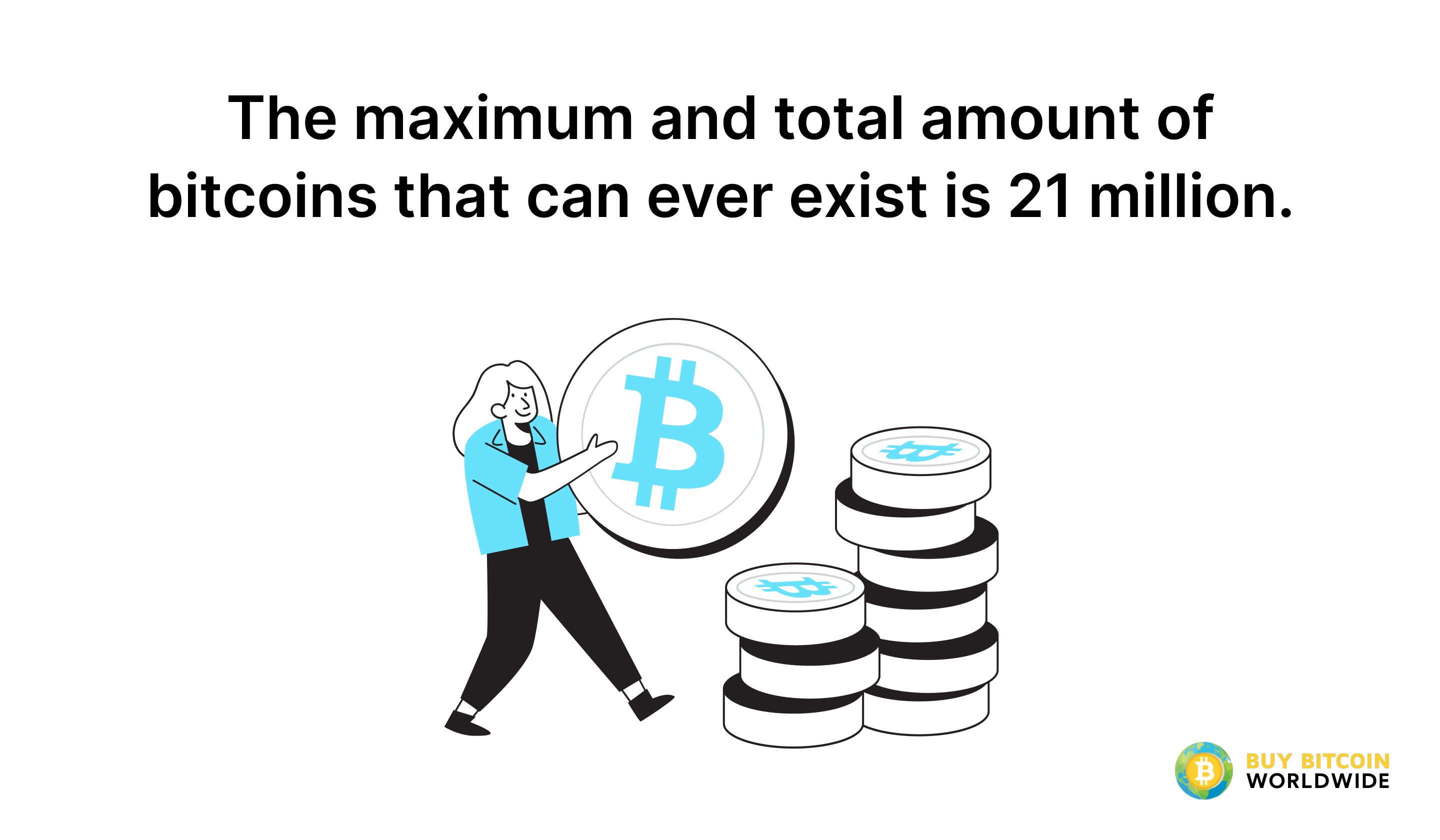
Hardcoded into Bitcoin’s protocol is a strict limit of 21 million Bitcoins that will ever be created. This figure is not arbitrary but is the result of a mathematical series governing the rate at which new Bitcoins are introduced into the system. New Bitcoins are “mined” by powerful computers solving complex computational puzzles, and for each puzzle solved (a “block” added to the blockchain), the miner is rewarded with a fixed amount of new Bitcoin, known as the “block reward.”
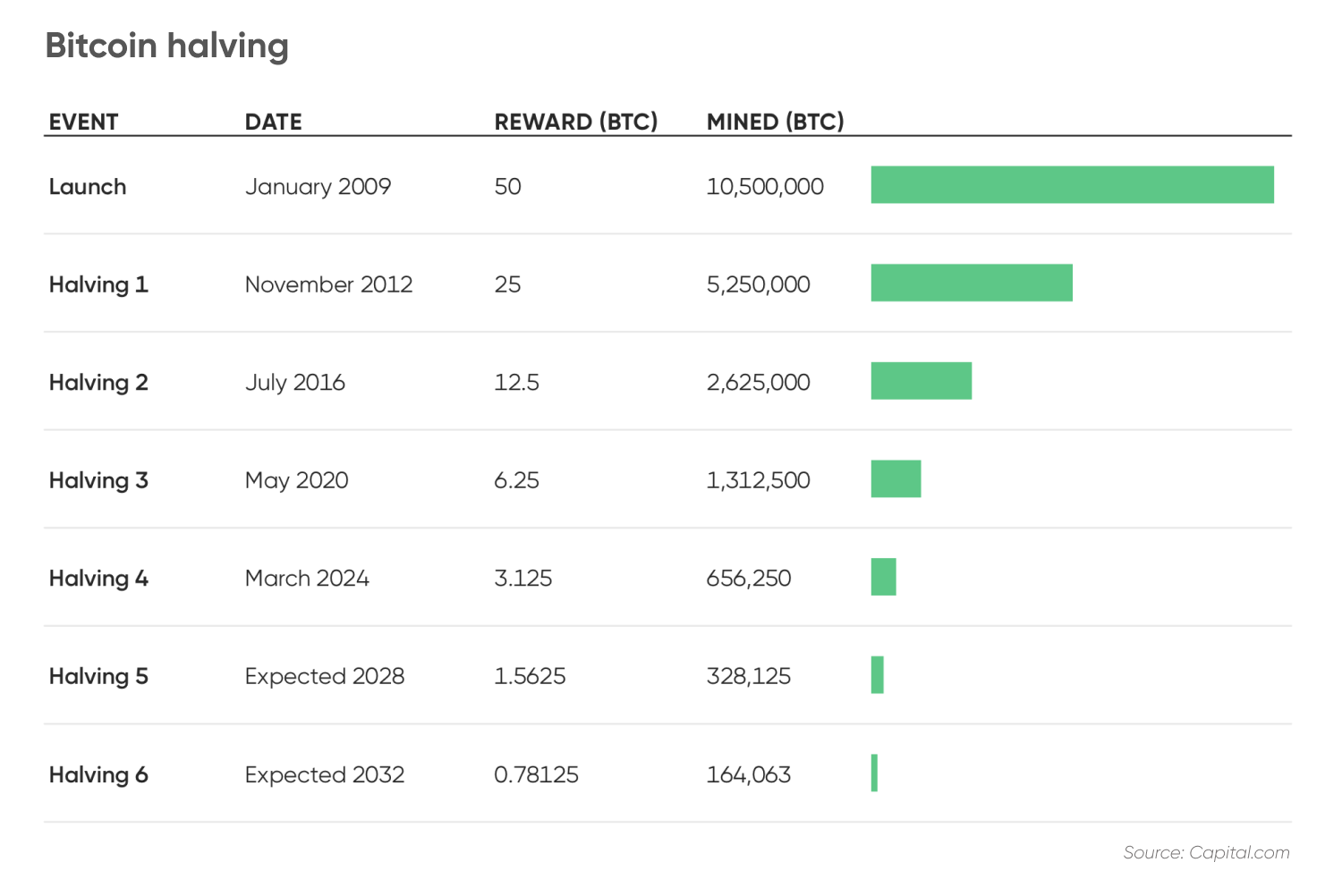
Initially, this block reward was 50 Bitcoins per block. However, the protocol dictates that this reward is halved approximately every four years, or every 210,000 blocks. This process, known as “halving” (or “the halving”), continues until the reward becomes so infinitesimally small that no more new Bitcoins can be practically issued. The last Bitcoin is expected to be mined around the year 2140. This predetermined, decelerating rate of issuance is critical for understanding Bitcoin’s supply model.
Why Scarcity Matters in Economics
From an economic perspective, scarcity is a fundamental driver of value. Resources that are finite and in demand tend to command higher prices. Historically, gold derived much of its enduring value from its relative scarcity and difficulty of extraction. Bitcoin’s digital scarcity provides a similar, if not superior, property.
In contrast, fiat currencies, which are not backed by a physical commodity and can be created or destroyed by central banks, are subject to inflation. Inflation erodes purchasing power over time, meaning that a dollar today might buy less tomorrow. Bitcoin’s fixed supply inherently builds in a deflationary pressure over the long term, making it an attractive hedge against traditional monetary inflation. For investors, this hard cap offers a unique form of digital property rights, ensuring that their holdings will never be diluted by an unexpected increase in supply. This predictable supply schedule allows for sophisticated financial modeling and long-term investment strategies, differentiating Bitcoin significantly from other asset classes.
Unpacking the Current Bitcoin Supply
While the ultimate limit is 21 million, the journey to reach that cap is still ongoing. Understanding the current state of Bitcoin’s supply requires distinguishing between total supply, circulating supply, and the factors influencing their evolution.
Circulating Supply vs. Total Supply
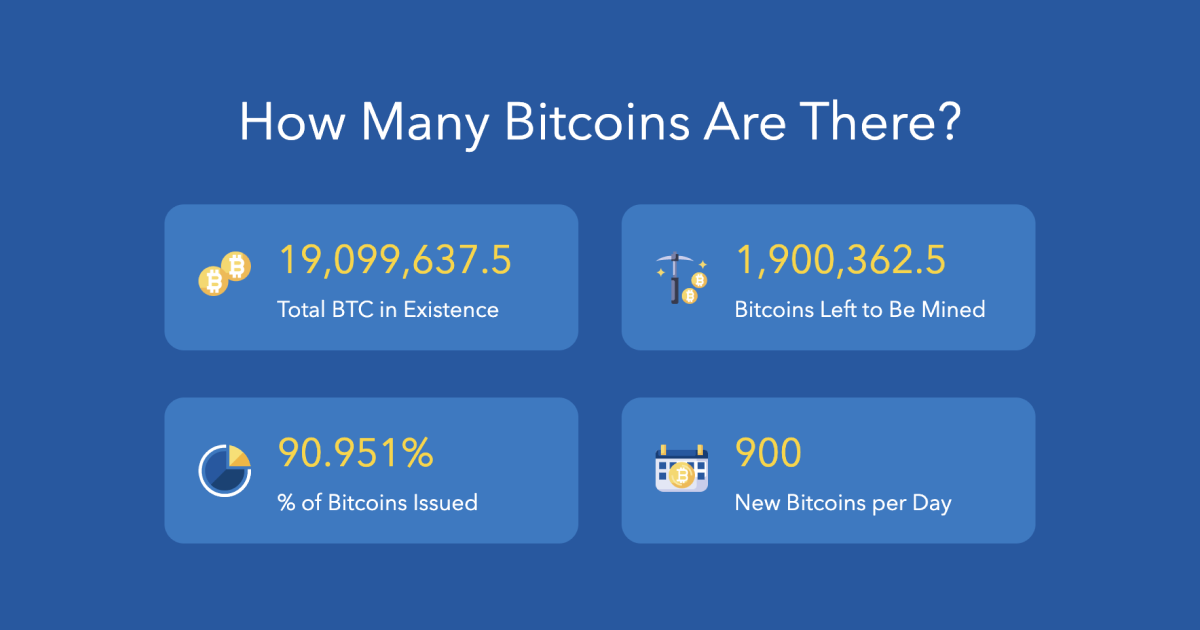
The “total supply” of Bitcoin refers to the maximum 21 million Bitcoins that will ever exist. However, the “circulating supply” refers to the number of Bitcoins that are currently available to the public and actively being traded or held. As of late 2023/early 2024, approximately 19.5 million Bitcoins are already in circulation. This figure steadily increases as new blocks are mined and their corresponding rewards are added to the network. The gap between the circulating supply and the total supply represents the Bitcoins yet to be mined. This distinction is crucial for financial analysis, as it’s the circulating supply that primarily influences market dynamics and price discovery.
The Role of Mining and Block Rewards
The process of “Bitcoin mining” is integral to both the security of the network and the issuance of new Bitcoins. Miners use powerful computers to validate and add new blocks of transactions to the blockchain. As a reward for their computational effort and securing the network, they receive a block reward, which consists of newly minted Bitcoins (the “coinbase reward”) plus any transaction fees attached to the transactions included in the block.
This mechanism serves two primary financial functions:
- Issuance: It’s the only way new Bitcoins are introduced into the economy. The fixed schedule ensures a predictable release.
- Security: The economic incentive of the block reward encourages miners to invest significant capital and energy into securing the network, making it incredibly difficult for malicious actors to disrupt it. This robust security underpins Bitcoin’s reliability as a financial asset.
Halving Events and Their Impact on Supply Emission
As discussed, the Bitcoin block reward halves approximately every four years. Each halving event dramatically reduces the rate at which new Bitcoins enter circulation.
- 2009: Initial block reward of 50 BTC.
- 2012: First halving reduced reward to 25 BTC.
- 2016: Second halving reduced reward to 12.5 BTC.
- 2020: Third halving reduced reward to 6.25 BTC.
- Future: The next halving, expected in 2024, will further reduce the reward to 3.125 BTC, and so on.
These halving events have profound financial implications. Historically, they have been associated with significant price surges, largely due to the sudden shock to the supply-demand equilibrium. When the supply of new Bitcoins diminishes while demand remains constant or increases, the price tends to rise, assuming all other market conditions are stable. For investors, understanding the halving cycle is a key part of long-term Bitcoin investment strategy and market analysis. It highlights Bitcoin’s programmed disinflationary nature, making it increasingly scarce over time.
Lost and Inaccessible Bitcoins: The Vanishing Supply
Adding another layer of complexity to Bitcoin’s supply dynamics is the phenomenon of lost or otherwise inaccessible Bitcoins. While the protocol dictates a 21 million cap, the effective circulating supply is actually less due to irrevocably lost coins.
The Irrevocable Nature of Lost Keys
Bitcoin ownership is determined by possessing private keys, cryptographic strings that grant control over the Bitcoins associated with a specific address. If a private key is lost, forgotten, or destroyed, the Bitcoins linked to that key become permanently inaccessible. There is no central authority to reset passwords or recover funds. This is a double-edged sword: it ensures absolute financial sovereignty but also introduces the risk of permanent loss. These lost Bitcoins are effectively removed from circulation forever, making the actual usable supply even smaller than the current circulating figure suggests.
Early Adopter Fortunes and Forgotten Wallets
Estimates suggest that a significant portion of the early-mined Bitcoins, perhaps millions, are now lost. Early adopters who mined Bitcoin when it held little to no monetary value often did so out of curiosity, accumulating thousands of coins on old hard drives or paper wallets that have since been discarded, corrupted, or simply forgotten. The legendary story of James Howells, who accidentally threw away a hard drive containing 7,500 Bitcoins, is just one prominent example illustrating this issue. While the exact number is impossible to determine, these “lost” coins contribute to Bitcoin’s effective scarcity.
Impact on Effective Circulating Supply
The existence of lost Bitcoins means that the true number of Bitcoins available for transaction, trade, and investment is lower than the official circulating supply count. This intensifies the scarcity argument, as the effective supply is permanently shrinking, even as new Bitcoins are still being mined. For financial analysts and investors, considering this factor when evaluating Bitcoin’s market capitalization and value per coin is essential. A smaller effective supply, coupled with growing demand, could place even greater upward pressure on Bitcoin’s price over the long term, reinforcing its “digital gold” narrative.
The Future of Bitcoin Supply and Its Economic Implications
As Bitcoin progresses towards its hard cap, its economic implications become increasingly pronounced, shaping its role as an investment and a global financial asset.
Approaching the Cap: What Happens After 21 Million?
Once all 21 million Bitcoins have been mined, estimated to be around 2140, no new Bitcoins will enter circulation. At this point, the block reward for miners will consist entirely of transaction fees. This transition is a crucial aspect of Bitcoin’s long-term economic model. It means that the security of the network will eventually depend solely on transaction fees, as miners will continue to have an economic incentive to process transactions and secure the blockchain.
Economically, this marks a profound shift from a supply-inflationary model (albeit disinflationary) to a purely fixed-supply model. For investors, it means that the asset they hold will become absolutely finite, intensifying its scarcity characteristics. This absolute finitude is unprecedented in modern monetary history and positions Bitcoin as a unique economic experiment.
Deflationary Pressure and Value Proposition
Bitcoin’s fixed supply and decreasing issuance rate create inherent deflationary pressure. In a world where central banks routinely engage in quantitative easing and expand the money supply, Bitcoin offers an alternative: a currency with a predictable and eventually static supply. This makes it an attractive proposition for those seeking to preserve wealth against inflationary erosion.
Its value proposition, therefore, extends beyond mere speculation. Bitcoin is increasingly seen as a “store of value” — an asset that retains its purchasing power over time, similar to how gold has historically functioned. This narrative is gaining traction among institutional investors, who are allocating portions of their portfolios to Bitcoin as a hedge against global economic uncertainties and a diversification tool against traditional assets. The predictable supply makes it a more reliable long-term store of value than assets subject to arbitrary supply increases.
Bitcoin as Digital Gold: A Store of Value
The “digital gold” analogy is perhaps the most fitting description for Bitcoin’s long-term economic role. Like gold, Bitcoin is:
- Scarce: Finite in supply.
- Durable: Indestructible digital asset.
- Divisible: Can be broken down into tiny units (satoshis).
- Portable: Easily transferable across borders without physical constraints.
- Fungible: Each Bitcoin is interchangeable with another.
- Verifiable: Easy to confirm authenticity.
These characteristics, combined with its programmatic scarcity and censorship resistance, cement Bitcoin’s status as a formidable alternative or complement to physical gold in an increasingly digital world. For investors seeking a robust store of value outside the traditional financial system, Bitcoin’s supply dynamics present a compelling case.
Investing in a Finite Asset: Navigating Bitcoin’s Supply Dynamics
For anyone considering Bitcoin as an investment, a deep understanding of its supply characteristics is not just academic; it’s fundamental to developing a sound financial strategy.
Supply-Side Economics and Investor Psychology
Bitcoin’s supply schedule profoundly impacts its market behavior and investor psychology. The predictable halvings create anticipation and often trigger bullish sentiment, as investors front-run the expected supply shock. This “stock-to-flow” model, comparing the existing supply (stock) to the rate of new production (flow), suggests that assets with high stock-to-flow ratios (i.e., very scarce relative to new production) tend to hold their value better. Bitcoin’s stock-to-flow ratio continuously increases, signifying its growing scarcity.
For the individual investor, understanding this dynamic helps in formulating investment theses. It encourages a long-term perspective, often referred to as “HODLing” (holding on for dear life), as short-term fluctuations are seen as noise against the backdrop of an inevitably scarce asset.
Diversification and Risk Management in Crypto
While Bitcoin’s scarcity is a powerful attribute, it’s essential for investors to approach it within a broader framework of diversification and risk management. Bitcoin, despite its established position, remains a volatile asset. Its price can be influenced by macroeconomic factors, regulatory news, technological developments, and overall market sentiment.
For financial planners, advising clients on Bitcoin often involves emphasizing its role as a potential growth asset or a long-term store of value, while ensuring that it represents a suitable percentage of a diversified portfolio, aligned with the client’s risk tolerance. The finite supply might mitigate some long-term risks (like inflation), but it doesn’t eliminate others (like market volatility).
Long-Term vs. Short-Term Investment Horizons
Bitcoin’s supply schedule particularly favors a long-term investment horizon. For those looking for quick gains, Bitcoin’s volatility can be a double-edged sword. However, for those with a multi-year outlook, Bitcoin’s predictable scarcity, combined with increasing adoption and utility, presents a compelling case for sustained value appreciation. The continued reduction in new supply, coupled with growing global demand, positions Bitcoin as an asset whose value tends to accrue over time, appealing to investors focused on wealth preservation and significant capital appreciation over decades rather than months.
Ultimately, the question of “how many Bitcoins are there” reveals the core strength of this revolutionary digital asset. Its predetermined, immutable scarcity is not merely a technical detail; it is the economic engine that drives its value, differentiates it from traditional currencies, and solidifies its position as a unique, powerful force in the future of finance and investing.
aViewFromTheCave is a participant in the Amazon Services LLC Associates Program, an affiliate advertising program designed to provide a means for sites to earn advertising fees by advertising and linking to Amazon.com. Amazon, the Amazon logo, AmazonSupply, and the AmazonSupply logo are trademarks of Amazon.com, Inc. or its affiliates. As an Amazon Associate we earn affiliate commissions from qualifying purchases.