
In the dynamic world of digital finance, few assets capture as much attention and generate as much discussion as Bitcoin. Since its inception in 2009, this pioneering cryptocurrency has evolved from an obscure technological experiment into a globally recognized asset, often referred to as “digital gold.” The most frequent question posed by newcomers and seasoned investors alike revolves around its value: “How much is Bitcoin in dollar?” This seemingly simple query unlocks a complex web of economic principles, market forces, and technological innovations that determine Bitcoin’s ever-fluctuating price. Understanding this valuation is crucial not just for potential investors, but for anyone seeking to comprehend the profound shifts occurring in the global financial landscape.
Bitcoin’s price is not fixed; it is a live, constantly moving target, reflective of a decentralized, 24/7 global market. Unlike traditional stocks that trade on exchanges with defined opening and closing hours, Bitcoin markets never sleep. Its value against the U.S. dollar, or any other fiat currency, is a continuous barometer of supply and demand across myriad trading platforms worldwide. This article delves into the mechanisms that drive Bitcoin’s dollar value, how one can ascertain it, and the broader financial implications of this revolutionary digital asset.
Understanding Bitcoin’s Price Dynamics
The price of Bitcoin, expressed in U.S. dollars, is a direct result of market forces, much like any other commodity or asset. However, its digital, decentralized nature introduces unique factors that contribute to its distinctive price dynamics, often characterized by rapid and significant movements.
The Concept of Volatility
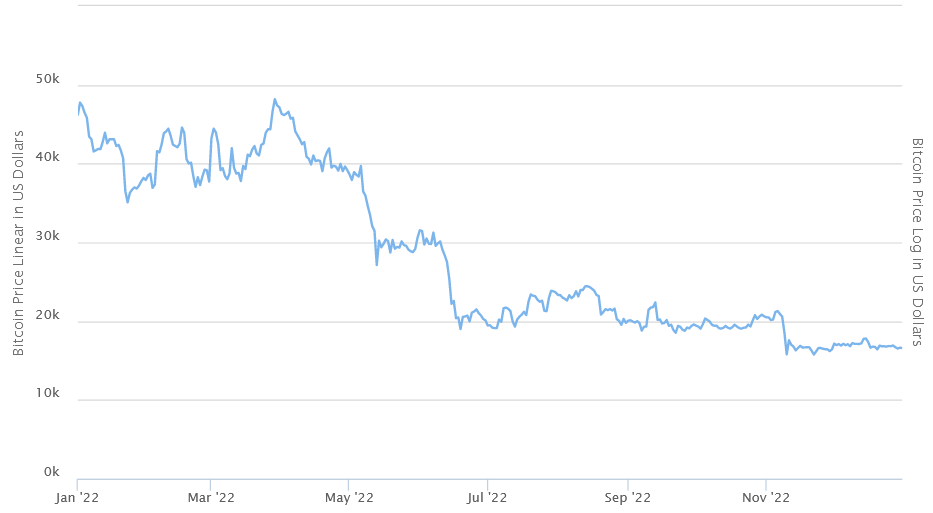
Volatility is perhaps the most defining characteristic of Bitcoin’s price. It refers to the degree of variation of a trading price series over time. Bitcoin has historically exhibited much higher volatility compared to traditional assets like stocks, bonds, or even gold. This means its dollar value can swing dramatically within hours, days, or weeks. These fluctuations can be exhilarating for traders seeking quick gains but can also be daunting for long-term investors or those unfamiliar with such rapid changes. The reasons for this heightened volatility are multifaceted, ranging from its relatively smaller market capitalization compared to traditional markets, to the speculative nature of early adoption, and the impact of news and social media sentiment.
Supply and Demand Fundamentals
At its core, Bitcoin’s dollar price adheres to the fundamental economic principle of supply and demand. The supply of Bitcoin is inherently limited and predictable. Capped at 21 million coins, with new coins introduced through a process called “mining” at a decreasing rate (halving events occur approximately every four years), Bitcoin is designed to be a scarce asset. This scarcity, a critical element of its value proposition, contrasts sharply with fiat currencies, which can be printed indefinitely by central banks.
Demand for Bitcoin, on the other hand, is driven by a multitude of factors including its utility as a peer-to-peer payment system, its perceived role as a store of value (an alternative to gold), speculative investment interest, and its growing acceptance in mainstream finance. When demand outstrips the rate of new supply, the price in dollars tends to rise; conversely, if supply exceeds demand, the price tends to fall.
Macroeconomic Influences
While often touted as an uncorrelated asset, Bitcoin’s price is not entirely immune to broader macroeconomic trends and global financial events. For instance, periods of high inflation in traditional economies have sometimes led to increased interest in Bitcoin as a potential hedge against currency debasement, thereby driving up its dollar value. Conversely, global economic crises or widespread market downturns can sometimes see investors liquidate riskier assets, including Bitcoin, leading to price declines. Central bank policies, interest rate changes, and geopolitical events can all indirectly influence investor sentiment and capital flows into and out of the cryptocurrency market, ultimately impacting Bitcoin’s dollar valuation.
Factors Driving Bitcoin’s Value
Beyond the immediate forces of supply and demand, several deeper currents continually shape Bitcoin’s perceived and actual value in dollars. These factors are crucial for understanding the long-term trajectory and stability of its price.
Adoption and Utility
The utility of Bitcoin as a transactional currency and its broader adoption are significant determinants of its value. As more merchants accept Bitcoin for goods and services, and as more individuals and institutions use it for remittances or other financial transactions, its practical utility increases. This enhanced utility strengthens its fundamental value proposition beyond mere speculation. Furthermore, the integration of Bitcoin into traditional financial products like exchange-traded funds (ETFs) and the development of layer-2 solutions like the Lightning Network, which enhances its transaction speed and reduces fees, all contribute to its usability and, by extension, its dollar valuation. Broader acceptance by major corporations and institutional investors also signals a maturing asset class, attracting more capital and underpinning its price.
Regulatory Landscape and Government Stance
The regulatory environment plays a pivotal role in shaping Bitcoin’s value. Clarity in regulations can instill confidence among investors and financial institutions, encouraging greater participation. Conversely, strict bans, unclear guidelines, or hostile government stances can introduce uncertainty and dampen demand, leading to price corrections. Different countries adopt varying approaches, from outright bans to embracing cryptocurrencies as legal tender. The evolving discussions around consumer protection, anti-money laundering (AML), and taxation of digital assets consistently impact market sentiment and, consequently, Bitcoin’s dollar price. A globally harmonized and supportive regulatory framework would likely provide a strong tailwind for Bitcoin’s value.
Technological Developments and Network Security
Bitcoin’s underlying technology, the blockchain, is integral to its value. Continuous development and improvements to the Bitcoin protocol, such as efficiency upgrades, enhanced privacy features, or scalability solutions, contribute to its robustness and attractiveness. Equally important is the security of the Bitcoin network, maintained by thousands of decentralized “miners” who validate transactions. The immense computational power dedicated to securing the network makes it incredibly resistant to attacks, fostering trust among users. Any perceived vulnerabilities or significant technological breakthroughs/setbacks can directly influence confidence in the asset and therefore its dollar value. The ongoing strength and innovation within the Bitcoin ecosystem are critical for its long-term viability and valuation.
Market Sentiment and Speculation
Human psychology, often manifesting as market sentiment, is an undeniable force in Bitcoin’s price movements. News events, social media trends, influencer opinions, and general enthusiasm or fear can trigger significant buying or selling pressure. Periods of intense bullish sentiment, often fueled by “fear of missing out” (FOMO), can lead to rapid price surges, sometimes detached from underlying fundamentals. Conversely, negative news or widespread panic can trigger steep sell-offs. While speculation is a natural part of any nascent market, it often amplifies Bitcoin’s volatility, making its dollar value susceptible to rapid shifts based on collective investor mood rather than purely objective factors.
Accessing Real-time Bitcoin Prices

Given its constant fluctuations, knowing where to find accurate, real-time Bitcoin prices in dollars is essential for anyone engaged with the asset. Fortunately, numerous reliable sources provide this information.
Cryptocurrency Exchanges and Trading Platforms
The most direct and immediate way to ascertain Bitcoin’s dollar value is through cryptocurrency exchanges where it is actively traded. Platforms like Coinbase, Binance, Kraken, and Gemini, among many others, display live trading pairs (e.g., BTC/USD). These exchanges provide not only the current “last traded price” but also order books showing active buy and sell orders, historical charts, and trading volumes. It’s important to note that slight price variations can exist between different exchanges due to liquidity differences and local supply/demand dynamics, though arbitrage generally keeps these discrepancies minimal.
Financial News Outlets and Data Aggregators
Many mainstream financial news websites (e.g., Bloomberg, Reuters, Wall Street Journal) and dedicated crypto news sites (e.g., CoinDesk, CoinTelegraph) now offer real-time or near real-time Bitcoin price tickers. These sources often aggregate data from multiple exchanges to provide a more representative average. Crypto data aggregators like CoinMarketCap and CoinGecko are particularly popular, offering comprehensive dashboards that display Bitcoin’s price, market capitalization, trading volume, and other key metrics, often across hundreds of different exchanges, allowing users to track its dollar value conveniently.
Understanding Price Indices and Averages
For a more standardized view, various organizations calculate Bitcoin price indices. These indices typically use a methodology to weight prices from several major exchanges to create a single, consolidated reference price. For example, the Bitcoin Price Index (BPI) provided by CoinDesk averages prices from leading global exchanges. Using an index can help mitigate the slight variations found on individual exchanges and provide a more robust representation of Bitcoin’s global dollar value. When referring to “the price of Bitcoin,” people often implicitly refer to such an averaged or indexed value.
The Broader Implications of Bitcoin’s Dollar Value
Beyond the immediate numerical figure, Bitcoin’s dollar value carries significant implications, shaping its role in the global financial ecosystem and influencing investment strategies.
Bitcoin as an Investment Asset
For many, Bitcoin’s dollar value is primarily viewed through the lens of an investment asset. Its historical performance, characterized by periods of exponential growth, has attracted both retail and institutional investors seeking diversification or high returns. As an investment, its dollar price determines portfolio performance, capital gains or losses, and overall market sentiment. Investors constantly monitor its dollar value against their cost basis to assess profitability and make decisions about buying, holding, or selling. Its status as an uncorrelated asset to traditional markets (though this relationship is evolving) also makes its dollar valuation a point of interest for portfolio managers looking to hedge against conventional economic downturns.
Bitcoin’s Role in Global Finance
Bitcoin’s dollar value also impacts its broader role in global finance. As its market capitalization grows and its dollar price solidifies, it gains greater legitimacy as a global payment rail and a potential reserve asset. Its ability to facilitate cross-border transactions at potentially lower costs and faster speeds than traditional banking systems is directly tied to a stable and predictable dollar value (or at least predictable volatility). A higher and more stable dollar valuation makes it more attractive for international trade, remittances, and as a store of wealth in regions experiencing hyperinflation or currency instability. Its value against the dollar serves as a benchmark for its financial power and influence.
The Future of Digital Currencies and Fiat Parity
The journey of Bitcoin’s dollar value is also a narrative about the future of digital currencies and their relationship with fiat money. While some envision a future where Bitcoin completely supplants fiat currencies, a more immediate reality sees it as a complementary asset. Its dollar value serves as the primary bridge between the traditional financial system and the emerging decentralized economy. The ongoing debate about whether Bitcoin will ever achieve “fiat parity” (meaning a truly stable value against a major fiat currency, perhaps through stablecoin mechanisms, or evolve into a global reserve currency itself) is intrinsically linked to its dollar valuation and how consistently it can maintain value and utility.
Navigating the Bitcoin Market: Tips for Investors
For those considering entering or currently participating in the Bitcoin market, understanding its dollar value is paramount. Here are some tips to navigate this complex asset.
Due Diligence and Research
Before investing, conducting thorough due diligence is non-negotiable. Understand what Bitcoin is, how its blockchain works, its economic principles (like halving), and the factors that influence its price. Rely on reputable sources, academic papers, and established financial analysis rather than speculative advice. Be aware of the risks involved, including its inherent volatility, potential regulatory changes, and cybersecurity threats. A well-informed investor is better equipped to interpret price movements and make rational decisions.
Risk Management and Diversification
Given Bitcoin’s volatility, effective risk management is crucial. Never invest more than you can afford to lose. Consider dollar-cost averaging (investing a fixed amount regularly, regardless of price) to mitigate the impact of price swings. Diversifying your investment portfolio beyond just Bitcoin is also a wise strategy. While Bitcoin might be a component, a balanced portfolio should ideally include other asset classes that align with your risk tolerance and financial goals, reducing over-exposure to any single volatile asset.
Long-term vs. Short-term Perspectives
Decide whether your investment horizon is short-term (trading) or long-term (holding). Short-term trading requires significant time, knowledge of technical analysis, and a high tolerance for risk due to rapid price fluctuations. Long-term investing, often referred to as “HODLing” in the crypto community, involves buying Bitcoin with the intention of holding it for several years, riding out short-term volatility in anticipation of future growth. Your perspective will heavily influence how you interpret and react to changes in Bitcoin’s dollar value.
In conclusion, the question “How much is Bitcoin in dollar?” is far more than a simple numerical query. It encapsulates a dynamic interplay of technological innovation, economic principles, market sentiment, and evolving regulatory landscapes. Its dollar value is a constant reflection of its perceived utility, scarcity, and the collective confidence of a global network of users and investors. As Bitcoin continues to mature and integrate further into the global financial fabric, understanding its dollar valuation will remain a cornerstone for anyone seeking to engage with this transformative digital asset.
aViewFromTheCave is a participant in the Amazon Services LLC Associates Program, an affiliate advertising program designed to provide a means for sites to earn advertising fees by advertising and linking to Amazon.com. Amazon, the Amazon logo, AmazonSupply, and the AmazonSupply logo are trademarks of Amazon.com, Inc. or its affiliates. As an Amazon Associate we earn affiliate commissions from qualifying purchases.