
Understanding your annual income is the cornerstone of effective personal finance management. Whether you are applying for a mortgage, planning your taxes, or simply trying to build a sustainable monthly budget, knowing exactly how much money you bring in over a twelve-month period is essential. While the concept may seem straightforward—totaling the money you earn in a year—the reality is often more complex, involving various streams of revenue, tax implications, and fluctuating earnings.
In this guide, we will break down the methodologies for calculating your annual income across different employment scenarios, explore the critical differences between gross and net earnings, and discuss how to leverage this data for long-term financial success.
Understanding the Fundamentals: Gross vs. Net Annual Income
Before diving into the calculations, it is vital to distinguish between the two primary ways income is measured: Gross Annual Income and Net Annual Income. Conflating these two figures is one of the most common mistakes in personal finance, often leading to overspending and tax-season surprises.
Defining Gross Annual Income
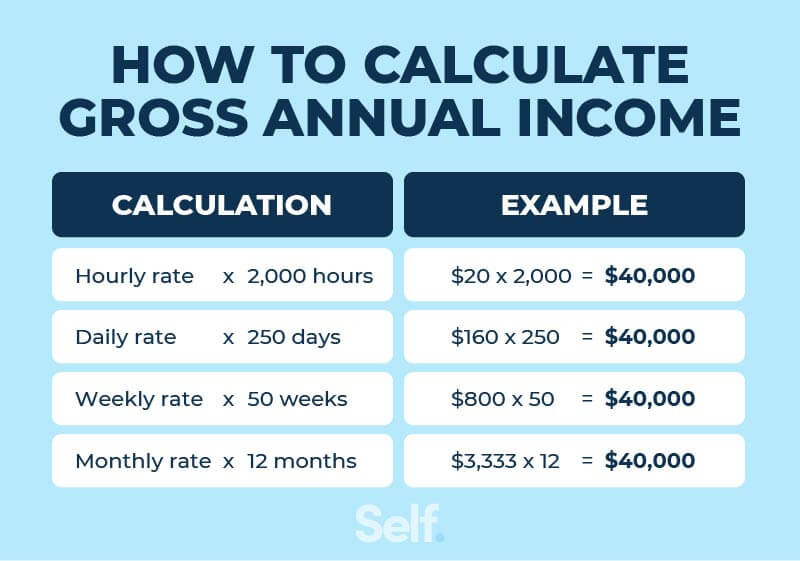
Gross annual income is the total amount of money you earn in a year before any taxes or deductions are taken out. For salaried employees, this is usually the “sticker price” of their job offer. For instance, if you are hired at a salary of $80,000 per year, that is your gross income. If you are an hourly worker, it is the total of all wages earned before the government or your employer’s benefits department touches a single cent. This figure is most commonly used by lenders (such as mortgage companies) to determine your debt-to-income ratio.
Defining Net Annual Income (Take-Home Pay)
Net annual income, often referred to as “take-home pay,” is the amount of money that actually lands in your bank account. This is the figure that truly matters for your day-to-day lifestyle and budgeting. It is calculated by taking your gross income and subtracting federal, state, and local taxes, Social Security contributions, and Medicare (FICA).
Factoring in Pre-Tax and Post-Tax Deductions
To arrive at a precise net income figure, you must also account for voluntary deductions. Pre-tax deductions, such as contributions to a 401(k), 403(b), or Health Savings Account (HSA), lower your taxable income but also reduce your immediate take-home pay. Post-tax deductions might include certain insurance premiums or union dues. Understanding where your money goes between “earned” and “deposited” is the first step toward financial literacy.
Calculating Income Across Different Employment Structures
The method you use to determine your annual income depends heavily on how you are paid. The modern economy has moved beyond the standard 9-to-5 salary, meaning many individuals must juggle multiple calculation methods.
The Salaried Employee
For those with a fixed annual salary, the calculation is the simplest. Your gross annual income is your base salary plus any guaranteed bonuses. To find your monthly gross, divide by 12. To find your bi-weekly gross (if paid every two weeks), divide by 26. However, even salaried employees must remain vigilant about “total compensation,” which includes employer-paid benefits like health insurance and retirement matches that, while not “income” in the sense of cash-in-hand, represent significant financial value.
The Hourly Professional
If you are paid by the hour, your annual income can fluctuate based on the number of hours worked. The standard formula for a full-time hourly employee is to multiply the hourly rate by 2,080 (the number of work hours in a year based on a 40-hour work week).
- Formula: $Hourly Rate times Hours per Week times 52 Weeks = Gross Annual Income.$
It is important to include a realistic estimate of overtime if it is a consistent part of your role. Overtime is typically paid at 1.5 times the base rate, and failing to account for it can result in an underestimation of your financial capacity.
Freelancers, Solopreneurs, and the Gig Economy
Determining annual income for the self-employed is more labor-intensive. Since income is often irregular, the best approach is to look at the “Net Profit” rather than “Gross Receipts.” If you earn $100,000 in revenue but spend $30,000 on business expenses (software, equipment, marketing), your gross annual income for personal financial purposes is $70,000. Self-employed individuals should use a “trailing twelve months” (TTM) approach, adding up the last year of earnings to get a realistic picture of their current financial standing.
Accounting for Variable Income and Diverse Revenue Streams

In the “Money” niche, we emphasize that income is rarely a single stream. To truly determine your annual income, you must look beyond your primary paycheck and account for the “extras” that contribute to your wealth.
Bonuses, Commissions, and Tips
For those in sales or service industries, a significant portion of annual income is variable. When determining your income for the upcoming year, it is safer to use a conservative average of the last two years of bonuses or commissions. Relying on a “best-case scenario” for variable income can lead to financial fragility. If you receive tips, ensure you are tracking the actual amounts received rather than just the amounts reported on your W-2, as this provides the most accurate view of your purchasing power.
Investment Income and Dividends
True financial independence often involves making money through investments. Annual income should include interest from high-yield savings accounts, dividends from stocks, and capital gains distributions. While many people choose to reinvest these funds, they still count as part of your annual earnings and are usually taxable. If you own rental property, your annual income includes the rent collected minus the specific expenses associated with maintaining that property (mortgage interest, taxes, repairs).
Side Hustles and Passive Income
The rise of the “side hustle” means many professionals have secondary income sources, such as an Etsy shop, a YouTube channel, or consulting work. These should be calculated separately from your main job to see how they contribute to your overall financial picture. By isolating these streams, you can determine which “hustles” are providing the best return on your time and which might be dragging down your hourly effective rate.
Essential Tools and Methods for Tracking and Projection
Accuracy in determining annual income requires more than just mental math. Utilizing professional tools can help you maintain a real-time view of your financial health.
Utilizing Financial Software and Apps
Modern fintech tools have made tracking income easier than ever. Apps like YNAB (You Need A Budget), Mint, or specialized tools for freelancers like QuickBooks Self-Employed, automatically categorize incoming deposits. These tools allow you to see your “Average Annual Income” over time, which smooths out the peaks and valleys of irregular pay cycles. By linking your bank accounts, you can see a live dashboard of your earnings versus your projections.
The Power of the Spreadsheet
For those who prefer a hands-on approach, a customized Excel or Google Sheets document remains the gold standard. A well-constructed spreadsheet allows you to input various income streams, apply estimated tax percentages, and subtract fixed expenses. This “manual” process often provides a deeper psychological connection to your money, making you more aware of where your income originates and how it is being utilized.
Projecting Future Earnings
Determining your past annual income is about record-keeping; determining your future annual income is about strategy. Financial planning requires you to project your earnings for the next 12 months. This involves accounting for scheduled raises, anticipated changes in dividends, and potential shifts in the economy that might affect your side business. A “Base, Best, and Worst” case projection model is a sophisticated way to manage your finances, ensuring you are prepared for any economic climate.
Why Accurate Annual Income Calculation is the Key to Wealth Building
Knowing your annual income is not just an academic exercise; it is a functional requirement for several pillars of wealth management.
Tax Planning and Compliance
Your annual gross income determines your tax bracket. By knowing where you stand early in the year, you can make strategic moves to lower your taxable income. For example, if you realize your annual income will push you into a higher bracket, you might choose to increase your contributions to a traditional IRA or 401(k) to bring your taxable total back down. Without an accurate calculation, you are essentially flying blind until April 15th.
Lending and Creditworthiness
When you apply for a “big ticket” item—a home, a car, or a business loan—the lender will scrutinize your annual income. They are looking for stability and “room” in your budget to take on more debt. By calculating your income accurately beforehand, you can determine your Debt-to-Income (DTI) ratio. Most lenders prefer a DTI of 36% or lower. If your calculated income shows your ratio is too high, you know you need to either increase your income or pay down debt before applying.

Budgeting for Financial Independence
Finally, your annual income dictates your “savings rate”—perhaps the most important number in personal finance. If you know your net annual income is $60,000 and your annual expenses are $45,000, you have a 25% savings rate. Tracking this year-over-year allows you to see if you are moving closer to or further away from financial independence. It allows for the “reverse budgeting” method, where you decide how much you want to save for the year first, and then live on whatever is left of your annual income.
In conclusion, determining your annual income is a multi-faceted process that requires attention to detail and a clear understanding of your financial ecosystem. By mastering the distinction between gross and net, accounting for all revenue streams, and utilizing the right tools, you transform a simple number into a powerful roadmap for your financial future. Whether you are an hourly worker or a multi-stream entrepreneur, clarity on your income is the first step toward true financial mastery.
aViewFromTheCave is a participant in the Amazon Services LLC Associates Program, an affiliate advertising program designed to provide a means for sites to earn advertising fees by advertising and linking to Amazon.com. Amazon, the Amazon logo, AmazonSupply, and the AmazonSupply logo are trademarks of Amazon.com, Inc. or its affiliates. As an Amazon Associate we earn affiliate commissions from qualifying purchases.