
Understanding the genesis of any financial asset is crucial for investors, market analysts, and financial enthusiasts alike. In the fast-paced world of digital currencies, the launch date often marks the beginning of a complex journey through market cycles, regulatory landscapes, and technological evolution. For XRP, a prominent cryptocurrency associated with Ripple Labs, its inception date is not just a historical fact but a foundational element that shapes its perceived value, investment thesis, and role within global financial infrastructure. This article delves into the precise timeline of XRP’s launch, examining its initial purpose, early market reception, and the long-term financial implications that stem from its foundational design and strategic rollout.
The Genesis of XRP: A New Paradigm for Global Payments
The story of XRP’s launch is intrinsically linked to the broader vision of its creators: to revolutionize cross-border payments. Unlike many cryptocurrencies that emerged from a decentralized, anonymous genesis, XRP was conceived by a team with a clear business objective from the outset.
From RipplePay to Ripple Labs: The Early Vision
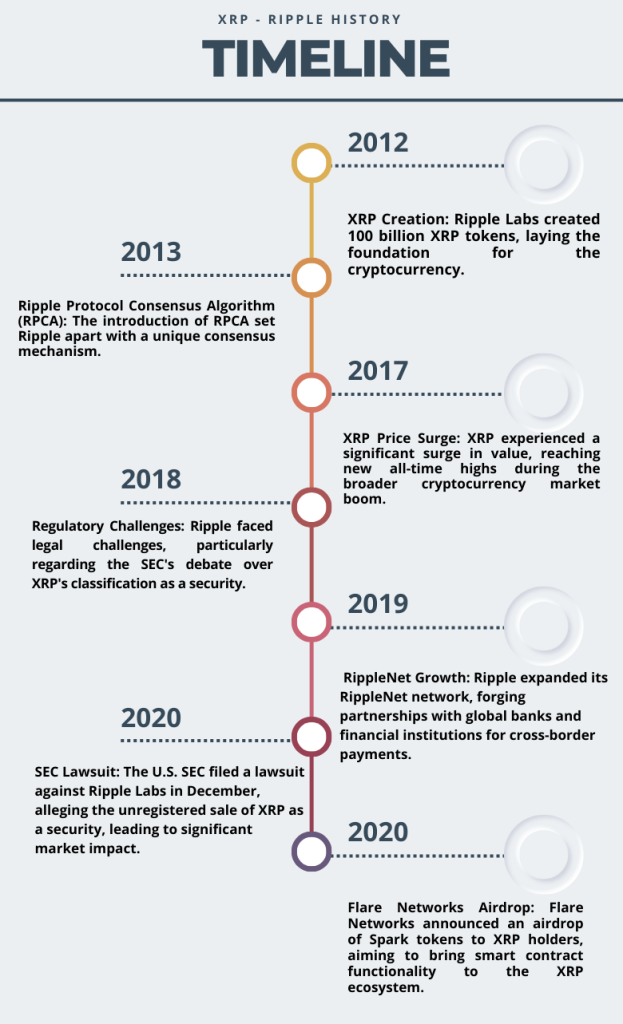
The intellectual origins of what would become XRP can be traced back to 2004 with Ryan Fugger’s creation of RipplePay, an early attempt at a decentralized payment system. However, the modern iteration of XRP and its underlying technology began to take shape significantly later. In 2011, Jed McCaleb began developing a new digital currency system. He soon approached Chris Larsen, and together with Arthur Britto, they co-founded a company that would eventually become Ripple Labs (initially OpenCoin). This collaboration marked the formal commencement of what we now recognize as the XRP Ledger and the XRP digital asset.
The core problem they aimed to solve was the inefficiency and high cost of traditional international money transfers. SWIFT, the long-standing international banking network, while robust, often involved multiple intermediaries, leading to delays, high fees, and a lack of transparency. The founders envisioned a digital asset that could act as a “bridge currency” to facilitate instantaneous, low-cost, and reliable cross-border transactions without the need for pre-funded Nostro/Vostro accounts.
The XRP Ledger and Its Distinctive Architecture
The XRP Ledger (XRPL) is a decentralized cryptographic ledger that powers the XRP digital asset. Its development was distinct from Bitcoin’s, focusing on speed and scalability from the ground up. While the official “launch” of XRP as a publicly accessible and transactable asset isn’t a single, universally agreed-upon date like an Initial Coin Offering (ICO) or Genesis Block, the XRP Ledger itself was publicly released in 2012. This is often cited as the period when XRP, as a distinct digital asset, truly began its public life. The architecture introduced unique features such as a consensus mechanism—the XRP Ledger Consensus Protocol—which allowed transactions to be validated and settled in 3-5 seconds, significantly faster than many other early cryptocurrencies.
The design choice to pre-mine all 100 billion XRP tokens at launch was also a critical aspect of its financial strategy. This differed fundamentally from proof-of-work cryptocurrencies like Bitcoin, which are mined over time. The founders then decided to gift a substantial portion of this pre-mined supply to Ripple Labs to fund its operations, development, and strategic partnerships, with a significant amount also placed in an escrow account to ensure a predictable and controlled release into the market.
Initial Distribution and the Founding Principle
The distribution model of XRP was designed to serve its specific use case as a liquidity tool for financial institutions. Out of the 100 billion XRP created, the founders initially allocated 80 billion XRP to Ripple Labs, with the remaining 20 billion distributed among the founders themselves. This centralized initial distribution has been a point of discussion and debate within the cryptocurrency community, impacting investor perception and regulatory scrutiny.
The underlying principle was to have a ready supply of XRP that Ripple could use to incentivize adoption among financial institutions, develop payment corridors, and maintain the ecosystem. By controlling the release of XRP from escrow, Ripple aimed to prevent market saturation and provide a predictable supply schedule, theoretically mitigating extreme price volatility for institutional partners who might rely on XRP for large transactions.
XRP’s Market Debut and Early Investment Landscape
Following the public release of the XRP Ledger in 2012, XRP gradually found its way onto cryptocurrency exchanges, marking its official debut in the nascent digital asset market. This period was characterized by significant price discovery and evolving investor sentiment.
The First Exchanges and Price Discovery
XRP began trading on various cryptocurrency exchanges shortly after the XRP Ledger’s public release. While exact dates for its first listing can be granular and vary by exchange, by 2013-2014, XRP was actively traded on platforms like Bitstamp and others, making it accessible to early crypto investors and speculators. These early listings were crucial for establishing a market price and liquidity for XRP, transforming it from a mere digital token into a tradable financial asset.
Initially, the price of XRP was exceptionally low, often fractions of a cent. For early adopters, this presented a unique speculative investment opportunity. The lack of historical data, combined with the novel nature of digital assets, meant that early investors were betting on the future utility and adoption of Ripple’s technology rather than established financial metrics.
Understanding Scarcity: Total Supply and Emission Schedule
The pre-mined nature of XRP means that its total supply of 100 billion tokens is fixed. This contrasts with inflationary assets or those with an ongoing mining process. Ripple Labs, however, controls the circulating supply through its escrow mechanism. In December 2017, Ripple placed 55 billion XRP into a series of cryptographically secured escrow accounts, releasing 1 billion XRP each month. Unused XRP from the monthly release is returned to the escrow queue. This structured release schedule is designed to provide predictability and manage supply, directly influencing market dynamics and investor expectations regarding the asset’s long-term value.
From a financial perspective, understanding this emission schedule is vital. It implies that while the total supply is capped, the circulating supply increases over time in a controlled manner, which can affect price stability and long-term investment strategies. Investors must factor this into their valuation models, considering both demand-side drivers (adoption, partnerships) and supply-side dynamics (escrow releases).
Early Investor Sentiment and Speculation
In its early years, XRP attracted a diverse group of investors, ranging from technology enthusiasts interested in its payment capabilities to pure speculators drawn by the volatility and potential for significant returns. The narrative surrounding XRP often centered on its potential to disrupt the SWIFT network and its close ties to established financial institutions. This narrative, coupled with strategic partnerships announced by Ripple, fueled early investor optimism.
However, the centralized nature of its distribution and Ripple’s significant holdings also generated skepticism among some crypto purists who favored truly decentralized protocols. These differing perspectives contributed to a dynamic and sometimes contentious investment landscape for XRP, establishing early on that it would be an asset with a distinct profile within the broader cryptocurrency market.
XRP’s Role in the Evolving Crypto Economy and Financial Systems
Since its public introduction, XRP has carved out a unique niche within the financial ecosystem, positioning itself as a utility token for institutional payments rather than primarily a store of value or a decentralized medium of exchange for everyday transactions.
Facilitating Cross-Border Transactions: xRapid (now On-Demand Liquidity)
The primary utility of XRP, as envisioned by Ripple, is to serve as a real-time liquidity solution for cross-border payments. This was initially demonstrated through a product called xRapid, which was later rebranded to On-Demand Liquidity (ODL). ODL uses XRP as a bridge currency to facilitate instantaneous and low-cost transfers between different fiat currencies. For instance, a financial institution wanting to send funds from USD to Mexican Pesos could convert USD to XRP, send XRP across the ledger, and then instantly convert XRP to MXN. This process bypasses traditional banking intermediaries, reducing costs and settlement times from days to seconds.
From a business finance perspective, ODL represents a significant efficiency gain for companies involved in international trade or remittances. The ability to minimize counterparty risk and reduce pre-funded capital requirements in various currencies (Nostro/Vostro accounts) offers a compelling financial incentive for adoption, driving demand for XRP itself.

Institutional Adoption and Partnerships
Ripple has aggressively pursued partnerships with banks, payment providers, and financial institutions worldwide to promote the adoption of its technologies, including ODL. Companies like MoneyGram (though the partnership was later wound down) and various smaller payment corridors have experimented with or adopted ODL for specific remittance routes. These partnerships are critical for XRP’s long-term value proposition, as increased utility within institutional frameworks directly translates to higher demand for the asset.
For investors, tracking these partnerships and the actual transaction volume flowing through ODL is a key metric for assessing XRP’s fundamental value beyond speculative trading. It signifies tangible utility and integration into the existing financial fabric, potentially unlocking significant value as global payment flows continue to digitize and optimize.
XRP as a Bridge Currency: Efficiency and Cost Savings
The concept of XRP as a bridge currency is central to its financial model. By enabling near-instantaneous settlement and drastically lower transaction fees compared to traditional methods (which can charge percentages of the transaction amount plus fixed fees), XRP offers compelling cost savings for businesses. This efficiency is particularly attractive for markets with low liquidity for direct currency pairs, where multiple conversions might otherwise be necessary, each incurring costs and delays.
The value proposition for financial tools built on XRP is clear: provide a faster, cheaper, and more transparent alternative for global money movement. This positions XRP as a critical component in the evolution of business finance, moving towards a more interconnected and efficient global economy.
Navigating Regulatory Challenges and Investment Implications
The journey of XRP and Ripple has been heavily shaped by regulatory scrutiny, particularly in the United States. These legal battles have had profound financial implications for investors and the market alike.
The SEC Lawsuit and its Impact on Market Dynamics
In December 2020, the U.S. Securities and Exchange Commission (SEC) filed a lawsuit against Ripple Labs and two of its executives, alleging that XRP was an unregistered security and that its sales constituted unregistered securities offerings. This lawsuit sent shockwaves through the cryptocurrency market, particularly for XRP holders.
The immediate financial impact was severe: many exchanges in the U.S. delisted XRP or suspended its trading, leading to a significant drop in its price and liquidity for U.S.-based investors. This event underscored the inherent regulatory risks associated with investing in digital assets, especially those with a company behind them that could be deemed an “issuer” of a security. For personal finance and investment planning, the lawsuit highlighted the importance of understanding the regulatory environment and the potential for adverse legal actions to dramatically affect asset values.
Regulatory Clarity: A Pivotal Factor for Financial Assets
The SEC lawsuit has been a defining moment for XRP, turning into a multi-year legal saga that has brought the broader issue of cryptocurrency regulation to the forefront. A favorable ruling for Ripple (as seen in certain partial summary judgments in 2023) provided some regulatory clarity, leading to significant price rallies and relistings on some platforms. Conversely, unfavorable rulings or ongoing uncertainty continue to suppress investor confidence and limit market access.
For investors, the outcome of such regulatory battles is paramount. Clear regulatory frameworks provide certainty, reduce risk, and can open doors for broader institutional adoption. Lack of clarity, or negative rulings, can cordon off markets and limit an asset’s growth potential. This emphasizes the need for investors to stay informed about legal and regulatory developments in the digital asset space as part of their due diligence.
Investment Considerations Amidst Legal Uncertainties
For individuals considering XRP as part of their investment portfolio, the ongoing regulatory landscape necessitates a cautious approach. While the asset boasts strong utility and potential in cross-border payments, the “security vs. commodity” debate continues to hover over it. Investors must weigh the potential for significant gains if Ripple ultimately prevails and XRP gains widespread institutional acceptance against the risk of adverse regulatory outcomes that could again impact its tradability and value.
Diversification remains a key strategy in such a volatile environment. Allocating only a manageable portion of a portfolio to high-risk assets like XRP and understanding one’s own risk tolerance are fundamental personal finance principles. The XRP case is a living example of how external legal and political factors can exert enormous influence on the financial performance of an asset.
The Future Outlook for XRP and Its Place in Your Financial Portfolio
As XRP continues its journey, its long-term viability and investment potential hinge on several factors, including its continued utility, broader adoption, and the ultimate resolution of regulatory challenges.
Potential for Broader Integration and Use Cases
Beyond cross-border payments, XRP’s fast and low-cost ledger technology holds potential for other use cases within the financial sector, such as tokenized assets, decentralized finance (DeFi) applications on the XRPL, and central bank digital currencies (CBDCs). Ripple is actively exploring these avenues, aiming to expand the utility and, by extension, the demand for XRP.
Should the XRPL become a platform for a wider array of financial services and innovations, the inherent demand for XRP could grow substantially, influencing its long-term valuation. Investors should monitor developments in these areas as indicators of future growth potential.
Risk Assessment and Diversification Strategies
Investing in XRP, like any cryptocurrency, carries significant risks, which are compounded by its unique regulatory situation. Price volatility is inherent, and market sentiment can shift rapidly based on news, partnerships, or legal developments. Therefore, a thorough risk assessment is essential.
Financial advisors typically recommend diversification as a strategy to mitigate risk. Including XRP as a small, speculative part of a broader, well-diversified portfolio (which includes traditional assets like stocks, bonds, and other less correlated investments) can help manage overall portfolio risk. Understanding that one could lose a substantial portion or even all of an investment in such an asset is a critical aspect of responsible personal finance.
Long-Term Value Proposition vs. Short-Term Volatility
The long-term value proposition of XRP lies in its potential to become a global standard for instant liquidity in international payments, streamlining a multi-trillion-dollar industry. If Ripple succeeds in its mission, XRP could achieve widespread adoption among financial institutions, driving sustained demand.
However, in the short term, XRP is subject to significant price volatility driven by speculative trading, broader crypto market trends, and news related to the SEC lawsuit. Investors must distinguish between these short-term fluctuations and the long-term utility-driven growth potential. For some, XRP represents a bet on the future of institutional finance and the efficiency of digital assets as financial tools. For others, it’s a speculative play on market sentiment. Understanding one’s own investment horizon and thesis is paramount when considering XRP for any financial portfolio.
In conclusion, XRP launched with the public release of the XRP Ledger in 2012, setting the stage for its unique role in the digital asset landscape. Its journey from an ambitious solution for cross-border payments to a significant, albeit controversial, player in the crypto market highlights the complexities and opportunities within digital finance. For investors, its history and ongoing developments underscore the importance of informed decision-making, careful risk management, and a deep understanding of how technology, regulation, and market dynamics converge in the world of money.
aViewFromTheCave is a participant in the Amazon Services LLC Associates Program, an affiliate advertising program designed to provide a means for sites to earn advertising fees by advertising and linking to Amazon.com. Amazon, the Amazon logo, AmazonSupply, and the AmazonSupply logo are trademarks of Amazon.com, Inc. or its affiliates. As an Amazon Associate we earn affiliate commissions from qualifying purchases.