
Social Security remains the cornerstone of retirement planning for millions of Americans. While many view it as a simple government entitlement, the underlying mechanics are a sophisticated mathematical process designed to provide a progressive safety net. Understanding how your benefit is calculated is not just a matter of curiosity; it is a vital component of strategic financial planning. Whether you are decades away from retirement or approaching your mid-sixties, grasping the variables of the Social Security Administration (SSA) formula allows you to make informed decisions about your career, your savings rate, and the optimal timing for your claim.

The Foundation: Earnings History and the 35-Year Rule
The calculation of your Social Security benefit begins with your lifetime earnings. Unlike some private pension plans that might only look at your “high five” years of salary, the SSA takes a much broader view of your professional life.
The Significance of the 35-Year Window
The SSA uses your 35 highest-earning years to determine your benefit. If you have worked for more than 35 years, the agency will simply select the 35 years with the highest inflation-adjusted earnings and discard the rest. However, if you have worked fewer than 35 years, the SSA does not shorten the denominator. Instead, they fill in the missing years with zeros. These zeros can significantly drag down your average, highlighting the importance of maintaining a consistent work history or working longer to replace low-earning years from your youth.
Indexing for Inflation
A dollar earned in 1985 does not have the same purchasing power as a dollar earned in 2024. To ensure that your past earnings are relevant to today’s economic context, the SSA “indexes” your historical wages. This process involves multiplying your actual earnings for each year by an indexing factor based on the Average Wage Index (AWI) for the year you turn 60. Earnings after age 60 are taken at face value. This ensures that the calculation reflects the general rise in the standard of living that occurred during your working years.
The Social Security Wage Base
It is important to note that not all income is subject to Social Security taxes, and therefore, not all income counts toward your benefit calculation. Every year, the SSA sets a “Contribution and Benefit Base,” also known as the taxable maximum. For 2024, this limit is $168,600. Any earnings above this threshold are not taxed for Social Security and are not included in the calculation of your future benefits. High earners should recognize that their benefit will eventually “cap out” regardless of how much they earn above this limit.
From Earnings to AIME: Determining Your Average
Once your top 35 years of earnings are indexed and totaled, the SSA moves to the next step of the formula: determining your Average Indexed Monthly Earnings (AIME).
Calculating the AIME
To find your AIME, the SSA takes the sum of your 35 years of indexed earnings and divides that number by 420 (the number of months in 35 years). The resulting figure represents your career-average monthly pay, adjusted for modern economic conditions. This figure is the raw material used to determine your actual monthly check.
The Progressive Nature of the Formula
The Social Security benefit formula is intentionally progressive, meaning it is designed to replace a higher percentage of pre-retirement income for lower-wage earners than for higher-wage earners. This is achieved through a multi-tiered calculation applied to your AIME to arrive at your Primary Insurance Amount (PIA).
Understanding “Bend Points”
The transition from AIME to PIA happens through two “bend points.” These are specific dollar thresholds that change annually. For an individual reaching age 62 in 2024, the formula is as follows:
- 90% of the first $1,174 of AIME.
- 32% of AIME between $1,174 and $7,078.
- 15% of AIME over $7,078.
The sum of these three amounts is your PIA. This tiered structure ensures that while everyone who pays in receives a benefit, the “replacement rate” favors those who earned less, providing a more robust floor for those who might not have had the capacity for significant private savings.
The Impact of Timing: Full Retirement Age and Claiming Strategies
While the PIA represents your “base” benefit, the actual amount you receive each month depends heavily on when you choose to start receiving checks. This is arguably the most critical decision a retiree will make regarding their Social Security strategy.
Identifying Your Full Retirement Age (FRA)
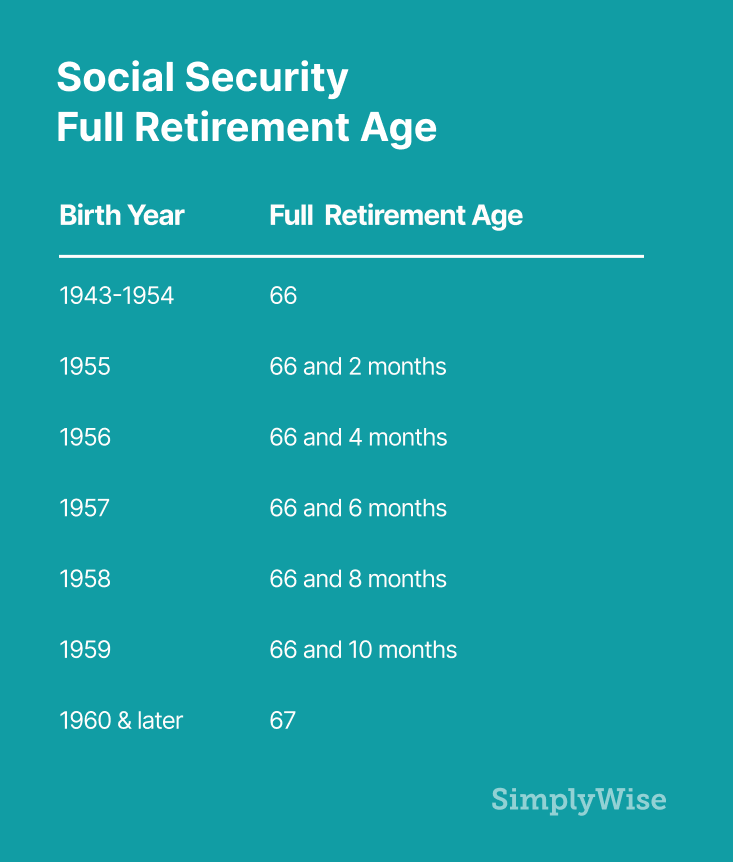
Your Full Retirement Age is the age at which you are entitled to 100% of your PIA. For those born between 1943 and 1954, the FRA is 66. For those born in 1960 or later, the FRA is 67. If you were born between 1955 and 1959, the FRA increases in two-month increments for each birth year. Knowing your exact FRA is the starting point for calculating early filing penalties or delayed credits.
The Cost of Filing Early
You can begin taking Social Security as early as age 62, but doing so comes with a permanent reduction in your monthly benefit. If your FRA is 67 and you claim at 62, your benefit is reduced by approximately 30%. This reduction is calculated monthly: benefits are reduced by 5/9 of 1% for each month before FRA, up to 36 months, and 5/12 of 1% for each month beyond that. For many, the “break-even point”—the age at which the total cumulative value of larger checks surpasses the value of more numerous, smaller checks—usually occurs in the late 70s or early 80s.
The Reward for Delaying: Delayed Retirement Credits
Conversely, if you choose to delay benefits past your FRA, your monthly check increases by 8% for every year you wait, up to age 70. There is no financial benefit to waiting past age 70. This 8% annual “return” is guaranteed and inflation-adjusted, making it one of the most powerful tools in personal finance for longevity protection. For a person with an FRA of 67, waiting until 70 results in a check that is 124% of their PIA.
Special Adjustments and External Variables
The standard calculation covers the majority of workers, but several specific factors can alter the final amount you see in your bank account.
The Annual Cost-of-Living Adjustment (COLA)
To ensure that retirees do not lose purchasing power due to inflation, the SSA applies a Cost-of-Living Adjustment (COLA) most years. This adjustment is based on the Consumer Price Index for Urban Wage Earners and Clerical Workers (CPI-W). When the CPI-W increases, benefits increase. This is a unique feature of Social Security; very few private annuities or pensions offer a true, uncapped inflation hedge.
Taxation of Benefits
It is a common misconception that Social Security benefits are tax-free. Depending on your “combined income” (Adjusted Gross Income + Non-taxable Interest + ½ of your Social Security benefits), you may owe federal income tax on up to 85% of your benefits. In the realm of personal finance, this makes the “tax-location” of your other withdrawals (such as from a Roth IRA versus a Traditional IRA) vital, as those withdrawals can push your Social Security into a higher taxable bracket.
The Windfall Elimination Provision (WEP)
For those who worked in “non-covered” employment—such as certain government or civil service jobs where they did not pay Social Security taxes but earned a pension—the WEP may apply. This provision modifies the first “bend point” of the PIA formula, potentially reducing the benefit. It is designed to prevent workers who receive a pension from non-covered work from also receiving the “progressive” boost intended for low-wage earners who only have Social Security.

Strategic Takeaways for Your Financial Plan
Understanding the calculation is only half the battle; the other half is applying this knowledge to your broader financial strategy.
- Check Your Statement Regularly: Log in to your “my Social Security” account annually. Verify that your earnings history is accurate. An error in your reported income from twenty years ago could be lowering your projected benefit today.
- The “High-35” Strategy: If you are nearing retirement but have a few years with low or zero earnings in your history, working just a few more years at a higher salary can replace those zeros, providing a significant boost to your AIME.
- Coordinate with Your Spouse: Spousal benefits allow a lower-earning spouse to receive up to 50% of the higher-earning spouse’s PIA. Strategic claiming—where the higher earner delays to age 70 to maximize the survivor benefit—is often the most effective way for couples to hedge against longevity risk.
Social Security is not a passive benefit; it is a dynamic asset that responds to your career choices and your claiming timeline. By understanding the math of the 35-year average, the logic of the bend points, and the impact of the claiming age, you can transform Social Security from a mysterious government check into a precisely calculated pillar of your financial independence.
aViewFromTheCave is a participant in the Amazon Services LLC Associates Program, an affiliate advertising program designed to provide a means for sites to earn advertising fees by advertising and linking to Amazon.com. Amazon, the Amazon logo, AmazonSupply, and the AmazonSupply logo are trademarks of Amazon.com, Inc. or its affiliates. As an Amazon Associate we earn affiliate commissions from qualifying purchases.