
In an increasingly dynamic economy, traditional W-2 employment is just one piece of the income puzzle. Millions of individuals earn money through freelancing, contracting, investments, and various side hustles, all of which fall under the umbrella of non-employment income. For these income streams, the IRS Form 1099 is not just a piece of paper; it’s a critical document for accurate tax reporting and financial compliance. If you’ve ever asked “Where can I get a 1099?”, you’re likely navigating the complexities of these diverse earnings. This comprehensive guide will demystify the 1099, explain its various forms, outline when and from whom you should expect to receive it, and provide crucial advice on what to do if it doesn’t arrive. Ultimately, understanding your 1099s is key to financial peace of mind and optimizing your tax strategy.
Demystifying the 1099: What It Is and Why It Matters for Your Finances
The IRS Form 1099 serves as a vital informational tax document, reporting various types of income received by individuals or businesses throughout the tax year, other than regular wages, salaries, and tips reported on a W-2. It’s the IRS’s way of tracking payments made to non-employees, ensuring that all taxable income is accounted for. For you, the recipient, the 1099 is a confirmation of income received, acting as a crucial piece of evidence when you file your annual tax return.
The Core Purpose of Form 1099
At its heart, the 1099’s purpose is twofold: for the payer, it’s a way to report payments made to the IRS, thereby establishing an audit trail. For the recipient, it acts as a summary of taxable income that needs to be included in their gross income for the tax year. The IRS uses these forms to cross-reference the income you report on your tax return, looking for discrepancies. Receiving a 1099 doesn’t automatically mean you owe taxes on the full amount, as deductions and expenses may apply, particularly for self-employment income, but it certainly means the income has been reported to the government.
Distinguishing Between W-2 and 1099 Income
Understanding the fundamental difference between W-2 and 1099 income is paramount. A W-2 form is issued by an employer to an employee, signifying an employment relationship where the employer withholds taxes (federal, state, Social Security, Medicare) from each paycheck. A 1099, conversely, signifies an independent contractor relationship, or other types of income where the payer does not typically withhold taxes. This distinction has profound implications for how you manage your finances and fulfill your tax obligations. With 1099 income, you are generally responsible for calculating and paying your own self-employment taxes (Social Security and Medicare) and income taxes, often through estimated tax payments throughout the year.
Your Taxpayer Obligation: Beyond Just Receiving the Form
It’s a common misconception that if you don’t receive a 1099, you don’t have to report the income. This is false. Your obligation to report all taxable income to the IRS is absolute, regardless of whether you receive a specific form. The threshold for receiving a 1099 for most income types is $600 from a single payer in a calendar year (though there are exceptions, such as $10 in interest/dividends or certain payment card transactions). Even if you earn less than this amount from a particular source and don’t receive a 1099, you are still legally required to report that income on your tax return. The 1099 simply acts as a convenience and a reporting mechanism for both the payer and the IRS.
Pinpointing Your 1099 Source: Common Forms and the Payer’s Role
The term “1099” is actually a family of forms, each designed to report specific types of non-employment income. Knowing which forms apply to your income streams and who is responsible for issuing them is the first step in ensuring you “get” all the 1099s you need.
For Freelancers & Contractors: Form 1099-NEC
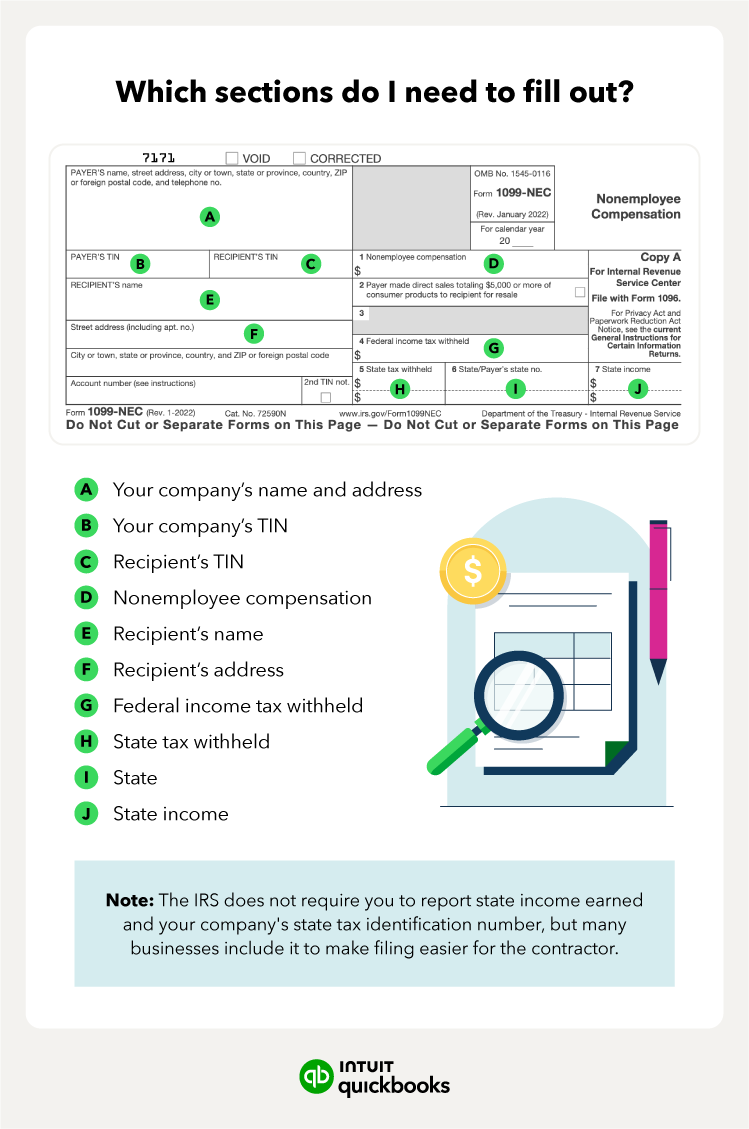
Prior to 2020, non-employee compensation was largely reported on Form 1099-MISC. However, the IRS reintroduced Form 1099-NEC (Nonemployee Compensation) specifically for this purpose. If you work as an independent contractor, freelancer, consultant, or provide services to a business without being an employee, and you earn $600 or more from a single client in a calendar year, that client is legally obligated to send you a 1099-NEC. This is perhaps the most common 1099 for individuals participating in the gig economy or running their own small service-based businesses.
For Rental Income & Diverse Payments: Form 1099-MISC
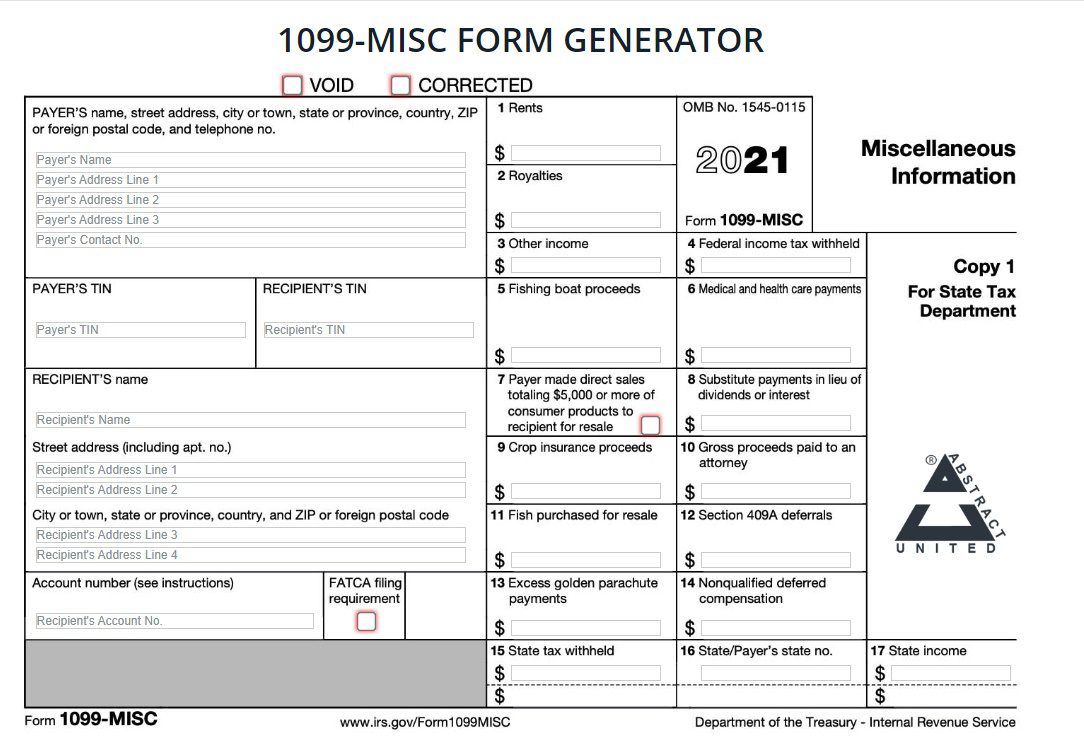
While 1099-NEC now handles nonemployee compensation, Form 1099-MISC (Miscellaneous Information) still reports a wide array of other payments. This includes rental income ($600 or more paid by a trade or business), prizes and awards, medical and health care payments, attorney fees, and payments to fish boat crew members. If you’re a landlord receiving rental payments from a business (e.g., a commercial tenant), or if you won a significant prize, expect a 1099-MISC from the payer.
For Investors: Forms 1099-INT and 1099-DIV
If you’re an investor, these forms will be familiar. Form 1099-INT reports interest income you’ve received, typically from banks, credit unions, and other financial institutions. The threshold for reporting is generally $10 or more. Form 1099-DIV reports dividends and distributions from stocks, mutual funds, and other investments, also usually with a $10 threshold. Your brokerage firm or the financial institution holding your investments is responsible for issuing these forms.
For Gig Workers & Online Sellers: Form 1099-K
With the rise of the gig economy and online marketplaces, Form 1099-K (Payment Card and Third Party Network Transactions) has become increasingly relevant. This form is issued by third-party payment networks (like PayPal, Stripe, Square, or platforms like Uber, Lyft, Etsy, eBay) if you meet certain thresholds. Historically, this was over 200 transactions AND an aggregate amount exceeding $20,000. However, new legislation has been enacted, reducing the threshold significantly to $600, regardless of the number of transactions, which was originally set to take effect for the 2023 tax year. This means many more casual sellers and gig workers will now receive a 1099-K. It’s crucial to monitor the current IRS guidance, as implementation dates for these lower thresholds have seen changes.
Other Specialized 1099 Forms You Might Encounter
Beyond these common forms, there are several other specialized 1099s:
- 1099-R: Distributions from pensions, annuities, retirement or profit-sharing plans, IRAs, insurance contracts, etc.
- 1099-B: Proceeds from broker and barter exchange transactions (e.g., stock sales).
- 1099-C: Cancellation of debt (e.g., if a lender forgives a loan amount).
- 1099-S: Proceeds from real estate transactions.
Understanding which forms apply to your financial activities helps you anticipate their arrival and ensures no income is overlooked.
The Timeline and Delivery: When and How to Expect Your 1099s
Knowing when and how to expect your 1099s is crucial for timely tax preparation. Most payers adhere to strict deadlines for issuing these forms, and understanding the delivery methods can help you track them effectively.
Key Deadlines for Issuers and Recipients

For most 1099 forms (including 1099-NEC, 1099-MISC with amounts in boxes 8 or 10, 1099-K, 1099-INT, 1099-DIV), the payer must furnish the form to you by January 31st of the year following the calendar year in which the income was paid. For example, income earned in 2023 should result in a 1099 delivered by January 31, 2024. Some forms, like 1099-B (Brokerage Transactions) and some 1099-MISC forms with specific reporting boxes, have a later deadline, typically February 15th. It’s always wise to mark your calendar and begin checking for these documents in early February.
Understanding Your Delivery Options: Mail vs. Electronic Consent
Most 1099s are delivered via postal mail to the last known address the payer has on file for you. However, many companies, especially financial institutions and online platforms, offer the option to receive your 1099s electronically. If you’ve opted for electronic delivery, you’ll typically receive an email notification when your form is available to download from your account on their website. This method is often faster and more secure, but you must have actively consented to receive electronic statements. It’s good practice to log into your various accounts around January to verify your delivery preferences and ensure your contact information is up to date.
What Information You’ll Find on Your 1099
Each 1099 form includes specific details essential for your tax return:
- Payer Information: The name, address, and Taxpayer Identification Number (TIN) of the entity that paid you.
- Recipient Information: Your name, address, and TIN (usually your Social Security Number or Employer Identification Number if you’re a business).
- Income Details: The specific box on the form indicates the type of income (e.g., Box 1 on a 1099-NEC for nonemployee compensation, Box 1a on a 1099-INT for interest income) and the dollar amount received.
- State Information: Some forms also include state income tax withheld or state identification numbers.
Reviewing this information for accuracy is crucial. Any errors should be promptly reported to the payer for correction.
Navigating Missing Forms: What to Do When Your 1099 Doesn’t Arrive
It’s common for a 1099 to occasionally get lost in the mail or for a payer to miss the deadline. If you’re expecting a 1099 and it hasn’t arrived by mid-February, don’t panic, but do take action. Remember, your tax obligation remains even without the physical form.
Your First Step: Proactive Communication with the Payer
The most effective initial step is to directly contact the payer. This could be your client, the bank, your brokerage, or the platform you used. Explain that you haven’t received your 1099 and request that they resend it. Be prepared to provide your name, address, and relevant account or client ID. Keep a record of your communication, including dates, names of individuals you spoke with, and any reference numbers. Sometimes, it’s a simple oversight or an incorrect address on file.
The Self-Reporting Imperative: Filing Without the Form
While having the official 1099 is helpful, you are absolutely required to report all your taxable income. If a payer is unresponsive or refuses to send the form, you must still report the income you earned. Use your own financial records – bank statements, invoices, payment logs, contracts – to accurately determine the amount of income received. When you file your taxes, you’ll report this income on the appropriate schedule (e.g., Schedule C for self-employment income from a 1099-NEC, Schedule B for interest/dividends). Indicate that you did not receive a 1099 when prompted by your tax software or preparer. The IRS is more concerned with you reporting the income than with you having the physical form itself.
Escalating to the IRS: When and How to Seek Assistance
If you’ve contacted the payer multiple times, waited a reasonable period, and still haven’t received your 1099, you can contact the IRS for assistance. You can do this by calling the IRS directly at 1-800-829-1040. Have your personal information (name, address, SSN, phone number) and the payer’s information (name, address, phone number, EIN if you have it) readily available, along with an estimate of the income you expect to be reported and the date you contacted the payer.
The IRS may then contact the payer on your behalf. Additionally, you can file Form 4852, Substitute for Form W-2, Wage and Tax Statement, or Form 1099-R, Distributions From Pensions, Annuities, Retirement or Profit-Sharing Plans, IRAs, Insurance Contracts, etc. While Form 4852 is primarily for W-2s, the IRS also advises using it as a substitute for a missing or incorrect Form 1099-R, and for other missing 1099 forms where you cannot obtain a corrected one after trying to do so. This form allows you to report your income and withholdings based on your best estimates.
Strategizing with Your 1099 Income: Tax Efficiency and Best Practices
Receiving a 1099 means you have a new level of financial responsibility and opportunity. Unlike W-2 employees, you have more control over your taxable income through deductions and are responsible for paying your own taxes. This requires proactive planning and diligent record-keeping.
Harnessing Deductions to Reduce Your Taxable Income
One of the significant advantages of 1099 income, particularly from self-employment, is the ability to deduct legitimate business expenses. These deductions can substantially reduce your taxable income, thereby lowering your overall tax liability. Common deductions for freelancers and independent contractors include:
- Home Office Deduction: If you use a part of your home exclusively and regularly for your business.
- Business Travel and Meals: Expenses related to client meetings or business trips.
- Software and Subscriptions: Tools essential for your work.
- Professional Development: Courses, certifications, and conferences.
- Health Insurance Premiums: If you’re self-employed and not eligible for an employer-sponsored plan.
- SEP IRA or Solo 401(k) Contributions: These retirement contributions can be significant deductions.
- Supplies and Equipment: Purchases necessary for your business operations.
Keeping meticulous records of all business-related expenses throughout the year is paramount to effectively claim these deductions.
Understanding Estimated Tax Payments for 1099 Earners
When you earn substantial income reported on a 1099, the IRS expects you to pay taxes on that income as you earn it, rather than waiting until the annual tax deadline. This is done through estimated tax payments, typically made quarterly (April 15, June 15, September 15, and January 15 of the following year). Failure to pay enough tax throughout the year can result in penalties. To calculate your estimated taxes, you’ll need to project your income and expenses for the year. It’s advisable to consult with a tax professional to help you accurately estimate and make these payments, especially in your first year of significant 1099 income.
The Critical Importance of Robust Record-Keeping
Effective record-keeping is the backbone of successful tax management for anyone receiving 1099 income. This goes beyond just tracking payments received. You should maintain detailed records of:
- All Income Sources: Who paid you, how much, and when.
- All Business Expenses: Receipts, invoices, bank statements, and a clear description of the business purpose.
- Mileage Logs: For business-related travel.
- Communication with Payers: Especially regarding missing or corrected 1099s.
- Proof of Estimated Tax Payments: Keep copies of your payment confirmations.
Digital tools, accounting software, and dedicated spreadsheets can greatly simplify this process. Organized records will not only save you stress during tax season but also serve as vital evidence in case of an IRS audit.
In conclusion, understanding “where can I get a 1099” is more than just locating a form; it’s about grasping your financial responsibilities, leveraging tax efficiencies, and proactively managing your non-employment income. By familiarizing yourself with the various 1099 forms, understanding the issuance deadlines, knowing how to address missing forms, and adopting smart financial habits, you can navigate the world of independent income with confidence and ensure your tax affairs are in impeccable order.
aViewFromTheCave is a participant in the Amazon Services LLC Associates Program, an affiliate advertising program designed to provide a means for sites to earn advertising fees by advertising and linking to Amazon.com. Amazon, the Amazon logo, AmazonSupply, and the AmazonSupply logo are trademarks of Amazon.com, Inc. or its affiliates. As an Amazon Associate we earn affiliate commissions from qualifying purchases.