
In an increasingly digitized world, the annual ritual of filing taxes has undergone a profound transformation, moving from stacks of paper and manual calculations to sophisticated digital platforms. At the heart of this shift lies tax software—a powerful technological solution designed to simplify, streamline, and demystify the complex process of tax preparation and submission. Far more than a mere calculator, modern tax software leverages advanced algorithms, robust data management, and intuitive user interfaces to empower individuals and businesses to navigate their fiscal responsibilities with unprecedented ease and accuracy. This article delves into the intricate workings of tax software, exploring its core functionalities, the technological innovations that drive its efficacy, and its indispensable role in the modern digital landscape.
The Digital Transformation of Tax Preparation
For generations, tax preparation was a formidable task, often requiring meticulous record-keeping, a deep understanding of ever-changing tax codes, and a significant investment of time. The advent of personal computing and, subsequently, the internet, paved the way for a digital revolution that fundamentally altered this landscape. Tax software emerged as a beacon of innovation, promising to democratize tax filing and make it accessible to everyone, regardless of their financial acumen or professional background.
From Ledgers to Algorithms: A Brief History
The journey from physical ledgers and manual calculations to today’s sophisticated tax software is a testament to technological progress. Early iterations of tax software, often disk-based, provided basic computation and form-filling capabilities. They were essentially digital worksheets that replicated paper forms, offering a marginal improvement in convenience. However, as computing power grew and internet connectivity became ubiquitous, these tools evolved rapidly.
Modern tax software harnesses complex algorithms and expansive databases that store vast amounts of tax law, regulations, and forms. This technological backbone allows the software to interpret user input, apply relevant rules, and generate accurate results, effectively encapsulating decades of tax expertise within a user-friendly application. The shift from static digital forms to dynamic, interactive platforms marks a significant leap, fundamentally changing how users interact with their financial data and the tax system.
The Fundamental Promise: Efficiency and Accuracy
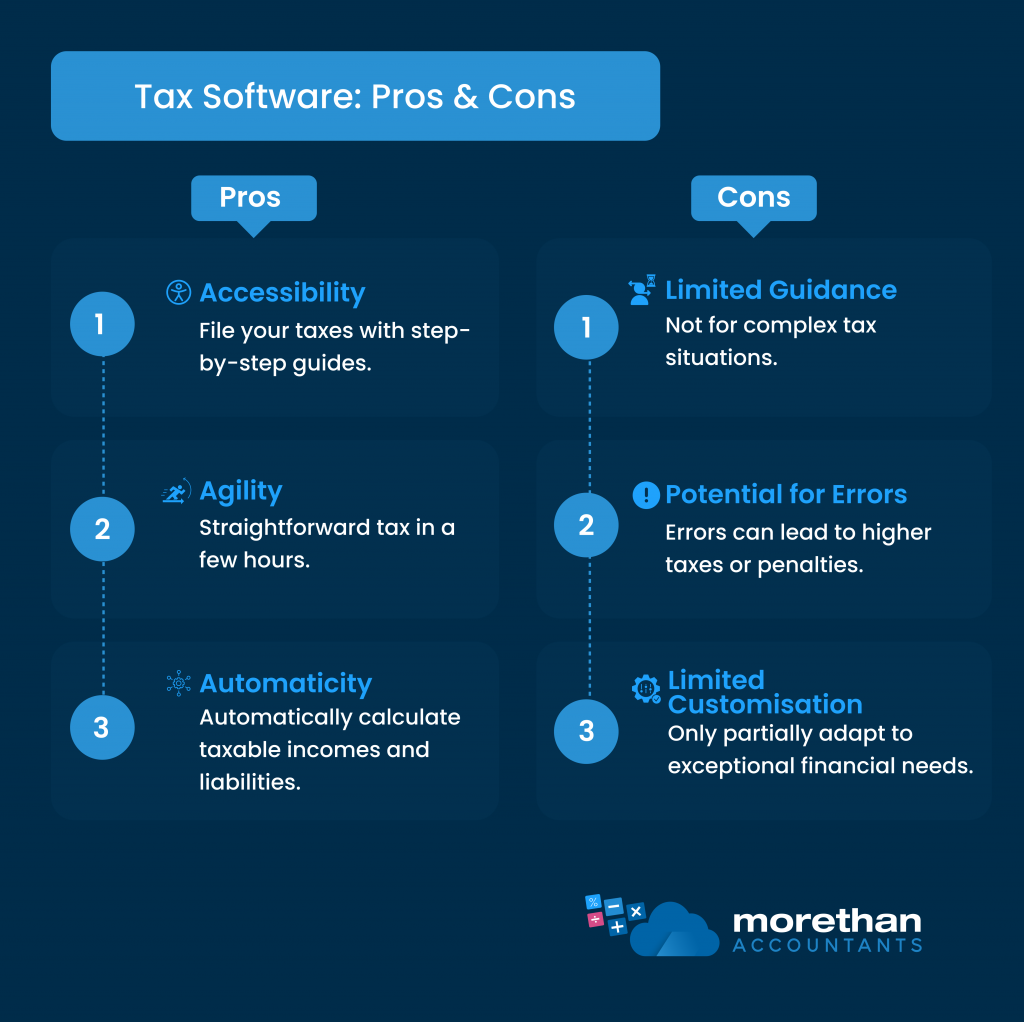
At its core, tax software offers two paramount promises: efficiency and accuracy. Manually preparing taxes is not only time-consuming but also prone to human error, which can lead to costly mistakes, missed deductions, or even penalties. Tax software addresses these challenges directly through its design and functionality.
Efficiency is delivered through automation. The software guides users step-by-step, automates calculations, populates forms, and integrates data from various sources, drastically reducing the time and effort required for preparation. What once took hours or even days can now often be completed in a fraction of the time.
Accuracy is maintained by embedding complex tax rules and regulations directly into the software’s logic. This ensures that calculations are precise and that all relevant laws are correctly applied. Furthermore, built-in validation checks flag potential errors, preventing common mistakes that might go unnoticed in a manual process. This dual promise of efficiency and accuracy underscores the profound impact of technology on a critical civic duty.
Core Technological Features and Functionalities
The true power of tax software lies in its robust set of technological features, each engineered to simplify a specific aspect of the tax preparation process. These functionalities work in concert to transform raw financial data into a complete and compliant tax return.
Data Input and Categorization Automation
One of the most tedious aspects of tax preparation is gathering and organizing financial documents. Modern tax software tackles this head-on with sophisticated data input mechanisms. Many platforms offer direct integration with banks, investment firms, and payroll providers, allowing users to automatically import transaction data, W-2s, 1099s, and other crucial documents. This eliminates the need for manual data entry, reducing both effort and the risk of transcription errors.
Beyond mere import, advanced software often employs machine learning algorithms to categorize expenses and income automatically. For instance, a transaction from a specific merchant might be instantly tagged as a business expense or a medical deduction based on historical data and user preferences. This intelligent categorization engine significantly speeds up the process and ensures that all relevant financial activities are properly accounted for, maximizing potential deductions and credits.
Intelligent Calculation Engines
The heart of any tax software is its calculation engine. This sophisticated system is responsible for applying the myriad of tax laws, rates, and rules to the user’s financial data. It’s not a simple calculator; rather, it’s an intricate network of conditional logic, cross-references, and up-to-date tax tables.
When a user enters income, expenses, or deductions, the engine instantaneously processes this information, determining its impact on their overall tax liability or refund. It can handle complex scenarios such as capital gains, depreciation, alternative minimum tax (AMT), and various business deductions, all while ensuring compliance with federal, state, and local regulations. This computational power eliminates the need for users to understand the nuances of tax formulas, effectively abstracting away the complexity of tax law into a user-friendly interface.
Form Generation and Pre-population
Once the calculations are complete, tax software automatically generates all the necessary official tax forms. This includes the primary federal forms (e.g., Form 1040) as well as any required schedules (e.g., Schedule A for itemized deductions, Schedule C for self-employment income) and state-specific forms. The software intelligently determines which forms are relevant based on the user’s input and then pre-populates them with the calculated data.
This automated form generation capability is a significant time-saver and a critical feature for ensuring compliance. Users no longer need to manually search for, print, and fill out dozens of different forms. The software ensures that all necessary fields are completed accurately and that the forms are presented in the correct format for submission.
Error Detection and Validation Systems
To further enhance accuracy, tax software incorporates robust error detection and validation systems. These systems function as a digital audit, scrutinizing the entered data and the generated forms for inconsistencies, omissions, and potential errors. For example, if a user enters a deduction amount that exceeds a legal limit, the software will flag it. If a required field is left blank, it will prompt the user to complete it.
Beyond simple error checking, some advanced systems perform logical validations. They might cross-reference entries across different forms to ensure consistency or compare current year data with prior year filings (if available) to identify unusual discrepancies that could indicate a mistake. This proactive error identification mechanism is invaluable in preventing costly mistakes, rejections by tax authorities, and potential audits.
Enhancing the User Experience Through Technology
Beyond its core computational features, tax software excels at making the daunting task of tax filing surprisingly approachable. This is largely due to advancements in user experience (UX) and interface design, which leverage technology to create an intuitive and supportive environment.
Intuitive Interfaces and Guided Workflows
Modern tax software prioritizes ease of use through thoughtfully designed interfaces and guided workflows. Instead of presenting users with a blank form, the software employs a question-and-answer format, breaking down complex tax concepts into simple, understandable queries. This conversational approach mimics the interaction with a professional tax preparer, guiding users through each section of their return step-by-step.
Visual cues, progress trackers, and clear navigational paths ensure that users always know where they are in the process and what still needs to be done. The design focuses on reducing cognitive load, making the entire experience less intimidating and more manageable for individuals without extensive tax knowledge.
Cloud-Based Accessibility and Mobile Integration
The shift to cloud-based architecture has dramatically expanded the accessibility and flexibility of tax software. Users can now access their tax returns from virtually anywhere, on any device with an internet connection. This means starting a return on a desktop computer, continuing it on a tablet during a commute, and finalizing it on a smartphone.
Mobile applications provide a streamlined experience, often optimized for smaller screens and touch interaction. They might include features like document scanning using a phone’s camera, allowing users to quickly upload receipts or W-2s without needing a separate scanner. This ubiquitous accessibility ensures that users can work on their taxes at their convenience, fitting the process seamlessly into their busy lives.
Personalized Support and AI-Driven Assistance
When users encounter questions or need clarification, tax software offers various levels of integrated support. This ranges from context-sensitive help buttons that provide instant explanations of specific tax terms or fields, to comprehensive knowledge bases and FAQs.
Increasingly, tax software incorporates AI-driven assistance, such as chatbots or virtual assistants. These tools can answer common questions, guide users to relevant sections, or even offer personalized advice based on their input. For more complex issues, many platforms offer direct access to tax professionals via chat, phone, or video call, integrating human expertise within the digital framework. This blend of automated and human support ensures that users receive timely and accurate help whenever needed.
Digital Security and Compliance Frameworks
Given the highly sensitive nature of financial data, the technological infrastructure of tax software places an immense emphasis on security and compliance. Protecting user information from cyber threats and ensuring adherence to ever-evolving regulations are non-negotiable aspects of its design.
Robust Encryption and Data Protection
Tax software employs state-of-the-art encryption protocols to safeguard user data both in transit and at rest. This typically involves advanced encryption standards (e.g., AES-256) for all data exchanged between the user’s device and the software’s servers, as well as for data stored in the cloud. These measures make it virtually impossible for unauthorized parties to intercept or decipher sensitive financial information such as Social Security numbers, bank account details, and income figures.
Beyond encryption, comprehensive data protection strategies include secure server environments, regular security audits, and strict access controls, ensuring that only authorized personnel can interact with the data under specific, monitored conditions.
Authentication Protocols and Fraud Prevention
To prevent unauthorized access to user accounts, tax software implements robust authentication protocols. This commonly includes multi-factor authentication (MFA), where users must provide two or more verification factors (e.g., a password and a code sent to their phone) to log in. This significantly enhances security beyond a simple password.
Fraud prevention mechanisms are also deeply embedded. The software may monitor for unusual login attempts, suspicious activity patterns, or changes to personal information, alerting users or even temporarily locking accounts if potential fraud is detected. These proactive measures are crucial in protecting users from identity theft and other cybercrimes.
Staying Current with Regulatory Updates
Tax laws are not static; they are subject to frequent changes, updates, and amendments at federal, state, and local levels. A critical technological function of tax software is its ability to adapt swiftly to these regulatory shifts. Software providers continuously monitor legislative changes and push out timely updates to their platforms.
This continuous update mechanism ensures that the software’s calculation engines, form templates, and legal interpretations are always aligned with the latest tax codes. Users benefit from this without needing to manually track changes or purchase new versions every year. The software provider bears the technical burden of regulatory compliance, offering users peace of mind that their returns will be accurate and compliant with the most current laws.
The Future Landscape: Emerging Technologies in Tax Software
The evolution of tax software is far from over. As technology continues to advance, new innovations are poised to further enhance its capabilities, making tax preparation even more intelligent, integrated, and perhaps, entirely seamless.
Artificial Intelligence and Machine Learning
The role of Artificial Intelligence (AI) and Machine Learning (ML) in tax software is set to expand dramatically. Beyond current categorization capabilities, AI could offer highly personalized tax planning advice by analyzing a user’s financial history, predicting future income, and suggesting proactive strategies to optimize their tax situation. ML algorithms could identify complex patterns in financial data that human eyes might miss, uncovering potential deductions or warning signs of audit risk. AI-driven systems could also automate more complex aspects of business tax preparation, such as expense classification for diverse industries or intricate depreciation schedules.
Blockchain for Transparency and Verification
While still nascent, blockchain technology holds intriguing potential for the future of tax software. Its distributed, immutable ledger system could offer unprecedented transparency and verifiable records for financial transactions. Imagine a system where all income, expenses, and asset transfers are recorded on a private or government-sanctioned blockchain. This could significantly simplify auditing, reduce fraud, and automatically verify deductions. Tax software could then integrate directly with these blockchain records, making data input and verification instantaneous and highly secure.

Advanced Integrations and Ecosystem Expansion
The trend towards deeper integration will continue, potentially moving beyond just bank accounts to encompass a broader financial ecosystem. This could include seamless links with smart home devices for energy-efficient deductions, integration with ride-sharing platforms for mileage tracking, or even direct feeds from gig economy platforms. The goal is to create a truly connected financial life where all relevant data automatically flows into the tax software, minimizing user effort. Furthermore, tax software could evolve into a comprehensive financial health platform, offering budgeting tools, investment insights, and retirement planning alongside tax preparation, all powered by integrated data and AI.
In conclusion, tax software is a sophisticated technological marvel that has fundamentally reshaped the way we approach our financial obligations. By combining intelligent algorithms, intuitive design, robust security measures, and continuous updates, it transforms a complex, often dreaded task into a manageable and efficient process. As emerging technologies like AI and blockchain continue to mature, the capabilities of tax software will only grow, promising an even more streamlined, intelligent, and integrated future for tax preparation. It stands as a prime example of how technology can empower individuals and businesses, simplifying complexity and fostering greater accuracy and peace of mind in the digital age.
aViewFromTheCave is a participant in the Amazon Services LLC Associates Program, an affiliate advertising program designed to provide a means for sites to earn advertising fees by advertising and linking to Amazon.com. Amazon, the Amazon logo, AmazonSupply, and the AmazonSupply logo are trademarks of Amazon.com, Inc. or its affiliates. As an Amazon Associate we earn affiliate commissions from qualifying purchases.