
In the vast and often complex world of finance, few terms resonate with the immediate recognition and historical weight as “the Dow.” It’s a phrase uttered daily in news broadcasts, financial reports, and casual conversations about the economy. Yet, despite its omnipresence, a common misconception persists: many believe “Dow” is an acronym. It isn’t. Instead, it’s a testament to the vision and legacy of one man, Charles Dow, and his partner, Edward Jones, who sought to bring clarity to the burgeoning American industrial landscape over a century ago.
The Dow, formally known as the Dow Jones Industrial Average (DJIA), is more than just a collection of letters or a random stock ticker. It is a benchmark, a narrative, and a psychological bellwether that, for many, represents the pulse of the American economy. Its daily fluctuations are scrutinized by investors, economists, and policymakers alike, serving as a quick snapshot of market sentiment and corporate health. To truly understand its significance within the realm of personal finance and global investing, one must delve into its origins, its composition, and its enduring, albeit debated, relevance in the modern financial ecosystem. This article will demystify the Dow, revealing its true identity, its historical evolution, and its critical role in shaping how we understand and engage with the world of money.
The Origin Story: Charles Dow and Edward Jones
The birth of the Dow Jones Industrial Average was not a spontaneous event but a deliberate innovation designed to address a pressing need for market transparency in a rapidly industrializing nation. At the close of the 19th century, the U.S. economy was undergoing profound transformations, with railroads expanding, manufacturing flourishing, and new industries emerging. Yet, for investors and the public, understanding the overall health and direction of the stock market was a daunting task, lacking a cohesive and easily digestible measure.
A Vision for Market Clarity
It was into this environment that Charles Henry Dow, a journalist and co-founder of Dow Jones & Company, stepped with a revolutionary idea. Along with his business partner, statistician Edward D. Jones, Dow recognized the need for a simple, arithmetic average that could track the performance of leading American companies. Their objective was not to create an investment vehicle, but rather a journalistic tool — a snapshot that would provide a clear indicator of market trends for the readers of their nascent financial publication, the Wall Street Journal.
Before the DJIA, discerning market trends was akin to trying to read a novel by only looking at random pages. Dow’s genius lay in simplifying this complexity, offering a concise summary that could inform and guide. He believed that by tracking a select group of representative stocks, one could gain insight into the broader economic landscape, much like a barometer indicates changes in weather patterns. This innovative approach laid the groundwork for modern index theory and measurement.
From Rails to Industrials: The Evolution of an Index
The very first index created by Dow and Jones was not the Industrial Average we know today, but rather the Dow Jones Railroad Average, launched in 1884. This index comprised just nine railroad companies, two industrial companies, and one utility. At the time, railroads were the titans of industry, representing the cutting edge of technological advancement and economic power. Their performance was a direct reflection of the nation’s economic arteries, dictating the flow of goods, people, and capital.
However, as the American economy diversified and manufacturing prowess grew beyond just transportation, Dow recognized the need for an index that better reflected the nation’s broader industrial might. This led to the creation of the Dow Jones Industrial Average on May 26, 1896. Initially consisting of just 12 prominent industrial companies, including names like General Electric, American Cotton Oil, and U.S. Leather, it marked a significant pivot. The new index aimed to capture the essence of a rapidly evolving economy, focusing on the heavy manufacturing and goods-producing sectors that were driving America’s economic engine. This evolution showcased Dow’s foresight, adapting his market indicators to remain relevant amidst dynamic economic shifts, a principle that continues to guide the index’s management to this day.
Deconstructing the Dow Jones Industrial Average (DJIA)
Understanding the Dow requires moving beyond its catchy name and diving into its unique methodology. Far from a simple list, the DJIA is a carefully curated and calculated financial instrument, though one with distinct characteristics that set it apart from other market indices.
Not an Acronym, but a Legacy
One of the most persistent misconceptions about the Dow is that it stands for something — an acronym for a governmental body, a financial term, or a sophisticated economic formula. The truth, as explored earlier, is much simpler and more personal: “Dow” refers directly to Charles Henry Dow, its co-creator. Similarly, “Jones” refers to Edward D. Jones. Their names are permanently etched into the index, signifying their pioneering contribution to financial journalism and market analysis. It is a testament to their legacy, not an abbreviation. This distinction is crucial for anyone seeking to deepen their financial literacy, as it grounds the index in its historical context rather than a generic technical term.
The “Industrial” Misnomer Today
When one hears “Industrial Average,” images of factories, smokestacks, and heavy machinery might spring to mind. While this accurately reflected the economic landscape of 1896, the modern DJIA has significantly broadened its scope. Today, the 30 companies that comprise the index represent a diverse array of sectors, extending far beyond traditional manufacturing. You’ll find technology giants, healthcare innovators, financial services powerhouses, and leading consumer brands alongside a few remaining industrial stalwarts.
Companies like Apple, Microsoft, UnitedHealth Group, Visa, and McDonald’s are all components of the current DJIA. Their inclusion underscores how the term “Industrial” has largely become a historical relic, retained out of tradition rather than as an accurate description of the index’s current composition. This evolution reflects the fundamental shift in the American economy from a manufacturing-centric model to one driven by technology, services, and global consumption. The Dow’s managers continually adjust its components to ensure it remains a relevant, though imperfect, barometer of the leading edges of U.S. corporate strength.
An Average, but Not a Simple One
The “Average” in Dow Jones Industrial Average also warrants closer examination. Unlike a typical arithmetic average where one simply sums values and divides by the count, the DJIA employs a more complex calculation: it is a price-weighted index. This means that stocks with higher share prices have a greater influence on the index’s movement than those with lower share prices, regardless of the company’s overall market capitalization (total value of outstanding shares). A one-dollar change in a high-priced stock will have a larger impact on the DJIA than a one-dollar change in a low-priced stock.
To maintain continuity and account for corporate actions like stock splits, mergers, or dividend payments, the sum of the 30 stock prices is divided by a special number known as the Dow Divisor. This divisor is adjusted whenever there’s a stock split or a change in the index’s components, ensuring that the index’s value is not artificially inflated or deflated by non-market-related events. For example, if a company in the Dow undergoes a 2-for-1 stock split, its share price would halve. Without adjusting the divisor, the Dow would instantly drop. The divisor is reduced to compensate for this, keeping the index’s historical continuity intact. This unique price-weighted methodology stands in contrast to most modern indices, such as the S&P 500, which are market-capitalization-weighted, meaning companies with larger total market values have a greater impact.
The Components: Who’s in the Club?
Membership in the Dow Jones Industrial Average is a prestigious affair, signaling a company’s status as a blue-chip leader in the American economy. However, the process of selection and maintenance is less about rigid rules and more about strategic judgment.
The Exclusive 30
At its core, the DJIA comprises exactly 30 large, publicly traded companies. These are often referred to as “blue-chip” stocks, signifying their long-standing reputation for stability, financial health, and leadership within their respective industries. The number 30 has been maintained for decades, providing a manageable yet purportedly representative cross-section of top-tier American corporations. This exclusivity is part of what gives the Dow its perceived authority and influence; these aren’t just any companies, but the perceived cream of the crop.
Selection Criteria and Influence
Unlike many other major indices that adhere to strict, quantitative rules (e.g., market capitalization minimums, liquidity requirements), the selection of companies for the DJIA is surprisingly qualitative and discretionary. The committee that manages the index, S&P Dow Jones Indices, looks for companies with an “excellent reputation, demonstrated sustained growth, and are of interest to a large number of investors.” They also strive for “adequate sector representation” of the broad U.S. market.
This discretionary approach means that decisions about who gets in or out can be influenced by subjective judgments about a company’s long-term prospects, its symbolic importance, and its ability to represent the changing face of the American economy. While this flexibility allows the Dow to adapt, it also sometimes leads to criticism regarding potential biases or a lack of transparent, objective criteria. However, the goal remains consistent: to ensure the index reflects leading companies that collectively provide a robust gauge of the U.S. stock market and broader economic trends.
Regular Rebalancing and Evolution
The list of 30 companies is not static. It evolves over time as the economy shifts, industries rise and fall, and corporate fortunes change. Companies are added and removed periodically to maintain the index’s relevance and reflective quality. These changes often make headlines, as an inclusion is seen as a badge of honor, while an exclusion can be perceived as a demotion for the company involved.
For example, when Apple was added to the Dow in 2015, it signaled the undeniable dominance of technology in the modern economy. Conversely, General Electric, one of the original 12 components from 1896, was removed in 2018 after years of underperformance, marking the end of an era. These adjustments, though infrequent, are critical for the Dow to continue serving its function as a bellwether, ensuring it doesn’t become an outdated snapshot of a bygone economic era. The constant re-evaluation of its components is a dynamic process that speaks to the ever-changing nature of the financial markets and the companies that drive them.
Why the Dow Matters: Significance and Limitations
The Dow Jones Industrial Average holds a unique place in the financial world, revered by some and critiqued by others. Its enduring presence stems from its historical significance and its ability to provide a simple, albeit limited, snapshot of market performance.
A Barometer of Economic Health
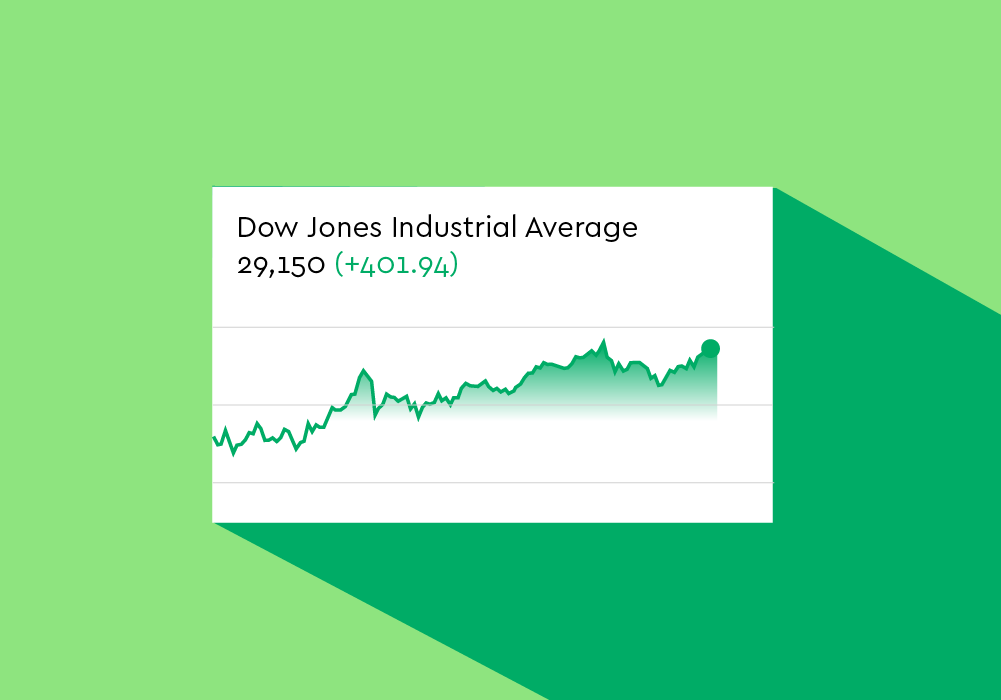
For over a century, the DJIA has served as a widely cited barometer of the U.S. stock market and, by extension, the broader American economy. Its daily movements are interpreted as indicators of investor confidence, corporate profitability, and the overall economic outlook. A rising Dow often suggests a healthy, growing economy, while a significant decline can signal recessionary fears or periods of uncertainty. This historical role has ingrained the Dow into the collective consciousness, making it a benchmark against which many people measure financial well-being. When the news reports “the market was up today,” they are often referring primarily to the Dow’s performance.
Simplicity and Media Impact
One of the Dow’s greatest strengths lies in its simplicity. As a single, easily digestible number, it is perfectly suited for quick media reporting. It’s the first market figure many people hear on their morning news, providing an immediate sense of the market’s direction. This ease of comprehension, coupled with its long history, gives the Dow immense psychological impact. Significant milestones, like “Dow 30,000,” capture public attention and often generate widespread optimism or concern. For the average individual, who may not be deeply entrenched in financial analysis, the Dow offers a straightforward way to gauge the general sentiment of the market.
Critiques and Alternative Perspectives
Despite its popularity, the DJIA is not without its critics, who point to several significant limitations:
- Limited Representation: With only 30 companies, the Dow is far from a comprehensive representation of the thousands of publicly traded companies in the U.S. economy. It excludes many important small-cap and mid-cap companies, as well as a vast number of growing industries. This narrow scope can lead to a skewed perspective of overall market health.
- Price-Weighted Bias: As a price-weighted index, the Dow gives greater influence to companies with higher share prices, regardless of their actual market capitalization. This means that a stock with a high price but a relatively smaller overall company value can impact the index more than a significantly larger company with a lower share price. This is often seen as a distortion compared to market-cap weighted indices like the S&P 500, which better reflect the true economic size of companies.
- “Industrial” Misnomer: As discussed, the name “Industrial” no longer accurately reflects the diverse composition of the index, which now includes a broad range of sectors. This can be misleading for those seeking to understand specific industrial performance.
For these reasons, many financial professionals and institutional investors prefer other, broader indices like the S&P 500 (which tracks 500 large-cap U.S. companies and is market-cap weighted) or the Russell 2000 (which tracks 2,000 small-cap U.S. companies) as more accurate gauges of the overall market. While the Dow provides a historical and easily understood snapshot, it should rarely be the sole metric used for in-depth financial analysis or investment decisions.
Investing in the Dow: Practical Applications
For individuals interested in personal finance and investing, understanding the Dow is not just an academic exercise; it has practical implications, even if direct investment in “the Dow” itself isn’t straightforward.
Index Funds and ETFs
You cannot directly “buy the Dow.” However, investors can gain exposure to the companies within the Dow Jones Industrial Average through various financial products, primarily index funds and Exchange Traded Funds (ETFs). These investment vehicles are designed to track the performance of the DJIA by holding shares in the same 30 companies, often in the same proportions (or adjusted to reflect market cap weighting in some cases, although pure price-weighted ETFs exist).
Investing in a Dow-tracking ETF or index fund allows individuals to diversify their portfolio across these 30 blue-chip companies without having to purchase each stock individually. This offers a convenient way to participate in the performance of some of America’s largest and most established corporations, aligning with strategies for long-term growth and stability often sought by prudent investors.

Understanding Volatility and Trends
Observing the Dow’s daily movements, historical trends, and significant milestones can also serve as an educational tool for investors. It helps in understanding market volatility, the impact of economic news, and the broader cycles of booms and busts. While it’s crucial not to make investment decisions based solely on the Dow’s performance due to its limitations, understanding its movements can offer insights into general market sentiment.
For instance, prolonged periods of upward movement in the Dow might indicate strong corporate earnings and economic expansion, signaling a potentially favorable environment for equity investments. Conversely, sharp declines could signal economic headwinds or market corrections, prompting investors to re-evaluate their risk exposure. The Dow, therefore, serves as a prominent piece of the larger financial puzzle, one among many indicators that savvy investors consider when navigating their personal financial journeys and making informed investment choices.
The Dow Jones Industrial Average, far from being a cryptic acronym, is a monumental legacy, a tribute to the pioneering work of Charles Dow and Edward Jones. It stands as a testament to their vision of bringing clarity and understanding to the often-opaque world of financial markets. While its “Industrial” moniker may no longer accurately reflect its diverse composition, and its price-weighted methodology invites criticism from purists, its historical significance and widespread recognition remain undeniable.
For the average individual navigating personal finance and investing, the Dow is a readily available, high-profile indicator that provides an immediate, if limited, snapshot of the market’s sentiment and the health of America’s leading corporations. It’s a reminder that even in an age of complex algorithms and vast data sets, sometimes the most enduring tools are those built on simple, foundational principles. Understanding what Dow stands for – a name, a legacy, and a persistent gauge of economic progress – is a fundamental step in grasping the dynamics of the money world and making informed decisions for one’s financial future.
aViewFromTheCave is a participant in the Amazon Services LLC Associates Program, an affiliate advertising program designed to provide a means for sites to earn advertising fees by advertising and linking to Amazon.com. Amazon, the Amazon logo, AmazonSupply, and the AmazonSupply logo are trademarks of Amazon.com, Inc. or its affiliates. As an Amazon Associate we earn affiliate commissions from qualifying purchases.