
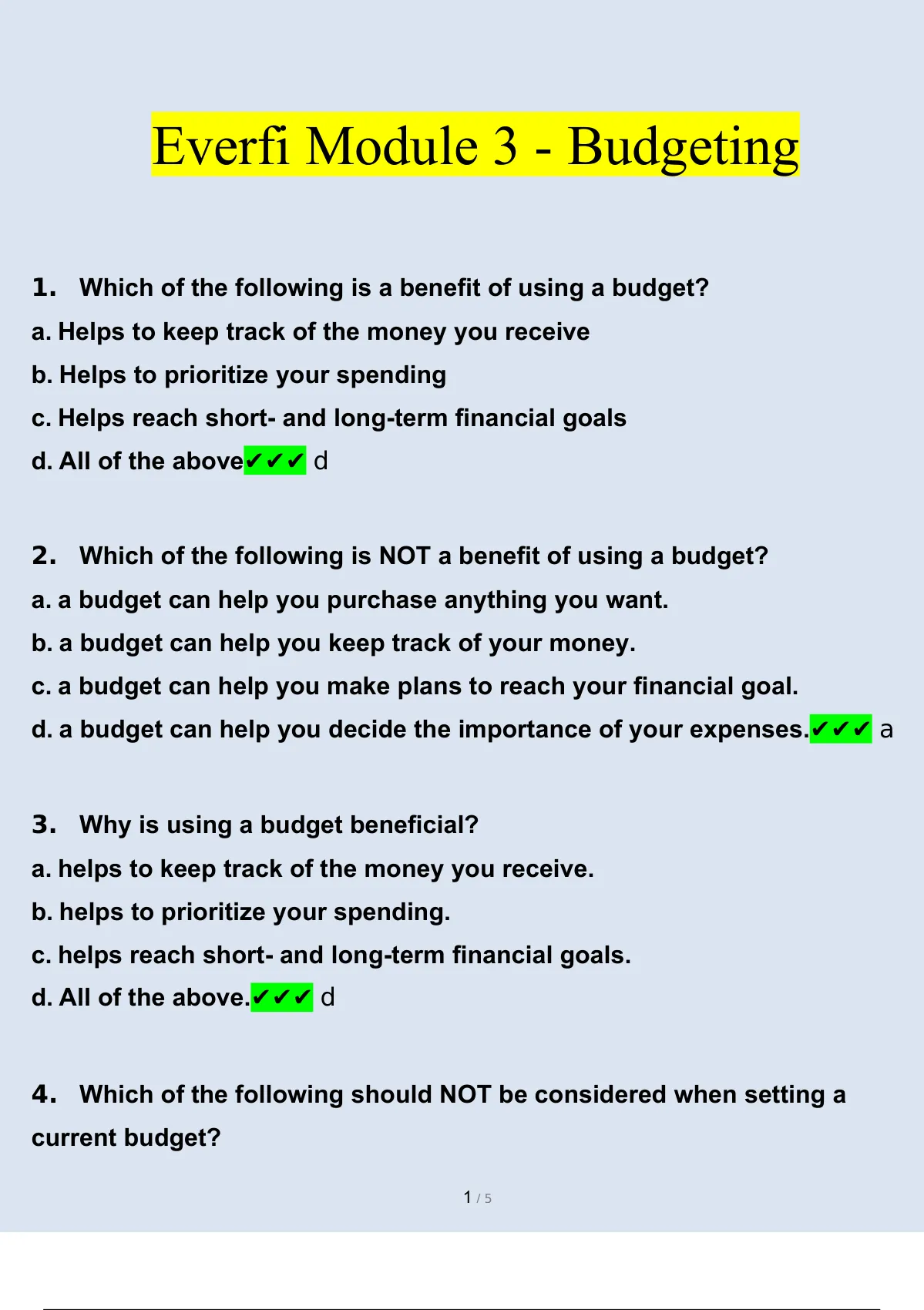
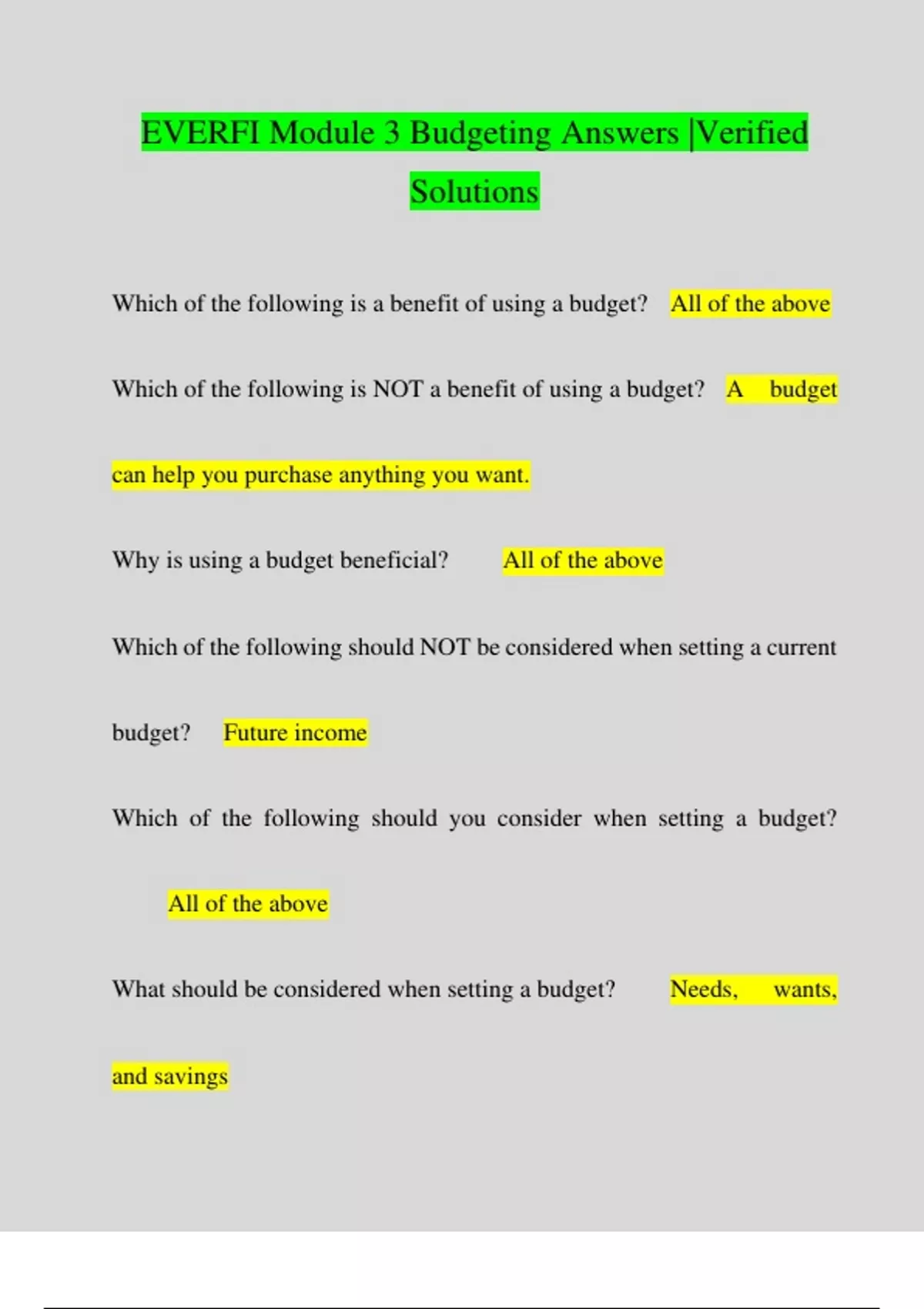
In an increasingly complex financial landscape, the concept of a budget often evokes images of restriction, tedious spreadsheets, and deprivation. However, this perception couldn’t be further from the truth. A budget is, in essence, a strategic financial roadmap – a powerful tool that, when properly utilized, transforms your relationship with money from one of passive reaction to proactive control. As educational platforms like Everfi continue to champion financial literacy, understanding the multifaceted benefits of budgeting becomes not just a recommendation, but a cornerstone of personal empowerment and long-term security. Far from limiting your life, a well-crafted budget expands your possibilities, alleviates stress, and propels you towards your most ambitious financial aspirations. It demystifies where your money goes, reveals opportunities for growth, and establishes a clear pathway to achieving true financial freedom.

The Essential Blueprint for Financial Clarity and Control
At its core, a budget is a detailed plan for how you will spend and save your money. It’s a systematic overview of your income and expenses over a specific period, typically a month. This fundamental practice provides unparalleled clarity, serving as the bedrock upon which all sound financial decisions are built. Without this blueprint, managing money often feels like navigating a dense fog, making it impossible to see where you’re going or even where you are.
Demystifying Your Income and Expenses
Many individuals operate under a vague notion of their financial situation, often surprised by the balance in their bank account at the end of the month. A budget forces you to confront the reality of your finances by meticulously tracking every dollar earned and every dollar spent. This process isn’t about judgment; it’s about understanding. You’ll gain a clear picture of your net income, identify all fixed expenses (like rent/mortgage, loan payments, insurance premiums) and variable expenses (like groceries, entertainment, utilities), and recognize the exact delta between the two. This level of granular detail illuminates potential leaks in your financial pipeline that might otherwise go unnoticed.
Moving Beyond Guesswork to Informed Decisions
Once you have a clear understanding of your income and expenses, you move from guesswork to informed decision-making. Instead of wondering if you can afford a new purchase, you’ll know. Instead of hoping you have enough for bills, you’ll have allocated the funds in advance. This foresight allows you to make conscious choices about your spending, aligning it with your priorities rather than being dictated by impulse or scarcity. You gain the power to say ‘yes’ to what truly matters and ‘no’ to what doesn’t, all with a clear conscience and a secure financial outlook. It transforms your financial life from a series of reactive choices into a deliberate, strategic endeavor.
The Everfi Approach to Financial Education Basics
Educational initiatives, particularly those championed by organizations like Everfi, highlight the critical importance of mastering these basic budgeting skills early on. Everfi’s curriculum, often utilized in schools and communities, breaks down complex financial concepts into digestible lessons, emphasizing that budgeting is not an advanced mathematical exercise but a practical life skill accessible to everyone. By teaching individuals how to set up and maintain a budget, Everfi empowers them with the foundational knowledge needed to navigate their finances effectively, fostering a generation that is financially literate and confident in their money management abilities from the outset.
Paving the Path to Your Financial Aspirations
Beyond mere control, a budget is an incredibly potent tool for achieving your personal financial goals, no matter how ambitious they may seem. Without a budget, goals remain abstract desires. With one, they transform into actionable steps, each dollar playing a role in their realization.
From Dreams to Tangible Savings Goals
Do you dream of buying a home, traveling the world, starting a business, or simply building a robust savings account? A budget provides the framework to turn these dreams into tangible savings goals. By identifying your discretionary income, you can allocate specific amounts each month towards these objectives. You might designate $200 for your down payment fund, $50 for your vacation fund, and $100 for a new investment account. This intentional allocation ensures that your money is working towards your future, rather than simply disappearing into everyday spending. Each contribution becomes a measurable step forward, offering motivation and a clear sense of progress.
Accelerating Debt Repayment
One of the most common and liberating financial goals is becoming debt-free. Whether it’s credit card debt, student loans, or an auto loan, carrying debt can be a significant burden. A budget allows you to aggressively tackle debt by identifying surplus funds that can be applied to principal payments. Strategies like the “debt snowball” or “debt avalanche” rely heavily on accurate budgeting to free up extra cash and direct it strategically towards specific debts. By systematically allocating more than the minimum payments, you can significantly reduce interest paid and shorten the repayment period, liberating future income for other goals.
Funding Major Life Milestones (e.g., Home, Education, Retirement)
Major life milestones – such as purchasing a first home, funding higher education, or securing a comfortable retirement – require substantial capital and long-term planning. A budget is indispensable for these grander ambitions. It enables you to forecast future financial needs, calculate how much you need to save periodically, and identify areas where you can optimize spending to accelerate contributions to these critical funds. For retirement, for example, a budget helps you determine how much you can realistically contribute to a 401(k) or IRA each month, allowing you to take full advantage of compounding interest over decades. For education, it means setting up a dedicated 529 plan and consistently funding it. These milestones, while daunting, become achievable when broken down into manageable, budgeted steps.
Cultivating Financial Resilience and Peace of Mind
Perhaps one of the most underestimated benefits of budgeting is the profound sense of security and tranquility it brings. Financial uncertainty is a leading cause of stress, but a well-managed budget acts as a powerful antidote, fostering resilience and peace of mind.
Building an Emergency Fund: Your Financial Safety Net
Life is unpredictable, and unexpected expenses are inevitable. A job loss, a medical emergency, or an unforeseen car repair can quickly derail even the most carefully laid plans if you’re not prepared. A budget prioritizes the creation and maintenance of an emergency fund – a dedicated savings account holding three to six months’ worth of living expenses. By consistently allocating a portion of your income to this fund, you build a critical financial safety net. This fund acts as a buffer, preventing you from going into debt or having to liquidate investments when life throws a curveball. It’s the ultimate form of self-insurance.
Navigating Unexpected Expenses with Confidence
When you have a robust emergency fund and a clear understanding of your finances through budgeting, unexpected expenses no longer trigger panic. Instead, they become manageable inconveniences. You have a plan in place, and the funds readily available to address them without compromising your other financial goals or incurring high-interest debt. This capability is liberating, allowing you to face life’s uncertainties with a calm and confident demeanor, knowing that you have the resources to weather financial storms.
Reducing Financial Stress and Improving Well-being
The psychological burden of financial worry is immense. Constant concern about bills, debt, and future security can lead to sleepless nights, relationship strain, and overall diminished well-being. A budget directly addresses these stressors by providing clarity, control, and a sense of preparedness. When you know where your money is going, when bills are due, and that you have a buffer for emergencies, a significant weight is lifted. This reduction in financial stress translates directly into improved mental and emotional health, allowing you to focus your energy on other aspects of your life that bring joy and fulfillment, rather than constant anxiety. It empowers you to live more fully in the present, secure in the knowledge that your financial future is being proactively managed.
Optimizing Spending Habits and Maximizing Your Resources
A budget isn’t just about setting limits; it’s about optimizing your resources and making conscious choices that align with your values. It provides invaluable insights into your spending habits, allowing you to identify areas for improvement and reallocate funds more effectively.
Uncovering Hidden Spending Patterns
Many people are unaware of where a significant portion of their money actually goes. Those seemingly small, daily expenditures – the morning coffee, the impulse online purchase, the forgotten subscription – can collectively amount to a substantial sum over a month or year. A budget, especially when meticulously tracked, brings these “leakages” to light. You might discover you spend more on dining out than you realized, or that you’re paying for streaming services you rarely use. This awareness is the first crucial step toward making intentional changes. Without knowing your patterns, you cannot change them.
Differentiating Needs from Wants
One of the most powerful exercises a budget facilitates is the clear differentiation between needs and wants. Needs are essential for survival and basic living (housing, food, utilities, transportation to work, basic clothing). Wants are discretionary items that enhance your life but are not strictly necessary (entertainment, eating out, premium subscriptions, designer clothes, luxury vacations). By categorizing your spending, you gain perspective. This doesn’t mean eliminating all wants; rather, it means consciously deciding which wants bring you the most value and adjusting your spending accordingly. It’s about mindful consumption, ensuring your money is allocated to things that genuinely improve your quality of life.
Strategies for Smart Saving and Conscious Consumption
Armed with the knowledge of your spending habits and a clear distinction between needs and wants, you can implement strategies for smart saving and more conscious consumption. This might involve setting spending limits for specific categories, seeking out better deals on recurring expenses, or simply pausing before making an impulse purchase to consider its true value. For example, if your budget reveals excessive spending on takeout, you might allocate more to groceries and meal prepping, saving money and potentially eating healthier. By directing funds away from less impactful expenditures and towards savings or high-value wants, you effectively maximize the utility of every dollar you earn. This deliberate approach ensures your money is working harder for you, reflecting your priorities and propelling you closer to your financial objectives.
Empowering a Lifetime of Prudent Financial Management
Budgeting is not a one-time task; it’s an ongoing practice that evolves with your life. The skills and discipline developed through consistent budgeting are invaluable, laying the groundwork for a lifetime of prudent financial management and sustained wealth accumulation.
Establishing Long-Term Financial Habits
Regular budgeting instills crucial financial habits: discipline, delayed gratification, careful planning, and consistent saving. These habits extend beyond the confines of a monthly spreadsheet, influencing every financial decision you make. You become more discerning about purchases, more proactive in saving for the future, and more resilient in the face of financial challenges. These are not merely skills; they are character traits that contribute to overall personal success and well-being. By making budgeting a routine, you cement a foundation of financial wisdom that will serve you throughout your life.
The Link Between Budgeting and Wealth Accumulation
The path to wealth accumulation is rarely accidental; it’s almost always a result of intentional saving, smart investing, and diligent money management – all of which are anchored by a solid budget. A budget frees up capital that can be invested, allowing you to take advantage of compounding returns. It helps you identify opportunities to increase your income or reduce expenses, directly impacting your ability to save more. Without a budget, it’s easy for your money to slip through your fingers, leaving little left to invest. With one, you proactively build a surplus that can be deployed to build assets and grow your net worth over time. It transforms your finances from a static entity into a dynamic engine for wealth creation.
Continuously Adapting Your Budget for Life Changes
Life is a journey filled with changes: new jobs, marriage, starting a family, purchasing a home, career changes, or retirement. Each of these significant life events has a profound impact on your financial situation, altering your income, expenses, and financial goals. A truly effective budget is not rigid; it’s a living document that you revisit and adapt regularly. Quarterly reviews, or immediate adjustments after a major life event, ensure your budget remains relevant, accurate, and aligned with your current circumstances and evolving aspirations. This flexibility is key to its longevity and effectiveness, allowing you to maintain control and progress regardless of what life brings your way.
In conclusion, “what can a budget help you do?” is a question with a truly transformative answer. It helps you gain clarity, achieve goals, reduce stress, optimize spending, and build a secure future. Far from being a restrictive chore, a budget is an empowering financial GPS, guiding you through the complexities of personal finance towards a destination of stability, growth, and peace of mind. As advocated by financial literacy initiatives like Everfi, embracing the power of budgeting is not merely a smart choice; it’s an essential step towards unlocking your full financial potential and living a more intentional, secure, and fulfilling life.
aViewFromTheCave is a participant in the Amazon Services LLC Associates Program, an affiliate advertising program designed to provide a means for sites to earn advertising fees by advertising and linking to Amazon.com. Amazon, the Amazon logo, AmazonSupply, and the AmazonSupply logo are trademarks of Amazon.com, Inc. or its affiliates. As an Amazon Associate we earn affiliate commissions from qualifying purchases.