
In the realm of finance, numbers are the primary language of success, but raw data rarely tells the whole story. Whether you are tracking the performance of a stock portfolio, assessing the health of a small business, or managing a household budget, the ability to calculate a percentage increase is one of the most vital skills in your financial toolkit. A percentage increase provides context, transforming a simple change in dollar value into a measurable rate of growth. Understanding how to find out the increase in percentage allows you to compare different assets on an equal playing field and make informed, data-driven decisions about where to allocate your capital.
Understanding the Fundamentals of Percentage Increase in Finance
Before diving into complex investment portfolios or corporate balance sheets, one must master the basic mechanics of the percentage increase formula. In financial terms, a percentage increase represents the relative change between an initial value and a final value. It answers the fundamental question: “By what fraction of the original amount did my wealth or revenue grow?”
The Core Formula: New vs. Old
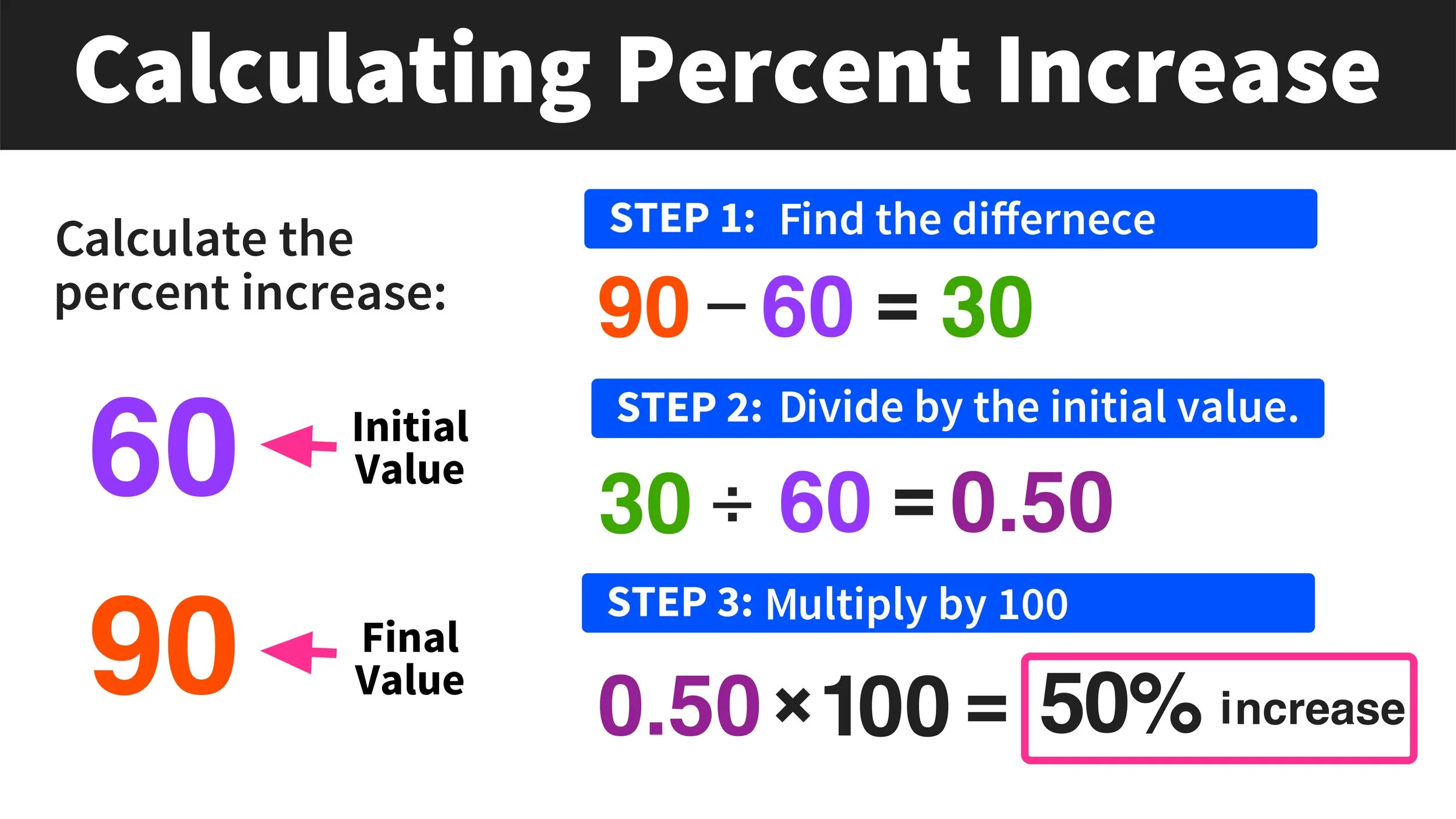
The mathematical foundation for calculating a percentage increase is straightforward, yet its implications are profound. The formula is:
((New Value – Old Value) / Old Value) × 100 = Percentage Increase
To apply this to a financial scenario, imagine you purchased a share of a company for $150 (the Old Value) and its price has risen to $180 (the New Value). First, you find the absolute difference ($180 – $150 = $30). You then divide that growth by the original investment ($30 / $150 = 0.2). Finally, multiply by 100 to arrive at a 20% increase. This simple calculation allows an investor to see that they have gained 20 cents for every dollar they originally risked.
Real-World Applications in Budgeting and Savings
For personal finance enthusiasts, calculating percentage increases is essential for monitoring lifestyle inflation and savings goals. If your monthly grocery bill was $400 last year and has climbed to $460 today, applying the formula reveals a 15% increase in expenses. By identifying these percentages, you can determine if your salary increases—often expressed in percentages—are keeping pace with your rising costs.
Furthermore, when evaluating high-yield savings accounts, understanding how your balance increases over time helps in visualizing the velocity of your wealth accumulation. If a side hustle increased your monthly income from $500 to $750, recognizing that as a 50% increase provides a much stronger psychological boost and strategic benchmark than simply noting a $250 gain.
Analyzing Investment Performance: Using Percentage Growth to Track Portfolio Success
In the world of investing, the absolute dollar gain is often a “vanity metric.” A $1,000 profit is impressive if you invested $2,000, but it is negligible if you invested $1,000,000. This is why professional investors rely almost exclusively on percentage increases to measure efficacy.
Calculating Return on Investment (ROI)
Return on Investment, or ROI, is perhaps the most famous application of the percentage increase formula. It serves as the universal yardstick for comparing the efficiency of different investments. Whether you are flipping real estate, buying Bitcoin, or funding a startup, the percentage increase tells you how hard your money is working for you.
When calculating ROI, it is important to include all costs associated with the “Old Value.” For example, if you buy a rental property for $200,000 but spend $20,000 on renovations, your true “Old Value” or cost basis is $220,000. If you later sell the property for $275,000, your percentage increase (ROI) is calculated based on the total capital deployed. This nuanced approach ensures that your percentage calculations reflect the actual profitability of your financial maneuvers.
The Impact of Compound Interest and Reinvesting
One of the most powerful concepts in money management is the “percentage on a percentage,” better known as compound interest. When your investment increases by 10% in the first year, and you reinvest those gains, the 10% increase in the second year is calculated on a larger base.
By tracking the percentage increase of a portfolio annually, investors can observe the “snowball effect.” A portfolio that grows by a consistent percentage each year will eventually see its absolute dollar gains explode. Understanding how to calculate these year-over-year increases helps investors stay disciplined during market fluctuations, focusing on long-term percentage trends rather than daily price volatility.
Business Financial Analysis: Measuring Revenue and Profitability Gains
For business owners and corporate executives, finding the percentage increase is the key to identifying trends, setting targets, and reporting to stakeholders. It is the primary method used to communicate growth to the market.
Year-over-Year (YoY) Growth Metrics
In business finance, “Year-over-Year” (YoY) growth is the standard for evaluating performance. By comparing the revenue of the first quarter of this year to the first quarter of last year, a business can account for seasonal fluctuations.
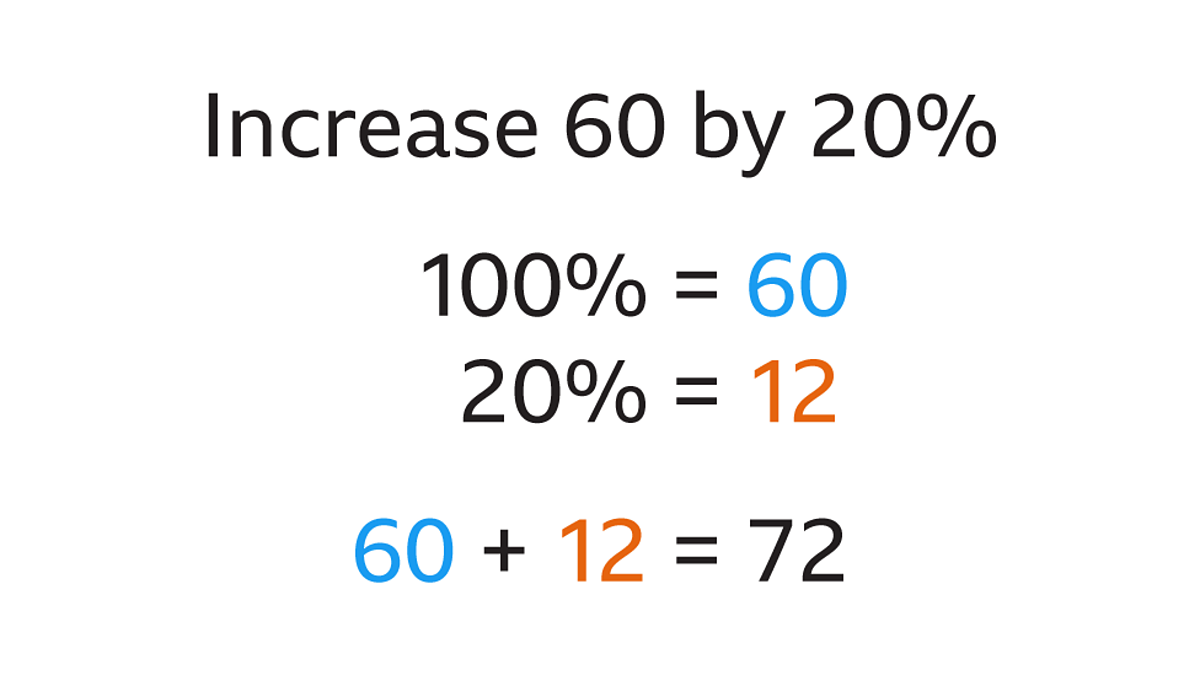
If a retail business earned $1 million in December 2022 and $1.2 million in December 2023, it saw a 20% YoY increase. This percentage is a vital KPI (Key Performance Indicator). It tells management whether the business is expanding, stagnating, or contracting. Investors look for consistent percentage increases in revenue as a sign of a healthy, scalable business model. Without calculating the percentage, it is difficult to tell if a “record-breaking” sales month is actually a significant improvement or just a marginal gain in line with inflation.
Margin Expansion and Cost Reduction Percentages
Beyond top-line revenue, percentage increases are used to analyze “margin expansion.” This occurs when a company’s profit grows at a faster rate than its expenses. For instance, if a company increases its production cost by 5% but manages to increase its sales price by 10%, the resulting percentage increase in net profit can be substantial.
Monitoring the percentage increase in costs is equally vital. If the price of raw materials increases by 12% in a single quarter, a business must decide whether to absorb that cost or increase their own prices by a corresponding percentage to maintain their margins. Being able to quickly calculate these shifts allows for agile decision-making in a competitive market.
Navigating Economic Shifts: Percentage Increases in Inflation and Cost of Living
On a macro level, the percentage increase is the primary tool used by economists and central banks to measure the health of the economy. For the individual, these percentages dictate purchasing power and retirement readiness.
How the Consumer Price Index (CPI) Affects Your Purchasing Power
Inflation is essentially the percentage increase in the average price of a basket of goods and services over time. When you hear that inflation is at 5%, it means that, on average, the “Old Value” of goods has increased by that percentage.
Understanding how to find out the increase in percentage helps you realize that if your annual salary increase is only 3% while inflation is at 5%, you have actually experienced a 2% “real” decrease in your purchasing power. This realization is crucial for negotiations during performance reviews. Armed with the math of percentage increases, you can argue for a raise that not only rewards performance but also maintains your standard of living against the backdrop of economic shifts.
Adjusting Financial Goals for Inflationary Trends
Long-term financial planning requires a deep understanding of projected percentage increases. When calculating how much you need for retirement in thirty years, you cannot use today’s dollar values. Financial tools and calculators use an assumed annual percentage increase in the cost of living to project future needs. By mastering these calculations, you can better understand why a $1 million retirement fund today might only have the purchasing power of $400,000 in several decades, necessitating a more aggressive savings percentage today.
Advanced Tools and Techniques for Financial Percentages
While the manual formula is essential for understanding the logic, modern financial management often requires handling vast amounts of data. Using technology to automate these calculations ensures accuracy and efficiency.
Automating Calculations with Spreadsheet Software
In programs like Microsoft Excel or Google Sheets, finding the percentage increase is a foundational task. To calculate the increase between cell A1 (Old Value) and B1 (New Value), you would use the formula: =(B1-A1)/A1.
By formatting the result as a “Percentage,” the software handles the multiplication by 100 for you. This allows financial analysts to track thousands of data points—such as daily stock price changes or inventory cost shifts—simultaneously. Setting up automated dashboards that highlight percentage increases in red or green based on performance can provide a real-time “heartbeat” of your financial health.

Avoiding Common Pitfalls in Percentage Interpretation
One must be cautious when interpreting percentage increases, particularly regarding the “Base Effect.” A common trap in finance is forgetting that a percentage increase and a percentage decrease are not symmetrical when applied to the same value.
For example, if a stock portfolio drops by 50%, it requires a 100% increase just to get back to the original starting point. If you start with $100 and lose 50%, you have $50. To get back to $100, that $50 must increase by $50—which is a 100% increase of the current balance. This is why protecting against large percentage losses is often more important in wealth management than chasing large percentage gains. Understanding this mathematical nuance is what separates sophisticated investors from amateurs.
In conclusion, the ability to find out the increase in percentage is more than just a math exercise; it is a fundamental pillar of financial literacy. From the micro-adjustments of a household budget to the macro-analysis of global markets, the percentage increase formula provides the clarity needed to measure growth, compare opportunities, and protect one’s purchasing power in an ever-changing economic landscape. By mastering this simple yet powerful tool, you gain the insight necessary to navigate the complexities of money with confidence and precision.
aViewFromTheCave is a participant in the Amazon Services LLC Associates Program, an affiliate advertising program designed to provide a means for sites to earn advertising fees by advertising and linking to Amazon.com. Amazon, the Amazon logo, AmazonSupply, and the AmazonSupply logo are trademarks of Amazon.com, Inc. or its affiliates. As an Amazon Associate we earn affiliate commissions from qualifying purchases.