
In the vast and ever-evolving landscape of Silicon Valley, few names command as much recognition and influence as Alphabet Inc. More than just a corporate name, Alphabet represents a monumental strategic evolution that restructured one of the world’s most ubiquitous companies, Google. To truly understand “what is the Alphabet company,” one must look beyond the familiar search engine and delve into a complex, visionary ecosystem designed to foster innovation, manage diverse technological ventures, and ultimately, shape the future of computing, artificial intelligence, and beyond.
Alphabet Inc. is a multinational technology conglomerate, headquartered in Mountain View, California. It was created on October 2, 2015, as the parent company of Google and several former Google subsidiaries. The primary architects of this restructuring, Larry Page and Sergey Brin, the founders of Google, envisioned Alphabet as a means to streamline Google’s massive operations, provide greater transparency for its diverse ventures, and allow its more speculative, ambitious projects—dubbed “Other Bets”—to develop with distinct management and resources. Essentially, Alphabet acts as a holding company, empowering its various subsidiaries to pursue their respective missions under a unified, yet decentralized, corporate umbrella. This strategic move was not merely a cosmetic rebrand but a fundamental shift in how one of the world’s most significant technology companies would operate and innovate.

The Genesis of Alphabet: A Strategic Evolution
The formation of Alphabet Inc. marked a pivotal moment in the history of Google. Before 2015, Google had grown into an immense, somewhat unwieldy entity, encompassing everything from its core search and advertising businesses to nascent ventures in self-driving cars, smart home devices, and life sciences. This sprawling structure, while a testament to Google’s ambition, began to present challenges in terms of focus, resource allocation, and investor understanding.
From Google to Alphabet: A Corporate Restructuring
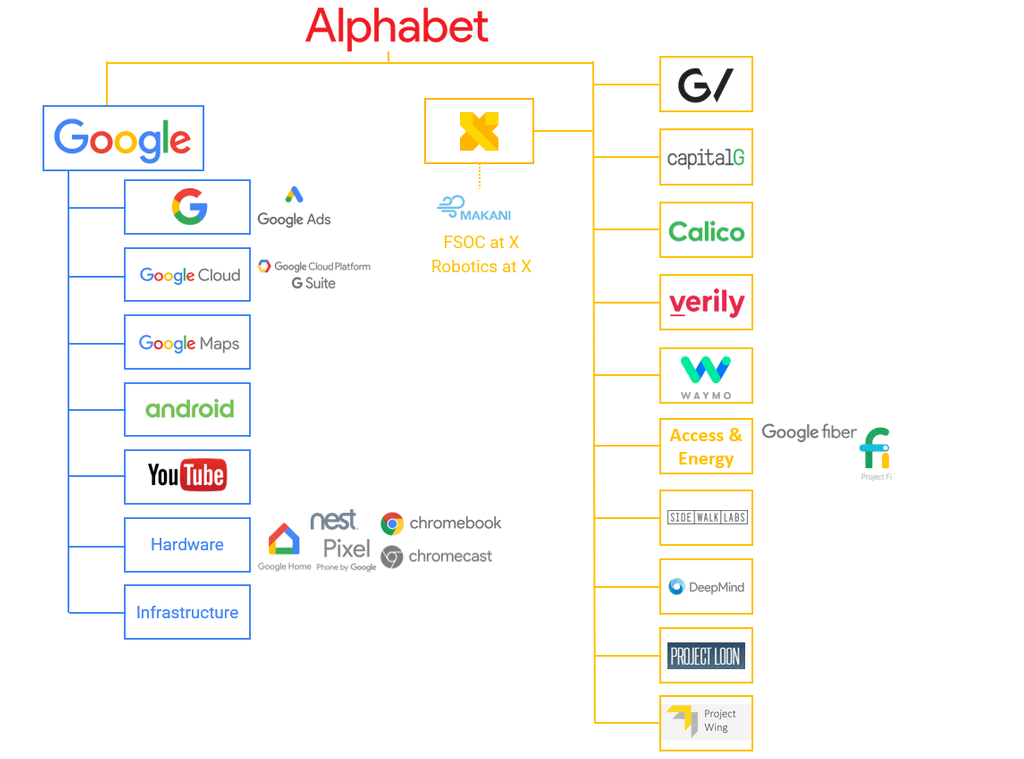
The announcement of Alphabet’s creation sent ripples through the tech and financial worlds. Google, as the world knew it, would become the largest subsidiary of Alphabet, retaining its core internet products and services—search, ads, Android, Chrome, YouTube, and Maps. Other, more futuristic projects that had been incubated within Google’s walls were spun out into independent companies under the new Alphabet umbrella. This included projects like Waymo (self-driving cars), Verily and Calico (life sciences), Nest (smart home, later reintegrated into Google), and Google X (now simply X, a moonshot factory).
Larry Page stepped down as Google’s CEO to become the CEO of Alphabet, with Sergey Brin becoming its President. Sundar Pichai, a long-time Google executive, was promoted to CEO of Google. This clear demarcation of leadership and corporate structure allowed for a more focused approach to each segment of the business, granting greater autonomy to the leaders of each “Other Bet” while maintaining strategic oversight at the Alphabet level.
The Rationale: Innovation, Transparency, and Focus
The rationale behind this ambitious restructuring was multi-faceted, primarily driven by three core objectives:
- Fostering Innovation: By separating the “moonshot” projects from Google’s core revenue generators, Alphabet aimed to create an environment where these ventures could pursue long-term, high-risk, high-reward innovations without the immediate pressure of quarterly earnings often associated with a dominant, established business. This allowed for greater entrepreneurial spirit and focus within each subsidiary.
- Increased Transparency: Investors often struggled to gauge the performance of Google’s disparate businesses. The Alphabet structure provided greater financial transparency by reporting Google’s core operations separately from the often loss-making but potentially transformative “Other Bets.” This offered a clearer picture of profitability and investment allocation.
- Enhanced Focus: With Sundar Pichai at the helm of Google, the company could dedicate its full attention to strengthening its core products and services, refining its advertising algorithms, and expanding its cloud computing footprint. Meanwhile, Page and Brin, as leaders of Alphabet, could concentrate on the broader strategic direction, talent development, and nurturing of the burgeoning “Other Bets.” This division of labor aimed to prevent the company from becoming too diluted in its strategic objectives.
Alphabet’s Core: Google and its Dominant Ecosystem
At the heart of Alphabet’s empire lies Google, still the undisputed titan of the internet. Google’s operations are the primary revenue driver for Alphabet, forming the stable, incredibly profitable foundation upon which all other ventures are built. Its influence extends across virtually every facet of digital life, solidifying its position as a global technology leader.
Search, Ads, and Android: The Pillars of Profit
Google’s enduring dominance is rooted in a triumvirate of powerful technologies:
- Search Engine: Google Search remains the world’s most used search engine, processing billions of queries daily. Its sophisticated algorithms and vast index of information make it the gateway to the internet for most users.
- Advertising Platform: This search dominance directly fuels Google’s massive advertising business (Google Ads and AdSense). Advertisers leverage Google’s unparalleled user data and reach to deliver targeted ads across its properties and partner websites, forming the vast majority of Alphabet’s revenue.
- Android Operating System: Android is the most widely used mobile operating system globally, powering billions of smartphones and tablets. This gives Google immense control over the mobile ecosystem, from app distribution (Google Play Store) to user data collection, further bolstering its advertising capabilities and hardware ambitions.
These interconnected services create a powerful network effect, reinforcing Google’s market position and making it incredibly difficult for competitors to dislodge.
Cloud Computing and AI: Google’s Future Frontiers
While search and ads provide the financial backbone, Google is aggressively investing in the future, with cloud computing and artificial intelligence (AI) at the forefront:
- Google Cloud Platform (GCP): GCP is a rapidly growing suite of cloud computing services, offering infrastructure, platform services, and serverless computing to businesses worldwide. Competing with AWS and Microsoft Azure, GCP is a strategic bet for Google to diversify its revenue streams and cater to the booming enterprise market for digital transformation.
- Artificial Intelligence (AI): AI is deeply embedded across all of Google’s products, from improving search results and personalizing YouTube recommendations to powering Google Assistant and enhancing G Suite applications. Google is a leader in AI research and development, investing heavily in machine learning, natural language processing, computer vision, and responsible AI practices, recognizing AI as the fundamental technology driving the next wave of innovation.
YouTube and Hardware: Expanding the Digital Footprint
Beyond its core pillars, Google continues to expand its digital footprint through popular platforms and innovative hardware:
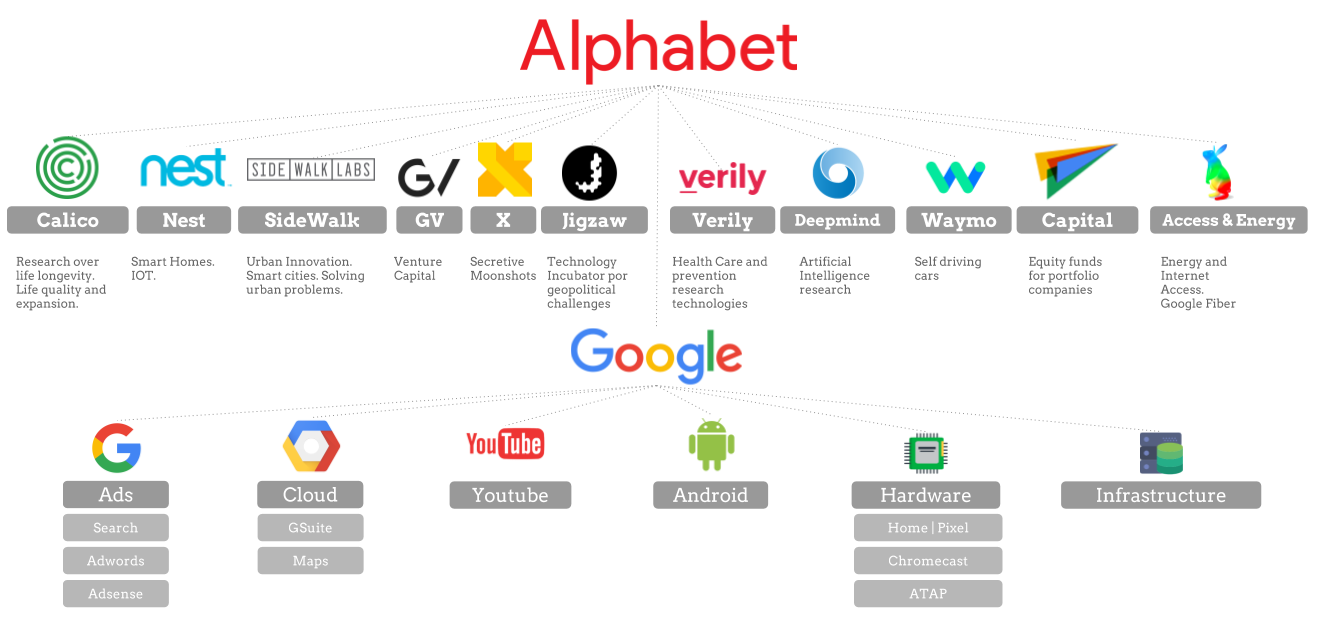
- YouTube: The world’s largest video-sharing platform, YouTube, is a massive entertainment and information hub. It generates substantial revenue through advertising and premium subscriptions, reaching billions of users monthly and influencing culture, media, and commerce globally.
- Hardware: Google designs and manufactures a growing range of hardware products, including Pixel smartphones, Google Home/Nest smart speakers and displays, Chromecast streaming devices, and Fitbit wearables (acquired by Google). These devices serve to extend Google’s software and services into users’ physical environments, creating a more integrated and immersive Google ecosystem.
The “Other Bets”: Pioneering the Future of Tech
While Google fuels the present, Alphabet’s “Other Bets” represent its audacious leap into the future. These are the experimental, often loss-making, but potentially revolutionary companies that operate under the Alphabet umbrella, tackling some of the world’s most complex challenges and pushing the boundaries of what technology can achieve.
Autonomous Driving: Waymo Leading the Charge
Waymo is arguably the most advanced and well-known of Alphabet’s “Other Bets.” Originating from the Google self-driving car project, Waymo is a pioneer in autonomous vehicle technology. It develops self-driving software and hardware and has accumulated millions of miles of real-world driving experience on public roads. Waymo aims to revolutionize transportation through fully autonomous ride-hailing services and logistics solutions, promising safer, more efficient, and more accessible mobility.
Life Sciences and Healthcare: Verily and Calico
Alphabet has made significant investments in the intersection of technology and biology:
- Verily Life Sciences: Focuses on leveraging data science and technology to understand health and prevent, detect, and manage disease. Verily develops tools, platforms, and interventions for precision medicine, clinical research, and population health, collaborating with healthcare organizations and pharmaceutical companies.
- Calico (California Life Company): Dedicated to tackling aging and age-related diseases. Calico conducts cutting-edge research into the biology of aging with the long-term goal of increasing human longevity and healthspan, a highly ambitious and challenging scientific endeavor.
Cutting-Edge Research and AI: DeepMind and X
Alphabet’s commitment to foundational research and radical innovation is embodied by:
- DeepMind: A leading artificial intelligence research company, acquired by Google in 2014. DeepMind is renowned for its breakthroughs in AI, including developing AlphaGo (which beat the world champion Go player) and AlphaFold (which accurately predicts protein structures). Its research drives advancements in general AI, neuroscience-inspired AI, and reinforcement learning, with applications across science, healthcare, and gaming.
- X (formerly Google X): The “moonshot factory” dedicated to inventing and launching breakthrough technologies that solve global problems. X operates with a unique culture that encourages radical thinking and rapid prototyping, embracing failure as part of the innovation process. Many “Other Bets” like Waymo and Wing originated as X projects.
Urban Innovation and Connectivity: Wing and Sidewalk Labs (now part of Google)
Alphabet has also explored new frontiers in urban development and logistics:
- Wing: Specializes in drone-based delivery services. Wing has developed an autonomous delivery system for small packages, operating in various locations globally and showcasing the potential for rapid, on-demand logistics, particularly for last-mile delivery.
- Sidewalk Labs: Initially focused on applying urban tech to improve city life, it explored concepts like smart infrastructure and data-driven urban planning. After significant project reevaluation, many of its innovations and staff were integrated back into Google, particularly within areas like Google’s urban planning efforts and Pano, a wildfire detection solution.
Alphabet’s Impact on the Technology Landscape
Alphabet’s structure and diverse portfolio position it as a perpetual force of innovation, constantly shaping and disrupting various technological sectors. Its influence is profound, but it also faces significant scrutiny and responsibility.
Driving Innovation and Disrupting Industries
Alphabet, through Google and its “Other Bets,” acts as a colossal engine of innovation. From pioneering AI breakthroughs that push the boundaries of machine learning to developing self-driving cars that could transform transportation, Alphabet consistently invests in and brings to market technologies that redefine industries. Its vast resources, top-tier talent, and long-term vision enable it to undertake projects that few other companies can, accelerating technological progress across the board. The company’s open-source contributions, like Android and TensorFlow, also empower countless developers and foster broader innovation ecosystems.
Challenges and Responsibilities: Regulation, Ethics, and Competition
With great power comes great responsibility, and Alphabet’s dominant position in tech has attracted intense scrutiny. The company navigates a complex landscape of challenges:
- Antitrust and Regulation: Governments worldwide are increasingly scrutinizing Alphabet’s market dominance, particularly in search, advertising, and Android, leading to antitrust investigations and significant fines. The ongoing debate about platform power and competition directly impacts Alphabet’s business practices and future strategies.
- Data Privacy and Ethics: As a company that processes immense amounts of user data, Alphabet faces constant pressure regarding data privacy, security, and the ethical implications of its AI technologies. Ensuring responsible data handling, algorithmic fairness, and transparency are paramount to maintaining public trust.
- Talent and Culture: Attracting and retaining the world’s best engineering and scientific talent is crucial, yet Alphabet must also manage its vast workforce, maintain a strong corporate culture, and address internal challenges related to diversity, equity, and inclusion.
A Vision for the Future: Shaping Tomorrow’s Technology
Ultimately, “what is the Alphabet company” is a question about the future of technology itself. Alphabet embodies a vision where technology extends far beyond screens, integrating into our cities, bodies, and daily lives in increasingly sophisticated ways. From quantum computing to personalized medicine, from fully autonomous systems to advanced robotics, Alphabet is actively investing in and building the foundational technologies that will define the next century. Its structure allows it to pursue both incremental improvements in its core businesses and radical, long-term “moonshots” that have the potential to solve some of humanity’s most pressing challenges, firmly cementing its role as a leading architect of tomorrow’s technological world.
aViewFromTheCave is a participant in the Amazon Services LLC Associates Program, an affiliate advertising program designed to provide a means for sites to earn advertising fees by advertising and linking to Amazon.com. Amazon, the Amazon logo, AmazonSupply, and the AmazonSupply logo are trademarks of Amazon.com, Inc. or its affiliates. As an Amazon Associate we earn affiliate commissions from qualifying purchases.