
In the intricate world of personal and business finance, certain numerical identifiers act as silent workhorses, ensuring the seamless flow of money. Among these, the routing number stands out as a fundamental yet often misunderstood component. Many of us encounter it regularly – on our checks, during online bill payments, or when setting up direct deposit – yet a clear understanding of what it is, where to find it, and its true significance often remains elusive. Demystifying the routing number isn’t just an exercise in financial literacy; it’s a practical step towards confidently managing your money, ensuring transactions go where they’re intended, and safeguarding your financial well-being.

This article delves deep into the essence of the routing number, peeling back the layers to reveal its purpose, its critical role in various financial operations, and how to reliably locate it. We’ll also address important security considerations and explore advanced insights to empower you with a comprehensive understanding of this vital piece of financial infrastructure.
Understanding the Core: What Exactly is a Routing Number?
At its heart, a routing number is a specialized identifier for financial institutions, primarily within the United States. It’s the equivalent of a postal code for your bank, directing funds to the correct receiving entity during a transaction.
The Anatomy of an ABA RTN
The routing number you’re most likely interacting with is formally known as an ABA Routing Transit Number (ABA RTN). It’s a unique nine-digit code assigned by the American Bankers Association (ABA) to individual financial institutions, including banks, credit unions, and other payment processing entities. Established in 1910, its initial purpose was to facilitate the sorting and routing of paper checks. Today, its role has expanded significantly to underpin the vast majority of electronic financial transactions.
Each of the nine digits within an ABA RTN carries specific information, though the average consumer doesn’t need to know the intricate breakdown. What’s crucial to understand is that these digits collectively identify the particular financial institution and its processing center responsible for handling a transaction. Without this precise identification, money transfers would be chaotic and prone to error.
Distinguishing Routing Numbers from Account Numbers
A common point of confusion arises when distinguishing between a routing number and an account number. While both are critical for financial transactions, they serve distinct purposes:
- Routing Number: Identifies your bank or credit union. Think of it as the address of the building where your money resides.
- Account Number: Identifies your specific account within that bank. This is like your unique apartment number within that building.
To illustrate, imagine sending a letter. The routing number is the city and state (the financial institution), while the account number is the specific street address and apartment number (your individual account). Both are absolutely necessary to ensure the letter reaches the intended recipient. You cannot send money to an account number without a routing number, nor can you send it to a routing number without a specific account number. Combining these two elements provides the unique pathway for your funds.
It’s also worth noting that for international transactions, different identifiers like SWIFT (Society for Worldwide Interbank Financial Telecommunication) or BIC (Bank Identifier Code) are used, which serve a similar purpose but on a global scale, identifying banks across different countries. We’ll touch on this later, but for domestic U.S. transactions, the ABA RTN is king.
The Multifaceted Importance of Your Routing Number
The routing number might seem like a small detail, but its absence would grind the modern financial system to a halt. It is the linchpin for a vast array of common and critical financial activities.
Facilitating Seamless Electronic Transfers
The most frequent applications of your routing number lie in electronic funds transfers. These are the bedrock of everyday personal and business finance:
- Direct Deposit: Whether it’s your payroll check from an employer, a government benefit like Social Security, or a tax refund, the routing number ensures that these funds are deposited directly and correctly into your bank account. Your employer or the government agency requires both your routing number and account number to initiate this process.
- Automated Clearing House (ACH) Transactions: The ACH network is a major electronic funds transfer system in the U.S. that handles a massive volume of debits and credits. This includes automatic bill payments (utilities, loan payments, insurance premiums, subscriptions), person-to-person transfers (e.g., using Zelle or similar services that link directly to your bank), and business-to-business payments. Every single one of these transactions relies on routing numbers to correctly identify the participating financial institutions.
- Wire Transfers: While domestic wire transfers also require a routing number, they often involve additional bank-specific instructions and are typically used for larger, time-sensitive, and less frequent transactions than ACH. The routing number ensures the wire reaches the correct receiving bank before being directed to the specific account.
Essential for Check Processing
Before the digital age, the primary role of the routing number was to facilitate the clearing of paper checks. Even today, despite the rise of electronic payments, checks remain a part of the financial landscape, especially for certain business transactions or personal payments.
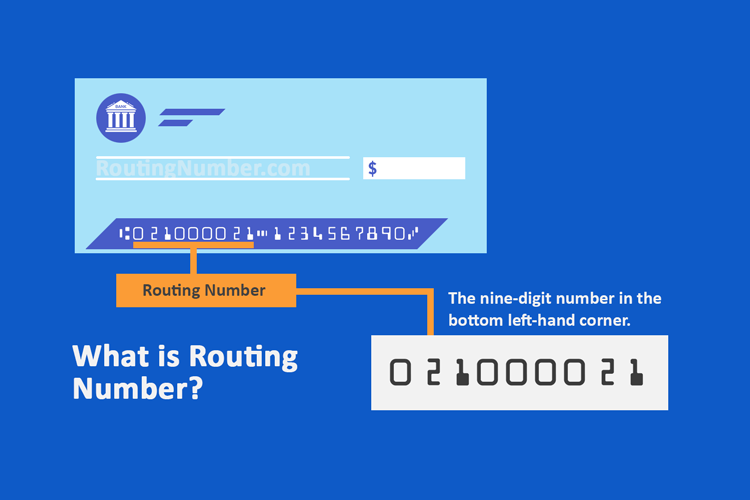
- On a Physical Check: The routing number is prominently printed on the bottom left of your checks, part of the Magnetic Ink Character Recognition (MICR) line. It’s usually the first set of nine digits, followed by your account number, and then the check number. When a check is deposited, the routing number tells the depositing bank which bank the funds need to be drawn from. This allows the interbank settlement process to occur smoothly.
Beyond Transfers: Other Financial Applications
The utility of a routing number extends beyond direct transfers and checks, touching various other aspects of your financial life:
- Setting Up Financial Accounts: When you link external bank accounts to an online investment platform, a budgeting app, or even another bank account, you’ll typically be asked for both the routing and account numbers to establish that connection.
- Loan and Investment Applications: Certain loan applications or investment account setups may require your routing number to verify your banking relationship or to facilitate future transfers of funds.
- Third-Party Payment Services: Many popular payment services that connect directly to your bank account (like PayPal, Venmo, etc., for initial setup or bank transfers) utilize your routing number to establish the link.
Navigating the Hunt: How to Reliably Locate Your Routing Number
Given its pervasive importance, knowing how to quickly and accurately find your routing number is a crucial skill. Fortunately, there are several reliable methods at your disposal.
The Classic Method: Your Checkbook
For many, the most traditional place to find their routing number is on a physical check:
- Location: Look at the bottom edge of one of your checks. You’ll see a series of numbers printed in magnetic ink (MICR line). The routing number is almost always the first group of nine digits, located on the far left. It might be preceded by a transit symbol (⑈ or ⑉).
- Visual Aid: It’s usually structured as [Routing Number] [Account Number] [Check Number]. For example,
123456789 0001234567 101. - Important Caveat: While generally reliable, some banks, especially larger ones, may have different routing numbers for specific types of accounts (e.g., checking vs. savings) or for different geographic regions due to mergers. Always confirm you’re using the correct one for the specific account you intend to use.
Digital Accessibility: Online Banking and Mobile Apps
In today’s digital age, your online banking portal or mobile app is often the quickest and most convenient way to retrieve your routing number:

- Online Banking Website: Log into your bank’s official website. Look for sections like “Account Details,” “Account Information,” “Direct Deposit Information,” “View Statements,” or “My Profile.” Your routing number is typically listed clearly alongside your account number.
- Mobile Banking App: Most bank mobile apps offer similar functionality. Navigate to the specific account you need the routing number for, and then look for “Account Info,” “Details,” or a similar option. Some apps might even have a dedicated “Direct Deposit” section that provides both numbers.
- Digital Statements: If you receive electronic statements, your routing number is usually displayed prominently on them, just as it would be on a paper statement.
Direct Contact: Bank Statements, Customer Service, and Branch Visits
If digital methods aren’t an option or you prefer direct confirmation, these avenues are highly reliable:
- Paper Bank Statements: Your monthly or quarterly paper bank statements almost always list your routing number clearly, usually near the top of the statement or in the “Account Information” section.
- Customer Service: Calling your bank’s customer service line is a foolproof way to get the correct routing number. Be prepared to verify your identity with personal details.
- Visiting a Branch: A quick visit to a local branch of your bank will allow a teller to provide you with the correct routing number directly.
- Bank’s Official Website: Beyond logging in, many banks list their general routing numbers on their public website, often in an FAQ section or under “Contact Us.” However, be cautious and ensure you’re on the official bank site and not a third-party aggregator. It’s always best to log into your account for personalized information.
Safeguarding Your Financial Footprint: Security Considerations
A common concern revolves around the security implications of sharing your routing number. Is it sensitive information, and what are the risks?
Is a Routing Number Sensitive Information?
Compared to your account number, Social Security number, or PIN, a routing number is significantly less sensitive. This is because it primarily identifies your bank, not you specifically. In many cases, it’s publicly available on checks or on a bank’s website. Someone knowing your routing number alone cannot directly access your funds.
However, the scenario changes dramatically when your routing number is combined with your account number and other Personally Identifiable Information (PII) like your name and address. Together, these pieces of information become highly sensitive and can be used to initiate unauthorized transactions.
Mitigating Risks: When to Be Cautious
While a routing number isn’t a top-tier security secret, a healthy dose of caution is always warranted in financial matters:
- Never Provide to Unsolicited Requests: Be extremely wary of emails, text messages, or phone calls that ask for your routing and account numbers, especially if they seem unexpected or originate from unknown sources. This is a classic phishing tactic. Legitimate institutions will rarely ask for this information via unsecured channels.
- Verify the Recipient: Only share your routing and account numbers with trusted entities when you are initiating a legitimate transaction (e.g., setting up direct deposit with your employer, paying a bill to a known service provider, or linking accounts within your secure online banking portal).
- Secure Online Environments: When entering this information online, always ensure the website is secure (look for “https://” in the URL and a padlock symbol).
- Strong Passwords & 2FA: For your online banking accounts, always use strong, unique passwords and enable two-factor authentication (2FA) for an added layer of security. This protects against unauthorized access to your account details, including your routing number.
What Can Someone Do with Just a Routing Number?
On its own, very little. A routing number by itself cannot be used to:
- Withdraw money from your account.
- Access your online banking.
- Make purchases.
Its primary function is identification. The real danger emerges when a routing number is combined with your account number and other personal details, which could potentially allow for fraudulent ACH debits or other unauthorized transactions if someone gains enough information to impersonate you. This underscores the importance of protecting your account number and other personal data with much greater vigilance.
Beyond the Basics: Common Scenarios and Advanced Insights
While the core function of a routing number is straightforward, there are nuances and related concepts that can enhance your financial understanding.
Multiple Routing Numbers for One Bank
It’s not uncommon for a single financial institution, especially larger banks or those that have undergone mergers, to have multiple routing numbers. This can happen for several reasons:
- Geographical Locations: Historically, banks might have had different routing numbers for branches in various states or regions. While less common for simple checking/savings accounts today, legacy systems from mergers can perpetuate this.
- Transaction Types: Banks often use different routing numbers for different types of transactions. For instance, the routing number for an incoming wire transfer might be different from the routing number used for ACH direct deposits or checking account processing.
- Specific Products: Occasionally, certain specialized products or services might have a unique routing number.
Key takeaway: Always verify the correct routing number for the specific transaction you are performing and the specific account it pertains to. When in doubt, use your online banking portal or contact your bank directly.
International Transfers: SWIFT/BIC Codes
It’s important to remember that ABA routing numbers are for domestic (U.S.) transactions. If you need to send or receive money internationally, you’ll generally use a different identifier:
- SWIFT/BIC Code: The Society for Worldwide Interbank Financial Telecommunication (SWIFT) assigns Bank Identifier Codes (BICs) that are used for international wire transfers. These are typically 8 or 11 characters long (e.g., CHASUS33 for JP Morgan Chase). If you’re receiving an international wire, the sender will need your bank’s SWIFT/BIC code in addition to your account number. Your bank’s website or customer service can provide this.
The Routing Number in Business Finance
For businesses, the routing number takes on an even broader significance:
- Payroll Processing: Businesses rely on routing numbers to accurately disburse employee paychecks via direct deposit.
- Vendor Payments: Many businesses pay vendors and suppliers through ACH transfers, which are facilitated by routing numbers.
- Receiving Customer Payments: If a business accepts ACH payments from customers, it needs to provide its routing and account numbers.
- Managing Multiple Accounts: Businesses often have multiple bank accounts for different purposes (e.g., operating expenses, payroll, savings). Ensuring the correct routing number is used for each specific transaction and account is critical for accurate record-keeping and financial management.
Conclusion
The question “Which number is the routing number?” leads us down a path of understanding one of the most fundamental components of the modern financial system. The 9-digit ABA Routing Transit Number is the unique identifier for your financial institution, playing a crucial role in almost every electronic money transfer, from direct deposits and bill payments to check processing.
While less sensitive than your account number, knowing where to find your routing number reliably – whether on your checkbook, through online banking, or by contacting your bank – is an essential skill for confident financial management. Always exercise caution when sharing this information, combining it only with your account number when dealing with trusted entities for legitimate transactions. By understanding the routing number, you empower yourself with a foundational piece of financial literacy, ensuring your money moves exactly where it needs to go, securely and efficiently.
aViewFromTheCave is a participant in the Amazon Services LLC Associates Program, an affiliate advertising program designed to provide a means for sites to earn advertising fees by advertising and linking to Amazon.com. Amazon, the Amazon logo, AmazonSupply, and the AmazonSupply logo are trademarks of Amazon.com, Inc. or its affiliates. As an Amazon Associate we earn affiliate commissions from qualifying purchases.