
In an increasingly digital financial world, the humble paper check might seem like a relic of the past. Yet, it remains an indispensable tool for many personal and business transactions. From setting up direct deposit with a new employer to paying rent or linking accounts for investment, understanding the information encoded on a check is a fundamental aspect of financial literacy. Among the various numbers printed at the bottom, the checking account number is arguably the most critical for identifying your specific funds. This guide will demystify the anatomy of a check, precisely locate your checking account number, explore alternative methods for retrieval, and discuss the importance of keeping this sensitive information secure.
Understanding the Anatomy of a Check
Before diving into how to find your checking account number, it’s essential to understand the overall structure of a standard check. Every element on a check serves a specific purpose, collectively facilitating the smooth transfer of funds from one account to another. Familiarity with these components not only helps in identifying your account number but also empowers you to complete checks accurately and understand banking communications.
The Key Components of a Standard Check
A typical personal or business check features several distinct areas, each providing crucial information:
- Payee Line: This is where you write the name of the person or entity you are paying.
- Date Line: The date the check is written, which is important for tracking and validity.
- Amount Box (Numerical): The dollar amount of the payment, written in figures.
- Amount Line (Written): The dollar amount of the payment, written in words, which serves as a safeguard against alteration.
- Memo Line: An optional line for notes, like an account number or purpose of payment.
- Signature Line: Your authorized signature, validating the payment.
- Bank Information: Your bank’s name and logo, usually in the upper left corner.
- Your Information: Your name and address, typically printed in the upper left corner.
- Check Number: A sequential number (usually in the upper right corner and repeated on the MICR line) used for tracking transactions.
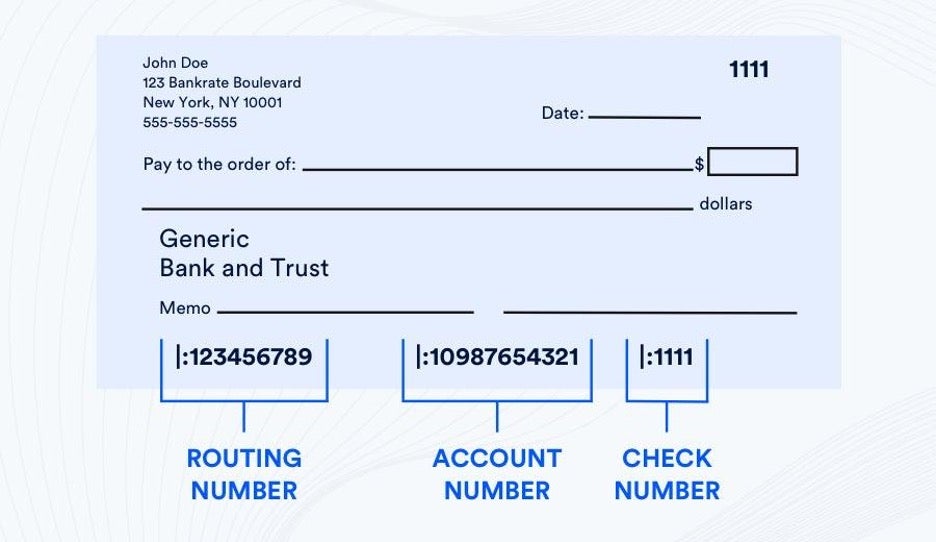
- The MICR Line: This is the machine-readable magnetic ink character recognition (MICR) line at the very bottom of the check, which contains the three most important sets of numbers: the routing number, the account number, and the check number.
Why Identifying Numbers is Crucial
Each set of numbers on a check plays a vital role in the banking ecosystem. The routing number directs the payment to the correct financial institution. The account number identifies your specific account within that institution. The check number allows for internal tracking and reconciliation. Misinterpreting or misusing these numbers can lead to returned payments, delays, or even funds being sent to the wrong account, incurring fees and frustration. Therefore, precise identification is not just a matter of convenience, but a necessity for effective financial management.
Locating Your Checking Account Number
The most reliable place to find your checking account number is on the bottom of a physical check. This string of digits is part of the MICR (Magnetic Ink Character Recognition) line, which is specially printed to be read by automated processing machines. Understanding how these numbers are arranged is key to correctly identifying your account number.
The MICR Line: Your Primary Source
The MICR line typically contains three distinct groups of numbers, read from left to right:
- Routing Number (9 digits): This is the first set of numbers on the left. It’s a nine-digit code that identifies your bank and its location. This number is standardized across the U.S. financial system and is crucial for direct deposits, wire transfers, and electronic funds transfers.
- Account Number (Variable Length): This is the second set of numbers, usually located in the middle of the MICR line. Its length can vary significantly between banks, typically ranging from 10 to 12 digits, but sometimes more or less. This is the number that uniquely identifies your specific checking account at your bank.
- Check Number (3-4 digits): This is the third set of numbers, found on the far right of the MICR line. It matches the check number printed in the upper right corner of the check.
Differentiating Between Routing, Account, and Check Numbers
While the order on the MICR line is generally consistent (Routing | Account | Check), there can be slight variations in the symbols or spacing used by different banks. However, a good rule of thumb is:
- Routing Number: Always 9 digits long, and always the first sequence.
- Account Number: The most variable in length, usually positioned in the middle. It often follows a specific symbol (like a colon or two vertical bars) that separates it from the routing number.
- Check Number: Typically 3 or 4 digits, located on the far right, and identifiable because it matches the check number at the top of the check.
If you are unsure, remember that the account number will not be 9 digits (that’s the routing number) and it will not match the check number at the top.
Visual Guides and Examples
To solidify your understanding, imagine a check’s bottom edge like this:
[BANK ROUTING NUMBER] [ACCOUNT NUMBER] [CHECK NUMBER]
For example:
012345678: 987654321012: 1234
In this example:
012345678is the Routing Number.987654321012is the Checking Account Number.1234is the Check Number.
Always double-check against a physical check from your own bank to confirm the exact placement and appearance of these numbers, as minor variations exist.
Beyond the Check: Alternative Ways to Find Your Account Number
While a physical check is the primary source for your account number, there are situations where you might not have one readily available. Fortunately, financial institutions offer several other secure methods to retrieve this vital information.
Online Banking Portals
In today’s digital age, your online banking portal is perhaps the most convenient and common alternative. Once you log into your bank’s website or mobile app:
- Navigate to Account Details: Look for a section like “Account Details,” “Account Information,” “My Accounts,” or “Summary” for your checking account.
- View Full Account Number: Some banks may initially show only the last few digits of your account number for security reasons. There’s usually an option to “Show Full Account Number,” “View Details,” or a similar link that, after an additional security verification (like entering your password again or a two-factor authentication code), will reveal the complete number.
- Mobile Apps: Similar functionality is available on most banking apps, offering quick access on the go.
This method is generally secure, as you are accessing the information through your bank’s encrypted portal.
Bank Statements and Official Documents

Your monthly bank statements, whether physical or electronic, are another reliable source of your checking account number.
- Printed Statements: Your full checking account number is typically printed on your monthly paper statements. It might be near your name and address, or in a section detailing the account summary.
- E-Statements: If you’ve opted for paperless statements, you can usually access archived e-statements through your online banking portal. Download a recent statement (often a PDF), and you’ll find your account number listed there.
- Account Welcome Kit: When you first opened your account, your bank would have provided a welcome kit. This often includes documents that list your account number, alongside other details like your routing number.
Always handle bank statements with care, as they contain sensitive financial information. Shred physical statements before discarding them, and protect digital versions on your computer.
Contacting Your Bank Directly
If all else fails, or if you prefer speaking to a human, contacting your bank directly is always an option.
- Customer Service Hotline: Call your bank’s customer service number (usually found on their website, the back of your debit card, or a previous bank statement). Be prepared to go through a rigorous identity verification process, which may include providing your full name, address, date of birth, Social Security Number, and answers to security questions.
- Visit a Branch: For the most secure and direct assistance, visit a local branch of your bank. Bring a valid form of identification (driver’s license, passport) as the teller will need to verify your identity before providing your account number.
While these methods might take slightly more effort, they ensure you receive accurate information directly from your financial institution.
When and Why You Need Your Account Number
Your checking account number is more than just a sequence of digits; it’s the key to various essential financial operations. Understanding when and why you need it helps you manage your finances efficiently and securely.
Setting Up Direct Deposit or Bill Pay
One of the most common reasons to provide your account number is for automated transactions:
- Direct Deposit: Whether it’s your salary, government benefits, or tax refunds, direct deposit requires your bank’s routing number and your checking account number to ensure funds are deposited directly and securely into your account. Employers or benefit providers will usually ask for a voided check or your account details on a form.
- Automatic Bill Pay: Many services, from utilities to mortgage lenders, offer automatic bill payment directly from your checking account. Setting this up typically requires both your routing and account numbers to link your bank account for recurring debits.
These automated processes streamline your financial life, reducing the risk of missed payments and eliminating the need for paper checks.
Linking External Accounts and Financial Apps
In the age of digital finance, connecting various accounts is common:
- Investment Accounts: When funding an investment brokerage account or transferring money to a retirement account, you’ll often need to link your checking account using its routing and account numbers.
- Budgeting and Financial Planning Apps: Many popular financial management tools and budgeting apps can connect directly to your bank accounts to track spending and manage budgets. While some use secure third-party aggregators that only require your login credentials, others may require manual entry of your routing and account numbers for deeper integration.
- Peer-to-Peer Payment Services: Although many P2P apps like Venmo or Zelle primarily use debit card information or email/phone numbers, for larger transfers or to set up initial funding, you might be prompted to link your bank account directly using these numbers.
Wire Transfers and Other Banking Transactions
For more complex or one-off banking activities, your account number is indispensable:
- Wire Transfers: Sending or receiving a wire transfer, especially internationally, almost always requires your full account number (alongside the routing number and sometimes SWIFT/BIC codes for international wires) to ensure the funds reach the intended recipient’s specific account.
- Funding New Accounts: When opening a new bank account or a certificate of deposit (CD) at a different institution, you might be asked for your existing checking account details to facilitate the initial funding transfer.
- Paying Taxes: In some cases, for federal or state tax payments, you might use your bank account number for direct debit payments.
Understanding these scenarios helps you anticipate when and why you’ll need to locate your checking account number, ensuring smooth and uninterrupted financial operations.
Best Practices for Account Number Security
Your checking account number, along with your routing number, is sensitive information that, if it falls into the wrong hands, could be used for fraudulent activities. Protecting this data is paramount to safeguarding your financial well-being.
Protecting Your Physical Checks
Even in a digital world, physical checks require careful handling:
- Store Securely: Keep blank checks in a locked drawer or a secure place where unauthorized individuals cannot access them.
- Shred Old Checks and Documents: Never throw away voided, unused, or old checks, bank statements, or any document containing your account number without shredding them first. Use a cross-cut shredder to make reconstruction difficult.
- Avoid Carrying Too Many: Only carry the checks you anticipate needing. Leaving an entire checkbook in an unsecured bag is risky.
- Be Cautious with Voided Checks: When providing a voided check (e.g., for direct deposit setup), understand that you are sharing your routing and account numbers. Only provide it to trusted entities.
- Inspect Deliveries: If you order new checks, ensure they arrive securely. Report any missing or tampered packages to your bank immediately.
Digital Security Measures
Protecting your account number extends to your digital interactions:
- Strong Passwords and Two-Factor Authentication (2FA): Always use strong, unique passwords for your online banking portals and enable 2FA wherever possible. This adds an extra layer of security, making it much harder for unauthorized users to access your account information even if they guess your password.
- Secure Networks: Avoid accessing your bank accounts or sharing account numbers over public Wi-Fi networks, which are often unsecured and vulnerable to eavesdropping. Use a Virtual Private Network (VPN) if you must use public Wi-Fi.
- Beware of Phishing Scams: Be vigilant against emails, texts, or calls purporting to be from your bank asking for your account number or other sensitive information. Banks will rarely ask for your full account number via unsolicited communication. Always verify the sender and, if in doubt, contact your bank directly using a number you know to be legitimate.
- Regularly Monitor Accounts: Review your bank statements and online transaction history frequently for any unauthorized activity. The sooner you spot an anomaly, the quicker you can act.
- Secure Your Devices: Ensure your computers and mobile devices are protected with up-to-date antivirus software, firewalls, and strong screen lock passcodes.

What to Do If Your Account Information is Compromised
Despite your best efforts, financial data breaches or theft can occur. Knowing how to react quickly is crucial:
- Contact Your Bank Immediately: As soon as you suspect your account number or other banking information has been compromised, contact your bank. They can place holds on your account, monitor for suspicious activity, or even close the account and issue a new one.
- Change Passwords: Update passwords for all your financial accounts and other important online services.
- Monitor Credit Reports: Obtain free copies of your credit report from the three major credit bureaus (Equifax, Experian, TransUnion) and review them for any accounts you don’t recognize. Consider placing a fraud alert or credit freeze.
- File a Police Report: For more serious cases of theft or fraud, filing a police report can be helpful for documentation and recovery efforts.
By understanding where your checking account number is located, how to access it through various channels, and—most importantly—how to protect it, you empower yourself to navigate the financial landscape with confidence and security.
aViewFromTheCave is a participant in the Amazon Services LLC Associates Program, an affiliate advertising program designed to provide a means for sites to earn advertising fees by advertising and linking to Amazon.com. Amazon, the Amazon logo, AmazonSupply, and the AmazonSupply logo are trademarks of Amazon.com, Inc. or its affiliates. As an Amazon Associate we earn affiliate commissions from qualifying purchases.