
In the complex landscape of modern finance, the account number stands as a foundational identifier, a unique sequence of digits that distinguishes your specific financial relationship from every other customer’s at a particular institution. While it might seem like basic information, finding your account number when you need it – whether for setting up direct deposit, paying a bill, or verifying your identity – can sometimes feel like searching for a needle in a digital haystack. This comprehensive guide aims to demystify the process, providing clear, actionable steps to locate your account number across various financial contexts and offering crucial insights into why this information is so vital to your financial well-being and security.

Your account number is more than just a string of digits; it’s the key to accessing and managing your funds, facilitating transactions, and ensuring that money goes precisely where it’s intended. Unlike a debit card number, which is primarily for making purchases, your account number is fundamental to the underlying structure of your financial relationship with a bank or other institution. Understanding where to find it and how to protect it is a cornerstone of responsible personal finance.
Understanding What an Account Number Represents
Before diving into the “how,” it’s essential to grasp the “what.” An account number is a unique identifier assigned by a financial institution to a specific account held by a customer. This number allows the institution to differentiate between various accounts—be it checking, savings, credit card, loan, or investment—within their vast system. Its primary purpose is to ensure that financial transactions, deposits, withdrawals, and inquiries are accurately linked to the correct individual account.
Distinguishing from Other Identifiers
It’s common for individuals to confuse their account number with other financial identifiers. Clarifying these distinctions is crucial for accuracy and security.
- Debit/Credit Card Number: This is the 16-digit number printed on your physical card. It’s primarily used for making purchases and conducting transactions at point-of-sale terminals or online. While linked to an account, it is not your bank account number. Your debit card number gives access to funds from your checking account, but it’s a different identifier used for a different purpose. Credit card numbers, similarly, identify the credit line but not necessarily a deeper “account number” in the same vein as a checking or savings account.
- Routing Number: This nine-digit number identifies your financial institution, not your individual account. It’s like a postal code for your bank, directing funds to the correct bank branch or central office. When combined with your account number, it forms a complete instruction for electronic transfers. You need both for transactions like direct deposit or wire transfers.
- User ID/Login ID: These are credentials you create to access your online banking portal or mobile app. They are for authentication purposes only and do not represent your account number. While they grant you access to view your account number, they are not the number itself.
The Role of Account Numbers in Financial Security
Given its unique and sensitive nature, your account number plays a critical role in your financial security. It’s directly tied to your funds, making its protection paramount. While generally less susceptible to immediate fraudulent use than a debit or credit card number (as it usually requires a routing number and often your name for transactions), unauthorized access to your account number can still pose significant risks. It enables direct debits, ACH transfers, and provides a pathway for identity theft if combined with other personal information. Therefore, understanding where to find it also means understanding how to safeguard it.
Common Places to Locate Your Account Number
Fortunately, financial institutions provide several reliable methods for you to find your account number. The key is knowing where to look, whether you prefer traditional paper records or modern digital interfaces.
Checking Your Bank Statements
One of the most straightforward and traditional methods is to consult your bank statements.
- Paper Statements: If you still receive paper statements in the mail, your account number is almost always prominently displayed. Look near the top of the statement, usually next to your name and address, or within the “Account Summary” section. It might be labeled simply as “Account Number” or “Acct. No.”
- Online Statements: For those who’ve gone paperless, accessing your account number through online statements is equally simple. Log into your bank’s online banking portal, navigate to the “Statements” or “e-Statements” section, and download a recent statement (typically a PDF). Your account number will be visible in the same location as on a physical statement. This method is secure as long as you access it through your bank’s official, secure website.
Through Your Online Banking Portal
Your online banking portal or mobile app is often the quickest and most convenient way to find your account number.
- Logging In: After securely logging into your bank’s website or mobile app, you’ll typically see a summary of your accounts.
- Navigating to Account Details: Click on the specific account (e.g., checking or savings) for which you need the number. Look for options such as “Account Details,” “Account Information,” “Manage Account,” or “View Account Summary.” Your full account number, often displayed with some digits masked for security, should be accessible here. Some banks require an additional click or confirmation (like re-entering your password) to reveal the full number.
- Security: Always ensure you are on your bank’s official website (check the URL for “https” and the correct domain) or using their official app to prevent phishing scams.
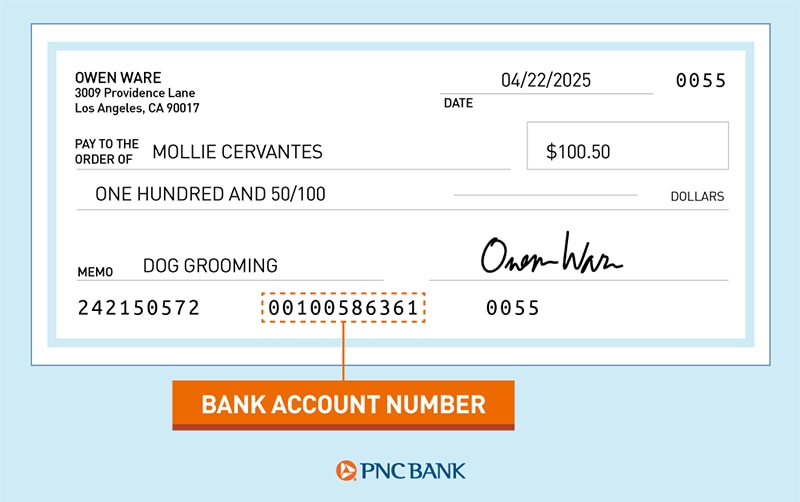
On Your Checkbook or Deposit Slips
For checking accounts, your physical checks and deposit slips are excellent sources of your account number.
- On Checks: Look at the bottom of a check. You’ll typically find three sets of numbers. From left to right, these are usually:
- The routing number (nine digits).
- Your account number (variable length, usually 10 to 12 digits).
- The check number (matching the number printed in the top right corner).
Your account number is the middle set of numbers.
- On Deposit Slips: Similar to checks, deposit slips also clearly display both your routing number and your account number.
- Caution: While convenient, be mindful that checkbooks can be lost or stolen. If you’ve recently changed banks or accounts, the numbers on an old checkbook may no longer be valid.
Contacting Your Financial Institution Directly
If all else fails, or if you prefer direct assistance, reaching out to your bank is always an option.
- Calling Customer Service: Call your bank’s official customer service line. Be prepared to go through a verification process to confirm your identity. This typically involves providing personal details like your full name, address, date of birth, Social Security Number, and answering security questions.
- Visiting a Branch: For in-person assistance, visit a local branch of your bank. A teller or customer service representative can provide your account number after verifying your identity with a valid photo ID (like a driver’s license or passport). This is often the most secure method, especially if you’re concerned about online security.
- Secure Messaging: Many banks offer a secure messaging service within their online banking portal or mobile app. You can send a message requesting your account number, and they will usually respond within a business day after verifying your identity.
Specific Scenarios and Considerations
The need for an account number isn’t exclusive to checking or savings accounts. Different financial products and services will have their own unique identifiers.
Different Types of Accounts
- Checking vs. Savings: While often linked under the same customer profile, checking and savings accounts typically have distinct account numbers. Ensure you’re retrieving the correct number for the intended purpose (e.g., direct deposit usually goes to checking, but sometimes savings).
- Credit Card Accounts: For credit cards, the 16-digit card number is the primary identifier for most transactions. However, if you’re setting up an automatic payment to the credit card, you might need an “account number” for that credit line, which can often be found on your credit card statement or by contacting the issuer. This is distinct from your bank account number where the payment originates.
- Brokerage/Investment Accounts: Investment firms (like those for stocks, bonds, or mutual funds) will assign a unique account number to your investment portfolio. This number is crucial for buying or selling assets, transferring funds, or making inquiries. You’ll find it on your investment statements or within your online brokerage portal.
- Loan Accounts (Mortgage, Auto, Personal): Every loan you have will be assigned a specific loan account number. This is vital for making payments, checking balances, or communicating with your lender. It’s usually found on your loan statements, payment coupons, or within your online loan management portal.
What If You Have Multiple Accounts?
Many individuals hold multiple accounts at one or several financial institutions. When seeking an account number, double-check that you are identifying the correct number for the specific account required. An employer requesting direct deposit information will need the account number for the checking or savings account where you want your paycheck to land, not necessarily your brokerage account number. Always confirm the context before providing the number.
Account Numbers for Non-Banking Services
Beyond traditional financial institutions, various service providers (utilities, phone companies, internet providers) also assign “account numbers” to their customers. While these are not bank account numbers in the financial transaction sense, they serve a similar purpose: uniquely identifying your service relationship for billing and customer service. You’ll typically find these on your monthly bills, within your online service portal, or by contacting their customer support.
Best Practices for Managing Your Account Numbers Safely
Knowing how to find your account number is just one part of the equation; managing it securely is equally important.
Safeguarding Sensitive Information
- Protect Your Data: Treat your account number with the same caution as your Social Security Number or date of birth. Avoid writing it down unnecessarily or storing it in easily accessible, unencrypted places.
- Be Wary of Phishing: Financial institutions will never ask for your full account number via unsolicited email or text message. Always be suspicious of requests for personal financial information that come out of the blue. If in doubt, contact your bank directly using a known, verified phone number or website.
- Shred Old Documents: When discarding old bank statements, checks, or deposit slips, always shred them thoroughly to prevent unauthorized individuals from gleaning your account information.
When and How to Share Securely
There are legitimate reasons why you might need to share your account number.
- For Direct Deposit: When setting up direct deposit with an employer, they will require your bank’s routing number and your account number. Provide this information on a secure form, typically paper or through an encrypted HR portal.
- For Bill Payments: To set up automatic payments for utility bills, loan payments, or other services, you might be asked for your routing and account numbers. Use the service provider’s official, secure payment portal.
- Always Verify: Before sharing your account number with anyone, verify the legitimacy of the request and the recipient. For businesses, ensure you are on their official website or speaking to an authorized representative.

Regular Monitoring of Accounts
Even with the best precautions, vigilance is key. Regularly review your bank statements and online transaction history for any unauthorized or suspicious activity. If you spot anything unusual, contact your financial institution immediately to report it and take steps to secure your account. Many banks offer alerts for large transactions or unusual activity, which can be a valuable tool for proactive monitoring.
In conclusion, understanding how to locate your account number is a fundamental aspect of effective personal finance management. From checking old-fashioned paper statements to navigating sophisticated online banking portals, multiple avenues exist to retrieve this crucial identifier. By distinguishing it from other numbers, knowing where to look, and employing sound security practices, you can confidently manage your financial accounts, ensuring both convenience and protection in your daily financial life.
aViewFromTheCave is a participant in the Amazon Services LLC Associates Program, an affiliate advertising program designed to provide a means for sites to earn advertising fees by advertising and linking to Amazon.com. Amazon, the Amazon logo, AmazonSupply, and the AmazonSupply logo are trademarks of Amazon.com, Inc. or its affiliates. As an Amazon Associate we earn affiliate commissions from qualifying purchases.