
Accessing cash conveniently is a fundamental aspect of personal finance, and for millions, Chase ATMs serve as a primary gateway to their funds. However, the seemingly simple act of withdrawing money comes with specific parameters, most notably daily withdrawal limits. The question, “how much can I withdraw from a Chase ATM outside,” often carries a dual meaning: does it refer to an ATM physically located outside a branch, or does it allude to accessing funds while traveling or outside one’s typical banking region? This comprehensive guide will dissect Chase’s ATM withdrawal policies, helping you understand the factors that dictate your limits, how to manage them, and what to expect, whether you’re at a corner store ATM or thousands of miles from home.
Understanding your withdrawal capacity is more than just knowing a number; it’s about optimizing your financial access, planning for cash needs, and ensuring security. As a pivotal tool in personal finance management, the ATM requires informed usage, especially when navigating varying limits and potential fees.
Decoding Your Daily Chase ATM Withdrawal Limits
At its core, a daily ATM withdrawal limit is a cap set by your bank on the maximum amount of physical cash you can retrieve from an ATM within a 24-hour period. This limit is designed for both your security (reducing potential losses from fraudulent activity) and the bank’s operational efficiency. While there’s a general framework, your specific limit with Chase is rarely a one-size-fits-all figure.
Understanding the Baseline: Account and Card Type
Chase, like most major financial institutions, tailors ATM withdrawal limits based on the type of account you hold and the specific debit card linked to it.
For standard Chase checking accounts (e.g., Chase Total Checking, Chase Premier Plus Checking), the daily ATM withdrawal limit typically ranges from $500 to $1,000. However, this is a broad guideline. Business checking accounts often have higher default limits due to the nature of business operations requiring larger cash transactions. Savings accounts, while generally allowing ATM withdrawals, might sometimes have slightly different limits or be subject to Regulation D limits on transfers, though actual cash withdrawals from an ATM are usually treated similarly to checking for the daily cash limit.
The type of debit card also plays a role. A standard debit card might have a baseline limit, whereas a premium or specialized card (often associated with higher-tier accounts or private banking relationships) could come with a more generous daily limit. These higher limits reflect the bank’s assessment of the customer’s financial profile and needs.
The Nuance of “Outside”: Physical Location vs. Geographical Scope
The phrase “how much can I withdraw from a Chase ATM outside” can be interpreted in a couple of ways, and it’s crucial to clarify this distinction:
-
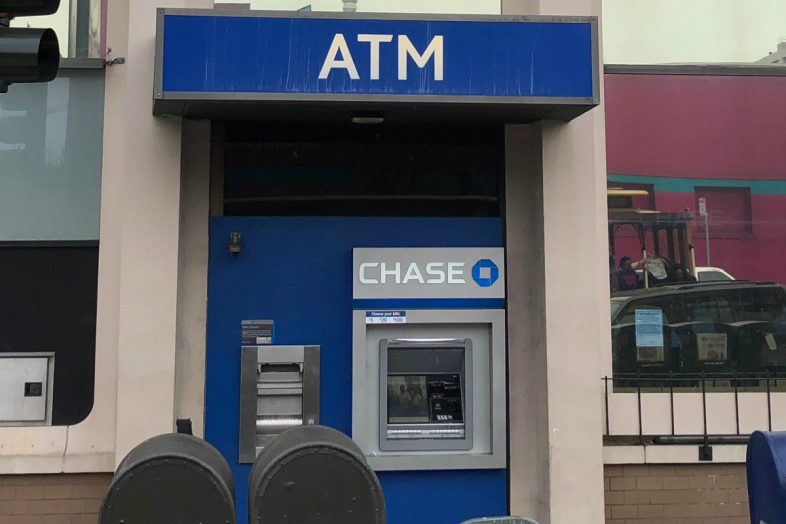
Physical Location of the ATM: If “outside” refers to a Chase ATM that is not located within a physical Chase branch (e.g., a drive-thru ATM, an ATM at a supermarket, or a standalone ATM in a public space), the general rule is that the withdrawal limits remain the same as if you were using an ATM inside a branch. Chase’s network of ATMs operates under a unified set of policies regarding limits, irrespective of their specific physical placement. The key is that it is a Chase-branded ATM.
-
Geographical Scope (Traveling Outside Your Usual Region/Country): If “outside” implies being away from your home region or even internationally, the core daily withdrawal limits set for your account generally still apply. However, there can be additional considerations:
- International Chase ATMs: If you are using a Chase ATM in another country where Chase operates (though its international retail presence is limited compared to its investment banking arms), your standard daily limit should still apply in the local currency equivalent.
- Non-Chase ATMs (International or Domestic): While the title specifies “Chase ATM,” it’s worth noting that if you were to use a non-Chase ATM internationally, that ATM network might impose its own, potentially lower, per-transaction or daily limits, which could supersede your Chase limit. Additionally, foreign transaction fees and ATM operator fees would apply. For the purpose of this article, we’ll stick to Chase ATMs.
In summary, for a Chase ATM, whether it’s physically inside a branch or a standalone unit “outside,” your primary daily withdrawal limit is consistent. The context of “outside” primarily impacts fee structures or the availability of Chase ATMs, rather than the core daily cash limit itself.
Cash vs. Daily Spending Limits: A Critical Distinction
It’s vital to differentiate between your daily ATM cash withdrawal limit and your daily debit card spending limit (for purchases). These are often two distinct figures:
- ATM Cash Withdrawal Limit: This is the maximum amount of physical cash you can retrieve from an ATM within a 24-hour period. As discussed, this typically ranges from $500 to $1,000 for personal accounts.
- Debit Card Spending Limit: This is the maximum amount you can spend using your debit card for purchases (e.g., swiping at a store, online transactions) within a 24-hour period. This limit is almost always significantly higher than your cash withdrawal limit, often ranging from $2,500 to $7,500 or even higher, depending on your account.
These separate limits mean you could hit your cash withdrawal cap but still have ample spending power for debit card purchases. This distinction is important for budgeting and managing larger daily expenses.
Key Determinants of Your Individual Limit
While general ranges exist, several factors specifically influence where your personal Chase ATM withdrawal limit falls within those parameters. These aren’t arbitrary figures but are calculated based on your banking relationship and the features of your accounts.
Your Relationship with Chase: A History of Trust
Banks often assign limits based on a customer’s history and relationship. A long-standing customer with a consistent banking history, responsible account management, and higher balances across multiple accounts (checking, savings, investments) may be afforded higher default limits. Conversely, a newer customer or one with a history of overdrafts might start with a lower, more conservative limit. This is part of the bank’s risk management strategy, where trust and a proven track record can translate into greater flexibility.
Exploring Different Chase Account Tiers and Their Caps
Chase offers a range of checking and savings accounts, each designed to meet different financial needs. Higher-tier accounts, such as Chase Sapphire Banking or Chase Private Client, typically come with more robust features, including elevated ATM withdrawal limits.
- Standard Accounts (e.g., Chase Total Checking): Often have the baseline limits (e.g., $500 – $1,000 daily).
- Premium Accounts (e.g., Chase Premier Plus Checking, Sapphire Banking): May offer daily limits in the range of $1,000 – $2,000, reflecting the expectation of more significant financial activity from these customers.
- Business Accounts: Chase Business Checking accounts usually have the highest default ATM withdrawal limits, sometimes up to $3,000 or more daily, to accommodate the operational needs of businesses that frequently handle larger cash sums.
It’s always best to refer to the specific terms and conditions of your Chase account package or check your online banking portal to confirm your precise limit.
The Role of Your Debit Card Type
Chase issues various debit cards, often corresponding to the account type. While most are Visa debit cards, their specific features can vary. For instance, a basic debit card issued with a student account might have a lower default limit compared to a card issued with a premium checking account. These variations are less about the card itself and more about the underlying account tier it represents. The card acts as the access key, and its associated account dictates the limits.
Strategies for Managing and Adjusting Your Withdrawal Capacity
Sometimes, your standard daily limit might not be sufficient for a particular need – perhaps you’re buying a used car, paying a contractor, or simply need more cash than usual. Fortunately, Chase offers avenues to temporarily adjust your limits.
When You Need More: Requesting a Temporary Limit Increase
If you anticipate needing to withdraw more cash than your current daily limit allows, you can often request a temporary increase. This is a common and straightforward process:
- Contact Chase Customer Service: The most reliable way is to call Chase’s customer service number (usually found on the back of your debit card or Chase’s official website).
- Visit a Chase Branch: If time permits and a branch is convenient, you can speak with a banker in person.
- Online or Mobile Banking (Limited): Some aspects of your limits might be viewable or adjustable via your Chase online account or mobile app, but for a significant temporary increase, direct contact is usually preferred.
When requesting an increase, be prepared to:
- Verify your identity: Standard security questions will be asked.
- State the reason for the increase: While not always mandatory for a small bump, explaining a legitimate reason (e.g., “I need $2,000 cash for a home repair”) can facilitate the process.
- Specify the desired temporary limit and duration: Clearly communicate how much you need and for how long (e.g., for today only, or for the next 48 hours).
Chase will review your request based on your account history, available balance, and banking relationship. Approval is not guaranteed, but for valid reasons, temporary increases are frequently granted. Remember, these are usually temporary and will revert to your standard limit after the specified period.
Proactive Planning for Significant Cash Needs
For larger cash requirements, relying solely on ATM withdrawals, even with a temporary increase, might not be the most efficient or secure method. Proactive planning is key:
- Split Withdrawals: If you need $1,500 and your limit is $1,000, you can withdraw $1,000 today and the remaining $500 tomorrow, provided the need isn’t immediate.
- Branch Teller Withdrawals: For substantial cash amounts, visiting a Chase branch during business hours and performing a teller withdrawal is often the best approach. Teller withdrawals generally do not have the same daily limits as ATMs, as they involve direct interaction with a bank employee for identity verification and fraud prevention. You can withdraw your entire available balance (up to limits that might be set for very large, unusual transactions requiring prior notice).
- Cashier’s Checks or Money Orders: If you need to make a payment to a third party with guaranteed funds, a cashier’s check or money order obtained from a branch is a safer and more convenient alternative to large sums of cash.
- Electronic Transfers: For most significant payments, electronic transfers (ACH, wire transfers) are typically more secure, trackable, and efficient than cash.
Beyond the ATM: Alternative Methods for Fund Access
While ATMs are great for quick cash, your Chase account offers other ways to access your money:
- Cash Back at Retailers: Many supermarkets and convenience stores offer “cash back” with a debit card purchase. While typically limited to smaller amounts ($20-$100), this can be a handy way to get a bit of extra cash without an ATM fee. This counts against your daily debit card purchase limit, not your ATM withdrawal limit.
- Online Transfers: Move funds between your Chase accounts, or to external accounts, using online or mobile banking.
- Wire Transfers: For large, time-sensitive transfers, wire transfers are available through Chase, often with associated fees.
- Writing Checks: For payments where physical cash isn’t required, writing a check from your Chase checking account remains a valid and trackable option.
Navigating Fees, Security, and International Withdrawals
Using an ATM effectively also means being aware of potential fees, prioritizing security, and understanding special considerations when traveling internationally.
Understanding Associated ATM Fees (Domestic and International)
While using a Chase ATM is generally fee-free for Chase account holders, situations can arise where fees apply:
- Non-Chase ATMs (Domestic): If you use your Chase debit card at an ATM that is not part of the Chase network, you will typically incur two types of fees:
- Chase’s Fee: Chase will charge a fee for using an out-of-network ATM (e.g., $3.00-$3.50 per transaction).
- ATM Owner’s Fee: The owner of the non-Chase ATM will also charge their own fee, which is usually displayed on the ATM screen before you finalize the transaction. These can range from $2.00 to $5.00 or more.
- International ATM Withdrawals: Using your Chase debit card at any ATM outside the U.S. will almost certainly incur fees:
- Chase’s Foreign Transaction Fee: Chase typically charges a foreign transaction fee (often 3% of the transaction amount) for any debit card transaction processed in a foreign currency, including ATM withdrawals.
- International ATM Operator Fee: The foreign ATM owner will also charge their own fee, similar to domestic out-of-network ATMs.
- Currency Conversion: The exchange rate used will also impact the effective cost. It’s often advisable to decline the ATM’s offer to convert currency (Dynamic Currency Conversion) and let Chase/Visa handle the conversion, as their rates are usually more favorable.
Crucial Note for this article: Since the title specifies “from Chase ATM,” using a Chase ATM internationally would still likely incur the foreign transaction fee if you are using a U.S.-issued Chase card in a foreign currency region. However, Chase’s retail ATM network is primarily domestic in the U.S. Finding a “Chase ATM” abroad in most places is highly unlikely. Therefore, for international cash needs, you’d almost certainly be using a non-Chase ATM, bringing all the associated fees mentioned above into play.
Best Practices for ATM Security
Protecting your funds is paramount. Follow these security measures when using any ATM:
- Be Aware of Your Surroundings: Choose well-lit ATMs in visible locations, especially at night.
- Guard Your PIN: Cover the keypad with your hand while entering your PIN to prevent “shoulder surfing.”
- Inspect the ATM: Briefly check for any unusual attachments or tampering on the card slot or keypad (skimmers).
- Secure Your Card and Cash: Put your card and cash away immediately. Don’t count money at the ATM.
- Monitor Your Accounts: Regularly check your Chase account statements and transaction history for any unauthorized activity.
- Report Lost/Stolen Cards Immediately: If your Chase debit card is lost or stolen, contact Chase immediately to have it deactivated.

International Travel: Special Considerations for Chase Cardholders
For those traveling “outside” the U.S., using your Chase debit card requires specific planning:
- Notify Chase of Travel: Although Chase has largely moved away from mandatory travel notifications due to advanced fraud detection systems, it’s still a good idea to inform them of your travel plans (destinations and dates) via the mobile app, online banking, or by calling customer service. This can help prevent your card from being flagged for suspicious activity and blocked.
- Understand Currency Exchange Rates: Be mindful of the prevailing exchange rates and the foreign transaction fees.
- Carry a Backup: Always have a secondary payment method (e.g., a credit card, a small amount of local currency) in case your debit card is lost, stolen, or not accepted.
- Know Your Limits (and ATM Availability): Reconfirm your daily withdrawal limit before you travel. Also, be aware that while Chase ATMs are prevalent in the U.S., they are not generally available abroad. You’ll be relying on ATMs that accept the Visa/Plus network.
In conclusion, withdrawing cash from a Chase ATM, whether it’s physically “outside” a branch or used while you are “outside” your usual geographic area, operates within a structured framework of limits and policies. By understanding these determinants, knowing how to temporarily adjust your limits, and prioritizing security, you can effectively manage your cash access and ensure seamless financial transactions, wherever your banking needs take you. Always remember to verify your specific limits through your Chase online account or by contacting customer service for the most accurate and up-to-date information.
aViewFromTheCave is a participant in the Amazon Services LLC Associates Program, an affiliate advertising program designed to provide a means for sites to earn advertising fees by advertising and linking to Amazon.com. Amazon, the Amazon logo, AmazonSupply, and the AmazonSupply logo are trademarks of Amazon.com, Inc. or its affiliates. As an Amazon Associate we earn affiliate commissions from qualifying purchases.