
Navigating the financial landscape often involves making strategic decisions about where to house your money. For many, this includes the occasional need to close an existing bank account. Whether you’re consolidating finances, seeking better terms elsewhere, or simply no longer require a particular account, understanding the correct procedure for closing a major institution like Chase Bank is paramount. This guide provides a professional, insightful, and engaging walkthrough of the steps involved, ensuring a smooth and financially sound transition.
Closing a bank account might seem straightforward, but a methodical approach is essential to avoid potential fees, missed payments, or future financial complications. It’s not merely about emptying the account; it involves a series of critical checks and updates to ensure all linked financial arteries are properly rerouted. This process falls squarely within the realm of personal finance, touching upon careful planning, managing cash flow, and maintaining accurate financial records.

Essential Preparations Before Initiating Account Closure
Before you even contact Chase, a significant amount of groundwork needs to be completed. These preparatory steps are crucial for preventing financial disruptions and ensuring a seamless transition. Ignoring these can lead to anything from bounced payments to unexpected fees, directly impacting your financial well-being.
Verify Your Account Balance and Pending Transactions
The very first step is to gain a crystal-clear understanding of your account’s current status. This goes beyond just checking your current balance. It’s about ensuring all financial activity has settled.
- Check for Outstanding Checks: If you’ve written checks, confirm they have all been cashed or deposited by the recipients. Checks can take days or even weeks to clear, and closing an account with outstanding checks will lead to them bouncing, potentially incurring fees for both you and the recipient, and damaging your financial reputation.
- Review Pending Debits and Credits: Log into your Chase online banking portal or check your recent statements for any pending transactions. This includes direct debits for bills, automatic transfers, or incoming direct deposits. Ensure that all scheduled payments have been processed and that any expected deposits have arrived before proceeding. A common mistake is closing an account before a final paycheck or benefit payment has landed, leaving you without access to those funds or delaying their availability.
- Account for Debit Card Purchases: Recent debit card transactions can sometimes take a day or two to fully post. Double-check that all purchases have cleared to avoid a negative balance or complications during the closure process.
- Understand Minimum Balance Requirements: Some accounts have minimum balance requirements to avoid monthly service fees. While this is less critical if you’re emptying and closing the account, it’s good to be aware of any thresholds that might impact your final balance calculations.
Update All Linked Payments and Deposits
This is arguably the most critical step in the preparation phase. Most individuals have numerous financial services tied to their primary checking or savings accounts. Neglecting to update these can lead to significant headaches.
- Direct Deposits: Identify all sources of incoming funds, such as your employer’s payroll, government benefits (Social Security, veteran benefits), or investment dividends. Contact each payer directly to provide them with your new bank account information. Ensure the first deposit to your new account is successful before closing the old one. This might mean keeping your Chase account open for an extra pay cycle as a buffer.
- Automatic Bill Payments (ACH Debits): Compile a comprehensive list of all recurring payments set up to automatically deduct from your Chase account. This typically includes:
- Utilities (electricity, gas, water, internet)
- Rent or mortgage payments
- Loan payments (car loans, student loans, personal loans)
- Insurance premiums
- Subscriptions (streaming services, gym memberships, software)
- Credit card payments
For each, log into the service provider’s portal or contact them directly to update your payment method with your new bank account or a different credit card. It’s advisable to do this several weeks in advance to ensure the change takes effect before the next payment due date.
- Third-Party Payment Apps and Wallets: If you use apps like Venmo, PayPal, Zelle, Cash App, Apple Pay, or Google Pay, you’ll need to update the linked bank account or debit card associated with these services. Failing to do so could mean you can’t send or receive money, or that funds are erroneously sent to a defunct account.
- Internal Transfers: If you have automatic transfers set up between your Chase accounts (e.g., from checking to savings), ensure these are canceled or redirected to your new bank.
Download or Request Account Statements
Maintaining accurate financial records is a cornerstone of sound personal finance. Before closing your account, secure all necessary historical data.
- Online Statements: Most banks allow you to download several years’ worth of statements in PDF format through their online banking portal. This is often the quickest and most convenient method. Save these files to a secure location, such as an encrypted cloud storage service or an external hard drive.
- Tax Records: Ensure you have statements covering all relevant tax years. These documents are vital for tax filing, audits, or resolving any future discrepancies.
- Record-Keeping for Disputes: In rare cases, you might need past transaction details to resolve a dispute with a merchant or service provider even after the account is closed. Having these records readily available can save considerable time and stress.
- Requesting Paper Copies: If you prefer paper records or cannot access older statements online, you can request physical copies from Chase. Be aware that there might be a fee for this service, especially for older statements.
Transfer Remaining Funds
Once you’ve ensured all pending transactions have cleared and all linked payments/deposits have been rerouted, the final step in preparation is to move any remaining funds out of your Chase account.
- Online Transfer (ACH): This is often the easiest method if you have already opened a new bank account. You can typically link your new bank account to Chase through online banking and initiate an external transfer. Be mindful of daily or per-transaction transfer limits.
- Wire Transfer: For larger sums or urgent transfers, a wire transfer is an option, though it usually incurs a fee.
- Cashier’s Check: You can request a cashier’s check for the remaining balance at a Chase branch. This is a secure way to transfer a significant sum to yourself or another party.
- Cash Withdrawal: For smaller balances, you might simply withdraw the remaining funds in cash at an ATM or teller.
- Internal Transfer (if applicable): If you are keeping another Chase account open, you can simply transfer the funds there.
Understanding Chase’s Account Closure Process
With all your preparatory work complete, you are now ready to formally request the closure of your Chase bank account. Chase offers several methods, each with its own advantages and requirements.
Methods for Closing Your Account
Choosing the right method often depends on your preference for direct interaction, the complexity of your account, and your geographic location.
- In-Person at a Chase Branch (Recommended):
- Advantages: This is generally the most straightforward and secure method. You can speak directly with a bank representative, ask any questions, and receive immediate confirmation. This also allows for real-time resolution of any issues or unexpected balances.
- What to Bring: Always bring a valid government-issued photo ID (driver’s license, passport) and your Chase debit card. While not always strictly necessary for closure, having your account number readily available will expedite the process. If you have any remaining checks or debit cards linked to the account, some banks prefer to collect and destroy them.
- Process: The representative will guide you through the necessary paperwork, verify your identity, confirm the account balance (ensuring it’s zero or that you’re receiving the final funds), and process the closure. You should receive a confirmation or a document stating the account is closed.
- By Phone:
- When Applicable: For simpler accounts with a zero balance, you might be able to close your account over the phone. Call Chase customer service at the number listed on their website or on the back of your debit card.
- Necessary Verification: Be prepared to answer security questions to verify your identity. This might include your full name, address, date of birth, Social Security number, and recent transaction details.
- Potential Wait Times: Customer service lines can sometimes have long wait times, so factor this into your plans.
- Confirmation: Request an email or mailed confirmation of the account closure for your records.
- By Mail:
- For Specific Situations: This method is typically reserved for individuals who cannot visit a branch or call due to specific circumstances (e.g., living abroad, military deployment). It’s generally less preferred due to potential delays and lack of immediate confirmation.
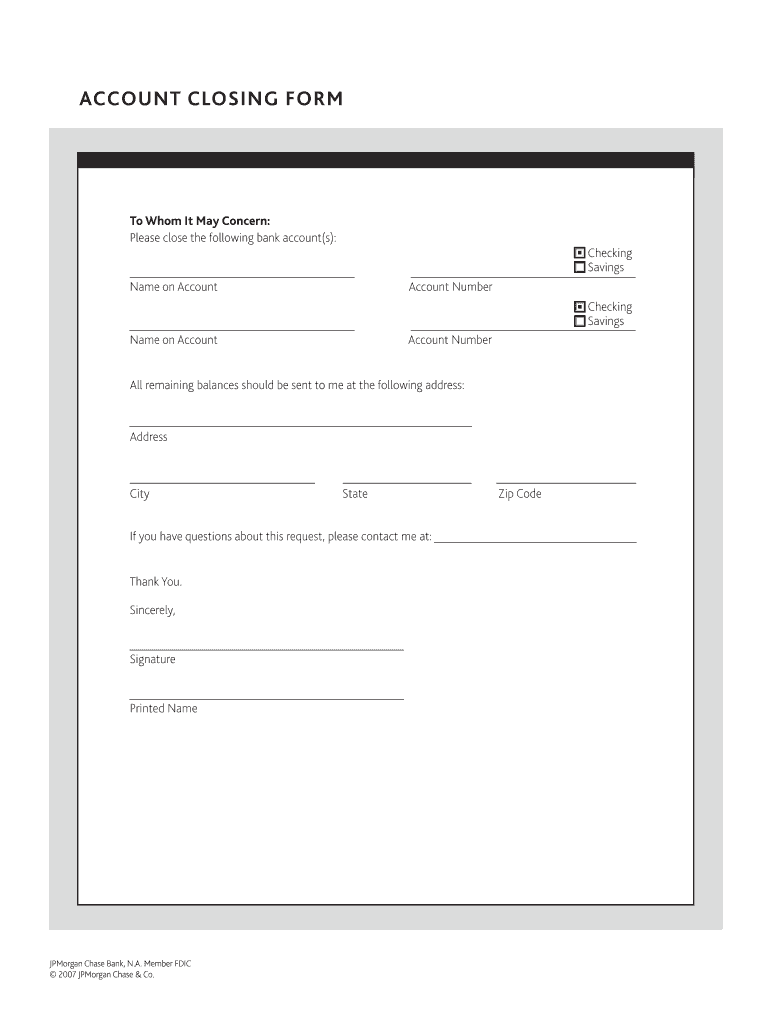
- Required Documentation: You will likely need to send a signed letter requesting the account closure, clearly stating your account number, full name, address, and providing a forwarding address for any final correspondence. Include a copy of your government-issued ID.
- Certified Mail Recommended: If sending by mail, use certified mail with a return receipt requested. This provides proof that Chase received your request, which is crucial for dispute resolution.
- Fund Transfer: You’ll need to specify how you want any remaining funds transferred, usually via a check mailed to your address. Ensure your mailing address on file is current.
Required Information and Documentation
Regardless of the method, certain pieces of information are universally required to close an account securely:
- Account Number: Your specific Chase checking or savings account number.
- Personal Identification: A valid government-issued photo ID.
- Signature Verification: If closing in person or by mail, your signature will be required to authorize the closure.
- Zero Balance (or plan for remaining funds): The account should ideally have a zero balance. If a small balance remains, you’ll need to instruct Chase on how to disburse it (e.g., via check).
What to Expect Post-Closure Request
Once you’ve formally requested the closure:
- Confirmation: Always ask for a written or email confirmation that the account has been closed. This is your proof that you followed the correct procedure.
- Final Statement: You might receive a final statement showing a zero balance and indicating the account is closed.
- Timeframe for Official Closure: While the request is immediate, it can sometimes take a few business days for the system to fully reflect the closure and for all internal processes to complete. In rare cases, if a small residual amount (e.g., a few cents of interest) posts after closure, the bank might reopen it briefly to clear, or simply write off the amount.
Potential Pitfalls and Financial Considerations
Closing a bank account successfully also means being aware of potential financial implications and avoiding common missteps. These insights help you protect your financial standing and ensure no unexpected charges arise.
Account Closure Fees
While most standard checking and savings accounts do not have direct closure fees, there are exceptions:
- Early Closure Fees: Some banks, including Chase, may impose an “early account closure fee” if you close an account within a certain timeframe after opening it (e.g., 90 or 180 days). This is to discourage individuals from opening accounts simply to take advantage of promotional offers without maintaining a long-term relationship. Always check the terms and conditions specific to your account.
- Minimum Balance Fees: If your account falls below a minimum balance and incurs a fee just before closure, that fee must be paid.
- Other Service Fees: Any outstanding fees for services like stop payments or wire transfers would need to be settled.
Impact on Credit Score (Indirectly)
It’s a common misconception that closing a checking or savings account directly affects your credit score. This is generally not the case. Your bank accounts are not reported to credit bureaus in the same way loans and credit cards are.
However, there can be an indirect impact:
- Missed Loan Payments: If you fail to update your automatic loan payments (mortgage, car, student loans) before closing your Chase account, and those payments bounce, this will be reported to credit bureaus and negatively impact your credit score.
- Overdrafts: If you close an account with a negative balance or if transactions clear after closure, leading to an overdraft, Chase could report this unpaid debt to collection agencies, which would damage your credit.
- Linked Credit Cards: If you have a Chase credit card linked to your checking account for overdraft protection or automatic payments, ensure that link is severed or updated. Closing the checking account will not automatically close the credit card.
Retaining Access to Past Records
As emphasized earlier, downloading statements is crucial. Banks typically retain records for a certain period, but accessing them after an account is closed can be a cumbersome process, sometimes involving fees for research or statement retrieval. Having your own digital copies ensures immediate access for tax purposes, audits, or resolving any financial discrepancies that may arise years down the line.
Overdraft Protection and Linked Accounts
If your Chase checking account was linked to another account (e.g., a savings account or a credit card) for overdraft protection, ensure this link is properly severed. You don’t want an unexpected debit attempting to pull funds from a non-existent account or, conversely, pulling from a credit card linked to an account you no longer use. Confirm with Chase that all associated services and links are terminated.
When to Consider Closing Your Account (Beyond Chase Specifics)
While this guide focuses on the “how-to” for Chase, it’s also worth pondering the “why” of closing a bank account. Understanding the broader financial context can help you make informed decisions about your banking relationships.
Reasons for Changing Banks
People decide to switch banks or close accounts for a variety of valid financial reasons:
- Better Interest Rates: Your current bank might offer negligible interest on savings, while competitors provide significantly higher Annual Percentage Yields (APYs), especially with online-only banks.
- Lower Fees or Fee-Free Accounts: Many traditional banks charge monthly maintenance fees unless certain conditions (like direct deposit or minimum balance) are met. Newer challenger banks or credit unions often offer accounts with fewer or no fees.
- Improved Customer Service: A frustrating experience with customer service can be a strong motivator to seek banking elsewhere.
- Specific Features or Technology: Your needs might evolve, requiring features like advanced budgeting tools, better mobile banking apps, or specific integration with financial planning software that your current bank doesn’t offer.
- Relocation: Moving to a new state or country often necessitates finding a bank with a stronger local presence or international capabilities.
- Ethical or Social Considerations: Some individuals choose banks based on their investment practices, environmental policies, or commitment to local communities.
- Consolidating Finances: Streamlining your financial life by having fewer accounts or consolidating them under one institution can simplify budgeting and management.
The Benefits of a Smooth Transition
A well-executed account closure and bank switch offers several benefits:
- Avoiding Financial Disruption: Properly updating all linked payments and deposits prevents late fees, missed payments, and potential damage to your credit score.
- Stress Reduction: Knowing your financial affairs are in order provides peace of mind.
- Optimizing Financial Health: By moving to a bank that better suits your needs, offers lower fees, or higher interest rates, you are actively improving your personal financial standing.
Conclusion
Closing a Chase bank account, or any bank account for that matter, is a financial administrative task that demands careful attention to detail. It’s far more than just emptying the funds; it’s a multi-step process involving meticulous preparation, clear communication with your bank, and a comprehensive review of all linked financial services.
By diligently verifying your balance, updating all direct deposits and automatic payments, securing your past statements, and choosing the appropriate closure method, you can ensure a hassle-free transition. Remember that while the act of closing an account doesn’t directly impact your credit, the collateral effects of neglecting associated financial obligations certainly can. A professional and methodical approach to this task safeguards your financial well-being and paves the way for a more optimized banking relationship elsewhere. Embrace the planning, execute with precision, and enjoy the financial freedom that comes with a well-managed banking portfolio.
aViewFromTheCave is a participant in the Amazon Services LLC Associates Program, an affiliate advertising program designed to provide a means for sites to earn advertising fees by advertising and linking to Amazon.com. Amazon, the Amazon logo, AmazonSupply, and the AmazonSupply logo are trademarks of Amazon.com, Inc. or its affiliates. As an Amazon Associate we earn affiliate commissions from qualifying purchases.