
Understanding and accessing your banking information, particularly your account number, is a fundamental aspect of personal financial management. Whether you’re setting up direct deposit for a new job, linking a third-party payment app, or initiating a wire transfer, knowing precisely where to locate your Chase account number is essential. For many, this piece of information can seem elusive, tucked away in the complexities of online portals or physical documents. This guide aims to demystify the process, providing clear, step-by-step instructions and practical insights to help you confidently find your Chase account number.

Understanding Your Chase Account Numbers: A Quick Primer
Before diving into the “how-to,” it’s crucial to understand what an account number is and how it differs from other critical banking details. Often, people confuse account numbers with routing numbers or even debit card numbers. Clarifying these distinctions will not only help you find the correct information but also ensure you use it appropriately for various financial transactions.
Account Number vs. Routing Number
Your account number is a unique identifier specific to your individual bank account. For Chase, this is typically a 10-digit number that precisely points to your checking, savings, or other specific account within the bank’s system. Think of it as your personal identification code for that particular bucket of money.
The routing number, on the other hand, is a nine-digit code that identifies the financial institution itself and, sometimes, a specific branch. When money moves between different banks, the routing number acts like a postal code, directing the transaction to the correct bank, while the account number then guides it to the correct account within that bank. For most standard transactions within the U.S., you’ll generally use the routing number assigned to your region and account type. Chase uses several routing numbers depending on the state where you opened your account and the type of transaction (e.g., wire transfers often have a different routing number).
Why You Need Both (and When)
Both your account number and routing number are indispensable for various financial activities. You’ll typically need both when:
- Setting up Direct Deposit: Your employer or benefits provider will require both to deposit funds directly into your account.
- Initiating ACH Transfers: For electronic funds transfers to or from other financial institutions, such as paying bills online directly from your bank account, linking investment accounts, or sending money to friends via services that require bank details.
- Wire Transfers: For larger, time-sensitive, or international transfers, both are critical, and sometimes specific wire transfer routing numbers are required.
- Linking Third-Party Financial Apps: Many budgeting apps, payment services (like Venmo or PayPal for direct bank transfers), and investment platforms ask for your bank account and routing numbers to connect securely.
While your debit card number is used for point-of-sale purchases or online transactions where you typically enter the card details, it should never be confused with your account number, which is used for direct bank-to-bank transfers.
The Most Reliable Ways to Locate Your Chase Account Number
Chase offers several convenient and secure methods to find your account number, catering to different preferences and situations. Whether you prefer digital access or traditional paper documents, there’s an option for you.
Checking Your Physical Checks
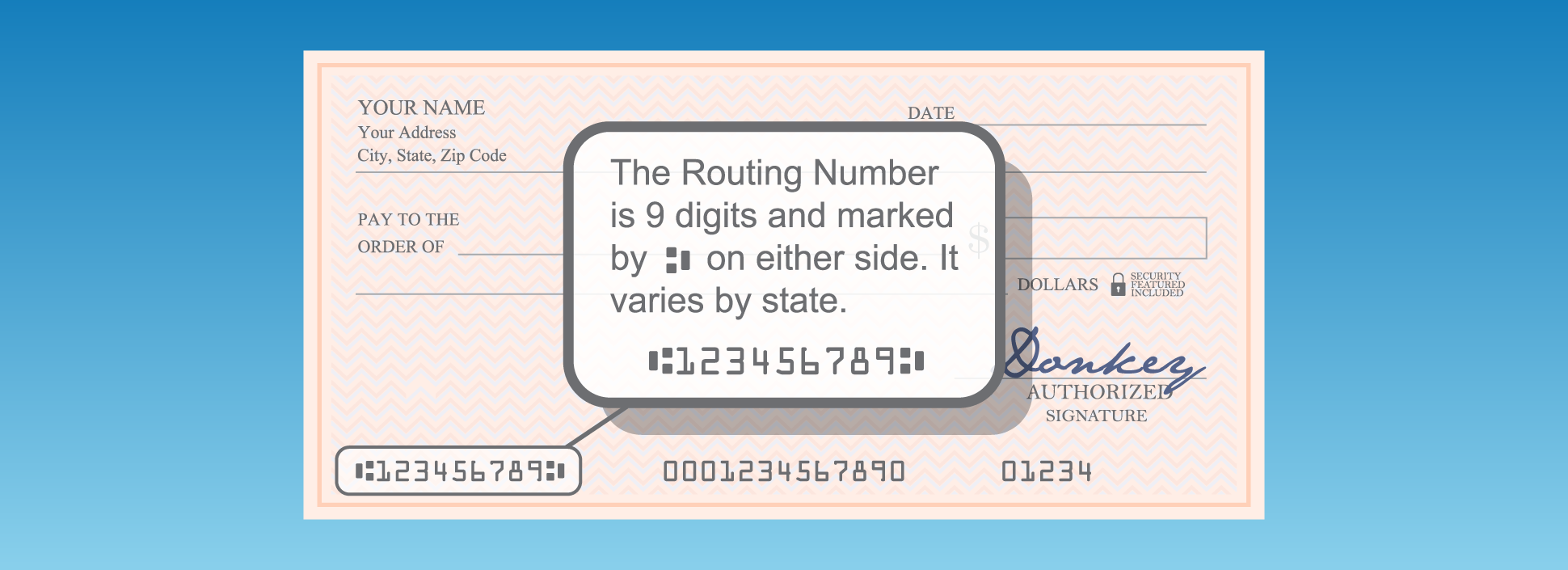
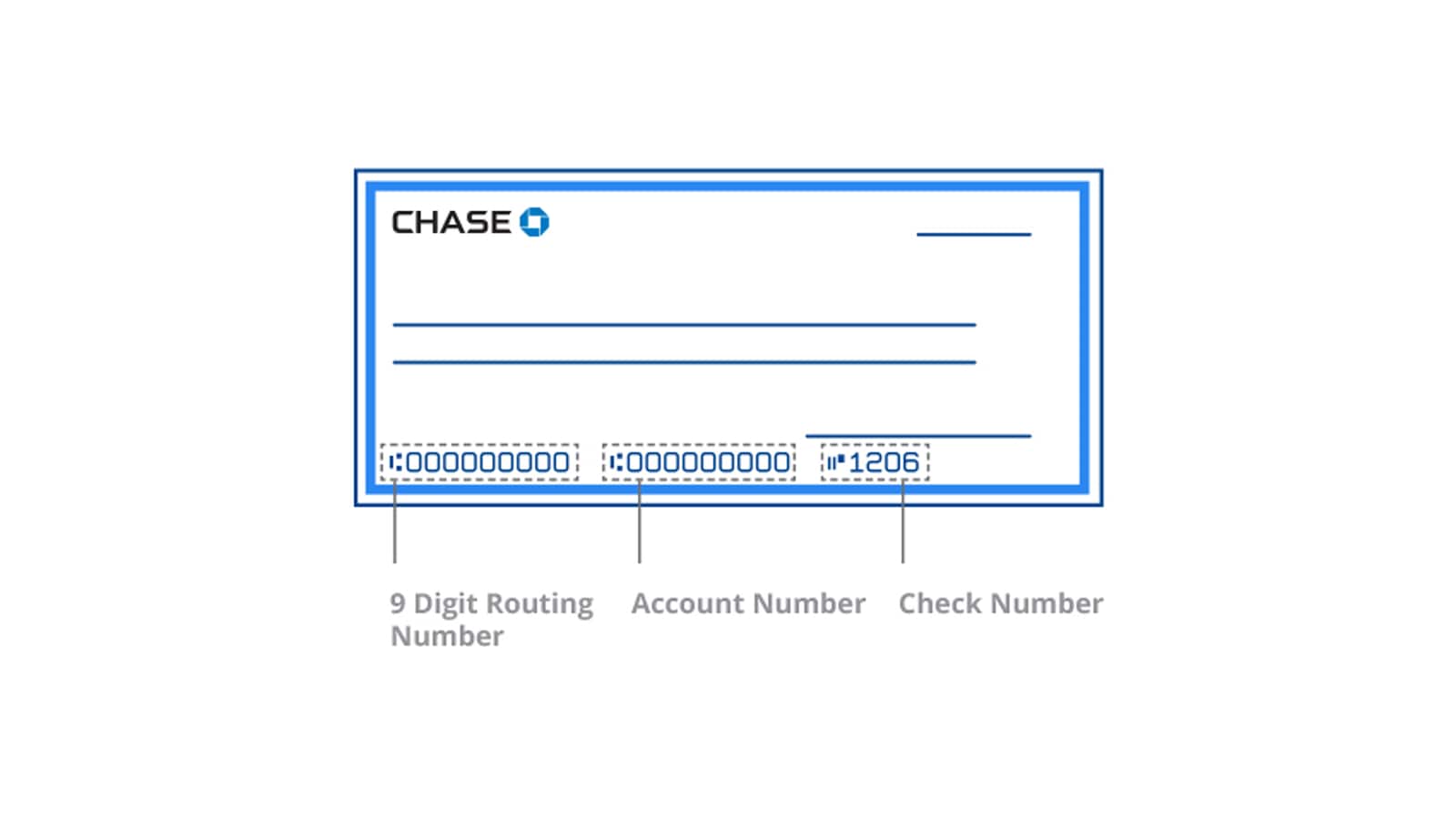
For those who still use a checkbook, this is often the quickest and most straightforward method. Your Chase account number is prominently displayed on the bottom of your personal checks.
- Location: Look at the bottom edge of a check. You’ll see three sets of numbers.
- Order: From left to right, the first set of nine digits is your routing number. The second set, typically 10 digits (though it can vary slightly), is your account number. The final set, usually four digits, is the check number.
- Tip: Always verify you are looking at your actual account number and not accidentally picking up the check number. The account number is generally longer than the check number.
Utilizing Chase Online Banking (Desktop & App)
In today’s digital age, online banking is arguably the most common and accessible way to find your account number. Chase’s online platform and mobile app are designed for ease of use and security.
Via Desktop (Chase.com):
- Log In: Go to Chase.com and log in to your account using your username and password.
- Select Account: Once logged in, navigate to the “Accounts” summary page. Click on the specific checking or savings account for which you need the number.
- View Account Details: On the account details page, look for an option like “Show Details,” “Account Services,” or a similar link. You might see a section explicitly labeled “Routing & Account Numbers.” Often, for security, the full account number will be partially masked (e.g., XXXX1234). You might need to click an “unmask” or “show full number” button and possibly re-enter your password or verify your identity to reveal the complete number.
- Print/Save: You can usually print these details or make a note of them in a secure location.
Via Chase Mobile App:
- Log In: Open the Chase Mobile app on your smartphone or tablet and log in.
- Select Account: From your account summary, tap on the specific account (e.g., “Chase Total Checking”) to view its details.
- Access Account Details: Look for an icon (often a small ‘i’ for information, or three dots for a menu) or a section labeled “Account details,” “Manage account,” or “Routing & account numbers.”
- Reveal Number: Similar to the desktop version, the account number might be masked. Tap to reveal the full number, which may require a security verification (e.g., Touch ID, Face ID, or password).
Reviewing Your Monthly Bank Statements
Bank statements are comprehensive records of your account activity and contain all your essential account information.
Digital Statements:
- Log In: Access your Chase online banking account (desktop or app).
- Find Statements: Navigate to the “Statements & Documents” section.
- Select Statement: Choose a recent checking or savings account statement (usually available for the past several years).
- Locate Information: Your account number will typically be listed at the top of the statement, near your name and address, often alongside the routing number.
Paper Statements:
If you receive paper statements by mail, simply locate your most recent statement. Your account number will be clearly printed at the top of the document, usually within the header section that includes your personal details and account summary. Keep these statements in a secure place.
Contacting Chase Customer Service
If you’ve exhausted all other options or prefer to speak with a representative directly, contacting Chase customer service is always a viable solution.
- Phone: Call the customer service number listed on the back of your debit card or on the Chase website (e.g., 1-800-935-9935 for general banking). Be prepared to verify your identity with personal information (e.g., account number, social security number, date of birth, mother’s maiden name, security questions).
- Secure Message (Online Banking): You can send a secure message through your online banking portal. This is often the safest written communication method.
- Visit a Branch: For in-person assistance, visit your local Chase branch. A banker can help you retrieve your account number after verifying your identity with a valid ID.
Common Scenarios Requiring Your Chase Account Number
Understanding when and why you need your account number reinforces its importance in managing your personal finances effectively.
Setting Up Direct Deposit (Payroll & Benefits)
This is perhaps the most frequent reason individuals need their account number. Employers, government agencies (for tax refunds or social security benefits), and other income sources use direct deposit for efficient and secure fund transfers. You’ll typically be asked to fill out a direct deposit form, which requires both your Chase account number and the correct routing number. Accuracy here is paramount; even a single digit error can lead to delays or misrouted funds.
Initiating Wire Transfers or ACH Payments
For larger, often time-sensitive, or international money transfers, wire transfers are common. ACH (Automated Clearing House) payments, on the other hand, are electronic network for financial transactions in the United States. Whether you’re receiving a wire transfer from abroad or sending a significant amount to another individual or business, your account number (and the appropriate routing number) is essential. Be particularly cautious with wire transfers, as they are often irreversible once sent. Always double-check the recipient’s details.
Linking to Third-Party Financial Apps (e.g., Venmo, PayPal, Budgeting Tools)
In an increasingly interconnected financial world, many people link their primary bank accounts to various financial applications. This includes popular peer-to-peer payment apps like Venmo or PayPal for sending and receiving money, or budgeting software like Mint or Personal Capital for tracking spending and wealth. When linking these apps, you’ll often be prompted to enter your bank’s routing number and your specific Chase account number to establish a secure connection, allowing funds to be moved or account activity to be monitored.
Paying Bills and Subscriptions
While many bills can be paid directly via debit card or credit card, some individuals or services prefer or require direct bank payments. This is often the case for recurring bills, where you might set up an automatic withdrawal from your checking account. Providing your account and routing numbers enables these vendors to debit your account directly, ensuring timely payments and avoiding late fees.
Safeguarding Your Account Information: Best Practices
Your Chase account number, along with your routing number, is sensitive information that, if it falls into the wrong hands, could potentially be used for fraudulent activities. Protecting this data is as important as knowing how to find it.
Be Wary of Phishing Scams
Never share your full account number, social security number, or other sensitive details in response to unsolicited emails, texts, or phone calls. Legitimate institutions like Chase will never ask for this information via unsecure channels. If in doubt, contact Chase directly using a verified phone number or through your secure online banking portal.
Use Secure Connections and Strong Passwords
Always access your Chase online banking through a secure, encrypted connection (look for “https://” in the URL bar and a padlock icon). Ensure your online banking password is strong, unique, and not easily guessable. Consider using a password manager to keep track of complex passwords. Enabling two-factor authentication (2FA) adds an extra layer of security, requiring a code sent to your phone in addition to your password.
Regularly Monitor Your Accounts
Make it a habit to regularly review your Chase account statements and transaction history, either through online banking or by reviewing paper statements. Promptly identify and report any unauthorized or suspicious transactions to Chase. Early detection can prevent significant financial losses.
What to Do if You Suspect Compromise
If you ever suspect that your Chase account number or other personal financial information has been compromised, act immediately. Contact Chase’s fraud department without delay. They can guide you through the process of securing your account, potentially closing the compromised account, and initiating a new one if necessary. Time is of the essence in these situations.
Conclusion
Finding your Chase account number is a straightforward process once you know where to look. Whether you prefer the tangible proof of a physical check or statement, the convenience of online banking, or the direct assistance of customer service, Chase provides multiple secure avenues. By understanding the importance of your account number, knowing how to locate it efficiently, and diligently safeguarding this crucial financial detail, you empower yourself with greater control and security over your personal finances. This foundational knowledge is a key component of effective money management in today’s digital landscape.
aViewFromTheCave is a participant in the Amazon Services LLC Associates Program, an affiliate advertising program designed to provide a means for sites to earn advertising fees by advertising and linking to Amazon.com. Amazon, the Amazon logo, AmazonSupply, and the AmazonSupply logo are trademarks of Amazon.com, Inc. or its affiliates. As an Amazon Associate we earn affiliate commissions from qualifying purchases.