
In the world of finance, numbers are the language of progress. Whether you are tracking the growth of a retirement portfolio, calculating the interest on a mortgage, or determining the tax implications of a new side hustle, one mathematical concept stands above the rest in terms of daily utility: the percentage. Understanding how to find a percentage of a number is not merely a classroom exercise; it is a fundamental pillar of financial literacy that empowers you to make informed decisions about your money.
When we talk about percentages in a financial context, we are discussing ratios and proportions. The term “percent” literally translates to “per one hundred.” In the realm of personal and business finance, this translates to how much of your capital is working for you, how much of your income is being diverted to expenses, and how much of your net worth is allocated to specific asset classes.

The Foundation of Financial Literacy: Understanding the Percentage Formula
Before diving into complex investment strategies or corporate tax structures, one must master the basic mechanics of finding a percentage. At its core, finding a percentage is the process of identifying a “part” relative to a “whole.”
The Core Equation for Financial Calculations
To find the percentage of a specific number, the most straightforward method is to convert the percentage into a decimal and then multiply it by the total amount. The formula is:
Amount = (Percentage / 100) × Total Value
For example, if you are looking to set aside a 15% performance bonus from a $5,000 commission check, you would divide 15 by 100 (0.15) and multiply by 5,000. The result, $750, represents the percentage of that specific number. In financial planning, this formula is used thousands of times a year to calculate everything from sales tax to tip amounts and investment fees.
Mental Math for Rapid Financial Assessment
In high-stakes business meetings or quick negotiation scenarios, you may not always have a calculator handy. Mastering “anchor percentages” allows for rapid mental estimation.
- To find 10%: Move the decimal point one place to the left ($1,000 becomes $100).
- To find 1%: Move the decimal point two places to the left ($1,000 becomes $10).
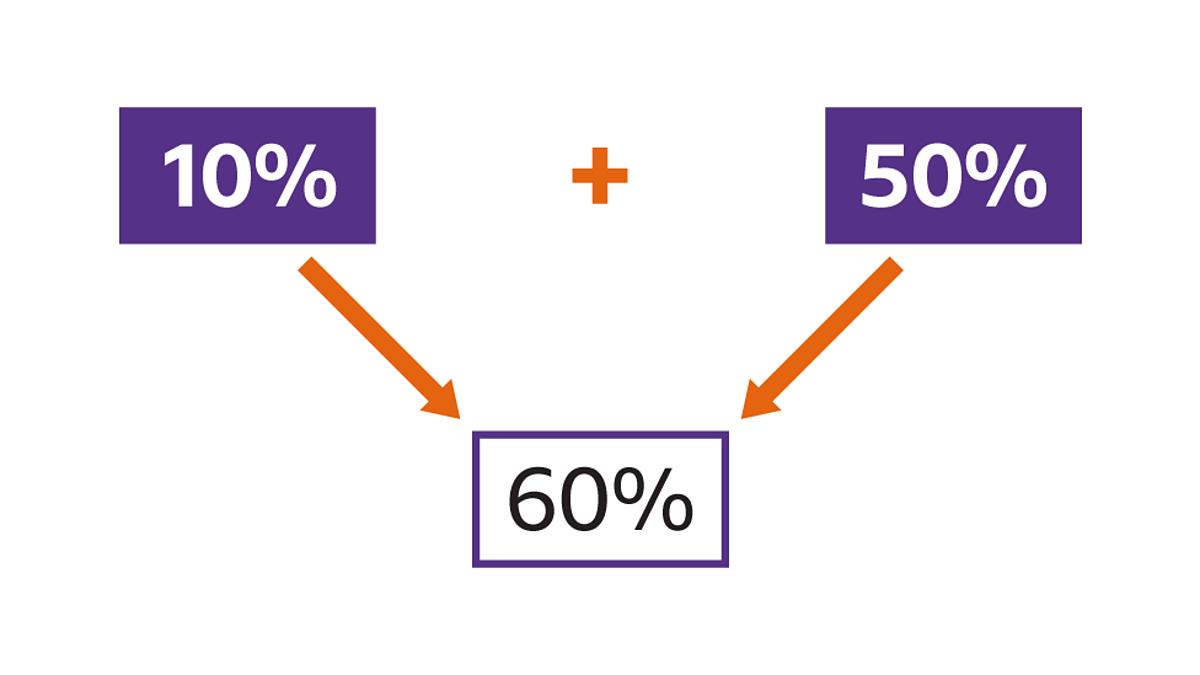
- To find 5%: Find 10% and cut it in half.
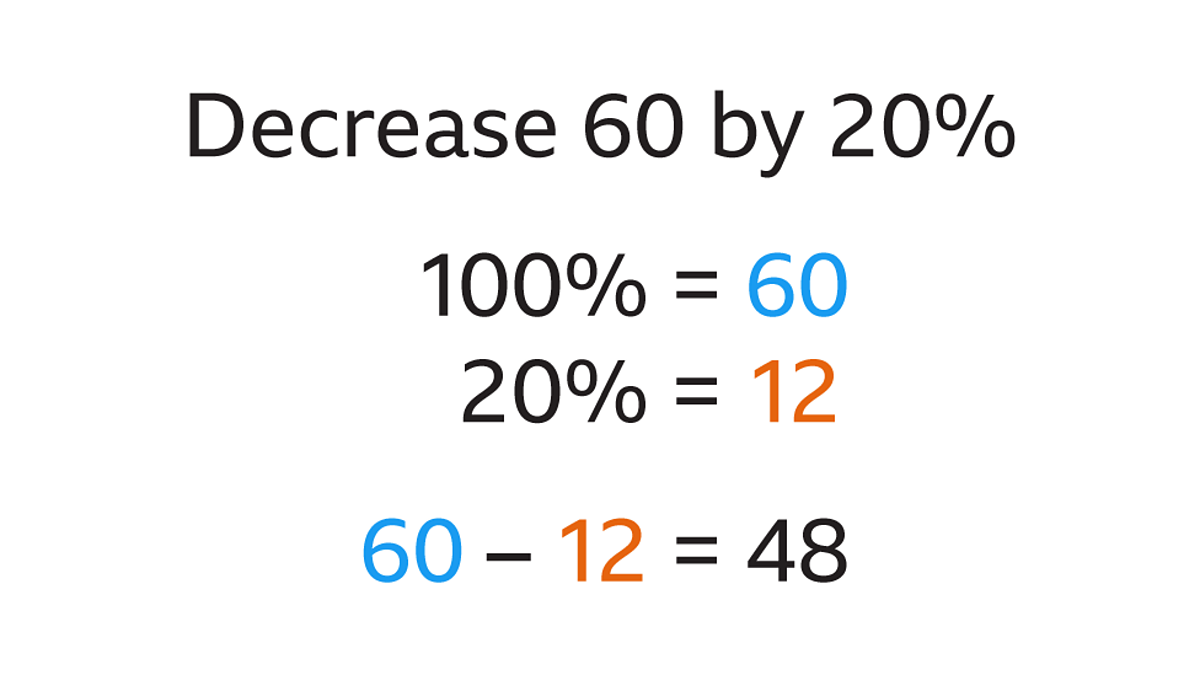
- To find 20%: Find 10% and double it.
These mental shortcuts are invaluable when evaluating the viability of an investment or checking the accuracy of a financial statement on the fly.
Percentages in Investment Strategy: Measuring Growth and Risk
For the modern investor, percentages are the primary metric for success. We rarely measure the success of a stock or a mutual fund by the dollar amount it increased; rather, we look at the percentage return relative to the initial capital invested.
Calculating Return on Investment (ROI)
ROI is the quintessential percentage calculation in the world of money. It tells you how efficiently your capital is performing. To find the percentage gain or loss on an investment, you use the following variation of the percentage formula:
ROI = [(Current Value – Original Value) / Original Value] × 100
If you purchased shares of a company for $2,000 and sold them for $2,600, your profit is $600. To find the percentage of the original number that this profit represents, you divide 600 by 2,000 to get 0.30, or a 30% ROI. This percentage allows you to compare the performance of that stock against other assets, such as real estate or bonds, regardless of the different dollar amounts involved.
The Power of Compound Interest
Compound interest is often called the eighth wonder of the world, and it is entirely driven by percentage-based growth. When your interest earns interest, your wealth grows exponentially. Understanding how a 7% average annual return on a diversified index fund compares to a 1% return in a standard savings account is the difference between a comfortable retirement and financial struggle. By calculating the percentage of growth over time, investors can project their future wealth and adjust their contributions accordingly.
Yields and Capital Gains
Income-focused investors often look at “yield.” A dividend yield is a percentage that shows how much a company pays out in dividends each year relative to its stock price. If a stock is priced at $100 and pays an annual dividend of $4, the yield is 4%. Understanding how to find this percentage helps investors build “passive income” streams that can eventually cover their living expenses.
Strategic Budgeting and Debt Management
Effective money management is essentially an exercise in percentage allocation. High-net-worth individuals rarely budget by tracking every penny; instead, they manage their wealth by tracking the percentages of their income.
The 50/30/20 Rule: A Percentage-Based Framework
One of the most popular financial tools for personal budgeting is the 50/30/20 rule. This strategy suggests that you should find the percentage of your after-tax income and divide it as follows:
- 50% for Needs: Housing, utilities, groceries, and insurance.
- 30% for Wants: Dining out, travel, and hobbies.
- 20% for Savings and Debt Repayment: Building an emergency fund or paying down principal.
By calculating these percentages, you create a scalable system. As your income grows, your spending and saving grow proportionally, preventing “lifestyle creep” from eroding your financial future.
Understanding APR and Interest Charges
On the other side of the balance sheet is debt. Whether it is a credit card, an auto loan, or a mortgage, the cost of borrowing is expressed as an Annual Percentage Rate (APR). If you carry a balance of $10,000 on a credit card with a 20% APR, you aren’t just paying back the $10,000; you are paying a percentage of that number every year in interest.
Finding the monthly interest charge requires dividing the annual percentage by 12. In this case, 20% / 12 = 1.66% per month. 1.66% of $10,000 is approximately $166. Understanding this math is a powerful motivator to pay off high-interest debt and move toward wealth-building instead of wealth-depletion.
Business Finance: Profit Margins and Scaling
For entrepreneurs and business owners, finding the percentage of a number is a daily necessity for maintaining solvency and ensuring profitability.
Gross vs. Net Profit Margins
A business may have millions of dollars in revenue, but if its expenses are equally high, it isn’t profitable. Profit margins are the percentages that tell the real story of a company’s health.
- Gross Profit Margin: Calculated by finding what percentage of revenue remains after subtracting the Cost of Goods Sold (COGS).
- Net Profit Margin: The percentage of revenue left after all expenses, including taxes and interest, have been paid.
If a product costs $40 to manufacture and sells for $100, the gross profit is $60, or a 60% margin. Investors look for high and stable margins as a sign of a “moat” or a competitive advantage in the marketplace.
Taxation and Deductions
Taxes are perhaps the most inevitable percentage calculation in finance. In progressive tax systems, different portions of your income are taxed at different percentages (brackets). Furthermore, business owners must calculate what percentage of their gross income can be deducted as legitimate business expenses. Failing to accurately find these percentages can lead to either overpaying the government or facing significant penalties during an audit.
Leveraging Technology for Financial Calculations
While understanding the manual math is essential for conceptual clarity, the modern financial landscape utilizes digital tools to handle complex, multi-variable percentage calculations.
Spreadsheet Mastery for Wealth Tracking
Tools like Microsoft Excel and Google Sheets are the backbone of professional finance. Learning how to find a percentage of a number using formulas allows for the creation of dynamic financial models. A simple formula like =A1*0.07 can instantly tell you the projected annual return on a portfolio value stored in cell A1. By chaining these percentage-based formulas together, you can simulate retirement scenarios, debt-snowball plans, or business cash flow projections.
Financial Planning Software
From robo-advisors to budgeting apps like YNAB or Mint, technology automates the “percentage of a number” logic to provide users with a bird’s-eye view of their finances. These tools automatically categorize your spending and tell you what percentage of your monthly budget went to “Entertainment” versus “Investments.” This automation allows you to focus on the high-level strategy—adjusting the percentages—rather than getting bogged down in the arithmetic.
In conclusion, the ability to find a percentage of a number is a superpower in the realm of money. It is the tool that transforms a confusing pile of receipts and statements into a coherent financial plan. By mastering this simple mathematical operation, you gain the clarity needed to minimize your debts, maximize your investments, and ultimately build a legacy of financial freedom.
aViewFromTheCave is a participant in the Amazon Services LLC Associates Program, an affiliate advertising program designed to provide a means for sites to earn advertising fees by advertising and linking to Amazon.com. Amazon, the Amazon logo, AmazonSupply, and the AmazonSupply logo are trademarks of Amazon.com, Inc. or its affiliates. As an Amazon Associate we earn affiliate commissions from qualifying purchases.