
Purchasing a used car represents a significant financial decision for many individuals and families. Far from being a mere transaction, it’s an intricate dance between budgeting, valuation, financing, and risk assessment. The allure of a pre-owned vehicle often stems from its immediate financial advantage: avoiding the steep depreciation that new cars experience the moment they leave the lot. However, navigating the landscape of used car acquisition requires a sharp financial mind to ensure you’re not just saving money upfront, but making a sound, long-term investment. This guide delves into the various avenues for buying used cars, exclusively through the lens of personal finance, helping you identify the most financially prudent path for your next vehicle.
Navigating the Landscape of Used Car Marketplaces
The first step in your used car journey is understanding where these vehicles are sold, and critically, the financial implications of each sales channel. Each option presents a unique balance of cost, convenience, and risk, all of which directly impact your financial outlay and peace of mind.
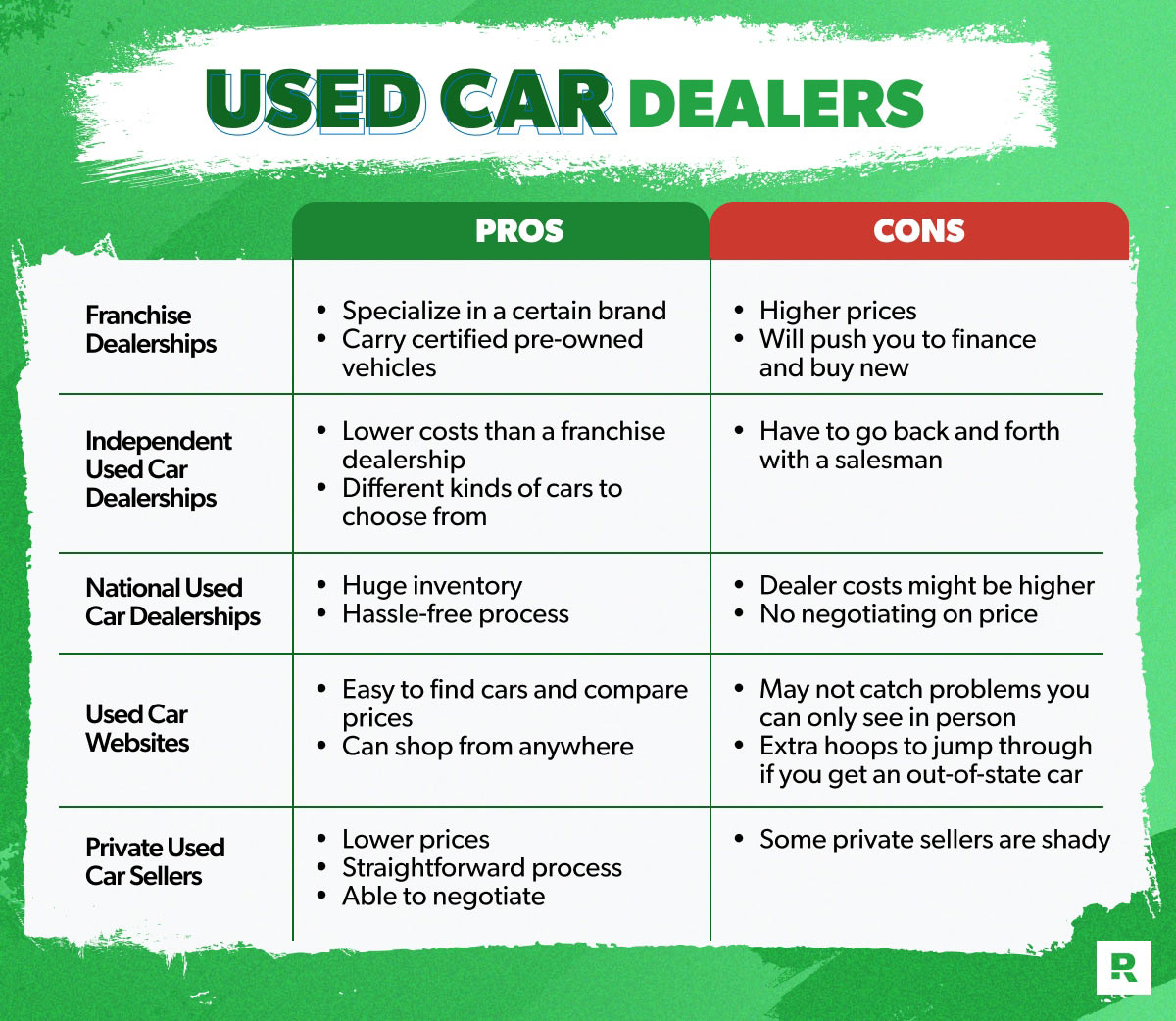
Private Sellers: Balancing Savings and Risk
Buying from a private seller, typically an individual selling their personal vehicle, often presents the most attractive initial price point. Without the overheads of a dealership, private sellers can offer lower prices, providing an immediate financial saving. This direct-to-consumer model means you’re potentially cutting out the middleman’s profit margin.
However, these savings come with increased financial risk and a greater need for due diligence. There are no warranties, no return policies, and typically no recourse if issues arise post-purchase. It falls entirely on the buyer to verify the vehicle’s condition, ownership history, and legal standing. This necessitates budgeting for a pre-purchase inspection (PPI) by an independent mechanic – a non-negotiable expense that can save you thousands in future repairs. Furthermore, verifying the title and registration to ensure a clear financial history (e.g., no outstanding liens) is paramount to avoid legal and financial headaches down the road. Payment security is another concern; typically, transactions involve cash or cashier’s checks, demanding careful coordination to avoid scams. While the potential for substantial savings is real, it requires a higher level of financial savvy and vigilance from the buyer.
Dealerships: Convenience, Assurance, and Cost Considerations
Dealerships offer a more structured and often more convenient buying experience, but typically at a higher price point than private sales. They can be broadly categorized into franchised dealerships (selling specific new car brands but also pre-owned vehicles) and independent used car dealerships.
Franchised dealerships often offer Certified Pre-Owned (CPO) programs. These vehicles undergo rigorous inspections and come with factory-backed warranties, offering a level of assurance akin to a new car, but at a lower price. From a financial perspective, CPO vehicles represent a premium segment within the used car market; you pay more for the peace of mind and warranty coverage, effectively transferring some of the long-term risk to the dealer/manufacturer. This can be a wise financial decision for buyers who prioritize reliability and want to mitigate unexpected repair costs, especially if their budget for repairs is limited.
Independent dealerships, while generally less expensive than franchised ones, offer a wider variety of makes and models. Their financial appeal lies in potentially lower prices compared to CPO options, but the extent of their reconditioning and warranty offerings can vary greatly. In both dealership scenarios, understanding and negotiating financing options is crucial. Dealers often have relationships with multiple lenders, but their rates may not always be the most competitive. Smart buyers will arrive with pre-approved financing from their bank or credit union to use as leverage, ensuring they secure the best possible interest rate and terms.
Online Marketplaces and Auctions: Digital Opportunities
The digital age has expanded the used car market significantly, introducing online marketplaces and auction sites as viable purchasing avenues. Platforms like Autotrader, CarGurus, and Facebook Marketplace aggregate listings from both private sellers and dealerships, offering unparalleled choice and convenience in comparing prices. The financial benefit here lies in the ability to easily compare numerous options and negotiate remotely, often leading to better deals. However, the financial due diligence remains the same as with private sales: arrange a PPI, verify history reports (like CarFax or AutoCheck), and secure payment safely.
Online auction sites, such as eBay Motors or specialized vehicle auction platforms (e.g., Copart for salvage vehicles, or dealer-only auctions for public access via brokers), represent another segment. These platforms can offer significant discounts, especially for vehicles with minor damage or those repossessed. However, they come with a higher degree of financial risk. Buyers often cannot inspect the vehicle in person before bidding, relying solely on provided descriptions and photos. This means there’s a greater chance of hidden mechanical issues, making the potential for savings conditional on being prepared for post-purchase repairs. This option is typically best suited for experienced buyers or those with a robust repair budget and a high tolerance for risk.
The Financial Deep Dive: Budgeting and Valuation
Beyond choosing where to buy, the true financial discipline in purchasing a used car lies in meticulous budgeting and accurate valuation. A smart purchase considers not just the sticker price, but the entire financial ecosystem surrounding vehicle ownership.
Setting a Realistic Budget: Beyond the Sticker Price
Your budget must extend far beyond the car’s purchase price. A common financial pitfall is overlooking the total cost of ownership (TCO). This includes insurance premiums, which can vary significantly based on the car’s make, model, age, your driving history, and chosen coverage. Maintenance and repair costs are another critical component; older or higher-mileage vehicles typically demand a larger maintenance budget. Don’t forget registration fees, taxes, and estimated fuel costs, which also contribute to the TCO.
When considering financing, your budget must also account for the down payment and monthly loan repayments. Assess your current debt-to-income ratio to ensure the new car payment doesn’t strain your finances, potentially impacting your ability to meet other financial obligations or save for future goals. A general rule of thumb is that total car expenses (payment, insurance, fuel, maintenance) should not exceed 10-15% of your net monthly income.
Valuing Your Investment: Tools and Techniques
Accurately valuing a used car is crucial to avoid overpaying and ensure you’re making a financially sound acquisition. Trusted resources like Kelley Blue Book (KBB), Edmunds, and NADA Guides provide comprehensive valuation data based on factors like make, model, year, mileage, condition, and optional features. These tools offer insight into trade-in value, private party value, and retail value, giving you a clear benchmark for negotiations.
Understanding market depreciation is also vital. While new cars depreciate rapidly, used cars continue to depreciate, albeit at a slower rate. Choosing a model known for holding its value can be a wise financial move, preserving more of your investment for future resale. Finally, the importance of a pre-purchase inspection (PPI) cannot be overstated. A PPI, performed by an independent mechanic, provides an objective assessment of the vehicle’s mechanical and structural condition. The cost of a PPI is a small investment that can uncover thousands of dollars in hidden repairs, preventing a financially disastrous purchase. It empowers you with leverage in negotiations or, if issues are too severe, the financial prudence to walk away.

Smart Financing Strategies for Used Car Purchases
How you pay for your used car can have a profound impact on the total financial outlay. Choosing the right financing strategy is as important as choosing the right car.
Cash vs. Loan: Weighing the Pros and Cons
Paying cash for a used car offers undeniable financial benefits: you avoid interest payments entirely, eliminating thousands of dollars in costs over the life of a loan. This frees up monthly cash flow and reduces your overall debt burden, contributing to greater financial stability. However, paying cash means liquidating a significant portion of your savings, which might be better invested elsewhere or reserved for emergencies. The opportunity cost of tying up a large sum in a depreciating asset should be carefully considered.
Opting for a loan, on the other hand, allows you to preserve your liquidity and can be a strategic move for building a strong credit history, provided you make timely payments. If interest rates are low, or if your alternative investments yield higher returns than the loan’s interest rate, a loan can be a financially sound choice. The key is to secure the most favorable terms possible to minimize the total cost of borrowing.
Securing the Best Loan Terms
The most financially savvy approach to car financing is to secure pre-approval from banks or credit unions before you even set foot in a dealership. This allows you to compare interest rates (APR), loan terms, and total interest paid from multiple lenders, giving you a strong negotiating position. Dealers often offer financing, but their rates may be higher, or they might try to extend the loan term to lower monthly payments, which ultimately means paying more interest over time.
Your credit score plays a monumental role in determining the interest rate you’ll qualify for. A higher credit score signals lower risk to lenders, translating into significantly lower APRs and substantial savings over the loan’s duration. Taking steps to improve your credit score before applying for a car loan can lead to thousands of dollars in savings.
The Role of Trade-ins and Down Payments
A trade-in can reduce the amount you need to finance, thereby lowering your monthly payments and the total interest paid. However, it’s often more financially advantageous to sell your current car privately, as dealerships typically offer less than the car’s market value for a trade-in. If you do trade in, research its value beforehand using tools like KBB to ensure you’re getting a fair deal.
Making a substantial down payment is another powerful financial strategy. A larger down payment reduces the principal loan amount, which means less interest paid over the life of the loan. It also helps to prevent being “upside down” on your loan (owing more than the car is worth), a precarious financial situation that can arise from rapid depreciation, especially with minimal down payments. Aiming for at least 20% down is a common recommendation for optimal financial health.
Protecting Your Investment: Post-Purchase Financial Considerations
The financial journey doesn’t end when you drive off the lot. Protecting your used car investment involves ongoing financial planning for insurance, maintenance, and future resale.
Insurance: A Non-Negotiable Financial Shield
Car insurance is a legal and financial necessity. For used cars, factors affecting premiums include the vehicle’s age, safety ratings, repair costs (which can be higher for older or less common parts), and your driving history. Comparing quotes from multiple insurance providers is crucial to find the most cost-effective coverage that meets your needs. Carefully consider the type and amount of coverage; while minimum liability is required, comprehensive and collision coverage protect your financial investment in the vehicle itself against theft, accidents, and other damages. The deductible you choose also directly impacts your premium – a higher deductible means lower premiums but a larger out-of-pocket expense in case of a claim.
Maintenance and Repairs: Budgeting for the Unexpected
Used cars, by their nature, are more likely to require maintenance and repairs than new ones. Establishing an emergency fund specifically for car repairs is a wise financial move, preventing unexpected breakdowns from derailing your monthly budget or forcing you into high-interest credit card debt. Research common issues for the specific make and model you’re considering and factor potential repair costs into your long-term budget.
Extended warranties, sometimes offered by dealerships or third parties, can seem appealing. However, their financial value is often debated. Carefully scrutinize the terms, exclusions, and cost of any extended warranty. Often, the cost of the warranty outweighs the actual cost of repairs over its term, making it a less financially sound choice than simply saving for potential repairs yourself. Consider DIY maintenance for simple tasks like oil changes or filter replacements to save on labor costs, but always prioritize professional repairs for critical components.
Resale Value and Future Planning
Maintaining your used car meticulously isn’t just about prolonging its life; it’s also about preserving its financial value. Regular servicing, keeping detailed maintenance records, and addressing cosmetic issues can significantly enhance its resale value when you decide to upgrade. When the time comes to sell, understanding the market value and choosing the right sales channel (private sale often yields higher returns than trade-in) will help you maximize your return on investment and contribute positively to your next vehicle purchase. Think of your used car not just as a means of transport, but as an asset whose value can be managed and optimized over time.

Conclusion
The decision of where to buy a used car is intrinsically tied to a multitude of financial considerations. From evaluating the immediate cost savings of a private seller against the assurances of a dealership, to meticulously budgeting for the total cost of ownership, and strategically financing your purchase, every step demands a financially informed approach. By understanding the nuances of each marketplace, diligently valuing your potential investment, securing optimal financing, and planning for post-purchase expenses, you can transform the often-stressful experience of buying a used car into a financially prudent and rewarding endeavor. Remember, a smart used car purchase isn’t about finding the cheapest option, but about making the most financially sound decision that aligns with your budget and long-term financial goals.
aViewFromTheCave is a participant in the Amazon Services LLC Associates Program, an affiliate advertising program designed to provide a means for sites to earn advertising fees by advertising and linking to Amazon.com. Amazon, the Amazon logo, AmazonSupply, and the AmazonSupply logo are trademarks of Amazon.com, Inc. or its affiliates. As an Amazon Associate we earn affiliate commissions from qualifying purchases.