
For investors, traders, and financial enthusiasts, the ringing of the opening bell at the New York Stock Exchange (NYSE) is more than just a ceremonial tradition; it marks the commencement of the world’s most significant daily display of capital movement. Understanding exactly when the market opens—and the nuances of the hours surrounding that opening—is fundamental to navigating the complexities of modern finance. Whether you are a retail investor managing a retirement portfolio or a day trader looking for high-volatility opportunities, timing is a critical component of your success.
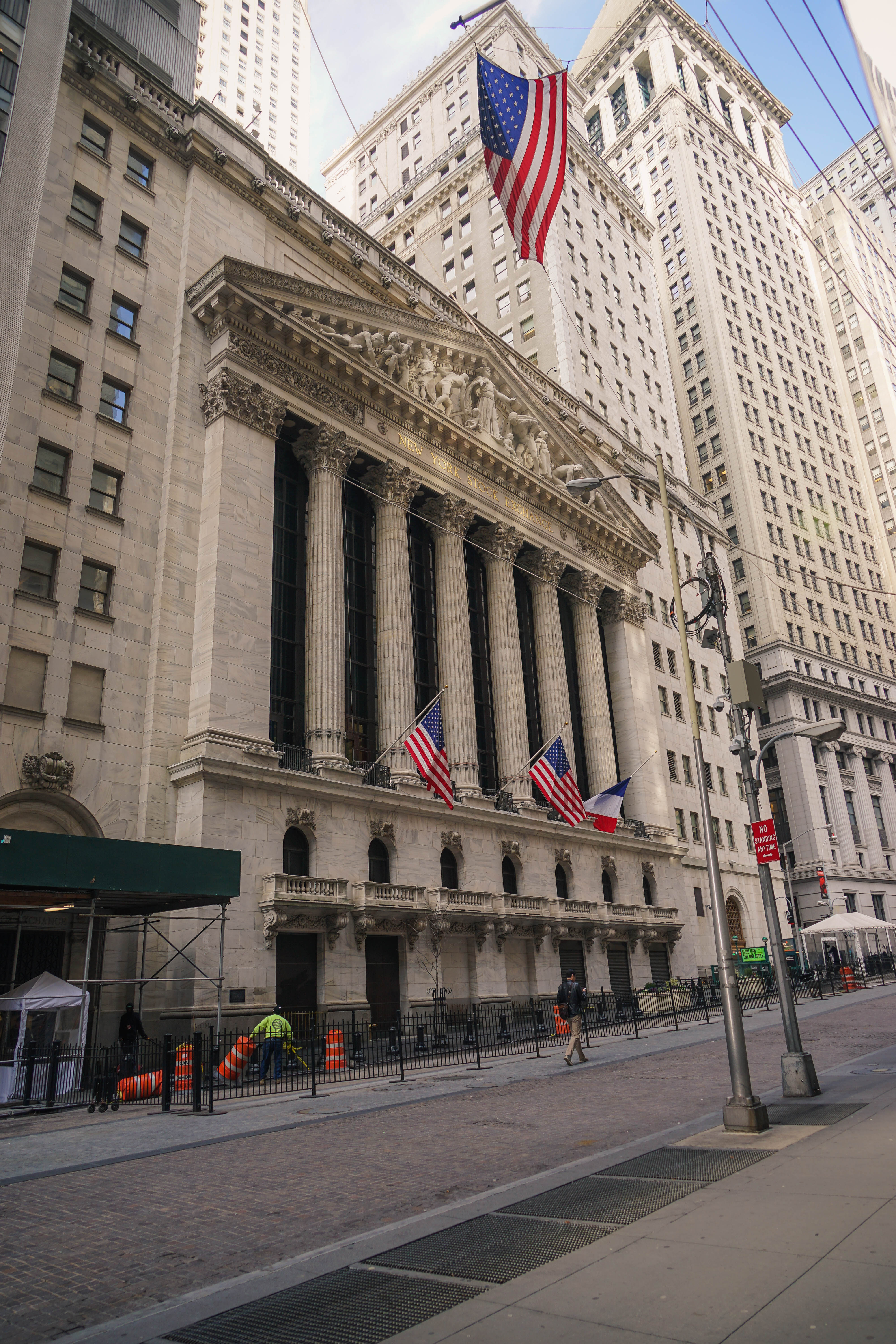
The NYSE, located at 11 Wall Street in Lower Manhattan, operates on a strict schedule that dictates the flow of trillions of dollars in global equities. However, the “opening time” is not a singular event but rather a series of phases that cater to different types of market participants.
The Core Trading Schedule of the NYSE
The New York Stock Exchange maintains a standardized schedule that provides a predictable framework for global commerce. For the vast majority of individual investors, the “trading day” refers to the period known as “Regular Trading Hours.”
Standard Trading Hours
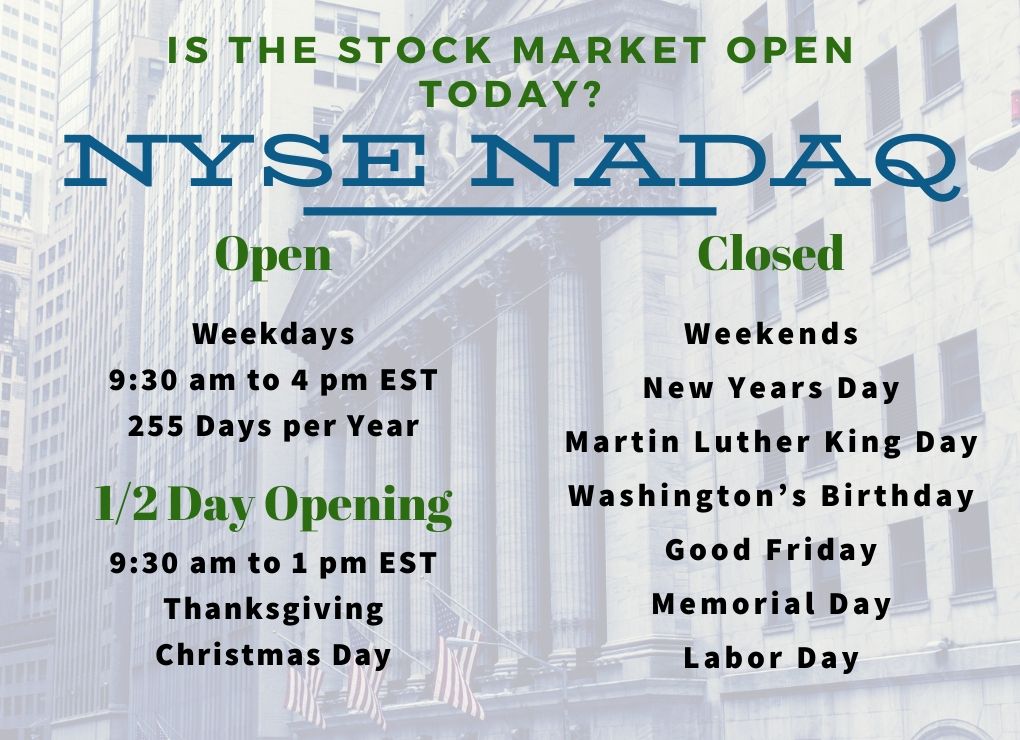
The New York Stock Exchange officially opens for regular trading at 9:30 AM Eastern Time (ET) and closes at 4:00 PM ET. This window, totaling six and a half hours, is when the bulk of stock transactions occur. During these hours, liquidity is at its peak, meaning there are enough buyers and sellers to ensure that trades can be executed quickly and at prices close to the current market rate. It is important to note that these times follow the New York clock; therefore, when the U.S. observes Daylight Saving Time, the market shifts accordingly, which international investors must track to avoid missing the opening.
The Significance of the Opening Bell
The 9:30 AM opening is signaled by the famous “Opening Bell.” While often a televised event featuring corporate executives or celebrities, the bell serves a functional purpose. It triggers the “Opening Auction,” a sophisticated process where buy and sell orders accumulated overnight are matched to determine the official opening price for each security. This price discovery mechanism is vital because it sets the tone for the day’s momentum. Unlike the decentralized nature of cryptocurrency markets, the NYSE’s centralized opening ensures a fair and transparent start to the session.
Weekend and Holiday Observances
The NYSE does not operate on Saturdays or Sundays. Furthermore, the exchange observes several U.S. federal holidays throughout the year. On days such as New Year’s Day, Martin Luther King Jr. Day, Washington’s Birthday (Presidents’ Day), Good Friday, Memorial Day, Juneteenth, Independence Day, Labor Day, Thanksgiving, and Christmas, the floor remains closed. Occasionally, the market will also observe “early closures,” such as the day after Thanksgiving or Christmas Eve, where trading ends at 1:00 PM ET. Being aware of these closures is essential for managing margin requirements and avoiding unexpected exposure over long weekends.
Extended Hours Trading: Beyond the Opening Bell
While the 9:30 AM to 4:00 PM window is the official session, the digital age has ushered in the era of “Extended Hours Trading.” This allows market participants to react to news that breaks outside of the standard window, such as corporate earnings reports or geopolitical shifts.
Pre-Market Trading Mechanics
The NYSE Arca, the exchange’s fully electronic platform, allows for pre-market trading to begin as early as 4:00 AM ET. Most retail brokerages, however, grant their users access starting at 7:00 AM or 8:00 AM ET. Pre-market trading is characterized by lower volume and wider bid-ask spreads. Because fewer participants are active, a single large order can cause significant price swings. For the strategic investor, the pre-market session serves as a laboratory to gauge how the market is reacting to overnight news before the “big money” enters at 9:30 AM.
After-Hours Trading Risks and Rewards
Following the closing bell at 4:00 PM, after-hours trading continues until 8:00 PM ET. This session is particularly crucial during “Earnings Season.” When a major company like Apple or Microsoft releases its quarterly results at 4:01 PM, the after-hours market experiences a surge in activity. While this allows for immediate reaction to news, it carries inherent risks. The lack of liquidity can lead to “slippage,” where your order is filled at a much worse price than anticipated. Professional investors often use limit orders during these sessions to protect themselves from extreme volatility.
Why Electronic Communication Networks (ECNs) Matter
The ability to trade before the 9:30 AM open is made possible by Electronic Communication Networks (ECNs). These are automated systems that match buy and sell orders without the need for a traditional exchange floor. ECNs have democratized access to the markets, ensuring that individual investors are no longer at a disadvantage compared to institutional firms when it comes to reacting to global events in real-time.
Global Context and Market Overlap
The NYSE does not exist in a vacuum. Its opening time is strategically positioned to interact with other major financial hubs across the globe, creating periods of intense activity known as “overlaps.”
Time Zone Synchronicity (EST/EDT)
Because the NYSE operates on Eastern Time, it serves as the bridge between the closing of European markets and the later activity of Asian markets. For investors on the West Coast of the United States, the market opens at a brisk 6:30 AM PT. For those in London, the NYSE open occurs at 2:30 PM GMT. This synchronicity is what makes the 9:30 AM ET open a global focal point; it is the time when the largest number of the world’s professional traders are awake and active simultaneously.
The “Golden Hour” of European Overlap
One of the most important periods in the trading day is the overlap between the NYSE and the major European exchanges, such as the London Stock Exchange (LSE) and the Euronext. This typically occurs from 9:30 AM ET until around 11:30 AM or 12:00 PM ET, when European markets close. This “Golden Hour” usually sees the highest trading volumes of the day. The dual participation from both sides of the Atlantic increases liquidity and provides the most stable environment for executing large institutional orders.
Impact on Volatility and Liquidity
When the NYSE opens, it often absorbs the volatility generated by the closing sessions in Europe and the overnight sessions in Tokyo and Hong Kong. If the Nikkei 225 drops 3% overnight, the NYSE opening will be the first opportunity for U.S.-based investors to price that risk into American equities. Understanding this global chain reaction helps investors understand why the 9:30 AM opening price can sometimes differ drastically from the previous day’s 4:00 PM close.
Strategic Timing for Modern Investors
Knowing when the market opens is one thing; knowing how to trade the opening is another. Market behavior changes significantly throughout the day, and successful investors tailor their strategies to these specific time blocks.
The First 30 Minutes: Morning Volatility
The period from 9:30 AM to 10:00 AM ET is often referred to as the “Amateur Hour”—though the name is misleading, as many professionals are also highly active. This is the period of maximum volatility. Overnight news, earnings, and economic data are all being “priced in” simultaneously. Many seasoned traders advise against placing market orders during these first 30 minutes, as the price can swing wildly in both directions before a clear trend is established.
The Mid-Day Lull
Between 12:00 PM and 2:00 PM ET, trading volume typically drops. This is often called the “lunchtime lull.” During this period, many institutional traders step away, and the market can become range-bound. For the long-term investor, this is often a good time to execute trades if they want to avoid the frantic volatility of the open or close, as prices tend to be more stable, albeit with slightly less liquidity.
The “Power Hour” Before Close
The final hour of trading, from 3:00 PM to 4:00 PM ET, is known as the “Power Hour.” Volume surges again as day traders close out their positions and institutional fund managers rebalance their portfolios to match their benchmarks. The final ten minutes, leading up to the closing auction, are particularly intense. Just as the opening bell sets the tone for the day, the closing bell provides the “closing print,” which is the benchmark used for valuing mutual funds and retirement accounts.
Technological and Economic Factors Affecting Market Hours
The question of “what time does the market open” may become more complex in the future as technology and economic pressures push for more flexible trading windows.
The Rise of 24/7 Trading Discussions
In recent years, there has been increasing debate within the financial community about moving toward a 24/7 trading model, similar to the cryptocurrency markets. Proponents argue that in a globalized economy, closing the market for 17.5 hours a day is an outdated concept. Critics, however, point out that 24-hour trading could lead to fragmented liquidity and increased stress for market participants. While the NYSE currently sticks to its 9:30 AM start, the expansion of “24/5” retail platforms suggests that the traditional opening time is becoming just one part of a continuous global loop.

How Economic Reports Influence Opening Behavior
The NYSE opening is frequently influenced by “Pre-Market Data Drops.” Major economic indicators, such as the Consumer Price Index (CPI) or the Non-Farm Payrolls report, are typically released at 8:30 AM ET—exactly one hour before the opening bell. These reports can cause massive shifts in index futures. An investor who only looks at the market at 9:30 AM might be confused by a sudden “gap up” or “gap down” in prices. By tracking these 8:30 AM releases, investors can anticipate the direction and intensity of the opening bell’s activity.
In conclusion, while the New York Stock Exchange officially opens at 9:30 AM ET, the reality of modern finance is a 24-hour cycle of information and preparation. By understanding the core hours, the extended sessions, and the strategic importance of market overlaps, investors can better position themselves to capitalize on opportunities and mitigate the risks of the world’s most influential financial market.
aViewFromTheCave is a participant in the Amazon Services LLC Associates Program, an affiliate advertising program designed to provide a means for sites to earn advertising fees by advertising and linking to Amazon.com. Amazon, the Amazon logo, AmazonSupply, and the AmazonSupply logo are trademarks of Amazon.com, Inc. or its affiliates. As an Amazon Associate we earn affiliate commissions from qualifying purchases.