
The quest to quantify and calculate is as old as civilization itself, driven by the fundamental human need to understand and manage the world around us. From the earliest scratches on cave walls to the complex algorithms powering today’s supercomputers, the journey of calculation has been one of relentless innovation. The question “Who invented the calculator?” doesn’t have a single, simple answer, but rather unfurls a fascinating saga of ingenious minds, iterative improvements, and technological breakthroughs spanning centuries. It’s a story deeply embedded in the very fabric of technological advancement, reflecting humanity’s continuous push to automate and simplify complex numerical tasks. This article will delve into the rich history of calculating devices, tracing their evolution from rudimentary tools to the sophisticated electronic instruments we rely on today, all through the lens of technological development.

The Dawn of Computation: Early Mechanical Aids
Before the advent of complex machinery, humans devised ingenious methods to assist with arithmetic. These early tools, while far removed from what we recognize as a calculator today, laid the conceptual groundwork for automated computation by externalizing the act of counting and calculating. They represent the foundational steps in humanity’s technological journey towards mechanical and eventually electronic calculation.
Ancient Abacus and Counting Boards
One of the oldest and most widely recognized calculating devices is the abacus. Its origins trace back thousands of years, with evidence of its use found in ancient Mesopotamia, Egypt, Greece, Rome, China, and Japan. The abacus, essentially a frame with beads sliding on rods or wires, allowed users to perform addition, subtraction, multiplication, and division by manipulating the beads according to specific rules. Its power lay in its ability to represent numbers positionally and perform calculations through physical manipulation, thereby externalizing memory and arithmetic operations. Different cultures developed variations of the abacus, such as the Chinese suanpan and the Japanese soroban, each with unique bead configurations and operational methods. While not a “calculator” in the modern sense, the abacus was a critical technological leap, providing a tangible interface for complex arithmetic long before the invention of gears and circuits. It demonstrated the profound impact of a simple, physical tool in augmenting human cognitive abilities for mathematical tasks.
Napier’s Bones and the Slide Rule
As the demands for more complex calculations grew, particularly in fields like astronomy, navigation, and commerce, new mechanical aids emerged. In the early 17th century, Scottish mathematician John Napier introduced Napier’s Bones, a set of numbered rods that simplified multiplication and division through a method of movable rods that effectively mechanized lattice multiplication. While not a machine, it was a significant step towards mechanical calculation by providing a systematic, physical method for performing multi-digit multiplication without having to memorize extensive multiplication tables.
Building on the principles of logarithms, also developed by Napier, the slide rule emerged shortly thereafter, invented by William Oughtred around 1622. This device, typically consisting of two sliding scales, allowed users to perform multiplication, division, roots, logarithms, and even trigonometric functions with remarkable speed and accuracy, limited only by the precision of its markings. The slide rule remained the primary tool for engineers, scientists, and mathematicians for over 300 years, until the advent of electronic calculators in the latter half of the 20th century. Its technological significance lies in its ingenious use of logarithmic scales to transform complex operations into simple additions and subtractions of lengths, demonstrating a sophisticated understanding of mathematical principles applied to a physical, analog device.
Blaise Pascal and the Birth of the Mechanical Calculator
The true lineage of the mechanical calculator, as we might recognize it, begins in the 17th century with the extraordinary work of a young French polymath, Blaise Pascal. His invention marked a pivotal moment, transitioning from manual aids to genuine mechanical computation.
The Pascaline: A Glimpse into Automation
In 1642, at the tender age of 19, Blaise Pascal invented the Pascaline, often credited as the first operational mechanical calculator. Pascal was motivated to help his father, a tax commissioner, with the laborious and error-prone task of calculating taxes. His device was a gear-driven machine that could perform addition and subtraction directly, and multiplication and division through repeated additions or subtractions.
The Pascaline featured a series of toothed wheels, each representing a decimal digit. A unique aspect was its “carry” mechanism, which automatically transferred a digit to the next position when a wheel completed a full rotation (e.g., from 9 to 0). This ingenious mechanism, akin to an odometer, was a significant technological breakthrough, automating a key part of arithmetic that previously required manual oversight. While limited in its practical application due to manufacturing complexities and cost, the Pascaline was a revolutionary concept. It proved that a machine could perform arithmetic operations autonomously, without human intervention for each step of the calculation process. Pascal built about 50 prototypes, refining his design and demonstrating its potential, even though widespread adoption was not achieved. Its invention firmly established the blueprint for subsequent mechanical calculators.
Leibniz, Babbage, and the March Towards Modern Computing
The ideas pioneered by Pascal were further developed by subsequent generations of inventors, most notably Gottfried Wilhelm Leibniz and Charles Babbage, who pushed the boundaries of mechanical calculation towards more versatile and automated machines, laying conceptual groundwork for what would eventually become the computer.
Leibniz’s Stepped Reckoner
Following Pascal’s work, German polymath Gottfried Wilhelm Leibniz significantly advanced the concept of mechanical calculation. Around 1672, Leibniz invented the Stepped Reckoner (or Staffelwalze), a more ambitious machine than the Pascaline. While still a mechanical calculator, it introduced several critical improvements. Unlike the Pascaline, which primarily focused on addition and subtraction, Leibniz’s machine was designed to perform all four basic arithmetic operations (addition, subtraction, multiplication, and division) more directly.
The key innovation in the Stepped Reckoner was the Leibniz wheel, a fluted drum with nine teeth of varying lengths. This design allowed for variable increments in each rotation, greatly simplifying the mechanism for multiplication and division. Although only two prototypes were built, and neither was perfectly reliable due to manufacturing precision limitations of the era, the Stepped Reckoner represented a crucial conceptual leap. It demonstrated how mechanical systems could be designed for a wider range of arithmetic operations and laid the theoretical foundation for future mechanical calculators and even calculating engines. Leibniz’s foresight in designing a mechanism for direct multiplication and division was a significant technological milestone, impacting mechanical calculator design for centuries.
Charles Babbage’s Analytical Engine and Ada Lovelace
The early 19th century witnessed the visionary work of British mathematician and inventor Charles Babbage, who is often referred to as the “Father of the Computer.” While his machines were never fully completed during his lifetime, his designs for the Difference Engine and, more importantly, the Analytical Engine, were centuries ahead of their time, outlining principles that would later become fundamental to modern digital computers.
Babbage’s Difference Engine (designed in 1822) was intended to automate the calculation of polynomial functions for producing accurate mathematical tables. It was a specialized mechanical calculator, designed to remove human error from these calculations. He then conceived the Analytical Engine in the 1830s, a far more ambitious and general-purpose design. This machine included an arithmetic logic unit (the “mill”), control flow in the form of conditional branching and loops, and integrated memory (the “store”). Crucially, it was programmable using punched cards, a concept borrowed from the Jacquard loom. This programmability is what distinguishes it fundamentally from earlier calculators and makes it a direct conceptual ancestor of modern computers.
Babbage’s collaborator, Ada Lovelace, daughter of Lord Byron, is recognized as the world’s first computer programmer. She translated and annotated an article on the Analytical Engine by Luigi Federico Menabrea, adding extensive notes that described how the machine could go beyond simple number crunching. She detailed a method for the Analytical Engine to calculate a sequence of Bernoulli numbers, effectively creating the first algorithm intended to be carried out by a machine. Lovelace’s insights into the machine’s potential for symbolic manipulation, not just numerical calculation, were profoundly ahead of their time, underscoring the revolutionary nature of Babbage’s design and her own understanding of its capabilities. Although Babbage’s machines remained largely theoretical due to the technological limitations and funding challenges of the era, their designs laid the intellectual and architectural groundwork for all subsequent computing machines, moving beyond mere calculation to true programmable computation.
The Electronic Revolution: From Vacuum Tubes to Integrated Circuits
The 20th century ushered in the era of electronics, fundamentally transforming the landscape of calculation. What began with massive, room-sized machines soon shrunk to portable devices, revolutionizing accessibility and computational power.
Early Electronic Computers and the Transistor Era
The mid-20th century marked the true beginning of the electronic computing age, with machines like the ENIAC (Electronic Numerical Integrator and Computer), completed in 1945, and the Atanasoff-Berry Computer (ABC), conceptualized earlier. These were the first electronic general-purpose digital computers, utilizing thousands of vacuum tubes. While not “calculators” in the modern sense, they were the direct ancestors of all electronic calculating devices, performing arithmetic operations at speeds previously unimaginable. These behemoths consumed vast amounts of power and generated immense heat, but they proved the viability of electronic computation.
The invention of the transistor in 1947 at Bell Labs was the game-changer. Transistors were much smaller, more reliable, consumed less power, and generated less heat than vacuum tubes. This invention paved the way for miniaturization, leading to smaller, more practical electronic devices. By the late 1950s and early 1960s, companies began producing transistor-based desktop calculators. These machines were still large and expensive compared to today’s standards, but they were significantly more powerful and reliable than their mechanical predecessors. They represented a critical step in making electronic calculation more accessible outside of dedicated research facilities.
The Rise of the Pocket Calculator
The true revolution in personal calculation came with the development of the integrated circuit (IC) in the late 1950s and early 1960s. The IC allowed for thousands, and eventually millions, of transistors to be etched onto a single silicon chip, drastically reducing the size and cost of electronic components. This technological leap directly led to the birth of the pocket calculator.
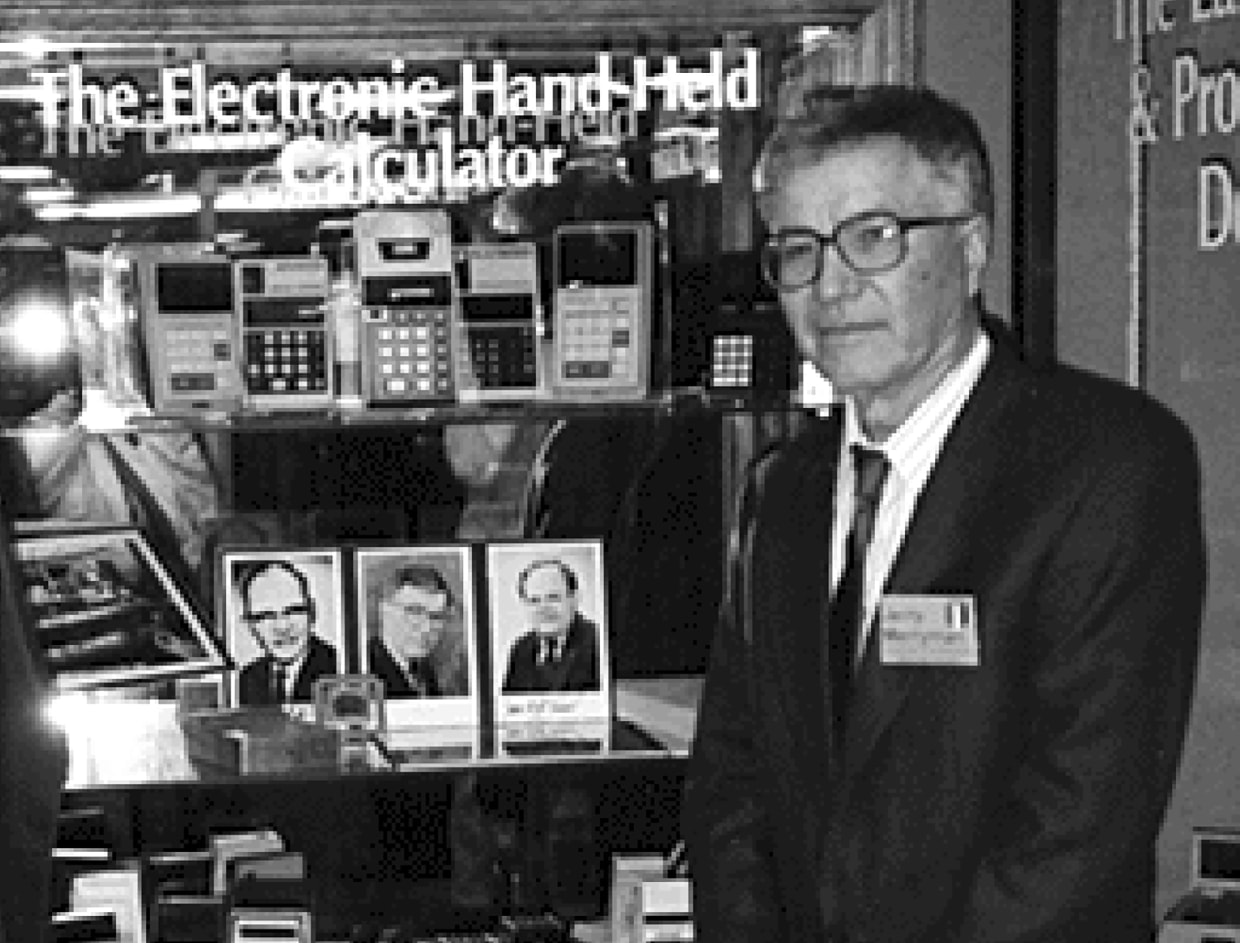
In 1967, Texas Instruments (TI) developed a prototype handheld calculator called “Cal-Tech,” a device weighing 2.5 pounds and capable of basic arithmetic. It utilized a single integrated circuit to perform its functions. By the early 1970s, mass-produced handheld electronic calculators became commercially available and affordable. Companies like Busicom (with Intel’s assistance in developing the 4004 microprocessor), Casio, Hewlett-Packard (HP), and Texas Instruments were at the forefront. The Busicom 141-PF (1971), HP-35 (1972, the first scientific calculator), and the TI-2500 Datamath (1972, the first widely affordable pocket calculator) quickly became iconic.
These pocket calculators completely displaced the slide rule and mechanical calculators. Engineers, scientists, students, and businesses rapidly adopted them due to their portability, speed, and accuracy. The invention of the microprocessor was central to this revolution, making it possible to pack complex computational power into a device that could fit in a shirt pocket. This era marked the transition of the calculator from a niche scientific instrument to a ubiquitous personal gadget, fundamentally altering how calculations were performed globally.
The Calculator’s Enduring Legacy and Future
While dedicated physical calculators might seem less central in an age of smartphones and omnipresent computing, their legacy is profound, and their evolution continues in specialized forms. The core principles and technological advancements that birthed the calculator are deeply integrated into modern society.
Integration and Specialization
The calculator, in its purest form, has largely been subsumed by more versatile devices. Today, the “calculator” function is a standard feature on every smartphone, tablet, and personal computer. These digital platforms offer far more than basic arithmetic, providing scientific, graphing, and even programmatic calculation capabilities within a multi-functional ecosystem. The very existence of these integrated tools owes everything to the pioneering work in calculator development, from mechanical gears to microprocessors.
However, dedicated physical calculators still thrive in specialized niches. Scientific calculators remain indispensable for students and professionals in STEM fields, offering complex functions, memory registers, and often formula input capabilities. Graphing calculators, pioneered by companies like Texas Instruments and Casio, are essential tools in higher mathematics and physics education, allowing users to visualize functions, solve equations graphically, and even perform rudimentary programming. Financial calculators cater to specific needs in business and finance. These specialized devices continue to evolve, with increasingly powerful processors, larger screens, and connectivity options, demonstrating that the need for focused, robust computational tools persists even amidst general-purpose computing. The interface and functionality of these specialized calculators represent a continuous refinement of the original technological mission: to provide efficient and reliable numerical problem-solving.

The Calculator’s Impact on Modern Technology
The journey of the calculator is, in many ways, the microcosm of the journey of computing itself. The drive to create devices that can perform arithmetic automatically led directly to the development of key technologies that underpin all modern digital systems. The concepts of mechanical carry mechanisms, logical operations, memory, and programmability, first explored in mechanical calculators and Babbage’s engines, found their ultimate realization in electronic computers. The miniaturization achieved through transistors and integrated circuits, initially aimed at making calculators portable and affordable, catalyzed the entire microelectronics industry. Without these breakthroughs, personal computers, smartphones, and the internet as we know them would not exist.
Looking forward, the concept of calculation continues to evolve. While traditional calculators may fade into the background, the underlying principles are more pervasive than ever. Algorithms and computational logic are integral to artificial intelligence, data science, quantum computing, and countless other emerging technologies. The fundamental human desire to quantify, predict, and solve problems through automated means, which began with simple counting tools and flowered with the invention of the mechanical and then electronic calculator, remains a driving force in technological innovation. The “inventor” of the calculator is not one person but a lineage of visionaries and engineers whose collective genius shaped our computational world, pushing the boundaries of what machines could achieve, and forever transforming human interaction with numbers.
aViewFromTheCave is a participant in the Amazon Services LLC Associates Program, an affiliate advertising program designed to provide a means for sites to earn advertising fees by advertising and linking to Amazon.com. Amazon, the Amazon logo, AmazonSupply, and the AmazonSupply logo are trademarks of Amazon.com, Inc. or its affiliates. As an Amazon Associate we earn affiliate commissions from qualifying purchases.