
Navigating the complexities of Social Security benefits can feel like deciphering a financial enigma. For millions of Americans, Social Security represents a cornerstone of their retirement income, yet the decision of when to claim these benefits is fraught with variables and potential pitfalls. Claiming too early could mean a permanent reduction in monthly payments, while waiting too long might not be optimal for individual circumstances. This is precisely where a Social Security calculator transforms from a simple tool into an indispensable guide, empowering individuals to make informed, data-driven decisions that can significantly impact their financial well-being throughout retirement.

The optimal claiming age is not a one-size-fits-all answer. It’s a deeply personal calculation influenced by factors ranging from individual health and longevity expectations to spousal benefits, current financial needs, and overall retirement goals. Understanding the mechanics of Social Security, recognizing the trade-offs of early versus delayed claiming, and leveraging sophisticated digital tools are crucial steps toward securing a stable and prosperous retirement.
Understanding the Social Security Claiming Dilemma
The decision of when to start receiving Social Security benefits is arguably one of the most impactful financial choices retirees face. The difference between claiming at the earliest possible age and waiting until the latest can amount to hundreds of thousands of dollars over a lifetime, profoundly shaping one’s retirement lifestyle.
Full Retirement Age (FRA) Explained
Central to the claiming decision is your Full Retirement Age (FRA). This is the age at which you are entitled to receive 100% of your primary insurance amount (PIA). Your FRA isn’t universal; it depends on your birth year. For those born between 1943 and 1954, FRA is 66. For those born in 1960 or later, FRA is 67. For birth years in between, it’s a gradual increase from 66 to 67. Knowing your FRA is the baseline for all subsequent calculations, as it dictates the adjustments applied to your benefits for claiming earlier or later. Claiming at FRA means you receive the benefit amount calculated based on your earnings history, without any reduction or increase.
Early Claiming vs. Delayed Claiming
The Social Security Administration (SSA) allows individuals to begin receiving benefits as early as age 62, or as late as age 70. Each choice comes with distinct financial implications.
- Early Claiming (Age 62 to FRA): If you claim benefits before your FRA, your monthly payment will be permanently reduced. For example, if your FRA is 67 and you claim at 62, your monthly benefit could be reduced by approximately 30%. This reduction reflects the fact that you will receive benefits for a longer period. While it provides immediate income, it comes at the cost of a significantly lower monthly payment for the rest of your life. This option might be appealing to those who need income immediately, are facing health challenges that limit their expected lifespan, or have other sufficient retirement resources.
- Delayed Claiming (FRA to Age 70): Conversely, for each year you delay claiming benefits past your FRA, up to age 70, you earn “delayed retirement credits.” These credits permanently increase your monthly benefit amount. The increase is typically 8% per year (compounded monthly) for those born in 1943 or later. This means that if your FRA is 67 and you wait until age 70, your monthly benefit could be 124% of your FRA amount. This strategy is often favored by those in good health with a high life expectancy, or those with sufficient other assets to cover expenses until age 70.
Factors Influencing the Decision
Beyond the mathematical adjustments, several personal factors heavily influence the optimal claiming age:
- Health and Longevity: Your personal health and family history of longevity are critical. If you anticipate a shorter lifespan, early claiming might be financially advantageous. If you expect to live well into your 80s or 90s, delaying benefits typically yields a higher cumulative payout.
- Other Retirement Income: The presence of pensions, 401(k)s, IRAs, or other savings can allow you to delay Social Security benefits, leveraging them as a longevity hedge. Conversely, a lack of other income sources might necessitate earlier claiming.
- Marital Status and Spousal Benefits: For married couples, the decision becomes more complex, involving coordinated strategies to maximize benefits for both spouses and potential survivor benefits.
- Current Employment: If you are still working and earning above a certain threshold before your FRA, your Social Security benefits may be temporarily reduced or withheld, making early claiming less attractive.
How a Social Security Calculator Works and Why It’s Indispensable
Given the numerous variables and the long-term financial implications, attempting to manually calculate the optimal Social Security claiming strategy is arduous and prone to error. This is where a Social Security calculator becomes not just helpful, but truly indispensable.
Inputting Your Personal Data
A robust Social Security calculator starts by asking for essential personal information. This typically includes:
- Your date of birth.
- Your estimated or actual earnings history (often accessible via your Social Security statement from the SSA website).
- Your marital status (single, married, divorced, widowed), as this affects spousal and survivor benefit calculations.
- Your spouse’s date of birth and earnings history, if applicable.
- Your current income and anticipated future income (if still working).
The accuracy of the calculator’s output is directly tied to the accuracy of the data you provide, making it crucial to use official sources like your SSA statement.
Projecting Future Scenarios
Once the data is entered, the calculator models various claiming scenarios. It can show you:
- Your estimated monthly benefit if you claim at age 62.
- Your estimated monthly benefit if you claim at your Full Retirement Age (FRA).
- Your estimated monthly benefit if you delay claiming until age 70.
- The benefit amounts for every age in between 62 and 70.
More advanced calculators can also project your cumulative lifetime benefits for each scenario, allowing for direct comparison.
Visualizing Long-Term Impact
One of the most powerful features of these tools is their ability to visualize the long-term financial impact of different claiming ages. Many calculators present this data in graphs, clearly showing the break-even points—the age at which the cumulative benefits from delaying claiming surpass those from claiming early. For instance, a graph might illustrate that while early claiming provides more income initially, delaying until age 70 results in a higher cumulative payout if you live beyond a certain age (e.g., 80 or 85). This visual clarity helps individuals grasp complex financial trade-offs intuitively.
Beyond Simple Arithmetic: Advanced Considerations
Sophisticated Social Security calculators go beyond simple multiplication and division. They factor in:
- Cost-of-Living Adjustments (COLAs): While future COLAs are estimates, calculators can project how these annual increases might impact your benefits over time.
- Future Earnings: For those still working, calculators can estimate how continued earnings might increase your PIA.
- Inflation: Some tools allow you to view benefits in both nominal and inflation-adjusted (real) terms, providing a more realistic picture of future purchasing power.
- Taxation of Benefits: A portion of Social Security benefits may be taxable, depending on your provisional income. Advanced calculators can provide an estimate of this impact, though a tax advisor should always be consulted for specific tax planning.
Key Scenarios Where a Calculator Provides Clarity
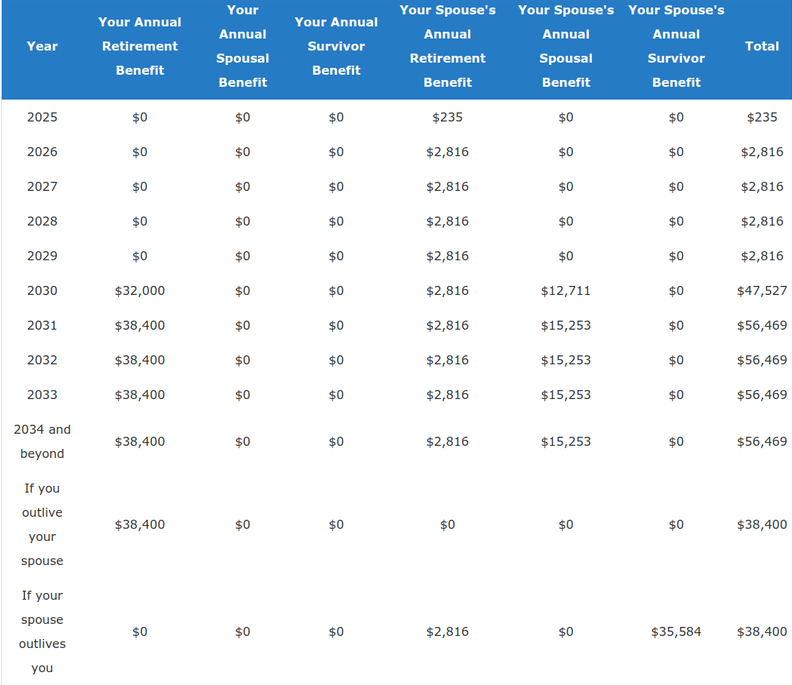
The utility of a Social Security calculator becomes especially apparent when confronting specific, common retirement planning challenges.
Maximizing Individual Benefits
For single individuals, the calculator’s primary role is to identify the claiming age that maximizes their personal lifetime benefits, considering their life expectancy. By comparing the cumulative benefits from claiming at 62, FRA, 70, and every year in between, a single person can pinpoint the strategy that aligns best with their health status and financial goals. For example, a single person with excellent health and sufficient other assets might clearly see that waiting until 70 offers the highest overall return.
Navigating Spousal and Survivor Benefits
For married couples, the claiming decision is often more intricate. A calculator helps visualize strategies that optimize the household’s total lifetime benefits, which might not be achieved by each spouse simply maximizing their individual payout. For instance:
- Spousal Benefits: A spouse may be eligible for up to 50% of the other spouse’s full retirement age benefit. A calculator can determine the best timing for the lower-earning spouse to claim their own benefit versus taking a spousal benefit.
- Survivor Benefits: If one spouse passes away, the surviving spouse may be entitled to the higher of their own benefit or the deceased spouse’s benefit. Calculators can model these scenarios, showing how a delayed claiming strategy by the higher-earning spouse can significantly boost the surviving spouse’s future income. This joint analysis is critical for ensuring financial security for the surviving partner.
Balancing Social Security with Other Retirement Income
Social Security is rarely the sole source of retirement income. A calculator allows individuals to integrate their expected benefits into their broader financial plan. For example, if you have a substantial 401(k) or IRA, a calculator might show that drawing down on these accounts in the early years of retirement, while delaying Social Security, leads to a higher overall net worth later in life. Conversely, if other assets are limited, an earlier claiming strategy for Social Security might be necessary to cover immediate living expenses.
Health Concerns and Longevity
The calculator is an invaluable tool for exploring “what-if” scenarios related to health and longevity. If an individual has a family history of early mortality or has received a diagnosis that may impact their lifespan, they can input a shorter life expectancy into the calculator. This can reveal that claiming earlier, despite the reduced monthly payment, might result in a higher cumulative payout over their expected shorter lifespan. This personalization is key to making a truly informed decision, rather than relying on generalized advice.
Choosing the Right Social Security Calculator
With numerous tools available, selecting the most appropriate Social Security calculator is important.
Official vs. Third-Party Tools
- Official SSA Calculator: The Social Security Administration provides a basic calculator on its website. Its primary advantage is direct access to your earnings record and official benefit estimates. However, it can sometimes be less flexible in modeling complex “what-if” scenarios for couples or incorporating detailed financial planning.
- Third-Party Calculators: Many reputable financial planning websites (e.g., AARP, NerdWallet, financial advisor firms) offer more advanced calculators. These often excel in user-friendly interfaces, robust scenario planning (e.g., comparing multiple claiming ages simultaneously), and the ability to factor in spousal benefits more intricately. When using third-party tools, always ensure they are from a credible source and keep their methodologies transparent.
Features to Look For
When evaluating a Social Security calculator, consider these features:
- Comprehensive Inputs: Can it handle individual, spousal, and survivor benefit scenarios? Can you input estimated future earnings?
- Detailed Output: Does it provide monthly and cumulative benefit projections? Does it show break-even points?
- “What-If” Scenarios: Can you easily adjust claiming ages, life expectancy estimates, and other variables to see immediate results?
- Ease of Use: Is the interface intuitive and easy to navigate, even for those less tech-savvy?
- Security and Privacy: Ensure the tool respects your data privacy, especially if it requires sensitive information.
The Importance of Professional Guidance
While a calculator is a powerful tool, it should not always be the final word. For complex situations, particularly involving significant assets, multiple income streams, health uncertainties, or intricate family dynamics, partnering with a qualified financial advisor specializing in retirement planning is highly recommended. An advisor can interpret the calculator’s results within the context of your entire financial picture, offer personalized strategies, and help navigate potential tax implications or legislative changes that a standalone calculator might not fully address.
Beyond the Calculator: Integrating Social Security into Your Retirement Plan
The Social Security calculator is a crucial starting point, but it’s part of a larger tapestry of retirement planning.
Holistic Financial Planning
Your Social Security benefits are just one pillar of your retirement income. They need to be viewed alongside your 401(k)s, IRAs, pensions, personal savings, investments, and any potential part-time work income. A holistic financial plan considers how these different income streams interact, allowing you to strategically draw down assets in a way that minimizes taxes and maximizes your overall financial security. For instance, strategically delaying Social Security might mean drawing more from taxable retirement accounts in early retirement, but results in higher, inflation-adjusted, and tax-advantaged Social Security income later.
Regular Review and Adjustment
Retirement planning is not a static exercise. Life happens, and circumstances change. Your health might shift, economic conditions can evolve, or legislative changes to Social Security might occur. It’s prudent to revisit your Social Security claiming strategy periodically, perhaps every few years, or after any significant life event. Recalculating your optimal strategy ensures your plan remains aligned with your current reality and future goals.

Tax Implications of Social Security Benefits
It’s important to remember that Social Security benefits can be subject to federal income tax, depending on your “provisional income” (a calculation based on your adjusted gross income, tax-exempt interest, and half of your Social Security benefits). Some states also tax Social Security benefits. Your claiming age can indirectly influence the total amount of benefits you receive over your lifetime, which in turn can impact your taxable income each year in retirement. This intricate relationship underscores the need for a comprehensive financial plan that considers tax efficiency.
In conclusion, the decision of when to claim Social Security benefits is one of the most critical retirement planning choices you’ll make. A Social Security calculator empowers you to move beyond guesswork, providing a data-driven framework to analyze various scenarios, understand their long-term financial impact, and make an informed decision that aligns with your unique circumstances and retirement aspirations. While not a substitute for professional advice, it is an indispensable financial tool that puts the power of sophisticated analysis directly into your hands, helping you secure a more predictable and prosperous future.
aViewFromTheCave is a participant in the Amazon Services LLC Associates Program, an affiliate advertising program designed to provide a means for sites to earn advertising fees by advertising and linking to Amazon.com. Amazon, the Amazon logo, AmazonSupply, and the AmazonSupply logo are trademarks of Amazon.com, Inc. or its affiliates. As an Amazon Associate we earn affiliate commissions from qualifying purchases.