
Navigating the intricacies of retirement planning can often feel like deciphering a complex financial puzzle. For many, Social Security benefits form a foundational pillar of their post-career income, yet understanding precisely how these benefits are calculated and what they might amount to can be a source of confusion. Far from being a simple, flat payout, your Social Security retirement income is a personalized figure, meticulously determined by a formula that considers your earnings history, age at claiming, and several other critical factors.
This comprehensive guide aims to demystify the calculation process, offering a clear, step-by-step breakdown of how the Social Security Administration (SSA) arrives at your monthly benefit amount. We’ll explore the key components that influence your payout, provide strategies for estimating your future income, and highlight crucial considerations that can significantly impact your financial well-being in retirement. By understanding these mechanics, you can make more informed decisions, optimize your claiming strategy, and ensure a more secure financial future.

Understanding the Fundamentals of Social Security
Before diving into the complex arithmetic, it’s essential to grasp the core principles and terminology that underpin the Social Security system. This foundational knowledge will illuminate why certain factors are so critical to your eventual benefit.
The Purpose of Social Security
Established in 1935, Social Security was designed as a social insurance program providing financial protection for millions of Americans. It primarily offers retirement, disability, and survivor benefits, funded through payroll taxes. The system operates on a pay-as-you-go basis, meaning today’s workers fund today’s retirees and beneficiaries. Its fundamental goal is to provide a safety net, ensuring a baseline income for those who have contributed throughout their working lives.
Who is Eligible for Benefits?
To qualify for Social Security retirement benefits, you generally need to have accumulated enough “credits” through covered employment. In 2024, you earn one credit for every $1,730 in earnings, up to a maximum of four credits per year. Most individuals need 40 credits, equivalent to 10 years of work, to be eligible for retirement benefits. Once you’ve earned these credits, you are “fully insured” and qualify for benefits based on your earnings record.
Key Terms: AIME, PIA, FRA
Understanding a few core acronyms is crucial for comprehending the calculation process:
- AIME (Average Indexed Monthly Earnings): This represents your average monthly earnings over your highest 35 years of work, adjusted for inflation. It’s the starting point for determining your benefit.
- PIA (Primary Insurance Amount): This is the monthly benefit you would receive if you claim benefits exactly at your Full Retirement Age (FRA). It’s derived directly from your AIME.
- FRA (Full Retirement Age): This is the age at which you are entitled to 100% of your PIA. It varies depending on your birth year. For those born between 1943 and 1954, it’s 66. For those born in 1960 or later, it’s 67. There’s a gradual increase for birth years in between. Claiming before or after your FRA will result in a permanently reduced or increased benefit, respectively.
Deconstructing Your Social Security Benefit Calculation
The calculation of your Social Security benefit is not a simple average of all your earnings. It involves a specific, multi-step process designed to factor in your lifetime contributions and adjust for inflation.
The 35 Highest-Earning Years Rule
The first critical step in determining your AIME is to identify your 35 highest-earning years. The SSA looks at your entire earnings history and selects the 35 years in which you earned the most, regardless of when those years occurred. If you have fewer than 35 years of earnings, the remaining years will be filled with zeros, which will naturally lower your overall average and, consequently, your benefit. This rule highlights the importance of consistent earnings throughout your career.
Adjusting for Inflation: Averaged Indexed Monthly Earnings (AIME)
Once your 35 highest-earning years are identified, your earnings from most of those years are “indexed” to account for changes in average wages over time. This indexing process ensures that your past earnings reflect their relative value at the time you turn 60. For example, earnings from 1980 will be adjusted upwards to reflect what that income would be worth in today’s economy compared to an equivalent income earned closer to your retirement. Earnings from age 60 onwards are not indexed, as they are considered recent enough to not require inflation adjustment.
After indexing, the adjusted annual earnings for your 35 highest years are summed up and then divided by 420 (the number of months in 35 years) to arrive at your Average Indexed Monthly Earnings (AIME). This AIME is the foundation upon which your PIA is built.
The Primary Insurance Amount (PIA) Formula
The AIME is then used in a progressive benefit formula to calculate your Primary Insurance Amount (PIA). The formula uses “bend points” that are designed to provide a higher replacement rate of pre-retirement income for lower earners than for higher earners. These bend points change annually, reflecting changes in the national average wage index.
For example, for someone reaching age 62 in 2024, the formula is:
- 90% of the first $1,174 of AIME
- 32% of AIME between $1,174 and $7,078
- 15% of AIME above $7,078
The sum of these three amounts equals your PIA. It’s crucial to note that the bend points for the PIA calculation are specific to the year you turn 62, regardless of when you actually claim benefits. This PIA is the monthly benefit you would receive if you started claiming precisely at your Full Retirement Age.
Factors Influencing Your Retirement Income Amount
While the PIA provides a baseline, several other critical factors can significantly alter the actual monthly benefit you receive. These adjustments are primarily related to the age you choose to begin receiving benefits.
Your Full Retirement Age (FRA)
As mentioned, your FRA is the age at which you are entitled to 100% of your PIA. For individuals born in 1960 or later, the FRA is 67. If you were born earlier, your FRA will be 66 and a certain number of months. Understanding your specific FRA is paramount, as it acts as the pivot point for all claiming decisions. Claiming before or after this age directly affects the benefit amount you receive.
The Impact of Claiming Benefits Early
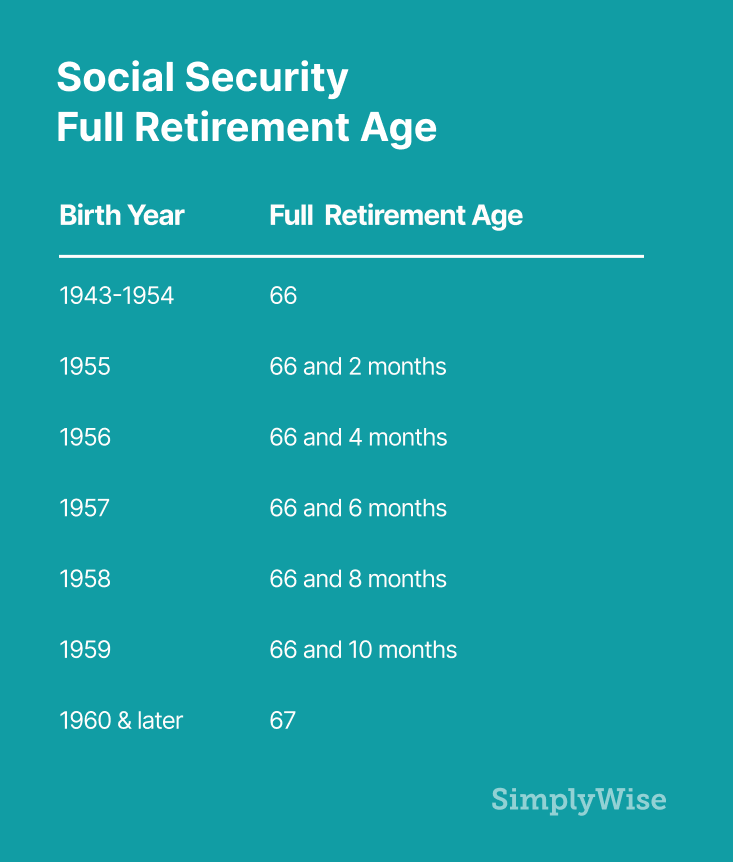
You can begin receiving Social Security retirement benefits as early as age 62. However, choosing to claim before your FRA will result in a permanent reduction of your monthly benefit. This reduction is calculated based on the number of months you are early. The reduction is approximately 5/9 of 1% for each month before FRA, up to 36 months, and 5/12 of 1% for each month beyond 36 months. For someone with an FRA of 67, claiming at age 62 results in a permanent reduction of approximately 30% of their PIA. This significant reduction is a critical consideration for early claimants.
The Advantage of Delaying Benefits
Conversely, delaying the start of your benefits past your FRA can significantly increase your monthly payment. For each year you delay claiming benefits past your FRA, up to age 70, you earn “Delayed Retirement Credits” (DRCs). These credits increase your annual benefit by a certain percentage, typically 8% per year (or 2/3 of 1% per month). For example, if your FRA is 67 and you delay claiming until age 70, you can increase your monthly benefit by 24% (3 years * 8% per year). This substantial increase can make a considerable difference in your retirement income, particularly for those with longer life expectancies.
Spousal and Survivor Benefits
Social Security also provides benefits for spouses and survivors. A spouse can claim a benefit equal to 50% of the primary earner’s PIA, provided they claim at their own FRA and the primary earner has filed for benefits. If the spouse claims early, their benefit will also be reduced. Survivor benefits are paid to eligible family members (e.g., widow(er)s, minor children) after the death of a worker. A widow or widower can receive up to 100% of the deceased worker’s benefit amount if they claim at their own FRA, or a reduced amount if they claim earlier. These benefits can be a vital safety net for families.
Taxation of Social Security Benefits
It’s also important to remember that a portion of your Social Security benefits may be subject to federal income tax, depending on your “provisional income.” Provisional income includes your adjusted gross income (AGI), tax-exempt interest, and half of your Social Security benefits.
- If your provisional income is between $25,000 and $34,000 for an individual ($32,000 to $44,000 for a couple filing jointly), up to 50% of your benefits may be taxable.
- If your provisional income exceeds $34,000 for an individual ($44,000 for a couple filing jointly), up to 85% of your benefits may be taxable.
Some states also tax Social Security benefits, so it’s essential to understand the rules in your state of residence.
Tools and Strategies for Estimating Your Benefits
While the calculation can seem complex, the Social Security Administration provides excellent resources to help you estimate your future benefits.
Utilizing the Social Security Administration (SSA) Website
The official SSA website (www.ssa.gov) is your primary resource. You can create a “my Social Security” account, which allows you to:
- Review your full earnings record, ensuring its accuracy.
- Access your personalized Social Security Statement online.
- Use various calculators to estimate your benefits under different claiming scenarios (e.g., claiming at 62, FRA, or 70).
- Apply for benefits online.
This online portal is an invaluable tool for understanding your specific benefit projections and planning your retirement.
Reviewing Your Social Security Statement
The Social Security Statement provides a detailed summary of your earnings history and estimated future benefits at various ages (62, FRA, 70). It also includes estimates for disability and survivor benefits. You used to receive this statement in the mail annually, but now it’s primarily available online via your “my Social Security” account. Regularly reviewing this statement is crucial to verify your earnings history and ensure there are no errors that could negatively impact your benefits.
Consulting Financial Advisors
For more complex situations or personalized advice, consulting a qualified financial advisor can be highly beneficial. They can help you integrate your Social Security claiming strategy into your broader retirement plan, considering other assets, income sources, tax implications, and your personal goals. An advisor can also assist in optimizing claiming strategies for couples, which can be particularly nuanced.
Maximizing Your Social Security Retirement Income
Given that Social Security benefits are a lifelong income stream, making informed decisions can significantly enhance your financial security in retirement.
Working Longer to Boost Your Earnings Record
Since your benefit is based on your 35 highest-earning years, continuing to work longer, especially if you have fewer than 35 years of earnings or if your current earnings are higher than some of your past earnings (especially those from early in your career that might be replaced by higher indexed earnings), can increase your AIME. Each additional year of higher earnings can replace a lower-earning year or a zero-earning year in your top 35, thereby increasing your average.
Strategic Claiming Decisions
The decision of when to claim benefits is one of the most impactful choices you’ll make.
- Early Claiming (62): While offering immediate income, it results in a permanently reduced benefit. This might be suitable if you face health issues, cannot work, or have substantial other retirement savings and desire to enjoy retirement sooner.
- Full Retirement Age Claiming: You receive 100% of your PIA. This is a common choice for many retirees, balancing immediate income with a full benefit.
- Delayed Claiming (up to 70): Maximizes your monthly benefit through DRCs, providing the highest possible monthly payout. This is often recommended for those with good health, who can afford to wait, and who are concerned about outliving their other savings.
For couples, coordinating claiming strategies can be particularly powerful. For example, one spouse might claim early to provide some income, while the other delays until 70 to maximize the higher earner’s benefit, which then becomes the survivor benefit for the remaining spouse.
Coordinating with Other Retirement Savings
Social Security is meant to be one leg of a three-legged stool for retirement income, with personal savings (401(k)s, IRAs) and pensions (if applicable) being the other two. Your Social Security claiming strategy should be integrated with your overall withdrawal strategy from these other accounts. For instance, delaying Social Security might mean relying more on withdrawals from your investment accounts in your early retirement years, which has its own tax and investment implications. A holistic approach ensures all components of your retirement income work together efficiently.

Conclusion
Calculating your Social Security retirement income involves understanding your earnings history, the indexing process, your Full Retirement Age, and the impact of when you choose to claim benefits. While the formula can appear complex, the underlying principles are straightforward: your benefit is a personalized reflection of your lifetime contributions, adjusted to provide a baseline level of financial security.
By utilizing the tools provided by the Social Security Administration, diligently reviewing your earnings record, and thoughtfully considering the various claiming strategies available, you can make informed decisions that significantly influence your financial comfort in retirement. Social Security is a vital resource for millions, and with proper planning, you can ensure it plays its fullest role in securing your golden years.
aViewFromTheCave is a participant in the Amazon Services LLC Associates Program, an affiliate advertising program designed to provide a means for sites to earn advertising fees by advertising and linking to Amazon.com. Amazon, the Amazon logo, AmazonSupply, and the AmazonSupply logo are trademarks of Amazon.com, Inc. or its affiliates. As an Amazon Associate we earn affiliate commissions from qualifying purchases.