
Inflation is a pervasive economic phenomenon that touches every aspect of our financial lives. From the cost of our weekly groceries to the long-term value of our savings and investments, understanding inflation is crucial for sound financial planning and astute business decision-making. At its core, inflation represents the rate at which the general level of prices for goods and services is rising, and subsequently, the purchasing power of currency is falling. To quantify this abstract concept, economists and financial analysts widely rely on the Consumer Price Index (CPI). This comprehensive guide will demystify the CPI and equip you with the knowledge and tools to accurately calculate inflation, providing clarity on a factor that silently shapes our economic realities.

Understanding Inflation and the Consumer Price Index (CPI)
Before diving into calculations, it’s essential to grasp the fundamental concepts of inflation and the primary tool used to measure it: the Consumer Price Index. These definitions form the bedrock of any meaningful analysis of price changes in an economy.
What is Inflation?
In simple terms, inflation is the rate at which prices for goods and services are increasing over a period, leading to a fall in the purchasing value of money. When inflation is high, the same amount of money buys fewer goods and services than it did previously. This erosion of purchasing power can have significant implications for consumers, businesses, and investors alike. For consumers, it means their wages might not stretch as far, impacting their standard of living. For businesses, rising costs of raw materials and labor can squeeze profit margins. For investors, inflation can diminish the real returns on their investments, making careful asset allocation even more critical. Central banks often target specific inflation rates, typically around 2%, believing it fosters economic stability and growth while avoiding the perils of deflation (falling prices), which can be equally damaging.
What is the Consumer Price Index (CPI)?
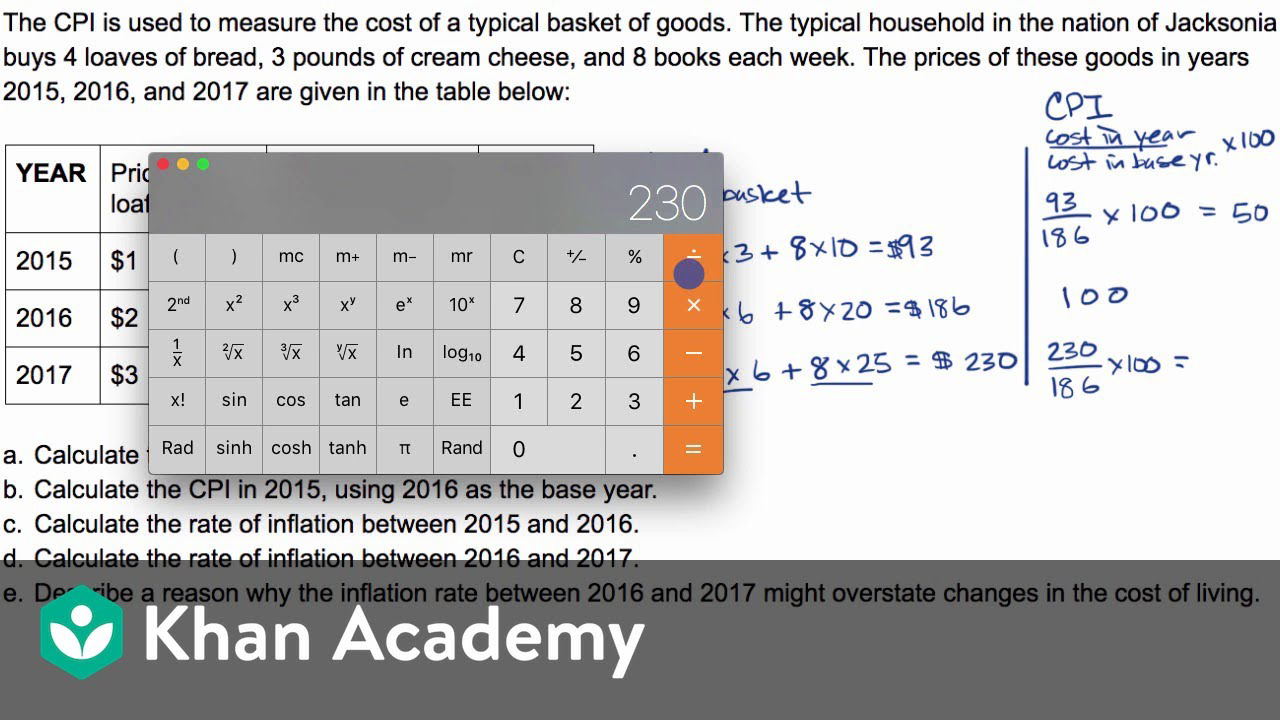
The Consumer Price Index (CPI) is a critical economic indicator published by governmental agencies (such as the Bureau of Labor Statistics in the United States) that measures the average change over time in the prices paid by urban consumers for a market basket of consumer goods and services. This “market basket” is a hypothetical collection of goods and services that represents typical household spending. It includes everything from food and beverages, housing, apparel, transportation, medical care, recreation, education, and communication, to other goods and services. The CPI is often considered the most widely used indicator of inflation and is instrumental in determining changes in purchasing power. It is an index number, meaning it’s expressed relative to a base period, which is set to 100. For instance, if the CPI is 120, it means prices have risen by 20% since the base period.
Why CPI is Crucial for Measuring Inflation
The CPI’s significance in measuring inflation cannot be overstated. It provides a standardized and widely accepted metric for tracking price changes that directly affect households. Governments use CPI data to adjust social security benefits, tax brackets, and other government payments, ensuring they keep pace with the cost of living. Businesses rely on CPI to inform pricing strategies, wage negotiations, and supply chain management. Investors use it to gauge the real return on their investments and make informed decisions about inflation-protected securities. Without a robust measure like the CPI, accurately assessing economic health, formulating effective monetary policy, or making informed personal financial decisions would be significantly more challenging. It acts as a barometer for economic stability and a cornerstone for financial planning.
The Mechanics of Calculating Inflation with CPI
Calculating inflation using the CPI is a straightforward process once you understand the formula and have access to the necessary data. It allows you to quantify how much prices have risen between two different points in time.
Gathering CPI Data
The first step in calculating inflation is to obtain the relevant CPI data. National statistical agencies regularly publish CPI figures, typically on a monthly or quarterly basis. You can usually find this information on their official websites. For example, in the United States, the Bureau of Labor Statistics (BLS) provides extensive CPI data. You will need two CPI values:
- Current Period CPI: The CPI value for the most recent month or year you are interested in.
- Previous Period CPI: The CPI value for an earlier month or year that you want to compare against.
It’s crucial to ensure that you are using the same type of CPI (e.g., CPI for All Urban Consumers, or CPI-U, in the U.S.) and for the same geographic area if available (e.g., national average vs. specific city).
The Basic Inflation Formula
Once you have your two CPI figures, you can apply the following formula to calculate the inflation rate:
$$ text{Inflation Rate} = left( frac{text{CPI}{text{Current Period}} – text{CPI}{text{Previous Period}}}{text{CPI}_{text{Previous Period}}} right) times 100% $$
Let’s break down what each part of this formula represents:
- ($text{CPI}{text{Current Period}} – text{CPI}{text{Previous Period}}$): This calculates the absolute change in the price index between the two periods.
- $/ text{CPI}_{text{Previous Period}}$: Dividing by the previous period’s CPI normalizes the change, expressing it as a proportion of the starting price level.
- $times 100%$: Multiplying by 100 converts this proportion into a percentage, giving you the inflation rate.
The resulting percentage indicates the rate at which prices have increased (or decreased, if the result is negative, indicating deflation) between the two selected periods.
Practical Example: Calculating Annual Inflation
Let’s walk through a concrete example to solidify your understanding.
Suppose you want to calculate the annual inflation rate between January 2022 and January 2023.
-
Step 1: Obtain CPI Data.
- CPI for January 2023 ($text{CPI}_{text{Current Period}}$) = 300
- CPI for January 2022 ($text{CPI}_{text{Previous Period}}$) = 280
-
Step 2: Apply the Formula.
$$ text{Inflation Rate} = left( frac{300 – 280}{280} right) times 100% $$

- Step 3: Calculate.
$$ text{Inflation Rate} = left( frac{20}{280} right) times 100% $$
$$ text{Inflation Rate} = 0.071428 times 100% $$
$$ text{Inflation Rate} approx 7.14% $$
This calculation tells us that, according to the CPI data, the inflation rate between January 2022 and January 2023 was approximately 7.14%. This means that, on average, the cost of goods and services in the market basket increased by 7.14% over that year, and consequently, the purchasing power of a dollar decreased by that amount.
Beyond the Basics: Interpreting and Applying Inflation Data
Calculating the inflation rate is just the first step. To truly leverage this data, one must understand its nuances and how it translates into practical implications for personal finance, investments, and business strategy.
Understanding Different CPI Categories
The overall CPI provides a general picture, but a more granular analysis often reveals specific trends. National statistical agencies typically break down the CPI into various categories, such as food, energy, housing, transportation, and medical care. Observing inflation rates within these specific categories can provide deeper insights. For instance, if overall inflation is moderate but food prices are skyrocketing, it disproportionately affects lower-income households who spend a larger portion of their budget on food. Similarly, understanding energy inflation is crucial for industries heavily reliant on fuel or electricity. Analyzing these sub-indices can help individuals tailor their budgets and businesses adjust their supply chains or pricing more precisely.
Core Inflation vs. Headline Inflation
When discussing inflation, you’ll often hear the terms “headline inflation” and “core inflation.”
- Headline Inflation: This is the total inflation rate, reflecting the price changes of all goods and services in the CPI market basket. It’s the figure most commonly reported in the news.
- Core Inflation: This measure excludes volatile items like food and energy prices. Food and energy prices can fluctuate dramatically due to factors like weather, geopolitical events, or supply disruptions, making the overall inflation rate appear more erratic than underlying price pressures truly are. Economists often prefer to look at core inflation to get a clearer picture of the long-term trend in price levels, as it’s less prone to short-term shocks and provides a better indicator of monetary policy effectiveness. Understanding both allows for a more comprehensive assessment of inflationary pressures.
Impact on Personal Finance and Investments
Inflation directly erodes the purchasing power of your money, meaning your savings buy less over time. A 3% annual inflation rate implies that what cost $100 today will cost approximately $103 next year. This is why a simple savings account earning 0.5% interest results in a loss of real purchasing power.
For personal finance, understanding inflation helps you:
- Budgeting: Adjust your budget to account for rising costs of living.
- Wage Expectations: Negotiate for raises that at least keep pace with inflation to maintain your standard of living.
- Retirement Planning: Plan for higher living expenses in retirement.
For investments, inflation is a critical factor: - Real Returns: It’s not the nominal return your investment earns that matters, but the real return after accounting for inflation. If your stock portfolio grows 8% but inflation is 5%, your real return is only 3%.
- Asset Allocation: Inflation-hedging assets like real estate, commodities, and Treasury Inflation-Protected Securities (TIPS) can become more attractive during periods of high inflation. Growth stocks and fixed-income investments with low yields may struggle.
- Debt: Inflation can be a boon for debtors, as the real value of their fixed-rate debt decreases over time.
Inflation’s Role in Business Decisions
For businesses, calculating and understanding inflation is integral to operational efficiency and strategic planning.
- Pricing Strategies: Businesses must factor in rising input costs (raw materials, labor, energy) when setting prices for their products and services. Underpricing in an inflationary environment can quickly erode profit margins.
- Wage Negotiations: Companies use CPI data to inform salary adjustments and collective bargaining agreements, ensuring competitive compensation that keeps pace with the cost of living.
- Supply Chain Management: Anticipating inflation in specific raw materials or transportation costs can help businesses secure contracts or inventory ahead of price hikes.
- Capital Expenditure: Decisions on large investments (e.g., new machinery, facilities) need to account for future cost increases and the discounted value of future cash flows.
- Financial Reporting: Inflation adjustments are sometimes necessary for accurate financial reporting, especially for asset valuation and depreciation.
Limitations and Nuances of CPI as an Inflation Measure
While the CPI is an invaluable tool for measuring inflation, it’s not without its limitations. Understanding these nuances is crucial for a complete and accurate interpretation of the data. No single economic indicator can perfectly capture the complexity of an entire economy, and the CPI is an aggregate measure that may not reflect individual experiences.
Substitution Bias
One significant limitation of the CPI is the “substitution bias.” The market basket used to calculate the CPI is fixed for certain periods. However, consumers tend to substitute more expensive goods with cheaper alternatives when prices rise. For example, if the price of beef increases significantly, consumers might buy more chicken or pork. The fixed market basket of the CPI might continue to assume the same proportion of beef purchases, thus overstating the true cost of living increase because it doesn’t account for consumers’ ability to adapt their purchasing habits. While statistical agencies employ sophisticated methods to adjust for this over time, it remains a challenge in real-time measurement.
Quality Bias
The “quality bias” arises because the CPI struggles to account for changes in the quality of goods and services over time. If a product improves in quality (e.g., a car with better fuel efficiency, safety features, or a smartphone with more advanced capabilities) and its price increases, part of that price increase is due to the improved quality, not just inflation. The CPI might register this as a pure price increase, thus overstating inflation. Conversely, if quality deteriorates, the CPI might understate inflation. Statistical agencies attempt to make “quality adjustments” to their data, but precisely quantifying these changes across a vast array of goods and services is inherently difficult and subjective.
New Goods Bias
The CPI faces challenges in quickly incorporating new goods and services into its market basket. When new products enter the market, they often do so at high prices that typically fall over time as production scales and competition increases. If these new goods are not immediately included in the CPI’s market basket, the index may miss the initial period of falling prices, again potentially overstating the true cost of living. Conversely, the introduction of innovative, more efficient products might not be reflected in the index, which focuses on the existing basket. This lag can prevent the CPI from fully capturing the benefits of innovation and product evolution on consumer welfare.
Regional and Individual Differences
The CPI is typically calculated at a national or large metropolitan area level, representing the average spending patterns of a broad group of urban consumers. However, individual spending habits and regional price changes can vary significantly. Someone living in a rural area might experience different price changes than someone in a major city. Moreover, a retired couple with specific medical needs will have a very different “personal inflation rate” compared to a young professional who commutes daily. The aggregate CPI provides a general economic picture, but it may not accurately reflect the specific inflationary pressures faced by every individual or household. For personalized financial planning, understanding how the national CPI data might diverge from one’s own expenditure pattern is crucial.
Conclusion
Understanding how to calculate inflation using the Consumer Price Index is more than just an academic exercise; it’s a fundamental skill for navigating the financial landscape. Inflation is a constant force, subtly eroding purchasing power and reshaping economic realities. By grasping the basics of the CPI, applying the inflation formula, and appreciating the nuances and limitations of this vital economic indicator, individuals can make more informed decisions about their personal finances, investments, and retirement planning. Businesses, in turn, can refine their pricing strategies, manage costs more effectively, and adapt to changing market conditions. While the CPI may not be a perfect mirror of every individual’s experience, it remains the most robust and widely accepted tool for gauging the overall pace of price changes, offering a critical lens through which to view the health and direction of our economy. Armed with this knowledge, you are better equipped to protect and grow your financial well-being in an ever-evolving economic environment.
aViewFromTheCave is a participant in the Amazon Services LLC Associates Program, an affiliate advertising program designed to provide a means for sites to earn advertising fees by advertising and linking to Amazon.com. Amazon, the Amazon logo, AmazonSupply, and the AmazonSupply logo are trademarks of Amazon.com, Inc. or its affiliates. As an Amazon Associate we earn affiliate commissions from qualifying purchases.