
Understanding your future Social Security benefits is a cornerstone of sound retirement planning. For many Americans, Social Security represents a significant, if not primary, source of income in their golden years, providing a vital safety net against the financial uncertainties of aging, disability, and even the loss of a breadwinner. Yet, despite its universal importance, the system for calculating these benefits often appears shrouded in complexity, leaving many wondering, “How much will I actually get?”
This article aims to demystify the Social Security system, guiding you through the intricate factors that determine your benefit amount. We’ll explore the core components of the calculation, highlight the critical decisions that influence your payments, and equip you with the knowledge and tools to estimate and potentially maximize your future Social Security income. Far from being a static figure, your Social Security benefit is a dynamic outcome shaped by your lifetime earnings, claiming age, and family situation. By understanding these levers, you can make informed choices that profoundly impact your financial security in retirement.
Demystifying Social Security: The Basics
Before delving into the specifics of “how much,” it’s crucial to grasp the fundamental purpose and mechanics of the Social Security program. Established in 1935, it has evolved into a comprehensive social insurance program designed to provide financial protection to millions of Americans.
What is Social Security (SS) and Why Does It Matter?
Social Security is more than just a retirement program; it’s a multi-faceted insurance system. While most people associate it with retirement benefits, it also provides critical disability benefits to workers unable to work due to a severe medical condition, and survivor benefits to the families of deceased workers. This broad scope makes Social Security an indispensable part of America’s economic fabric, serving as a foundational element of financial security for current and future generations. For many, especially those with limited personal savings or pensions, Social Security can make the difference between a secure retirement and financial hardship. Even for those with robust personal savings, it provides a guaranteed, inflation-adjusted income stream that can enhance financial stability.
Eligibility Requirements for Benefits
To be eligible for Social Security benefits, you must have worked and paid Social Security taxes for a sufficient period. This eligibility is measured in “quarters of coverage” or “credits.” In 2024, you earn one credit for each $1,730 of earnings, up to a maximum of four credits per year. Most individuals need 40 credits, which translates to 10 years of work, to qualify for retirement benefits. These credits do not need to be earned consecutively. The more credits you earn, up to the 40-credit maximum, the closer you get to securing your eligibility for benefits when you eventually claim them. It’s important to note that while 40 credits establish eligibility, the amount of your benefits is determined by your total earnings over many years, not just the number of credits.
Key Terms: AIME, PIA, Full Retirement Age (FRA)
Understanding these three acronyms is fundamental to comprehending how your Social Security benefit is calculated:
-
AIME (Average Indexed Monthly Earnings): This is the heart of your benefit calculation. The Social Security Administration (SSA) looks at your entire earnings history and indexes your past earnings to account for changes in average wages over time. This process ensures that your past earnings are expressed in terms of current dollar values, reflecting their true purchasing power. From this indexed record, the SSA selects your 35 highest-earning years, sums them up, and then divides by 420 (35 years x 12 months) to arrive at your Average Indexed Monthly Earnings. If you have fewer than 35 years of earnings, the missing years will be counted as zeroes, which can significantly reduce your AIME.
-
PIA (Primary Insurance Amount): Your AIME is then used to calculate your PIA, which is the amount you would receive if you began collecting benefits at your Full Retirement Age (FRA). The SSA uses a progressive formula that applies “bend points” to your AIME. This formula is designed to replace a higher percentage of earnings for lower-income workers than for higher-income workers, reflecting the program’s social insurance aspect. For example, a certain percentage of your earnings up to the first bend point is included, then a smaller percentage up to the second bend point, and an even smaller percentage for earnings above the second bend point. This progressive structure ensures that Social Security provides a more significant safety net for those with lower lifetime earnings.
-
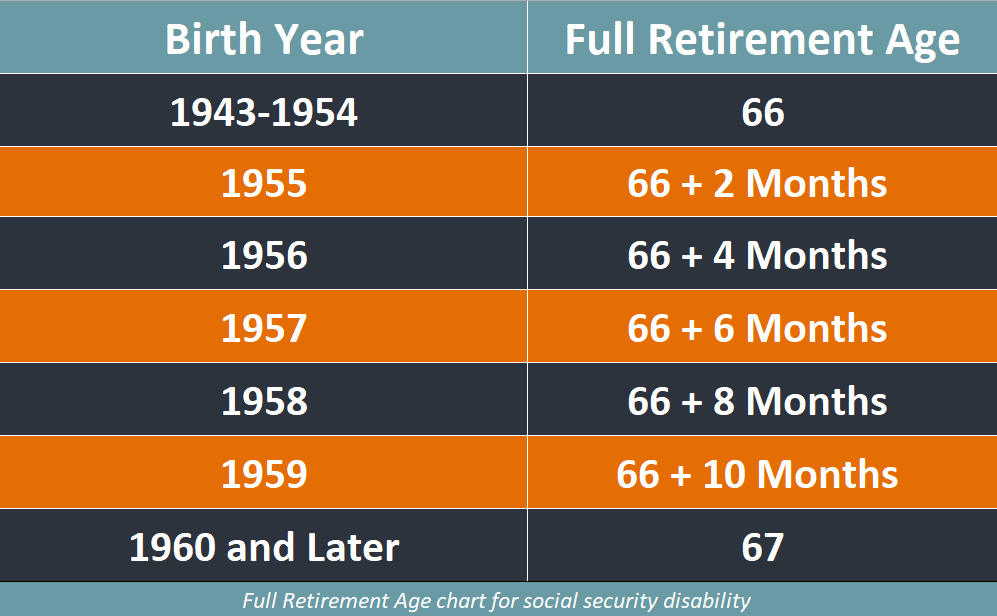
FRA (Full Retirement Age): This is the age at which you are entitled to receive 100% of your PIA. Your FRA depends on your birth year. For those born between 1943 and 1954, FRA is 66. It gradually increases for subsequent birth years, reaching 67 for anyone born in 1960 or later. Understanding your FRA is crucial because claiming benefits before or after this age will result in a permanent adjustment to your monthly payment.
Factors Influencing Your Social Security Benefit Amount
While AIME and PIA form the mathematical core, several other personal and programmatic factors can significantly alter the final benefit amount you receive.
Your Earnings History: The 35-Year Rule
As discussed, your benefit is primarily based on your average indexed monthly earnings over your 35 highest-earning years. This “35-year rule” is paramount. If you work for fewer than 35 years, each year you didn’t work (or had very low earnings) will count as a zero in the calculation, effectively lowering your AIME and, consequently, your PIA. Conversely, working more than 35 years can be highly beneficial. If you continue to work past 35 years and earn more than you did in one of your lower-earning past years, that new higher earning year will replace an older, lower-earning year (or a zero year), thereby increasing your overall AIME and your benefit amount. This highlights the value of sustained employment and higher earnings, especially later in your career.
Your Age When You Claim Benefits
This is perhaps the most significant decision you’ll make regarding your Social Security benefits, as it results in permanent adjustments to your monthly payment:
-
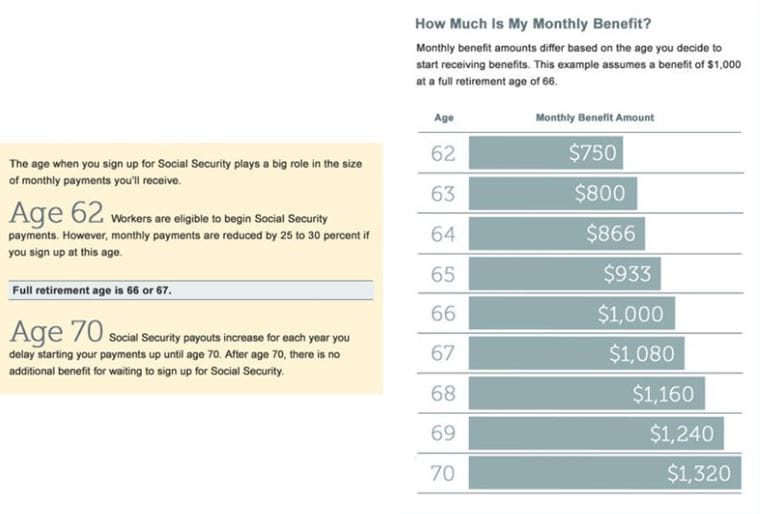
Claiming Early (Age 62): You can start receiving retirement benefits as early as age 62, but doing so results in a permanent reduction of your monthly benefit. The reduction is approximately 5/9 of 1% for each month before your FRA, up to 36 months. If you claim more than 36 months early, the reduction is 5/12 of 1% per month. For someone with an FRA of 67, claiming at 62 means a reduction of approximately 30%. This lower amount will then be your benefit for life (plus Cost-of-Living Adjustments).
-
Claiming at Full Retirement Age: If you wait until your FRA, you will receive 100% of your PIA, the full benefit amount calculated based on your earnings history.
-
Claiming Late (Up to Age 70): For every month you delay claiming benefits past your FRA, up to age 70, you earn “Delayed Retirement Credits.” These credits permanently increase your monthly benefit by 8% per year (2/3 of 1% per month). This means that by delaying claiming from an FRA of 67 to age 70, you can increase your monthly benefit by a substantial 24%. No additional credits are earned after age 70, so there’s no financial advantage to delaying beyond that point.
Spousal, Survivor, and Dependent Benefits
Social Security isn’t just for individual workers; it extends to family members, providing crucial support:
-
Spousal Benefits: If you are married, divorced (under specific conditions), or widowed, you may be eligible to receive benefits based on your spouse’s (or ex-spouse’s) earnings record, even if you never worked or had very low earnings yourself. A spouse can receive up to 50% of the working spouse’s PIA. If you are eligible for benefits based on your own work record and also for spousal benefits, the SSA will pay you the higher of the two amounts.
-
Survivor Benefits: When a worker dies, certain family members—including a surviving spouse, minor children, and dependent parents—may be eligible for survivor benefits. A surviving spouse can receive up to 100% of the deceased worker’s benefit amount if claiming at their own FRA (or earlier with a reduction).
-
Dependent Benefits: Unmarried children under 18 (or 19 if still in high school) and adult children who became disabled before age 22 can also receive benefits based on a parent’s earnings record.
These family benefits have complex rules and potential claiming strategies, especially for couples, that can significantly impact a household’s total Social Security income.
Cost-of-Living Adjustments (COLAs)

Once you begin receiving benefits, your payments are not fixed forever. They are subject to annual Cost-of-Living Adjustments (COLAs), which are designed to help your benefits keep pace with inflation. COLAs are determined by changes in the Consumer Price Index for Urban Wage Earners and Clerical Workers (CPI-W). When the CPI-W increases, your Social Security benefits will typically increase in the following year, helping to preserve your purchasing power over time. These adjustments are announced in October and take effect in December.
Tools and Strategies for Estimating and Maximizing Your Benefits
With a solid understanding of the factors involved, let’s explore practical ways to estimate your benefits and implement strategies to potentially increase them.
Using Your Social Security Statement
Your annual Social Security Statement is your most direct and personalized window into your benefits. You can access it securely online by creating an account at SSA.gov/myaccount. This statement provides:
- Your detailed earnings record: Crucial for verifying that all your earnings have been correctly reported. Discrepancies here can directly impact your future benefits.
- Estimated retirement benefits: Projections of your monthly payments at age 62, your Full Retirement Age (FRA), and age 70, based on your current earnings history and assumptions about future earnings.
- Estimated disability and survivor benefits: Important for understanding the full scope of your potential social insurance coverage.
Reviewing your statement regularly is paramount. Any errors in your earnings record, such as unreported wages or incorrect amounts, should be corrected promptly, as they can lead to lower benefits.
The SSA’s Online Tools and Calculators
Beyond your personalized statement, the SSA offers a suite of online tools and calculators on its website (SSA.gov) to help you plan:
- Retirement Estimator: This tool allows you to plug in different future earning scenarios and retirement ages to see how they impact your estimated benefit. It’s an interactive way to model various claiming strategies.
- Benefit Calculators: More detailed calculators can help you estimate spousal, survivor, and disability benefits.
- Life Expectancy Calculator: While not directly a benefit calculator, understanding average life expectancy can inform your claiming decision, especially when weighing the trade-offs of early vs. delayed claiming.
These tools are invaluable for personalizing your benefit estimates and exploring the financial implications of different choices.
Maximizing Your Benefits: Key Strategies
Proactive planning can significantly boost your Social Security income:
-
Working Longer/Higher Earning Years: Since your benefit is based on your 35 highest-earning years, working longer, especially into your peak earning years, can displace lower-earning years (or zero-earning years) from your earlier career. This can substantially increase your AIME and, consequently, your PIA. Even a few extra years of high earnings can have a noticeable impact.
-
Delaying Claiming: This is arguably the most powerful strategy for increasing your monthly benefit. As discussed, delaying benefits past your FRA, up to age 70, results in an 8% annual increase due to Delayed Retirement Credits. For someone with an FRA of 67, waiting until 70 means a 24% permanent increase in benefits. While this requires foregoing income for a few years, it provides a much higher, inflation-adjusted income stream for the rest of your life, which can be particularly beneficial for those with longer life expectancies.
-
Coordinating with a Spouse: For married couples, strategic claiming can maximize combined household benefits. This often involves one spouse (usually the higher earner) delaying claiming to earn maximum Delayed Retirement Credits, while the other spouse might claim earlier or claim spousal benefits based on the higher earner’s record. The optimal strategy depends on age differences, earnings histories, and health status. While the “file and suspend” strategy was eliminated for most, careful coordination remains crucial. Divorced individuals, under certain conditions (married for at least 10 years, currently unmarried, ex-spouse is eligible for benefits), can also claim benefits based on their ex-spouse’s record without affecting the ex-spouse’s benefits or their current spouse’s benefits.
-
Reviewing Your Earnings Record: Regularly check your Social Security Statement for accuracy. Errors, such as missing earnings from a past employer, can mean you’re credited with lower wages than you actually earned, leading to a smaller benefit. It’s much easier to correct these errors when you’re still working and can access old pay stubs or W-2 forms.
-
Understanding Taxation of Benefits: Be aware that a portion of your Social Security benefits may be taxable, depending on your “combined income.” Your combined income includes your adjusted gross income, tax-exempt interest, and half of your Social Security benefits. If your combined income exceeds certain thresholds, up to 85% of your Social Security benefits may be subject to federal income tax. Understanding this can help with overall retirement tax planning.
The Future of Social Security and What It Means for You
While Social Security has been a bedrock of financial security for generations, concerns about its long-term financial health are a common topic of discussion.
The Program’s Financial Health and Proposed Reforms
The Social Security program faces long-term financial challenges, primarily due to demographic shifts—an aging population means more beneficiaries receiving benefits and fewer workers paying into the system. The Social Security Trust Funds are projected to be able to pay 100% of promised benefits until the mid-2030s. After that, if no legislative action is taken, the program would be able to pay about 80% of scheduled benefits from ongoing tax revenues. This does not mean the program will run out of money entirely, but rather that it would not be able to meet its full obligations without changes.
Various proposals for reform have been put forth, including:
- Raising the Full Retirement Age: Gradually increasing the age at which individuals receive 100% of their benefits.
- Adjusting the COLA Formula: Modifying how cost-of-living adjustments are calculated, potentially slowing down benefit increases.
- Increasing the Payroll Tax Rate: Raising the percentage of earnings that workers and employers contribute.
- Raising or Eliminating the Taxable Earnings Cap: Currently, only earnings up to a certain amount ($168,600 in 2024) are subject to Social Security taxes. Raising or eliminating this cap would subject more of high earners’ income to the tax.
- Means-Testing Benefits: Reducing benefits for higher-income retirees.
While the exact nature of future reforms is uncertain, most experts agree that Congress will likely take action to ensure the program’s solvency. The impact on your individual benefits will depend on the specific changes enacted.
Don’t Rely Solely on Social Security: A Holistic Approach
Regardless of potential reforms, a crucial takeaway is that Social Security was never intended to be the sole source of retirement income. Financial advisors often refer to a “three-legged stool” of retirement planning: Social Security, pensions (for those fortunate enough to have them), and personal savings/investments.
For most Americans, personal savings—through 401(k)s, IRAs, other investment accounts, and taxable brokerage accounts—will be essential to achieving a comfortable retirement. Social Security should be viewed as a foundational component, a reliable income floor, rather than the entire structure of your retirement plan. Maximizing your Social Security benefits is one piece of the puzzle, but it must be integrated into a broader financial strategy that includes consistent saving, smart investing, and careful expense management.
Staying Informed and Planning Proactively
The landscape of Social Security and retirement planning is dynamic. Staying informed about potential legislative changes, economic trends, and updates from the Social Security Administration is vital. Regularly visiting SSA.gov, consulting with a qualified financial advisor, and reviewing your financial plan annually will ensure you’re making the most informed decisions for your future. Proactive planning allows you to adapt to changes and build a resilient financial future.
Calculating “how much will I get in SS” is not a simple question with a single answer; it’s a deeply personal journey influenced by a lifetime of work, strategic decisions, and evolving economic realities. By understanding the core mechanics of the program, leveraging available tools, and adopting a proactive approach to planning, you can gain clarity on your future benefits and confidently integrate Social Security into your overall financial roadmap for a secure and comfortable retirement.
aViewFromTheCave is a participant in the Amazon Services LLC Associates Program, an affiliate advertising program designed to provide a means for sites to earn advertising fees by advertising and linking to Amazon.com. Amazon, the Amazon logo, AmazonSupply, and the AmazonSupply logo are trademarks of Amazon.com, Inc. or its affiliates. As an Amazon Associate we earn affiliate commissions from qualifying purchases.