
Navigating the complexities of Social Security benefits while continuing to work is a common challenge for many Americans approaching or already in their retirement years. The desire to maintain a certain lifestyle, supplement retirement income, or simply remain active in the workforce often clashes with the intricate rules governing how earned income can affect your Social Security payments. Understanding these rules is crucial for making informed financial decisions that maximize your overall income and secure your financial future. This article delves into the specifics of working while receiving Social Security, exploring the earnings tests, tax implications, and strategic considerations to help you optimize your benefits.
Understanding Social Security Benefits and Working Limits
Social Security benefits are designed to replace a portion of your income lost due to retirement, disability, or the death of a family breadwinner. While the system encourages a phased transition into full retirement, it also incorporates mechanisms to ensure that benefits are primarily directed to those who truly need income replacement. This is where the “earnings test” comes into play, a critical component that determines how much you can earn before your Social Security benefits are reduced.
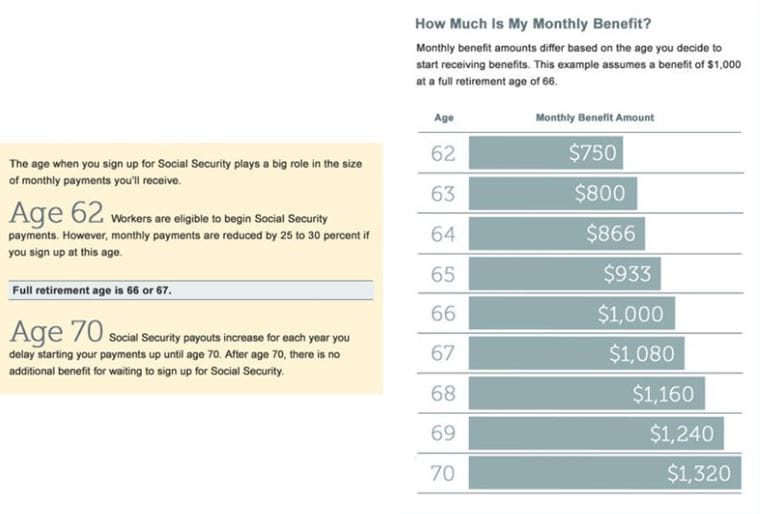
The impact of working on your Social Security benefits largely depends on your age relative to your Full Retirement Age (FRA). Your FRA is the age at which you are entitled to 100% of your primary Social Security benefit, and it varies based on your birth year. For those born in 1943 through 1954, FRA is 66. It gradually increases for later birth years, reaching 67 for those born in 1960 or later. Understanding your specific FRA is the first step in comprehending how your earnings will affect your benefits.
The Social Security Administration (SSA) categorizes beneficiaries into three main groups concerning the earnings test: those who are younger than their FRA for the entire year, those who reach their FRA during the year, and those who are at or past their FRA for the entire year. Each category has distinct rules and earnings limits, which are adjusted annually to account for inflation.
It’s important to remember that these rules primarily apply to earned income from wages or self-employment. Income from investments, pensions, annuities, and other government benefits generally does not count toward the earnings test. Only your gross earnings from employment or net earnings from self-employment are considered.
The Social Security Earnings Test Explained
The earnings test is arguably the most critical aspect to grasp when planning to work while receiving Social Security benefits. It dictates how much of your earned income the SSA will allow before it starts reducing your monthly benefit payments. These reductions are not permanent; any benefits withheld due to the earnings test are credited back to you in the form of a higher monthly benefit once you reach your Full Retirement Age. This is known as the “adjustment to the reduction factor.”
Before Full Retirement Age (FRA)
If you claim Social Security benefits before reaching your Full Retirement Age (FRA) and continue to work, your benefits will be subject to an annual earnings limit. For 2024, this limit is $22,320. If your earnings exceed this threshold, the SSA will deduct $1 from your benefits for every $2 you earn above the limit.
Example: If you are under FRA for all of 2024 and earn $32,320, which is $10,000 over the limit of $22,320, your benefits would be reduced by $5,000 ($10,000 / 2). This reduction applies to your total annual benefits, distributed across your monthly payments.
For individuals who start receiving benefits in the middle of a year, and are under FRA for the entire year, the SSA also applies a “monthly earnings test” for the first year of benefit receipt. This test ensures that you don’t lose benefits for months you were not working, even if your annual earnings exceed the limit. The monthly limit for 2024 is $1,860. If you do not earn more than this monthly limit in any given month, you can receive your full benefit for that month, regardless of your total annual earnings. This “monthly test” typically only applies to the first year you begin receiving benefits.
In the Year You Reach Full Retirement Age
There’s a special, higher earnings limit for the year in which you reach your Full Retirement Age. For 2024, this limit is $59,520. If your earnings exceed this amount in the months before you reach your FRA, the SSA will deduct $1 from your benefits for every $3 you earn above the limit. Importantly, once you reach your FRA month, the earnings limit no longer applies to your income for that month or any subsequent months in the year.
Example: If you reach your FRA in October 2024 and earn $69,520 in the months leading up to October (i.e., January through September), you would be $10,000 over the limit of $59,520. Your benefits would be reduced by approximately $3,333 ($10,000 / 3). Any income earned from October onwards in 2024 would not affect your Social Security benefits.
At or After Full Retirement Age
This is the simplest category: Once you reach your Full Retirement Age, there are no longer any earnings limits. You can earn as much as you want without your Social Security benefits being reduced. This is a common misconception, with many believing the earnings test applies indefinitely. The SSA will stop applying the earnings test in the month you reach your FRA, and your benefits will no longer be subject to reduction due to work income.
Furthermore, any benefits that were withheld from you prior to your FRA due to the earnings test are not lost. The SSA recalculates your benefit amount at your FRA, giving you credit for the months of benefits it withheld. This typically results in a slightly higher monthly benefit payment for the rest of your life.
Maximizing Your Combined Income: Strategies and Considerations
Understanding the earnings test is just one piece of the puzzle. To truly maximize your combined income from work and Social Security, you need to consider various strategic choices and their financial implications.
Delaying Benefits to Increase Monthly Payments
One of the most powerful strategies to increase your overall lifetime Social Security income is to delay claiming benefits past your initial eligibility age (62) up to your Full Retirement Age, or even beyond, up to age 70. For every year you delay claiming benefits past your FRA (up to age 70), you earn Delayed Retirement Credits (DRCs), which permanently increase your monthly benefit by approximately 8% per year.
While working past your FRA, even if you are not subject to the earnings test, continuing to delay benefits means you are forgoing current income. However, if your health and financial situation allow, this strategy can significantly boost your future benefit payments, providing a valuable hedge against inflation and increasing your financial security in later retirement. The decision to delay should be carefully weighed against your immediate income needs, health status, and life expectancy.
The Impact of Taxes on Social Security Benefits
Another crucial consideration is how your combined income from work and Social Security will be taxed. Unlike many other benefits, a portion of your Social Security benefits can be subject to federal income tax, depending on your “provisional income.” Provisional income includes your adjusted gross income (AGI), plus any tax-exempt interest, plus one-half of your Social Security benefits.
- Up to 50% of your benefits may be taxable if your provisional income is between $25,000 and $34,000 for an individual, or between $32,000 and $44,000 for a married couple filing jointly.
- Up to 85% of your benefits may be taxable if your provisional income exceeds $34,000 for an individual or $44,000 for a married couple filing jointly.
This means that earning income from a job while receiving Social Security can push your provisional income into a higher bracket, leading to a larger portion of your benefits becoming taxable. It’s essential to factor this into your financial planning, potentially adjusting your tax withholding or estimated tax payments.

State income taxes are also a consideration, though many states do not tax Social Security benefits. However, a handful of states do tax benefits, so it’s important to understand the rules in your state of residence.
Understanding Different Benefit Types
While the earnings test primarily applies to retired worker benefits, it can also affect other types of Social Security benefits:
- Spousal Benefits: If you are receiving spousal benefits based on your spouse’s work record and you are under your FRA, your own earnings can cause your spousal benefits to be reduced. The same earnings test rules apply to you as if you were claiming your own retirement benefits.
- Survivor Benefits: If you are a widow(er) receiving survivor benefits and you are under your FRA, your earnings can also reduce these benefits.
- Disability Benefits: The rules for working while receiving Social Security Disability Insurance (SSDI) are different and more complex, involving “trial work periods” and “substantial gainful activity” (SGA) thresholds. Generally, if you are receiving SSDI, your ability to earn income is significantly restricted, as the benefit is predicated on your inability to engage in SGA.
It’s vital to clarify how your specific benefit type interacts with your earned income to avoid unexpected reductions.
Navigating the Reporting Requirements and Potential Pitfalls
Properly managing your Social Security benefits while working requires diligence in reporting your earnings and understanding the potential for overpayments or underpayments.
How to Report Your Earnings to the SSA
If you are working and receiving Social Security benefits, especially if you are under your FRA, it is your responsibility to report your earnings to the SSA. This ensures that your benefits are accurately calculated and adjusted.
- For W-2 employees: Your employer reports your earnings to the SSA. However, it’s still good practice to inform the SSA if you expect to exceed the annual earnings limit so they can adjust your benefits proactively.
- For self-employed individuals: You must report your net earnings from self-employment to the SSA. This typically involves estimating your annual earnings at the beginning of the year and updating the SSA if your income changes significantly. It’s crucial to be as accurate as possible.
You can report changes in your earnings estimate online through your personal my Social Security account, by calling the SSA, or by visiting a local Social Security office. Proactive reporting helps prevent overpayments, which can lead to future benefit withholdings.
Overpayments and Underpayments
Overpayments occur when the SSA pays you more in benefits than you were entitled to receive. This often happens if you earn more than initially estimated or fail to report significant changes in your earnings. If an overpayment occurs, the SSA will typically notify you and request repayment. If you don’t repay the amount, the SSA will usually withhold your future benefits until the overpayment is recovered. You may be able to appeal the decision or request a waiver if you believe the overpayment was not your fault and repayment would cause financial hardship.
Underpayments happen less frequently but can occur if the SSA withheld too much from your benefits based on an inaccurate earnings estimate. If this happens, the SSA will typically reimburse you for the underpaid amount, often in a lump sum or by adjusting future payments. Maintaining accurate records of your earnings and communications with the SSA can help resolve these situations more smoothly.
Social Security and Medicare
While not directly tied to the earnings test, it’s important to remember that receiving Social Security benefits often correlates with Medicare eligibility. Typically, you become eligible for Medicare at age 65. If you are already receiving Social Security benefits when you turn 65, you will usually be automatically enrolled in Medicare Parts A and B. If you are not yet receiving Social Security, you will need to actively enroll in Medicare. The decision to work and delay Social Security benefits might also influence how you manage your healthcare coverage and associated costs.
Long-Term Planning and Expert Advice
The intersection of work, income, and Social Security benefits is complex, with myriad rules and potential implications. Sound long-term planning and expert guidance can make a significant difference in optimizing your financial outcomes.
Consulting a Financial Advisor
Given the individualized nature of Social Security claiming strategies and the impact of earned income, consulting a qualified financial advisor is highly recommended. A professional advisor specializing in retirement planning can help you:
- Analyze your specific situation: Considering your health, financial resources, family situation, and income needs.
- Project future scenarios: Helping you understand the long-term impact of different claiming ages and work patterns.
- Integrate Social Security into your broader financial plan: Including investments, pensions, and other income sources.
- Minimize tax liabilities: Advising on strategies to reduce the taxation of your Social Security benefits and overall income.
Their expertise can be invaluable in crafting a strategy that aligns with your personal goals and maximizes your financial security.
Regularly Reviewing Your Social Security Statement
The SSA provides a Social Security Statement (available online via your my Social Security account) that details your earnings history and provides estimates of your future benefits at different claiming ages. It is crucial to review this statement regularly to:
- Check for accuracy: Ensure that all your earnings are correctly posted to your record. Errors can affect your future benefit calculations.
- Monitor your benefit estimates: Keep track of how potential changes in your earnings or claiming age might affect your projected benefits.
- Stay informed: Understand your estimated benefits for retirement, disability, and survivor protection.
Catching errors early can prevent significant issues down the line.
Adapting to Policy Changes
Social Security rules and regulations are not static. While major overhauls are rare, Congress periodically considers adjustments to ensure the program’s long-term solvency. Earnings limits, benefit formulas, and tax thresholds can change over time. Staying informed about potential policy changes through reputable news sources and the SSA website is important for adapting your financial plan as needed.
In conclusion, the decision of “how much can I make and draw Social Security” is a nuanced one that requires careful consideration of your age, income levels, benefit type, and overall financial goals. By thoroughly understanding the earnings test, planning for tax implications, proactively reporting your income, and seeking professional advice, you can navigate these complexities effectively and make the most of your combined work earnings and Social Security benefits, ensuring a more secure and comfortable retirement.
aViewFromTheCave is a participant in the Amazon Services LLC Associates Program, an affiliate advertising program designed to provide a means for sites to earn advertising fees by advertising and linking to Amazon.com. Amazon, the Amazon logo, AmazonSupply, and the AmazonSupply logo are trademarks of Amazon.com, Inc. or its affiliates. As an Amazon Associate we earn affiliate commissions from qualifying purchases.