
Understanding how your future Social Security benefits are calculated is a critical component of effective retirement planning. For many Americans, Social Security represents a foundational layer of income in their later years, providing a crucial safety net. However, the exact methodology employed by the Social Security Administration (SSA) can seem complex and opaque to the uninitiated. Far from being a simple average of your lifetime earnings, the calculation involves a sophisticated multi-step process that accounts for inflation, your specific earning patterns, and the age at which you choose to claim benefits. This intricate system is designed to provide a progressive benefit structure, offering a higher replacement rate of pre-retirement income for lower earners, while still providing substantial support to those with higher lifetime earnings.

Demystifying this process is not merely an academic exercise; it empowers individuals to make informed decisions about their career path, savings strategies, and most importantly, when to claim their Social Security benefits. A clear grasp of the calculation methodology can reveal how different choices can impact your financial security decades down the line. By breaking down the core components, from your earnings record to the application of bend points and various adjustments, we can illuminate the path from a lifetime of contributions to a predictable stream of retirement income, firmly placing this topic within the realm of essential personal finance knowledge.
The Foundation of Social Security Benefits: Your Earnings Record
The bedrock of your future Social Security benefits is your personal earnings record, a comprehensive history of every dollar you’ve earned (up to the annual taxable maximum) throughout your working life, as reported to the Social Security Administration. Without this meticulous record, no calculation could even begin.
What is Covered Earnings?
Social Security benefits are funded through dedicated payroll taxes, specifically the Federal Insurance Contributions Act (FICA) tax, or the Self-Employment Contributions Act (SECA) tax for self-employed individuals. These taxes apply to your earnings up to a certain annual limit, known as the Social Security taxable maximum. For example, in 2024, this maximum was $168,600. Any earnings above this threshold in a given year are not subject to Social Security taxes and, consequently, do not count towards your Social Security benefit calculation. Your “covered earnings” are precisely these earnings that fall within the taxable limit each year. This distinction is vital because even if you earned millions in a year, only the portion up to the taxable maximum would be considered by the SSA.
The Importance of Accurate Records
Given that your entire benefit hinges on this earnings history, ensuring its accuracy is paramount. The SSA maintains records for millions of workers, and while generally reliable, errors can occur. These might stem from incorrect reporting by an employer, a transposed Social Security number, or even unreported earnings if you’ve been self-employed and not filed correctly. Periodically reviewing your Social Security statement, which can be easily accessed online via your My Social Security account, allows you to verify that your reported earnings match your pay stubs and tax records. Discovering and correcting discrepancies early on is crucial, as errors can significantly impact your future benefit amount. Waiting until you’re on the cusp of retirement to address these issues can be a bureaucratic nightmare, potentially delaying or reducing your rightful benefits.
Annual Wage Indexing (AWI): Adjusting for Inflation Over Time
One of the most critical, yet often misunderstood, steps in the calculation process is Annual Wage Indexing (AWI). Social Security is designed to provide benefits that reflect a worker’s earnings over their lifetime, but a dollar earned in 1980 simply doesn’t have the same purchasing power as a dollar earned today. To ensure fairness and reflect the general rise in wages and living standards, the SSA “indexes” your past earnings. This means that your earnings from earlier years are adjusted upwards to reflect the average wage level in the economy when you turn age 60.
For example, if you earned $20,000 in 1985, that amount is converted to an “indexed” value equivalent to what it would be worth in terms of today’s average wages. This indexing process stops at age 60, meaning earnings from age 60 onwards are generally counted at their nominal (actual) dollar value. AWI prevents early career earnings from being diluted by inflation, ensuring that your full working history is considered on a level playing field when determining your benefit. Without AWI, individuals with long careers would see their early contributions severely undervalued.
The Core Calculation: Averaging Your Indexed Monthly Earnings (AIME)
With your earnings record established and indexed for inflation, the next step involves calculating your Average Indexed Monthly Earnings (AIME). This is a crucial interim step that directly leads to your Primary Insurance Amount (PIA), which is the benefit you receive at your Full Retirement Age (FRA).
Identifying Your Highest Earning Years
The Social Security Administration doesn’t use every year of your earnings to calculate your benefit. Instead, it focuses on your most financially productive years. Specifically, the SSA takes your 35 highest-earning years, after those earnings have been indexed (as described in the previous section), and uses them for the calculation. This means that if you have a career shorter than 35 years, or if you had periods of very low earnings, those years will be included as zero-earning years in the 35-year total, potentially lowering your overall average. Conversely, if you work for more than 35 years, your lowest earning years will be dropped, effectively maximizing your average. This “drop-out” rule is designed to benefit workers who have long careers and whose earlier earnings might have been lower than their peak earning years.
Calculating Average Indexed Monthly Earnings (AIME)
Once the 35 highest indexed earning years are identified, their indexed dollar values are summed. This total sum represents your lifetime “indexed covered earnings.” To arrive at your AIME, this total is then divided by 420 (which is 35 years multiplied by 12 months per year). The result is your Average Indexed Monthly Earnings – a figure representing your average monthly income over your top 35 indexed earning years. It’s important to note that AIME is purely a calculation figure and not necessarily the amount you’ll receive; it’s the raw material from which your actual benefit is derived. For example, if your 35 highest indexed earning years totaled $1,500,000, your AIME would be $1,500,000 / 420 = $3,571.43. This monthly average then serves as the input for the next stage of the calculation: determining your Primary Insurance Amount.
Primary Insurance Amount (PIA): Your Full Retirement Age Benefit
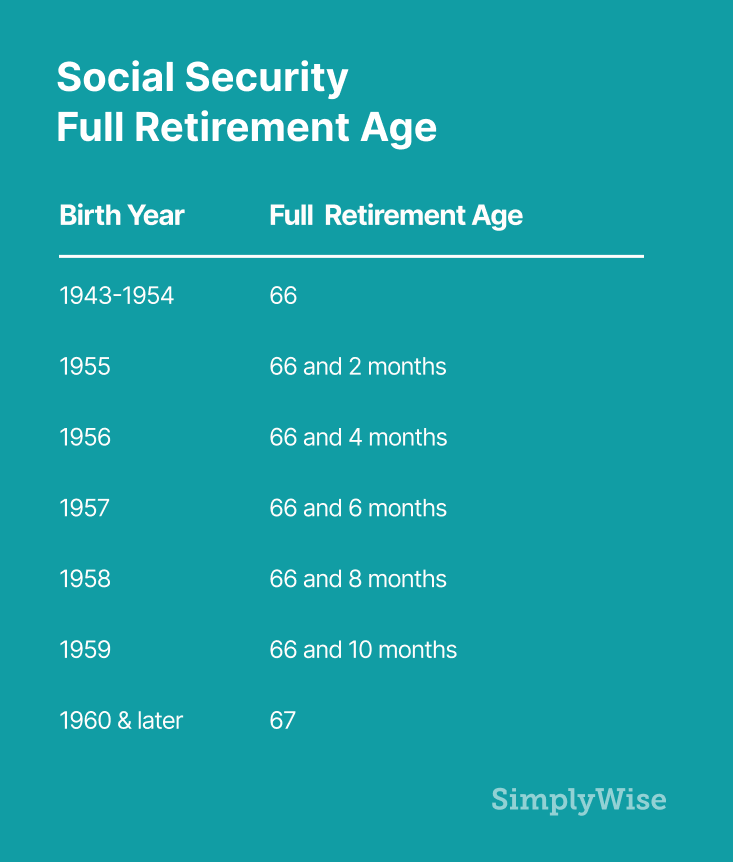
The Primary Insurance Amount (PIA) is arguably the most significant figure in your Social Security benefit calculation. It represents the monthly benefit you are entitled to receive if you claim benefits precisely at your Full Retirement Age (FRA). Your FRA depends on your birth year; for those born in 1960 or later, FRA is 67. The PIA is calculated directly from your AIME using a progressive formula involving “bend points,” which we will delve into next. It is the baseline from which all other benefits—whether you claim early, late, or if your family members claim spousal or survivor benefits—are derived. Understanding your PIA is key because it establishes the maximum amount you could receive without any adjustments for claiming age.
Applying the Bend Points: From AIME to PIA
The transition from your AIME to your PIA is where the progressive nature of Social Security benefits truly comes into play. The SSA doesn’t simply apply a flat percentage to your AIME; instead, it uses a formula with “bend points” that provides a higher income replacement rate for lower earners.
Understanding the PIA Formula and Bend Points
The PIA formula is structured with three specific “bend points” that divide your AIME into segments. For each segment, a different percentage is applied. For individuals who become eligible for Social Security benefits in a given year (i.e., turn age 62), the bend points are set annually. For example, for someone reaching age 62 in 2024, the formula might look something like this (actual percentages and bend points vary annually and are published by the SSA):
- 90% of the first X dollars of AIME
- 32% of AIME over X dollars up to Y dollars
- 15% of AIME over Y dollars
Let’s illustrate conceptually: if your AIME is $4,000, and the bend points are at $1,174 and $7,077 for 2024 (these are actual 2024 values for someone reaching age 62 in 2024), your PIA would be calculated as:
- 90% of the first $1,174 = $1,056.60
- 32% of the amount between $1,174 and $4,000 ($2,826) = $904.32
- 15% of the amount above $4,000 (which is zero in this example) = $0
- Total PIA = $1,056.60 + $904.32 = $1,960.92
This tiered approach ensures that a larger proportion of lower earnings is replaced, reflecting Social Security’s goal of poverty prevention and income redistribution.
The Progressive Nature of Benefits
This use of bend points is what gives Social Security its strong progressive character. Individuals with lower AIME receive a much higher percentage of their average indexed earnings back as benefits compared to those with higher AIME. For instance, someone with an AIME of $1,000 might get 90% back (or close to it), while someone with an AIME of $7,000 might get a much lower overall percentage, say 30-40%, once all three tiers are applied. This progressive structure is a fundamental design element of the program, aiming to provide a more substantial safety net for those who need it most, ensuring that even low-wage workers receive a meaningful benefit in retirement. It’s a key reason why Social Security is not simply a direct return on investment, but a social insurance program.
Annual Adjustments to Bend Points
It’s important to remember that the specific dollar amounts for the bend points are not static. They are adjusted annually based on changes in the national average wage index. This adjustment ensures that the progressive nature of the benefit formula remains consistent over time and reflects current economic conditions. Each year, the SSA releases updated bend points for individuals who become eligible for benefits in that specific year (i.e., turn age 62). This dynamic adjustment mechanism ensures that the system remains responsive to long-term economic shifts.
Adjustments to Your Primary Insurance Amount (PIA)
Once your Primary Insurance Amount (PIA) is determined, it’s not necessarily the exact amount you will receive each month. The PIA is merely the starting point. Several factors can either increase or decrease this base amount, primarily depending on the age at which you choose to begin receiving benefits and subsequent cost-of-living adjustments.
Claiming Benefits Early: The Reduction Factor
One of the most significant decisions influencing your Social Security benefit is when you choose to claim it. While you can start receiving benefits as early as age 62, claiming before your Full Retirement Age (FRA) will result in a permanent reduction of your PIA. The reduction is approximately 5/9 of 1% for each month you claim early, up to 36 months. For any months beyond 36, the reduction is 5/12 of 1% per month.
For someone with an FRA of 67, claiming at age 62 means a reduction of about 30% of their PIA. This reduction is permanent and will apply to all future benefit payments. While claiming early provides income sooner, it locks in a lower monthly amount for life, impacting not only your own retirement but potentially your spouse’s or survivors’ benefits as well. This trade-off between immediate income and a lower lifetime benefit is a crucial consideration for many retirees.
Delaying Benefits: The Increase Factor (Delayed Retirement Credits)
Conversely, if you delay claiming benefits past your Full Retirement Age (FRA), you can significantly increase your monthly payments. For each month you delay, up to age 70, you earn Delayed Retirement Credits (DRCs). These credits typically add 2/3 of 1% (or 8% annually) to your PIA for each year of delay.
For someone with an FRA of 67, delaying until age 70 would result in a 24% increase (3 years x 8% per year) in their monthly benefit compared to their PIA. These DRCs stop accruing at age 70, so there’s no financial advantage to delaying beyond that age. Delaying benefits is often a sound strategy for those who are healthy, have other income sources, and expect to live a long life, as it provides a substantially higher guaranteed income stream later in retirement.
Cost-of-Living Adjustments (COLAs): Keeping Pace with Inflation
To protect the purchasing power of Social Security benefits against inflation, the Social Security Administration implements annual Cost-of-Living Adjustments (COLAs). These adjustments are based on the Consumer Price Index for Urban Wage Earners and Clerical Workers (CPI-W). If the CPI-W increases from the third quarter of the previous year to the third quarter of the current year, a COLA is applied, increasing benefit payments for the following year.
COLAs are critical for retirees, as they ensure that the real value of their Social Security income doesn’t erode over time due to rising prices. These adjustments are applied to everyone’s benefit, regardless of when they claimed, ensuring that a benefit received today will still have similar purchasing power decades from now.
Other Factors: Spousal, Survivor, and Disability Benefits
Beyond individual retirement benefits, Social Security also provides crucial financial support through spousal, survivor, and disability benefits, all of which are directly tied to a worker’s PIA.
- Spousal Benefits: A spouse can claim up to 50% of their partner’s PIA (if claiming at their own FRA), provided their own benefit is lower.
- Survivor Benefits: A surviving spouse or eligible child can receive benefits based on the deceased worker’s PIA, with varying percentages depending on the relationship and claiming age.
- Disability Benefits: If a worker becomes disabled and meets eligibility requirements, their disability benefit is generally equal to their full PIA, without any age-related reductions.
These derivative benefits underscore the comprehensive nature of Social Security as a family protection program, extending its financial safety net beyond just the primary earner’s retirement.
Tools and Resources for Estimation and Planning
Navigating the intricacies of Social Security calculations might seem daunting, but thankfully, the Social Security Administration and various financial tools offer accessible ways to estimate your future benefits and plan accordingly.
Your Online Social Security Statement
The single most valuable resource at your disposal is your online Social Security Statement. By creating a secure “My Social Security” account on the SSA website, you gain access to your personalized statement. This document provides a detailed breakdown of your earnings history year by year, estimated benefits at different claiming ages (62, Full Retirement Age, and 70), and projections for disability and survivor benefits. Regularly reviewing your statement ensures the accuracy of your earnings record and provides a solid foundation for your financial planning. It’s a dynamic report that updates annually, reflecting your latest contributions.
Social Security Administration’s Online Calculators
Beyond the static statement, the SSA website also hosts a suite of robust online calculators. These tools allow you to input various scenarios, such as different claiming ages, future earnings projections, or even spousal benefit scenarios, to generate personalized benefit estimates. The “Retirement Estimator” is particularly useful, offering a clear picture of how different claiming decisions impact your monthly payout. These calculators are invaluable for “what-if” planning, allowing you to visualize the financial implications of early versus delayed retirement and other key choices.

Financial Planners and Professional Advice
For complex situations, such as coordinating Social Security benefits with other retirement income sources, tax planning, or intricate family situations (e.g., multiple marriages, special needs dependents), consulting with a qualified financial planner is highly recommended. While the SSA provides general information and tools, a professional financial advisor can offer tailored strategies that integrate Social Security into your broader financial plan, helping to optimize your claiming strategy for your unique circumstances and maximize your overall retirement income. Their expertise can be particularly beneficial in navigating the nuances of spousal or survivor benefits and understanding their interaction with other assets.
Understanding how your Social Security benefits are calculated is not just about numbers; it’s about empowering yourself to make smarter financial decisions that will profoundly impact your retirement security. From the foundational accuracy of your earnings record to the sophisticated application of wage indexing and bend points, and finally, to the critical adjustments based on your claiming age, each step plays a vital role. By grasping this multi-faceted process, utilizing available resources, and seeking professional guidance when needed, you can approach your retirement with greater confidence and a clearer path to a financially secure future. Social Security is a complex yet vital system, and an informed approach to its calculation is an indispensable part of comprehensive personal finance.
aViewFromTheCave is a participant in the Amazon Services LLC Associates Program, an affiliate advertising program designed to provide a means for sites to earn advertising fees by advertising and linking to Amazon.com. Amazon, the Amazon logo, AmazonSupply, and the AmazonSupply logo are trademarks of Amazon.com, Inc. or its affiliates. As an Amazon Associate we earn affiliate commissions from qualifying purchases.