
In an increasingly data-driven world, where information is abundant yet often unstructured, a powerful tool emerged over a decade ago that redefined how we interact with and extract knowledge from the digital realm. This tool is Wolfram Alpha, a computational knowledge engine that stands distinctly apart from traditional search engines. It’s not just about finding existing web pages; it’s about computing answers, generating data, and performing complex analyses in response to natural language queries. At its core, Wolfram Alpha represents a sophisticated blend of artificial intelligence, vast curated data, and advanced algorithmic computation, making it an indispensable asset for students, professionals, and the perpetually curious alike.

The Genesis of a Computational Knowledge Engine
The idea of Wolfram Alpha didn’t spring from a simple desire to improve web search but rather from a profound vision to create a system that could understand questions, process information, and compute answers dynamically. This ambition was years in the making, building upon decades of work in computation and symbolic mathematics.
Beyond Search Engines: A New Paradigm
Before Wolfram Alpha, our primary method for accessing information online was through search engines. These engines excel at indexing the vastness of the internet, matching keywords to relevant documents, and presenting a list of links. The user then sifts through these links to find the specific piece of information they need. While incredibly powerful for discovery, this model often requires users to synthesize information themselves, perform calculations manually, or cross-reference multiple sources.
Wolfram Alpha offered a fundamentally different approach. Instead of linking to documents, it computes answers. When you ask Wolfram Alpha a question, it doesn’t search for a web page containing the answer; it interprets your query, draws upon its immense repository of structured data, and applies its sophisticated algorithms to generate a precise, factual, and often visually rich response. This paradigm shift moved from information retrieval to knowledge computation, aiming to provide definitive answers rather than merely pointers to potential answers.
Stephen Wolfram’s Vision
The brainchild behind Wolfram Alpha is Stephen Wolfram, a distinguished scientist, mathematician, and software entrepreneur. Known for his work in cellular automata, computational science, and the development of Mathematica, Wolfram dedicated many years to assembling the foundational knowledge and technological infrastructure required for such an ambitious project. His vision was to create a system that could bring expert-level computational capabilities to anyone, transforming raw data into actionable insights and understandable facts.
Wolfram Alpha’s development involved painstakingly curating an enormous database of factual information across virtually every domain imaginable—from mathematics, physics, and chemistry to history, geography, finance, and culture. This data isn’t just collected; it’s meticulously structured, cross-referenced, and validated to ensure accuracy and consistency. Coupled with this data are millions of lines of algorithms, models, and computational functions, all designed to interpret queries and derive results. This monumental undertaking reflects Wolfram’s long-standing belief in the power of computation to understand and generate knowledge about the universe.
How Wolfram Alpha Works: Unpacking the Engine
Understanding Wolfram Alpha’s operational mechanics reveals the technological marvel beneath its seemingly simple interface. It’s a sophisticated ecosystem where natural language meets vast knowledge bases and complex algorithms.
Natural Language Processing and Semantic Understanding
The first critical step in Wolfram Alpha’s process is interpreting the user’s input. Unlike keyword-based search, Wolfram Alpha strives for semantic understanding. It uses advanced natural language processing (NLP) techniques to parse human language, identify entities, relationships, and the intent behind a query. For instance, if you type “population of Tokyo,” Wolfram Alpha doesn’t just look for those words; it understands “Tokyo” as a specific city and “population” as a request for a numerical attribute of that city.
This semantic understanding allows it to handle nuanced queries, recognize implicit meanings, and even disambiguate terms. It can distinguish between “apple” the fruit and “Apple” the company, or interpret “what is 2 + 2” as a mathematical operation rather than a textual search. This deep linguistic intelligence is fundamental to its ability to process complex questions and generate meaningful answers.
Curated Data and Algorithmic Computation
Once the query is understood, Wolfram Alpha taps into its core strength: an enormous, meticulously curated repository of structured data. This data is not scraped from the web indiscriminately; it comes from authoritative sources, academic papers, government statistics, scientific databases, and proprietary datasets. Each piece of information is carefully verified, standardized, and interconnected within Wolfram Alpha’s knowledge base.
Alongside this data lies a vast library of algorithms, models, and computational methods. These range from fundamental mathematical operations and statistical analyses to complex scientific simulations, financial models, and linguistic processing routines. When a query comes in, Wolfram Alpha identifies the relevant data points and applies the appropriate algorithms. For example, asking “integral of x^2 from 0 to 1” triggers a specific symbolic calculus algorithm, while “weather in London tomorrow” invokes weather prediction models and meteorological data. This fusion of reliable data with powerful computational tools is what enables Wolfram Alpha to generate answers rather than merely retrieve them.
Output Generation: Dynamic and Structured Answers
The final stage involves synthesizing the computed results into a coherent, comprehensible, and often visually engaging output. Wolfram Alpha’s answers are not static; they are dynamically generated for each query. This includes numerical values, mathematical plots, statistical charts, comparison tables, historical timelines, and even geographic maps.
Beyond just the raw answer, Wolfram Alpha often provides additional related information, alternative interpretations, and properties of the entities involved, giving users a comprehensive overview. For a simple query like “Paris,” it might provide the population, area, geographic coordinates, weather, historical facts, and even famous landmarks, all presented in a structured, easy-to-digest format. This emphasis on structured, informative, and context-rich output is a hallmark of its technological design, making it an invaluable tool for deeper exploration.
Key Features and Capabilities
Wolfram Alpha’s diverse capabilities stem from its robust technological infrastructure, allowing it to tackle an astonishing array of questions across numerous domains.
Mathematical and Scientific Prowess
At its heart, Wolfram Alpha is a powerhouse for mathematics and science. It can perform symbolic and numerical computations, solve equations, plot functions, evaluate integrals, differentiate expressions, and handle complex statistical analyses. From basic arithmetic to advanced calculus, linear algebra, and discrete mathematics, it acts as a universal computational assistant. In science, it can provide atomic data, chemical reactions, physical constants, astronomical observations, and detailed biological information, making it an indispensable tool for students and researchers in STEM fields. Its ability to generate step-by-step solutions for many mathematical problems is particularly valuable for learning and understanding.
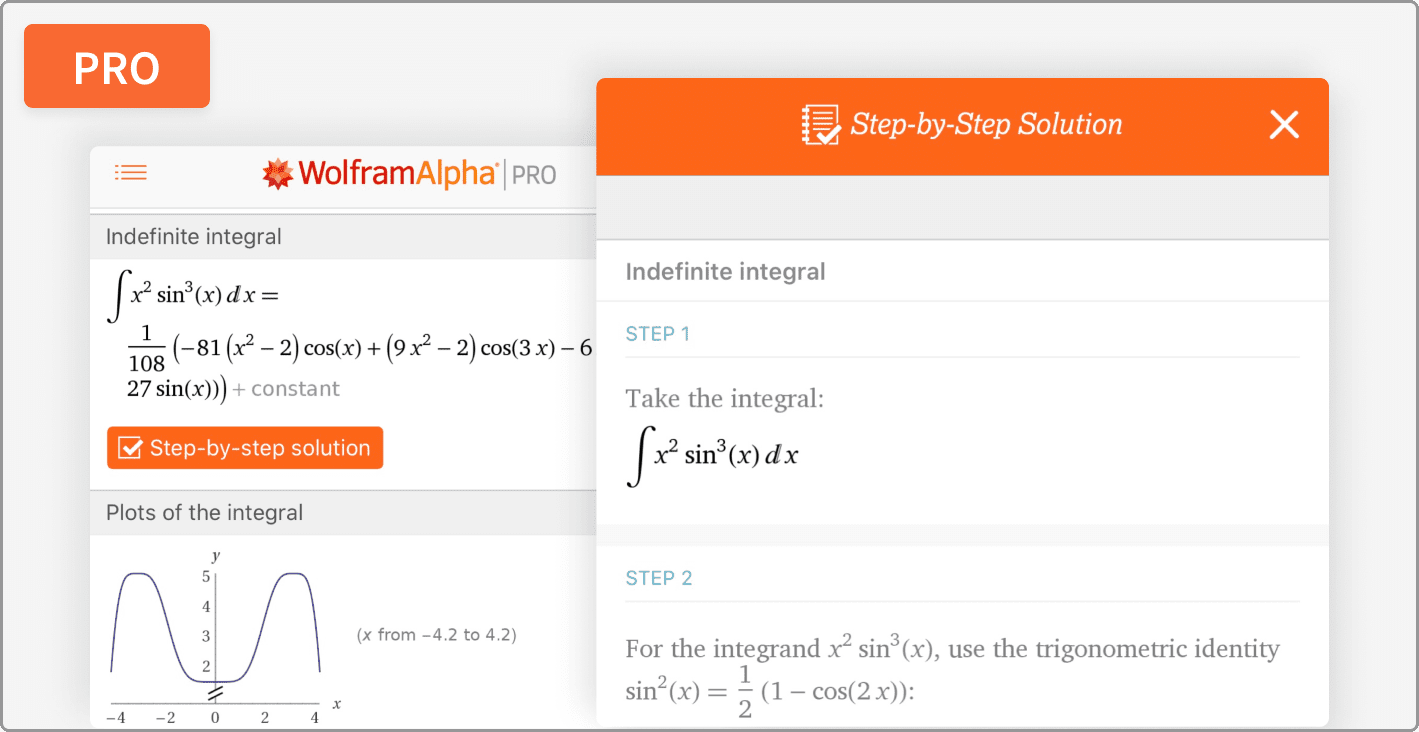
Data Analysis and Visualization
Beyond pure computation, Wolfram Alpha excels at data analysis and visualization. Users can input their own data (e.g., a list of numbers, a dataset) and ask Wolfram Alpha to perform statistical analysis, generate descriptive statistics, create various plots (histograms, scatter plots, box plots), and identify trends or correlations. This functionality transforms raw data into understandable insights, making it a powerful tool for researchers, business analysts, and anyone dealing with quantitative information. The automatic generation of professional-quality charts and graphs saves significant time and effort.
Everyday Computations and Practical Applications
Wolfram Alpha isn’t confined to academic or scientific niches; it’s also incredibly useful for everyday queries and practical applications. It can provide unit conversions, currency exchange rates, nutritional information for foods, flight data, historical facts, linguistic translations, health metrics, and even compare properties of different objects or concepts. Want to know the distance from New York to London? Or compare the caloric content of an apple versus a banana? Wolfram Alpha delivers precise answers instantly, bringing computational intelligence into daily life.
Integration with Other Technologies
Recognizing its unique value, Wolfram Alpha’s computational capabilities have been integrated into various other platforms and technologies. Most notably, it powers many of the advanced search and question-answering features of digital assistants like Apple’s Siri, providing accurate and context-aware responses to factual queries. It also plays a significant role in empowering large language models (LLMs) and generative AI systems, acting as a reliable “brain” for computational tasks, factual retrieval, and data generation, enhancing the accuracy and utility of AI conversations. This integration highlights its critical role as a foundational layer for intelligent systems requiring precise, verifiable information.
Use Cases Across Disciplines
The versatility of Wolfram Alpha makes it a valuable resource across an expansive range of disciplines and professions.
Education and Research
For students, Wolfram Alpha is an unparalleled learning aid. It helps visualize abstract concepts, check homework answers, explore complex mathematical functions, understand scientific principles, and gain quick access to verified factual data for reports and projects. Researchers across all fields use it for quick data lookups, performing complex calculations, verifying results, and generating visualizations to support their studies. Its ability to provide step-by-step solutions also helps students develop a deeper understanding of problem-solving methodologies.
Business and Finance
In the business world, Wolfram Alpha assists with market analysis, financial calculations, economic data comparisons, and statistical modeling. Entrepreneurs can use it to understand demographic trends, analyze industry data, or convert currencies. Financial analysts can perform complex bond calculations, examine historical stock data, or compare economic indicators across different countries. While not a dedicated financial trading platform, its computational power makes it an excellent tool for data-driven business insights and planning.
Engineering and Design
Engineers and designers leverage Wolfram Alpha for a multitude of tasks, from calculating physical properties of materials, converting units, and solving differential equations to performing simulations and accessing specifications for various components. Whether designing a bridge, coding a new application, or optimizing a manufacturing process, the precise computational capabilities of Wolfram Alpha streamline workflows and enhance accuracy, reducing reliance on manual calculations and external lookups.
Daily Life and Curiosity
Beyond professional applications, Wolfram Alpha caters to sheer human curiosity. Users frequently tap into it to answer questions about history, geography, nutrition, health, culture, and sports. Planning a trip? Ask about climate data. Debating a historical fact with a friend? Verify it with Wolfram Alpha. Its ability to deliver factual, computed answers instantly satisfies an innate desire for knowledge and understanding, enriching daily interactions with information.
Wolfram Alpha in the AI Landscape and Future Outlook
As the landscape of artificial intelligence continues to evolve at a rapid pace, Wolfram Alpha retains a unique and critical position, distinct from the rise of generative AI models.
Complementing Generative AI
While large language models (LLMs) like ChatGPT are extraordinary at generating human-like text, summarizing information, and creating creative content, they fundamentally operate on statistical patterns learned from vast datasets of human language. This means they can sometimes “hallucinate” or generate plausible-sounding but factually incorrect information, especially when dealing with precise numerical calculations or obscure factual data.
This is where Wolfram Alpha shines and complements generative AI. When an LLM encounters a query requiring exact computation, specific factual retrieval, or data analysis, it can call upon Wolfram Alpha as a tool. By integrating Wolfram Alpha, LLMs can offload these tasks to a system designed for precision, accuracy, and computational rigor. This hybrid approach leverages the best of both worlds: the conversational fluency and creativity of LLMs, combined with the factual reliability and computational power of Wolfram Alpha. It ensures that generative AI outputs are not only coherent but also factually grounded and mathematically sound.
Continuous Evolution and Expansion
Wolfram Alpha is not a static product; it is continuously evolving. The team at Wolfram Research constantly updates its curated data, expands its knowledge domains, refines its algorithms, and enhances its natural language understanding capabilities. New computational functions are added, existing models are improved, and the user interface is periodically refined to enhance usability and performance. The commitment to maintaining and expanding its vast knowledge base ensures its continued relevance and accuracy in an ever-changing world of information.

The Future of Computational Intelligence
Wolfram Alpha represents a pioneering step towards what Stephen Wolfram terms “computational intelligence”—a system that understands, computes, and presents knowledge in an intelligent and actionable way. In a future where AI becomes increasingly pervasive, the ability to access verifiable, computed facts will become even more crucial. Wolfram Alpha stands as a testament to the power of structured data and deterministic algorithms, serving as a reliable bedrock in an ocean of information, and continuing to empower users with unprecedented access to computational knowledge. It is not merely a tool but a foundational element in our quest to understand and interact with the complex world around us through the lens of computation.
aViewFromTheCave is a participant in the Amazon Services LLC Associates Program, an affiliate advertising program designed to provide a means for sites to earn advertising fees by advertising and linking to Amazon.com. Amazon, the Amazon logo, AmazonSupply, and the AmazonSupply logo are trademarks of Amazon.com, Inc. or its affiliates. As an Amazon Associate we earn affiliate commissions from qualifying purchases.