
In the intricate world of finance, whether personal or professional, understanding percentages isn’t merely a mathematical exercise—it’s a critical skill for making informed decisions, tracking progress, and optimizing financial health. From dissecting a monthly budget to calculating investment returns, determining profit margins, or even understanding the true cost of a loan, percentages provide a universal language for comparing proportions and expressing change. This comprehensive guide will demystify the process of calculating percentages of money, equipping you with the knowledge to apply this fundamental concept across various financial scenarios.
The Fundamental Importance of Percentages in Finance
Percentages serve as the bedrock for countless financial analyses, translating raw numbers into digestible insights that empower individuals and businesses alike. They offer a standardized way to compare parts to a whole, or to gauge relative changes over time, transcending the absolute values that can sometimes obscure the bigger picture.
Understanding Financial Proportions
Absolute dollar figures, while important, often lack context. A salary increase of $5,000 sounds significant, but its true impact can only be assessed by comparing it to the original salary. If your salary was $50,000, a $5,000 raise is a 10% increase, which is substantial. If your salary was $500,000, it’s only a 1% increase, a less impactful change. Percentages allow us to understand these proportions, enabling meaningful comparisons across different scales and situations. This relative understanding is crucial for assessing financial health, growth, and efficiency. It helps us answer questions like: “What portion of my income goes to housing?” or “What percentage of our company’s revenue comes from product X?”
Making Informed Decisions
Whether you’re allocating funds for savings, evaluating an investment opportunity, or deciding on a purchase, percentages guide decision-making. Budgeting often involves assigning percentages of income to different spending categories (e.g., 50% for needs, 30% for wants, 20% for savings). Investors analyze percentage returns to compare the performance of different assets or portfolios. Understanding interest rates as percentages is vital for anyone taking out a loan or credit card, as it dictates the true cost of borrowing. Without the ability to work with percentages, financial decisions would be based on incomplete information, leading to suboptimal or even detrimental outcomes.
Gauging Performance and Growth
For businesses, percentages are indispensable for measuring performance and growth. Profit margins (gross, operating, net) are expressed as percentages, providing a snapshot of a company’s efficiency and profitability relative to its revenue. Sales growth, market share, and customer retention are frequently tracked using percentage changes. Investors use metrics like Return on Investment (ROI) and Return on Equity (ROE), both percentage-based, to assess how effectively a company generates profits from its assets or shareholders’ equity. On a personal level, tracking the percentage growth of your investment portfolio or the percentage reduction in your debt provides clear, actionable insights into your financial journey.
Basic Principles: How to Calculate a Percentage of Money
At its core, calculating a percentage is a straightforward mathematical operation. However, the ability to apply this core principle to various financial questions is what unlocks its true power.
The Core Formula: Part / Whole x 100
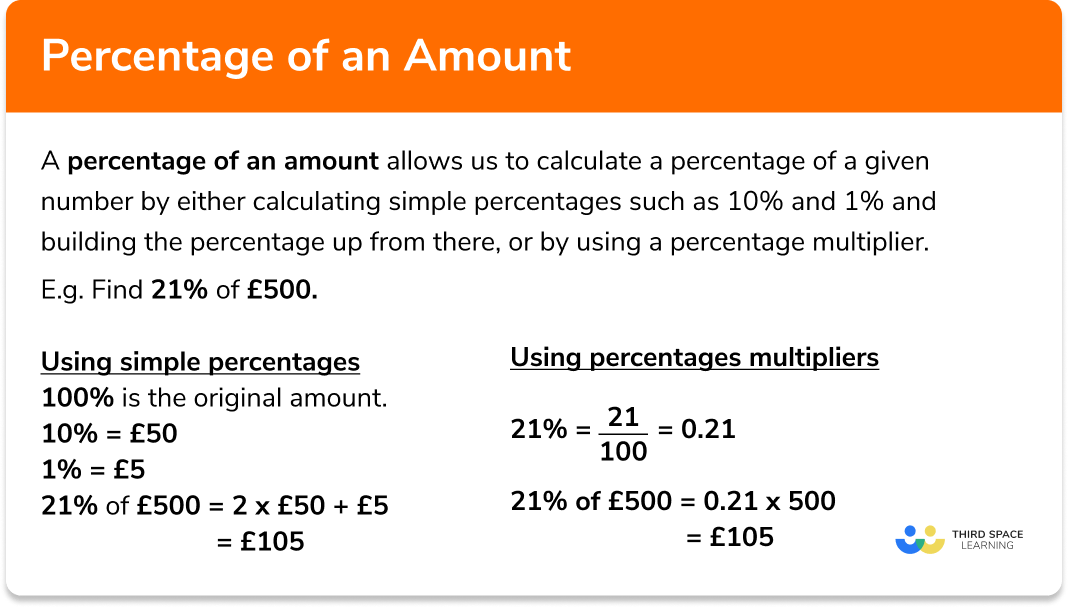
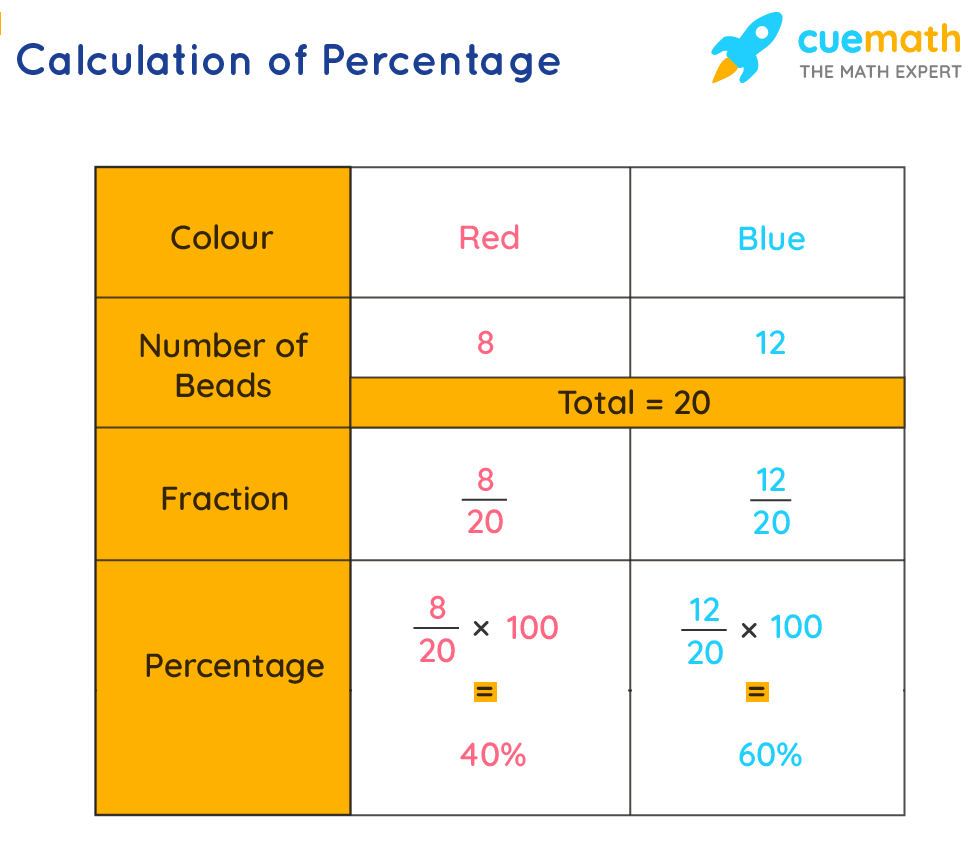
The most fundamental formula for calculating a percentage is:
Percentage = (Part / Whole) x 100
Here:
- Part is the specific amount or portion you are interested in.
- Whole is the total amount or the base against which the part is being compared.
- Multiplying by 100 converts the decimal or fractional result into a percentage.
For example, if you spent $150 (Part) out of your $1,000 (Whole) monthly budget on dining out, the percentage spent would be ($150 / $1,000) x 100 = 0.15 x 100 = 15%.
Calculating a Percentage of a Total Amount
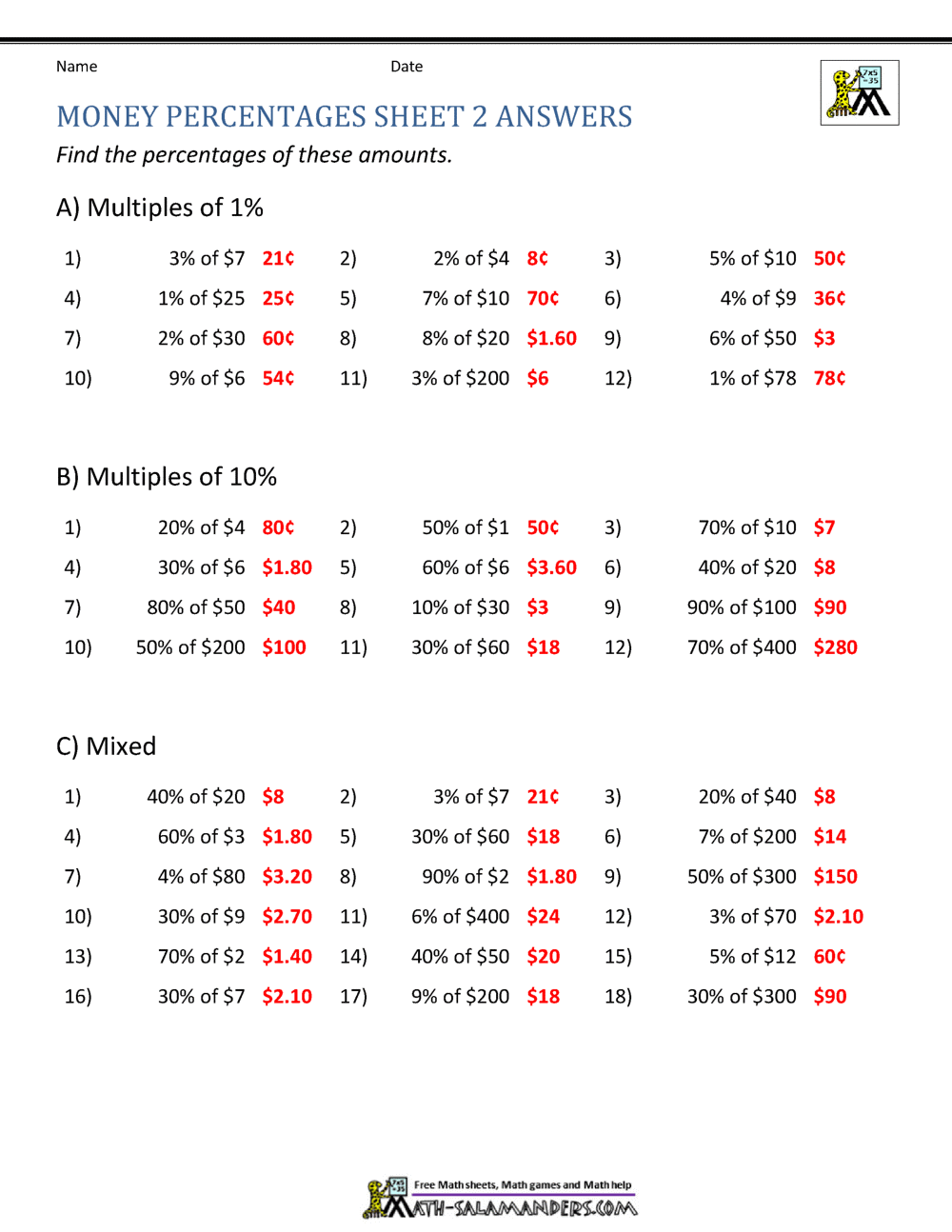
Often, you’ll need to find a specific percentage of a given monetary amount. For instance, if you want to save 20% of your $3,000 monthly income.
To do this, convert the percentage into a decimal by dividing it by 100, then multiply by the total amount.
Amount = (Percentage / 100) x Total Amount
Example: What is 20% of $3,000?
- Convert 20% to a decimal: 20 / 100 = 0.20
- Multiply by the total amount: 0.20 x $3,000 = $600
So, 20% of $3,000 is $600.
Calculating the Percentage One Amount Represents of Another
This is the inverse of the previous calculation and uses the core formula directly. You have two amounts, and you want to know what percentage the first amount is of the second.
Example: If you paid $75 in interest on a $1,500 credit card balance, what percentage interest did you pay?
- Part = $75 (interest paid)
- Whole = $1,500 (total balance)
- Percentage = ($75 / $1,500) x 100 = 0.05 x 100 = 5%
You paid 5% interest.
Percentage Increase and Decrease
Calculating percentage change is vital for tracking growth or decline in investments, income, expenses, or business metrics.
Percentage Change = [(New Value – Old Value) / Old Value] x 100
- Percentage Increase: If your stock investment grew from $1,000 to $1,200.
- Percentage Increase = [($1,200 – $1,000) / $1,000] x 100 = ($200 / $1,000) x 100 = 0.20 x 100 = 20% increase.
- Percentage Decrease: If your monthly utility bill dropped from $150 to $120.
- Percentage Decrease = [($120 – $150) / $150] x 100 = (-$30 / $150) x 100 = -0.20 x 100 = 20% decrease.
- (Note: A negative result indicates a decrease.)
Real-World Applications: Personal Finance Scenarios
Understanding how to calculate percentages of money is perhaps most immediately impactful in personal finance. It allows individuals to take control of their financial destiny, making smart choices about spending, saving, and managing debt.
Budgeting and Expense Tracking
One of the most common applications is budgeting. Many personal finance experts advocate for percentage-based budgeting rules, like the popular 50/30/20 rule (50% for needs, 30% for wants, 20% for savings and debt repayment). To apply this, you first need to calculate what these percentages represent in actual dollar amounts based on your income. Furthermore, tracking your actual spending as a percentage of your budget for each category helps you identify areas of overspending or opportunities for saving. For example, if your housing expenses account for 40% of your take-home pay, you might realize you’re exceeding a comfortable threshold and need to adjust.
Savings and Investment Growth
For savers and investors, percentages are crucial. The interest rate on your savings account or certificate of deposit (CD) is expressed as a percentage, determining how much your money will grow. More complex, compound interest calculations, while often handled by financial calculators, are built on percentage principles. When investing, you’ll constantly encounter percentage metrics: annual returns, expense ratios of funds, and portfolio allocation percentages (e.g., 70% stocks, 30% bonds). Understanding these percentages helps you compare investment options and assess your portfolio’s risk and growth potential.
Debt Management
Debt, whether from credit cards, student loans, or mortgages, is heavily intertwined with percentages. The interest rate is the percentage charged on the principal amount, and calculating it helps you understand the true cost of borrowing. Minimum payments on credit cards are often calculated as a small percentage of your outstanding balance, which can illustrate how long it will take to pay off debt if you only make the minimum. When negotiating debt settlement, lenders might offer to reduce your balance by a certain percentage, requiring you to quickly calculate the financial implications.
Understanding Discounts and Sales
Shopping savvy often means understanding discounts. A “25% off” sale is only truly beneficial if you can quickly calculate what that percentage discount translates to in dollars. This enables you to compare deals across different retailers or products and ensure you’re getting the best value. Similarly, understanding sales tax, which is a percentage added to the price of goods and services, helps you anticipate the final cost of your purchases.
Real-World Applications: Business Finance Scenarios
In the business realm, percentages are indispensable for analyzing performance, making strategic decisions, and communicating financial health to stakeholders. They provide a common metric for comparison across different companies and industries.
Profitability Metrics
Businesses constantly rely on percentages to measure profitability.
- Gross Profit Margin: (Gross Profit / Revenue) x 100. This shows the percentage of revenue left after deducting the cost of goods sold, indicating efficiency in production.
- Operating Profit Margin: (Operating Income / Revenue) x 100. This reveals the percentage of revenue remaining after covering all operating expenses, including production and administrative costs.
- Net Profit Margin: (Net Income / Revenue) x 100. This is the ultimate measure of profitability, showing the percentage of revenue that becomes actual profit after all expenses, taxes, and interest are paid. These margins are vital for assessing a company’s financial health and comparing it against competitors or industry benchmarks.
Sales and Discounts
Pricing strategies frequently involve percentages. Businesses might offer percentage-based discounts to stimulate sales, clear inventory, or reward loyal customers. Calculating these discounts accurately is essential for both the business (to ensure profitability) and the customer (to understand savings). Sales commissions, often a percentage of sales revenue, motivate sales teams and are a critical component of compensation structures. Furthermore, understanding market share—the percentage of total sales in an industry generated by a particular company—is crucial for strategic planning and competitive analysis.
Taxes and Commissions
Taxes are almost universally expressed as percentages. Corporate income tax rates, sales taxes, payroll taxes, and property taxes all require a clear understanding of percentage calculations for accurate financial planning, compliance, and reporting. Similarly, commissions, whether paid to sales agents, real estate brokers, or financial advisors, are typically a percentage of a transaction’s value. Businesses must accurately calculate these percentages to manage expenses and ensure fair compensation.
Financial Ratios and Performance Analysis
Beyond direct profit margins, businesses use a multitude of financial ratios, almost all of which are percentage-based, to assess various aspects of their operations.
- Liquidity Ratios (e.g., current ratio): While not always a direct percentage, they lead to insights about a company’s ability to meet short-term obligations.
- Solvency Ratios (e.g., debt-to-equity ratio): These ratios, often expressed as percentages, indicate a company’s ability to meet its long-term financial obligations.
- Efficiency Ratios (e.g., inventory turnover): While some are not direct percentages, many are used in conjunction with percentage changes to assess operational efficiency over time.
These ratios, when compared against historical data or industry averages, provide deep insights into a company’s financial strengths and weaknesses.
Leveraging Financial Tools for Percentage Calculations
While the basic calculations are straightforward, in today’s digital age, various tools can simplify and expedite percentage calculations, reducing the chance of human error and freeing up time for analysis.
Spreadsheet Software (Excel/Google Sheets)
Spreadsheet programs like Microsoft Excel and Google Sheets are perhaps the most powerful and versatile tools for financial calculations, including percentages. They allow you to set up complex financial models, automate calculations, and visualize data.
- Basic Percentage: If you have a value in cell A1 (Part) and a total in cell B1 (Whole), you can calculate the percentage with the formula
=(A1/B1)*100in another cell. - Percentage of a Number: To find 20% of a number in cell A1, use
=(A1*0.20). - Percentage Change: For values in A1 (Old) and B1 (New), use
=( (B1-A1)/A1 )*100.
Spreadsheets are invaluable for budgeting, investment tracking, and detailed business financial analysis due to their flexibility and ability to handle large datasets.
Online Calculators and Mobile Apps
For quick, one-off calculations, online percentage calculators or dedicated financial apps on your smartphone are incredibly convenient. A simple search for “percentage calculator” will yield numerous free web-based tools. Many banking apps and personal finance apps also incorporate percentage calculation functionalities, especially for budgeting, loan payments, or investment returns. These tools are ideal when you need an immediate answer without setting up a spreadsheet.
Accounting Software and Financial Management Platforms
Businesses, in particular, benefit from accounting software (like QuickBooks, Xero, or SAP) and comprehensive financial management platforms. These systems often have built-in functionalities that automatically calculate percentages for things like profit margins, sales tax, discounts, and financial ratios. They streamline financial reporting, ensuring accuracy and providing real-time insights into a company’s financial performance without manual calculation. For personal finance, more advanced budgeting apps can also automatically calculate the percentage of your income spent in various categories.
Mastering the calculation and interpretation of percentages of money is an indispensable skill in both personal and professional finance. It transforms raw financial data into meaningful insights, enabling smarter budgeting, more astute investing, efficient debt management, and robust business analysis. By understanding the core formulas and leveraging available financial tools, you can confidently navigate the complexities of the monetary world and make decisions that foster financial growth and stability.
aViewFromTheCave is a participant in the Amazon Services LLC Associates Program, an affiliate advertising program designed to provide a means for sites to earn advertising fees by advertising and linking to Amazon.com. Amazon, the Amazon logo, AmazonSupply, and the AmazonSupply logo are trademarks of Amazon.com, Inc. or its affiliates. As an Amazon Associate we earn affiliate commissions from qualifying purchases.