
In the complex landscape of personal finance, investing, and business strategy, few concepts hold as much transformative power as the percentage. Far from being a mere mathematical curiosity, percentages are the universal language of financial comparison, growth, loss, and allocation. They enable us to quantify change, evaluate performance, and make informed decisions that shape our economic well-being. Whether you’re budgeting for household expenses, scrutinizing investment returns, analyzing business profitability, or simply trying to understand a discount, a solid grasp of how to find out and interpret percentages is not just advantageous – it’s absolutely indispensable.

This guide will demystify the art and science of percentage calculation, rooting it firmly in the context of money management. We’ll explore why percentages are crucial, walk through the fundamental methods of calculation, and demonstrate their practical application across various financial scenarios, from everyday personal finance to sophisticated investment analysis. Finally, we’ll look at how modern tools can streamline these calculations, empowering you to navigate your financial journey with greater confidence and precision.
The Indispensable Role of Percentages in Financial Acumen
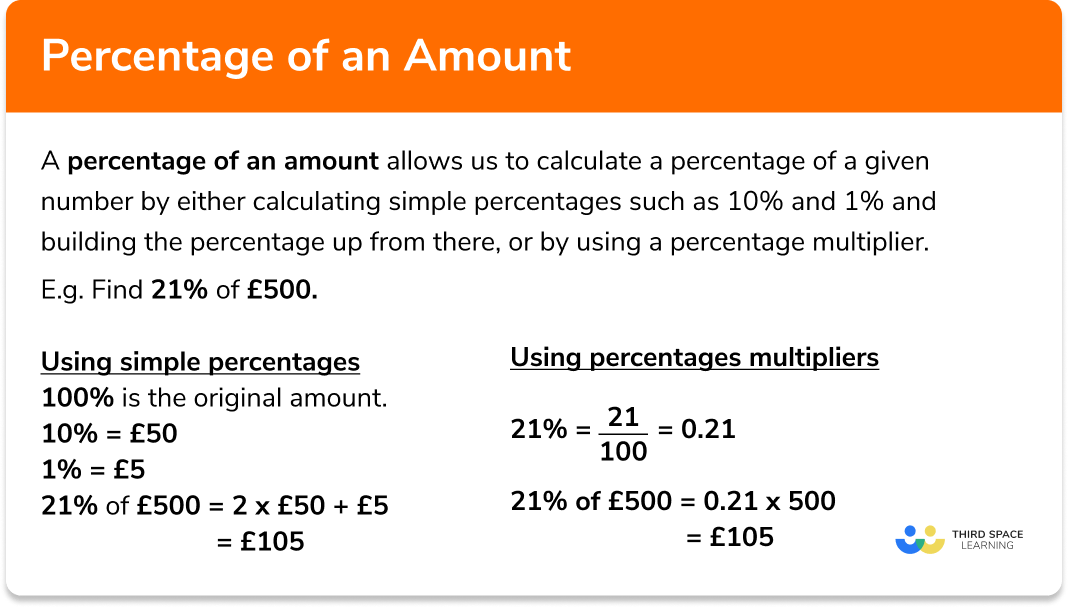
At its core, a percentage is a way of expressing a number as a fraction of 100. It literally means “per hundred.” This standardization makes percentages incredibly powerful for comparisons, as they provide a common baseline regardless of the absolute numbers involved. In the world of finance, where metrics, rates, and ratios dictate success and failure, percentages offer clarity and a powerful lens for evaluation.
Beyond Simple Numbers: Understanding Proportional Relationships
Absolute numbers, while important, often lack context. Knowing you saved $100 is good, but knowing you saved $100, which represents 10% of your monthly income, provides a deeper understanding of the impact and your financial behavior. Percentages allow us to understand proportional relationships, revealing how a part relates to a whole, or how one value changes relative to another. This is critical when assessing growth rates, shrinkage, allocations, or risk. For instance, a 5% return on a $1,000 investment is very different from a 5% return on a $100,000 investment in terms of absolute dollars, but the rate of return (the percentage) remains the consistent metric for comparison across different scales.
Empowering Financial Decision-Making
Every financial decision, from taking out a loan to setting a budget, involves percentages. Understanding how interest rates (a percentage) impact your loan repayments, how sales tax (a percentage) affects your purchases, or how your investment portfolio’s asset allocation (percentages) influences risk and return, directly translates into better decision-making. Percentages allow you to benchmark performance, compare different financial products, and forecast future outcomes, turning abstract figures into actionable insights. Without this understanding, individuals and businesses are left guessing, making financial choices based on intuition rather than data.
Common Financial Scenarios Demanding Percentage Savvy
Consider a few common examples:
- Budgeting: Allocating a percentage of income to savings, housing, and discretionary spending.
- Loans & Debt: Understanding annual percentage rates (APRs) on credit cards and mortgages.
- Discounts & Sales: Calculating the true price after a percentage markdown.
- Investments: Measuring capital gains, losses, and dividend yields.
- Business: Determining profit margins, growth rates, and market share.
- Taxes: Calculating income tax, sales tax, or capital gains tax.
In each scenario, a clear understanding of percentages is the bedrock for accurate analysis and sound financial management.
Fundamental Methods for Calculating Percentages in Finance
While advanced financial models can be complex, the core methods for calculating percentages are surprisingly straightforward. Mastering these basic formulas is the first step toward becoming financially literate.
Basic Formula: Part Over Whole
The most fundamental percentage calculation is determining what percentage one number is of another. The formula is:
Percentage = (Part / Whole) * 100
Example: If you spent $300 on groceries from a $2,000 monthly income, what percentage of your income went to groceries?
($300 / $2,000) * 100 = 0.15 * 100 = 15%
This formula is essential for budgeting, understanding expense allocations, or calculating the portion of your portfolio allocated to a specific asset.
Percentage Increase and Decrease: Tracking Growth and Loss
Financial life is dynamic, characterized by growth and sometimes, contraction. Calculating percentage increase or decrease allows you to measure these changes effectively.
Formula for Percentage Increase:
Percentage Increase = ((New Value – Original Value) / Original Value) * 100
Example: Your investment grew from $5,000 to $5,500. What is the percentage increase?
(($5,500 – $5,000) / $5,000) * 100 = ($500 / $5,000) * 100 = 0.10 * 100 = 10% increase.
Formula for Percentage Decrease:
Percentage Decrease = ((Original Value – New Value) / Original Value) * 100
Example: Your stock dropped from $100 per share to $90 per share. What is the percentage decrease?
(($100 – $90) / $100) * 100 = ($10 / $100) * 100 = 0.10 * 100 = 10% decrease.
These calculations are critical for tracking investment performance, evaluating business growth or decline, and monitoring changes in financial metrics over time.
Finding the Original Number: Reversing Percentage Changes
Sometimes, you know the final value after a percentage change and need to find the original value. This is common when dealing with discounted prices or understanding pre-tax amounts.
Formula for Original Value after a Percentage Increase:
Original Value = New Value / (1 + (Percentage Increase / 100))
Example: You bought an item on sale for $120, which was 20% more than its original price (perhaps a markup was applied). What was the original price?
Original Value = $120 / (1 + (20 / 100)) = $120 / (1 + 0.20) = $120 / 1.20 = $100
Formula for Original Value after a Percentage Decrease:
Original Value = New Value / (1 – (Percentage Decrease / 100))
Example: You paid $80 for an item after a 20% discount. What was the original price?
Original Value = $80 / (1 – (20 / 100)) = $80 / (1 – 0.20) = $80 / 0.80 = $100
This is particularly useful for savvy shoppers trying to reverse-engineer discounts or for businesses analyzing markdowns.
Percentage Points vs. Percentage Change: A Critical Distinction

A common pitfall in financial discussions is confusing “percentage points” with “percentage change.” A percentage point is simply the arithmetic difference between two percentages. A percentage change, as discussed, is a proportional change.
Example: If an interest rate increases from 5% to 7%, it’s an increase of 2 percentage points. However, it’s a ((7-5)/5) * 100 = 40% percentage increase in the interest rate itself. This distinction is crucial in understanding the true magnitude of change, especially in areas like interest rates, market share, or policy changes.
Applying Percentages in Personal Finance Management
For individuals, percentages are the backbone of sound personal finance. They provide the framework for managing income, expenses, savings, and debt effectively.
Budgeting and Expense Allocation: The 50/30/20 Rule
Many budgeting strategies rely on percentage allocations. The popular 50/30/20 rule, for instance, suggests allocating 50% of your after-tax income to needs (housing, groceries, utilities), 30% to wants (entertainment, dining out), and 20% to savings and debt repayment. Calculating these percentages correctly helps you understand where your money is going and adjust your spending habits to align with your financial goals.
Example: With a $4,000 monthly after-tax income:
- Needs: 50% of $4,000 = $2,000
- Wants: 30% of $4,000 = $1,200
- Savings/Debt: 20% of $4,000 = $800
Savings Goals and Growth: Compound Interest Unveiled
Understanding how your savings grow involves percentages, particularly with compound interest. Compound interest means earning interest on your initial principal and on the accumulated interest from previous periods. This snowball effect is expressed as an annual percentage rate (APR) or annual percentage yield (APY).
Example: If you save $1,000 in an account with a 5% annual interest rate, after one year, you’ll have $1,000 * (1 + 0.05) = $1,050. In the second year, you’ll earn 5% on $1,050, demonstrating the power of compounding percentages over time.
Debt Management: Interest Rates and Repayment Strategies
Debt is often quantified by interest rates—the percentage charged on the principal amount owed. Credit card APRs can be notoriously high (e.g., 20% or more), while mortgage rates are generally lower. Calculating the impact of these percentages on your total repayment amount is critical.
Example: A $1,000 balance on a credit card with a 20% APR will accrue $200 in interest over a year if no payments are made. Understanding this helps prioritize high-interest debt repayment strategies.
Smart Shopping: Discounts, Sales Tax, and Tip Calculations
Everyday financial transactions are rife with percentages. Calculating discounts (e.g., “25% off”) ensures you know the final price. Adding sales tax (e.g., 7% of the purchase price) is another common percentage calculation. And, when dining out, calculating a tip (e.g., 15-20% of the bill) is a social and financial courtesy. These seemingly small calculations add up and impact your overall spending.
Percentages in Investment and Business Strategy
Moving beyond personal finances, percentages become even more critical in the realms of investing and business, serving as key performance indicators and analytical tools.
Measuring Investment Performance: Return on Investment (ROI)
ROI is perhaps the most fundamental percentage in investing and business, measuring the profitability of an investment.
Formula: ROI = ((Current Value of Investment – Cost of Investment) / Cost of Investment) * 100
Example: If you invested $10,000 in a stock that is now worth $12,000, your ROI is (($12,000 – $10,000) / $10,000) * 100 = 20%. ROI allows investors to compare the efficiency of different investments. Other related metrics include annual growth rate, dividend yield (dividends as a percentage of share price), and expense ratios for funds.
Business Profitability: Margins and Markups
Businesses live and die by their margins. Gross profit margin, operating profit margin, and net profit margin are all expressed as percentages, indicating how much profit a company makes from its sales.
Gross Profit Margin: (Gross Profit / Revenue) * 100
Example: If a product costs $60 to make and sells for $100, the gross profit is $40. The gross profit margin is ($40 / $100) * 100 = 40%.
Markups, the percentage added to the cost to determine the selling price, are also crucial for pricing strategies. These percentage-based metrics inform pricing, cost control, and overall business health.
Economic Indicators: Inflation, GDP Growth, and Market Shares
Macroeconomic data relies heavily on percentages. Inflation (the rate at which prices for goods and services are rising, eroding purchasing power) is expressed as a percentage. Gross Domestic Product (GDP) growth, indicating the health of an economy, is also a percentage. Market share, representing a company’s sales as a percentage of total industry sales, is vital for competitive analysis. Understanding these percentages helps businesses forecast, plan, and mitigate risks related to the broader economic environment.
Risk Assessment: Diversification and Portfolio Allocation
In investing, diversification is key to managing risk, and it’s implemented using percentages. An investor might decide to allocate 60% of their portfolio to stocks, 30% to bonds, and 10% to real estate, based on their risk tolerance and financial goals. These percentage allocations are not arbitrary; they are carefully calculated to optimize the risk-return profile of the portfolio. Understanding how these percentages impact potential gains and losses is fundamental to effective portfolio management.
Leveraging Technology for Precision and Efficiency
While manual percentage calculations are essential for understanding, modern technology offers invaluable tools for speed and accuracy, especially with complex financial scenarios.
Built-in Calculator Functions
Most smartphones and basic calculators have a dedicated percentage key (%) or function. This button can simplify calculations like finding a percentage of a number or adding/subtracting a percentage. For instance, to find 20% of 150, you might type “150 * 20 % =” depending on your calculator. For a quick discount, “100 – 20 % =” (for 20% off $100) can provide the result directly.
Spreadsheet Software: Excel and Google Sheets for Complex Models
For more involved financial analysis, spreadsheet programs like Microsoft Excel or Google Sheets are indispensable. They allow you to:
- Automate calculations: Enter formulas once and apply them to thousands of data points.
- Build financial models: Create detailed budgets, investment trackers, or business forecasts that automatically update as inputs change.
- Visualize data: Generate charts and graphs to illustrate percentage trends over time.
Example:= (B2/A2)*100in a cell could calculate a percentage, where A2 is the ‘whole’ and B2 is the ‘part’. For percentage increase,= ((B2-A2)/A2)*100.
Dedicated Financial Calculators and Mobile Apps
Numerous online tools, mobile apps, and specialized financial calculators (like those from Texas Instruments or HP) are designed for specific financial percentage calculations. Loan calculators, compound interest calculators, ROI calculators, and retirement planners often handle complex percentage-based formulas, factoring in variables like compounding frequency, varying interest rates, and tax implications, saving you significant manual effort. These tools are particularly useful for long-term financial planning where small percentage differences can have monumental long-term impacts.
Online Tools and Financial Aggregators
Many financial websites, banking portals, and investment platforms offer integrated calculators and dashboards that display information in percentage terms. Investment platforms show portfolio allocation percentages, return percentages, and expense ratios. Budgeting apps automatically categorize spending and present it as percentages of your income. Leveraging these tools not only streamlines calculations but also provides valuable insights into your financial health at a glance.
Conclusion
The ability to “find out percentage” is far more than a mathematical skill; it is a foundational pillar of financial literacy. From meticulously managing personal budgets and shrewdly navigating consumer discounts to strategically investing and driving business growth, percentages provide the critical framework for understanding, evaluating, and predicting financial outcomes. They empower us to transform raw data into meaningful insights, enabling us to make deliberate and informed decisions rather than relying on guesswork.
By mastering the basic formulas, understanding their application across diverse financial contexts, and wisely utilizing the technological tools at our disposal, anyone can become a more confident and capable financial navigator. Embracing the language of percentages is not merely about crunching numbers; it’s about unlocking a deeper understanding of your financial world and charting a clearer path toward your economic aspirations.
aViewFromTheCave is a participant in the Amazon Services LLC Associates Program, an affiliate advertising program designed to provide a means for sites to earn advertising fees by advertising and linking to Amazon.com. Amazon, the Amazon logo, AmazonSupply, and the AmazonSupply logo are trademarks of Amazon.com, Inc. or its affiliates. As an Amazon Associate we earn affiliate commissions from qualifying purchases.