
Understanding how to calculate percentage decrease is a foundational skill for anyone navigating the complexities of personal finance, investing, or business operations. In a world saturated with financial data, the ability to accurately interpret reductions, losses, or declines is paramount to making informed decisions. Whether you’re tracking a drop in your investment portfolio, analyzing a reduction in your monthly expenses, or assessing a company’s sales decline, the concept of percentage decrease provides a standardized, relative measure that absolute figures alone cannot.
This article will demystify percentage decrease, guiding you through its fundamental definition, a straightforward step-by-step calculation, and myriad practical applications across various financial contexts. By mastering this essential metric, you’ll gain a deeper, more nuanced understanding of financial shifts, empowering you to better manage your money, evaluate opportunities, and mitigate risks.
The Fundamentals: What is Percentage Decrease?
At its core, percentage decrease is a mathematical concept used to quantify the relative reduction between an initial value and a subsequent, smaller value. It expresses this reduction as a proportion of the original amount, providing a clear, comparable metric regardless of the absolute scale of the values involved. Unlike a simple absolute decrease, which tells you how much something changed, a percentage decrease tells you how significant that change was in relation to its starting point.
Defining the Core Concept
Imagine you start with a certain amount, and that amount then becomes smaller. The percentage decrease quantifies this shrinkage relative to where you began. For instance, if you had $100 and it decreased to $50, the absolute decrease is $50. However, the percentage decrease reveals that you lost half of your initial sum, which is a much more impactful piece of information than just knowing you lost $50. This relative measure is crucial because a $50 decrease from $100 is far more significant than a $50 decrease from $10,000.
Why it Matters in Money Management
In the realm of personal and business finance, percentage decrease is an indispensable tool. For individuals, it helps in:
- Identifying losses: Understanding how much your investments have dropped as a percentage can temper emotional responses and inform strategic rebalancing.
- Tracking budget cuts: If you reduce spending in a particular category, knowing the percentage decrease helps assess your progress and the impact on your overall budget.
- Evaluating discounts: When a store offers a percentage discount, calculating the actual percentage decrease from the original price confirms the value of the deal.
For businesses, it’s vital for:
- Analyzing sales declines: A percentage decrease in sales indicates the magnitude of revenue loss, prompting investigations into market conditions, competition, or product performance.
- Monitoring cost reductions: When efforts are made to cut operational expenses, the percentage decrease quantifies the success of those initiatives.
- Interpreting market trends: A percentage decrease in market share or customer churn rate can signal significant challenges requiring immediate strategic attention.
The Step-by-Step Calculation of Percentage Decrease
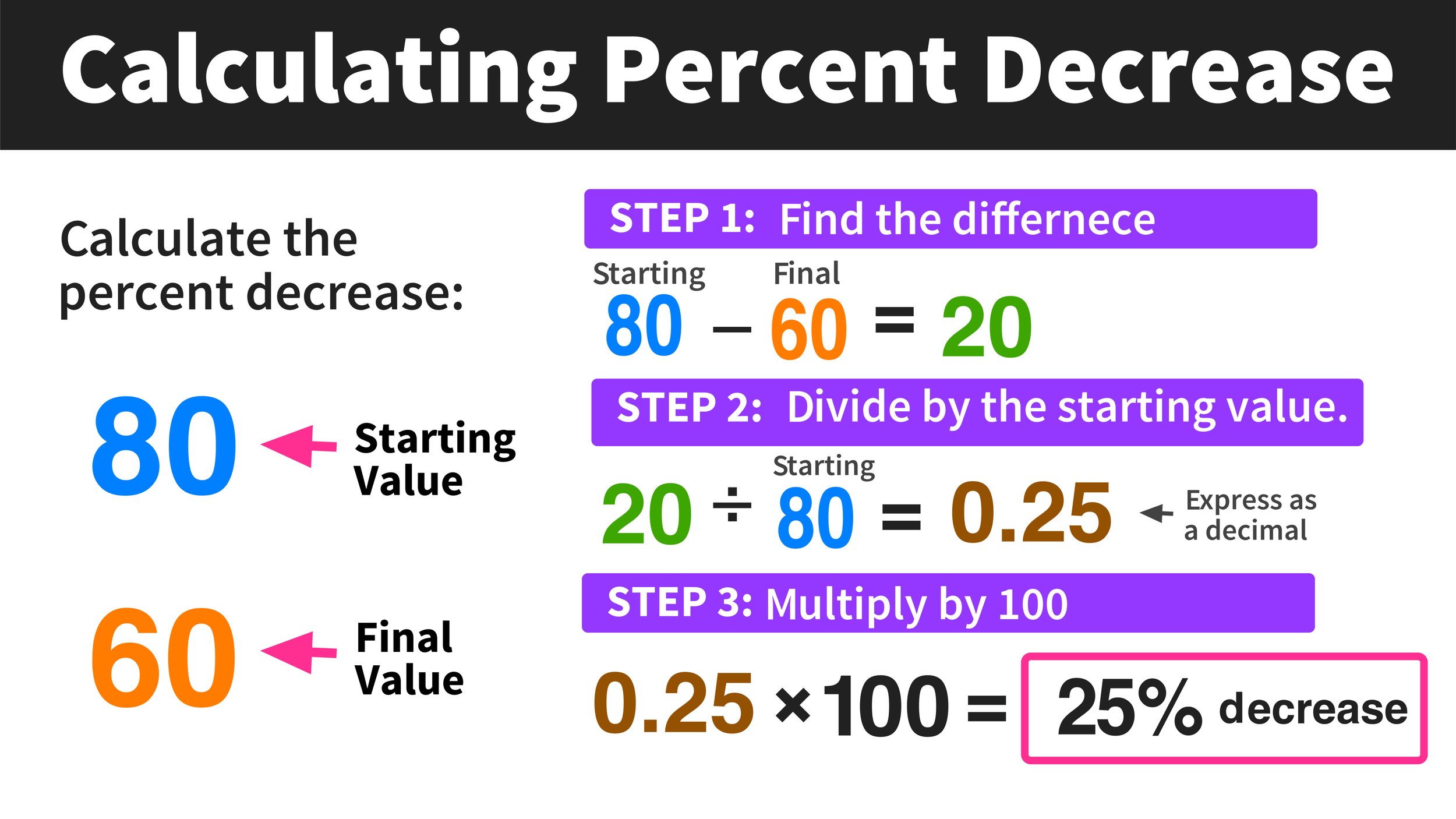
Calculating percentage decrease is a straightforward process that can be broken down into four simple steps. With a clear understanding of each stage, you’ll be able to confidently apply this calculation to any financial scenario.
Step 1: Determine the Original and New Values
The first and most crucial step is to accurately identify your starting point (the original value) and your ending point (the new, smaller value). Precision here is paramount, as any error in these initial figures will skew your final result.
- Original Value: This is the base number from which the decrease occurs. It represents the “before” state.
- Example: The price of a stock when you bought it, your initial monthly budget for groceries, last year’s sales figure.
- New Value: This is the smaller number after the decrease has taken place. It represents the “after” state.
- Example: The current, lower price of that stock, your reduced grocery budget, this year’s lower sales figure.
Step 2: Calculate the Absolute Decrease
Once you have your original and new values, the next step is to find the absolute difference between them. This simply tells you how much the value has gone down in raw numbers.
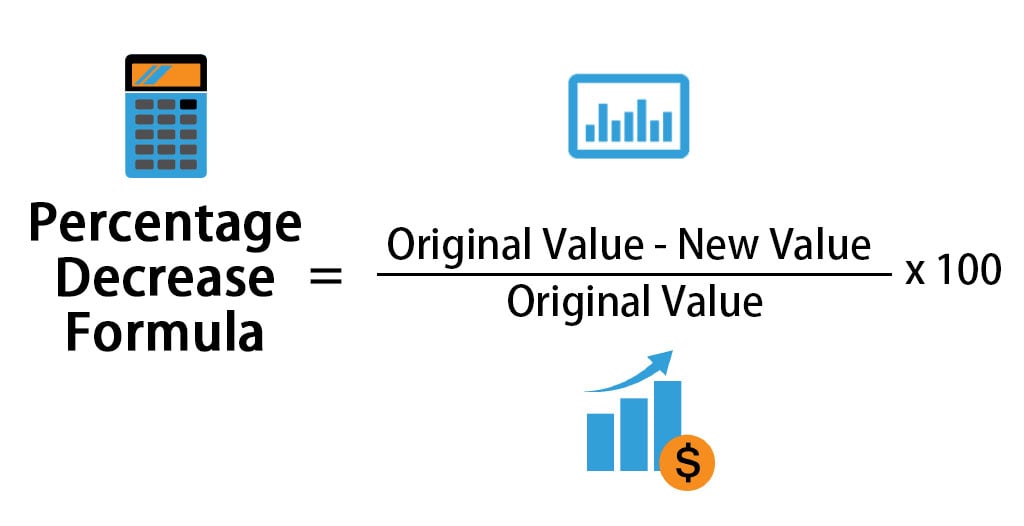
- Formula: Absolute Decrease = Original Value – New Value
- Example: If your original investment was $1,000 and its value decreased to $750, the absolute decrease is $1,000 – $750 = $250.
Step 3: Divide the Absolute Decrease by the Original Value
This step is where you establish the relative change. You take the absolute decrease you just calculated and divide it by the original value. This will give you a decimal number, which represents the proportion of the original value that was lost.
- Formula: Decimal Decrease = Absolute Decrease / Original Value
- Example (continuing from above): $250 / $1,000 = 0.25. This decimal shows that the decrease was 25% of the original amount.
It’s vital to divide by the original value, not the new value. The percentage decrease always references the starting point.
Step 4: Convert the Decimal to a Percentage
The final step is to convert the decimal obtained in Step 3 into a percentage. This is done by multiplying the decimal by 100.
- Formula: Percentage Decrease = Decimal Decrease × 100
- Example (continuing from above): 0.25 × 100 = 25%.
Therefore, your investment experienced a 25% decrease.
Full Example: A small business’s monthly revenue dropped from $50,000 in January to $42,500 in February.
- Original Value: $50,000
- New Value: $42,500
- Absolute Decrease: $50,000 – $42,500 = $7,500
- Decimal Decrease: $7,500 / $50,000 = 0.15
- Percentage Decrease: 0.15 × 100 = 15%
The business experienced a 15% decrease in revenue.
Practical Applications in Personal Finance and Investing
The ability to calculate percentage decrease is not just an academic exercise; it’s a practical skill with direct applications in managing your personal finances and investment portfolio.
Tracking Investment Performance
For investors, understanding percentage decrease is crucial for monitoring the health of their portfolio and individual assets.
- Portfolio Drops: If your investment portfolio was worth $100,000 and now it’s $90,000, that’s a 10% decrease. This metric helps you gauge the impact of market fluctuations or individual asset underperformance relative to your overall wealth.
- Individual Stock Depreciation: Suppose you bought shares of Company X for $150 each, and they are now trading at $120. The absolute decrease is $30 per share. Dividing $30 by $150 (the original value) gives you 0.20, or a 20% decrease. This insight is critical for deciding whether to hold, sell, or average down.
- Understanding Market Corrections: News often reports market indices (like the S&P 500) falling by a certain percentage. Understanding these figures in context helps you react rationally to broader economic shifts rather than being swayed by absolute point drops.
Analyzing Budget Cuts and Expenses
Percentage decrease is an excellent tool for budgeters aiming to reduce spending or assess changes in their financial commitments.
- Reducing a Specific Expense: If you spent $400 on dining out last month and managed to cut it down to $250 this month, that’s a $150 absolute decrease. $150 / $400 = 0.375, meaning you achieved a 37.5% decrease in your dining expenses. This allows for quantifiable progress tracking.
- Impact of a Pay Cut: If your salary decreases from $6,000 per month to $5,400, that’s a $600 absolute decrease. ($600 / $6,000 = 0.10, or a 10% pay cut). This percentage helps you understand the relative impact on your disposable income and adjust your budget accordingly.
- Debt Reduction: While typically seen as an increase in payments, the principal amount of a debt can be seen to decrease. If you owe $10,000 and pay it down to $8,000, you’ve achieved a 20% decrease in your outstanding debt, which is a significant milestone.
Evaluating Discounts and Sales
When shopping, percentage decrease is the foundation for understanding true savings.
- “X% Off” Promotions: A jacket originally priced at $120 is now on sale for $84. The absolute decrease is $36. Dividing $36 by $120 gives you 0.30, confirming it’s a 30% discount. This helps you verify advertised sales and compare deals across different retailers.
- Comparing Different Deals: If one store offers an item for $75 from an original price of $100 (a 25% decrease), and another offers a similar item for $60 from an original price of $85 (a 29.4% decrease), you can quickly see which is the better percentage deal, even if the absolute savings differ.
Strategic Uses in Business Finance
For businesses of all sizes, percentage decrease provides critical insights into operational efficiency, market performance, and overall financial health. It’s a vital metric for strategic planning and decision-making.
Assessing Revenue and Sales Decline
Tracking percentage decrease in sales and revenue streams is fundamental for business intelligence.
- Identifying Underperforming Products: If sales of Product A drop from $10,000 to $7,000 in a quarter, that’s a 30% decrease. This significant drop warrants investigation into product appeal, marketing effectiveness, or competitive pressures.
- Measuring Impact of Market Shifts: A general decrease in industry-wide sales can be expressed as a percentage, helping a business understand if its own sales decline is due to broader market conditions or internal issues.
- Quarter-over-Quarter Analysis: Comparing current quarter revenues to the previous quarter’s, or year-over-year, using percentage decrease helps identify trends and the effectiveness of business strategies. A 5% decrease in Q3 compared to Q2 could trigger an immediate review of sales tactics.
Managing Costs and Operational Efficiency
Businesses constantly strive to reduce costs without compromising quality or output. Percentage decrease is key to evaluating these efforts.
- Tracking Reductions in Operating Expenses: If a company reduces its monthly utility bill from $2,500 to $2,000, that’s a 20% decrease. This metric helps quantify the success of energy-saving initiatives.
- Evaluating Supply Chain Costs: A 12% decrease in raw material costs achieved through new supplier negotiations directly impacts profit margins and highlights successful procurement strategies.
- Personnel Costs: While a sensitive area, reductions in payroll (due to automation, restructuring, or natural attrition) can be quantified as a percentage decrease, reflecting efforts to optimize labor costs.
Interpreting Financial Reports and Metrics
Financial statements are replete with opportunities to apply percentage decrease, offering a clearer picture of a company’s performance.
- Analyzing Profit Decreases: A decrease in net profit from one fiscal year to the next is a critical indicator. If net profit falls from $1 million to $800,000, it’s a 20% decrease, signaling potential issues with revenue, expenses, or both.
- Depreciation of Assets: The value of fixed assets (like machinery or vehicles) decreases over time due to wear and tear. This depreciation is often calculated as a percentage of the asset’s original cost, which impacts the company’s balance sheet and tax liabilities.
- Communicating Financial Challenges: When presenting to stakeholders, explaining a percentage decrease in a key metric (e.g., a 15% reduction in production costs) is often more impactful and easier to grasp than large absolute numbers, helping to communicate progress or challenges effectively.
Common Pitfalls and Advanced Considerations
While the calculation itself is straightforward, a few common misunderstandings and more nuanced applications exist that are worth noting to ensure accurate and insightful financial analysis.
The Importance of the Original Value
The most frequent error in calculating percentage decrease (and percentage change in general) is incorrectly identifying the original value. The original value is always the denominator in the division. If you accidentally divide by the new, smaller value, your result will be incorrect and misleading. Remember, you are measuring the decrease from the starting point. This also clearly distinguishes percentage decrease from percentage increase, where the calculation structure is similar but the context of the change is opposite.
Context is King
A percentage decrease, in isolation, tells only part of the story. For example, a 50% decrease in personal debt is excellent news, while a 50% decrease in investment value is concerning. Always consider the broader financial context. Is the decrease intentional (e.g., reducing expenses)? Is it uncontrollable (e.g., market downturn)? Understanding the why behind the numbers adds invaluable insight. Sometimes a decrease can even be a positive sign, such as a decrease in liabilities or overhead.
Chaining Decreases and Averaging
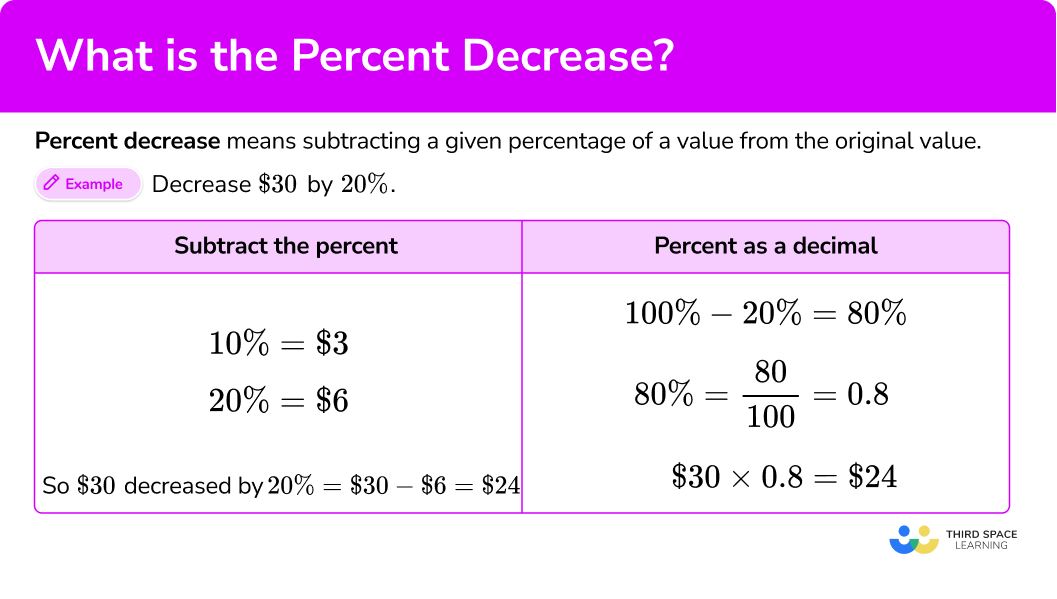
It’s a common misconception that successive percentage decreases simply add up. If an investment drops by 10% and then drops by another 10% from the new value, the total decrease is not 20% from the original.
- Example: $100 investment
- 10% decrease: $100 – ($100 * 0.10) = $90
- Another 10% decrease from $90: $90 – ($90 * 0.10) = $81
The total decrease from the original $100 is $19, which is a 19% decrease, not 20%. This distinction is critical in finance, especially when dealing with volatile assets or compound changes. Averaging percentage decreases across different items or periods also requires careful consideration, often necessitating weighted averages to reflect varying original values.
Conclusion
Mastering the calculation and interpretation of percentage decrease is an indispensable skill for anyone engaged with money, whether personally or professionally. From meticulously tracking your investment performance and adhering to a budget to strategically guiding a business through market fluctuations and cost optimization, this fundamental mathematical concept provides clarity and quantifiable insights.
By understanding the simple four-step process—identifying values, calculating absolute change, determining the decimal ratio, and converting to a percentage—you unlock a powerful analytical tool. Remember to always anchor your calculations to the original value and to consider the broader context of any decrease. Armed with this knowledge, you are better equipped to make informed financial decisions, navigate economic shifts, and achieve your financial goals with greater precision and confidence.
aViewFromTheCave is a participant in the Amazon Services LLC Associates Program, an affiliate advertising program designed to provide a means for sites to earn advertising fees by advertising and linking to Amazon.com. Amazon, the Amazon logo, AmazonSupply, and the AmazonSupply logo are trademarks of Amazon.com, Inc. or its affiliates. As an Amazon Associate we earn affiliate commissions from qualifying purchases.