
In the intricate world of finance, where every basis point can influence fortunes, understanding percentages is not merely a mathematical exercise—it’s a critical skill. While calculating a simple percentage is straightforward, the concept of a “percentage of a percentage” often presents a unique challenge, one that can lead to significant miscalculations in personal finance, investment analysis, and business operations. This deeper dive into nested percentages is not an academic abstraction; it’s a practical necessity for anyone looking to truly master their financial landscape.
From stacking discounts on a coveted purchase to deciphering complex investment returns or understanding multi-tiered commission structures, the ability to accurately calculate a percentage of a percentage unlocks a more profound level of financial literacy and control. This article will demystify this crucial concept, offering clear explanations, practical examples rooted in the world of money, and actionable insights to ensure you navigate financial complexities with confidence and precision.
The Financial Imperative: Why Mastering Nested Percentages Matters
The seemingly simple act of calculating percentages underpins nearly every financial decision we make. However, real-world financial scenarios are rarely confined to single, isolated calculations. Instead, they often involve layered conditions where one percentage depends on the outcome of another. Ignoring this nested relationship can lead to inaccurate budgeting, flawed investment strategies, and missed financial opportunities.
Beyond Simple Discounts: Unpacking Real-World Complexity
Think about the ubiquitous “sale on sale” events or the compounding interest on your savings account. These are prime examples of percentages applied sequentially. If you misinterpret how these percentages interact, you might overestimate your savings, underestimate your debt growth, or misjudge the true profitability of a business venture. Understanding how an initial percentage impacts the base value for a subsequent percentage is the cornerstone of accurate financial assessment.
The Cost of Miscalculation: Financial Ramifications
The consequences of miscalculating a percentage of a percentage can range from minor annoyances to substantial financial losses. On a personal level, it might mean overspending on a purchase because you incorrectly estimated a stacked discount. For investors, it could lead to an inaccurate assessment of net returns after fees, potentially skewing portfolio diversification or future investment decisions. In business, miscalculating profit margins after various deductions or commissions can severely impact pricing strategies, cash flow, and overall financial health. Precision isn’t just a virtue; it’s a financial necessity.
Empowering Financial Literacy
Mastering nested percentages empowers you with a sharper analytical lens. It moves you beyond surface-level numbers to understand the true financial implications of various scenarios. This enhanced financial literacy is invaluable, whether you’re negotiating a salary with commission tiers, evaluating a complex loan agreement, or simply trying to maximize your household budget. It transforms you from a passive observer of numbers into an active, informed participant in your financial journey.
Deconstructing the Math: Your Guide to Calculation
At its core, calculating a percentage of a percentage is a straightforward mathematical process, provided you adhere to fundamental principles. The key is to convert percentages into their decimal equivalents and understand the order of operations.
The Fundamental Rule: Conversion to Decimals
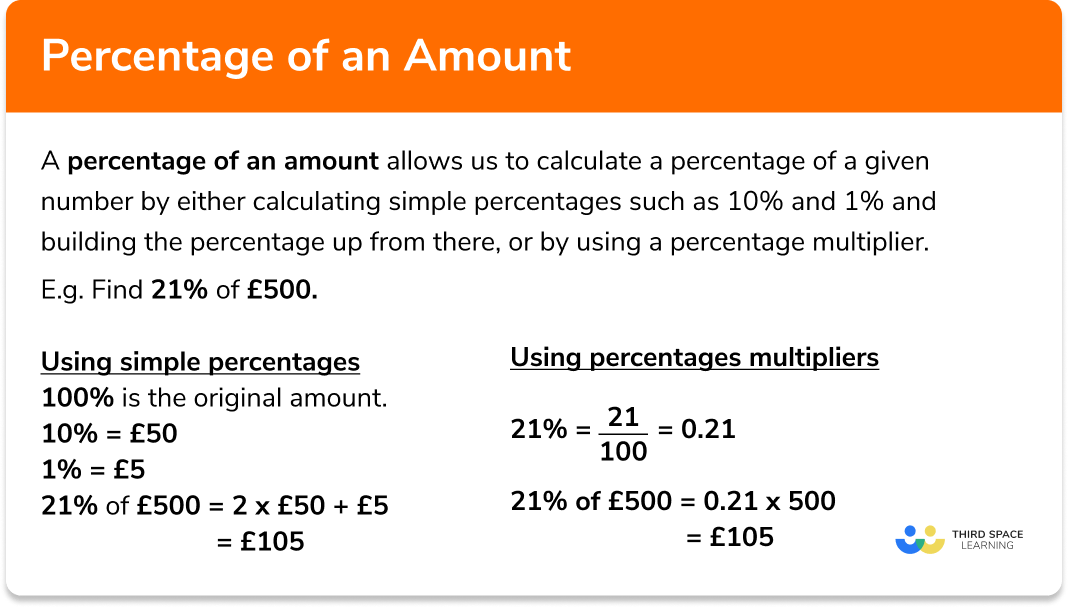
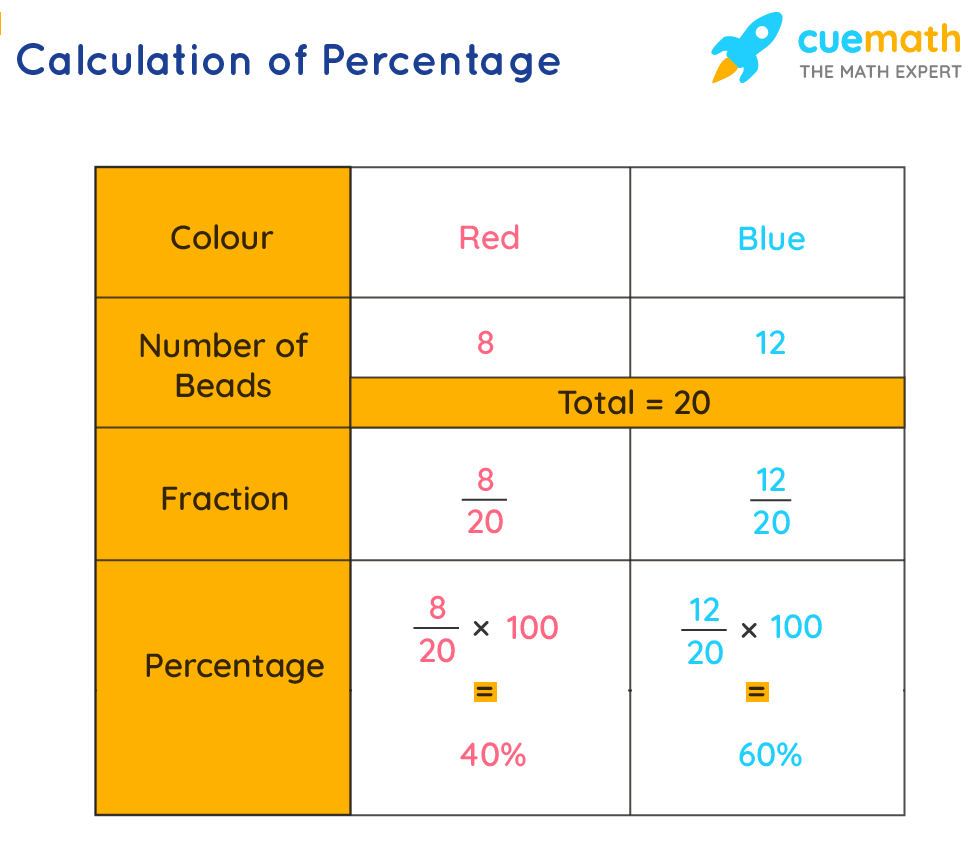
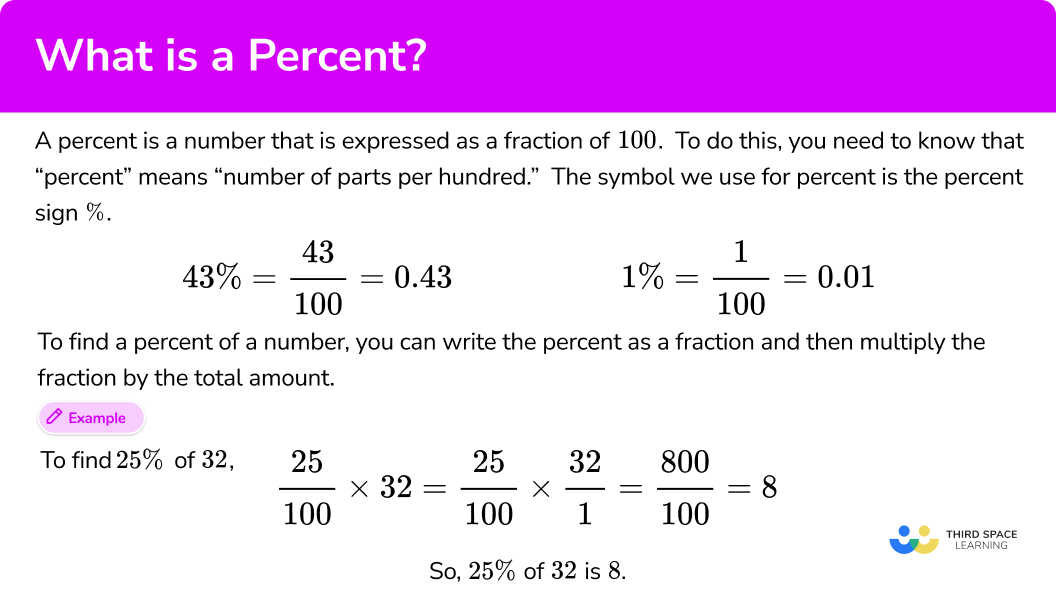
The most crucial step in any percentage calculation, especially when dealing with multiple percentages, is to convert them into decimals. A percentage is simply a fraction out of 100. So, 10% is 10/100, which equals 0.10. Similarly, 25% is 0.25, and 1% is 0.01.
When you need to find a percentage of a number, you multiply that number by the decimal equivalent of the percentage. For example, 10% of $200 is 0.10 * $200 = $20.
When finding a “percentage of a percentage,” you are essentially performing two sequential multiplication operations.
Step-by-Step Example: A Foundation for Understanding
Let’s illustrate with a common financial scenario:
Scenario: You have a $100 investment that gained 20% in value. On top of that, your financial advisor charges a 1% fee on the gain. What is your net gain?
Step 1: Calculate the initial gain.
- Initial investment: $100
- Gain percentage: 20%
- Convert 20% to decimal: 0.20
- Initial gain: $100 * 0.20 = $20
Step 2: Identify the base for the second percentage.
The advisor’s fee is 1% of the gain. So, the base for the 1% fee is the $20 gain calculated in Step 1.
Step 3: Calculate the second percentage (the fee).
- Base for fee: $20 (the gain)
- Fee percentage: 1%
- Convert 1% to decimal: 0.01
- Fee amount: $20 * 0.01 = $0.20
Step 4: Calculate the net outcome.
- Initial gain: $20
- Subtract the fee: $0.20
- Net gain: $20 – $0.20 = $19.80
So, a 1% fee on a 20% gain results in a net gain of $19.80, not the full $20. This small difference can accumulate significantly over time with larger sums and more frequent transactions.
Common Mistakes and How to Sidestep Them
The most frequent error is simply adding or subtracting percentages directly. For example, if an item is 20% off, and then an additional 10% off, it’s not 30% off.
- Original price: $100
- 20% off: $100 * (1 – 0.20) = $100 * 0.80 = $80
- Then 10% off the new price: $80 * (1 – 0.10) = $80 * 0.90 = $72
- Total discount: $100 – $72 = $28, or 28% off, not 30%.
Always remember that the second percentage is applied to the result of the first percentage, not the original base value. Convert to decimals and multiply sequentially.
Navigating Personal Finance with Nested Percentages
Personal finance is replete with situations demanding a nuanced understanding of nested percentages. From optimizing your spending to accurately projecting your savings, these calculations are indispensable.
Discount Stacking: Maximizing Your Savings
Retail therapy often comes with tempting offers: “25% off storewide, plus an extra 10% for loyalty members!” As demonstrated earlier, these are not additive. To find the true final price and total savings, you must apply them sequentially. For a $200 item:
- First discount (25% off): $200 * (1 – 0.25) = $200 * 0.75 = $150
- Second discount (10% off the new price): $150 * (1 – 0.10) = $150 * 0.90 = $135
Your final price is $135, which represents a total discount of $65 ($200 – $135), or 32.5% off. Knowing this allows you to compare offers accurately and truly maximize your savings.
Understanding True Interest and Returns: APY, APR, and Beyond
When it comes to savings accounts or loans, terms like Annual Percentage Yield (APY) and Annual Percentage Rate (APR) are crucial. APY, in particular, often reflects the effect of compounding, which is a percentage of a percentage at play. If you earn 1% interest monthly, your actual annual return (APY) will be slightly higher than 12% due to interest earned on previously earned interest. This “interest on interest” is a classic example of nested percentages accumulating over time, highlighting the power of compounding for savings and the burden of it for debt.
Budgeting and Deductions: Planning for Multiple Layers
For many, gross income is not what lands in their bank account. Various deductions, such as taxes, retirement contributions, and health insurance premiums, are often calculated as percentages of your gross pay, sometimes in specific orders. For example, some retirement contributions might be a percentage of your gross pay after certain pre-tax deductions. Understanding this sequence is vital for accurate budgeting and knowing your true net income.
Investment Growth and Fees: The Net Impact
Investors frequently encounter layered percentages. A stock might show a 15% gain for the year, but your broker charges a 0.5% management fee on your total portfolio value, or perhaps a 1% commission on trades. While a 15% gain on $10,000 is $1,500, a 1% commission on that gain (if applicable) or a percentage fee on your entire portfolio will reduce your actual take-home return. Always calculate the impact of fees and taxes after applying gains or losses to understand your true net performance.
Business Finance & Investment Strategy: Advanced Applications
For businesses and sophisticated investors, the ability to dissect nested percentages is not just about personal gain but about strategic decision-making, risk management, and profitability analysis.
Profitability Analysis: Unveiling Net-Net Margins
Businesses often deal with multiple layers of costs and deductions to arrive at true profitability. A product might have a 40% gross profit margin. But then, marketing expenses might consume 15% of that gross profit, and administrative overhead another 10% of the remaining profit. Calculating these sequentially is critical to determining the true net profit margin, which guides pricing, cost-cutting initiatives, and investment decisions.
Commission Structures: Calculating Fair Compensation
Sales teams, brokers, and consultants often work on commission, and these structures can be highly complex, involving percentages of percentages. A common scenario might be a sales agent earning 10% of the sales profit, where the profit itself is 30% of the total revenue.
- Revenue: $10,000
- Profit (30% of revenue): $10,000 * 0.30 = $3,000
- Agent’s commission (10% of profit): $3,000 * 0.10 = $300
An agent might mistakenly think they get 10% of $10,000 ($1,000) or 10% of 30% (which is 3% of the total revenue, or $300). The sequential calculation ensures fairness and transparency.
Tax Implications: Navigating Tiered and Compound Regulations
Tax systems globally can be incredibly intricate, often involving percentages applied to different segments of income or to income after certain deductions. Capital gains tax might be a percentage of an investment’s profit, and then an additional wealth tax might apply to a percentage of your total assets, which includes that gain. For businesses, various deductions, credits, and tiered tax brackets necessitate careful, sequential percentage calculations to determine net tax liabilities.
Portfolio Performance Attribution: Pinpointing Growth Drivers
In investment management, understanding which asset classes, sectors, or individual investments contributed most to a portfolio’s overall return often involves nested percentages. For instance, a technology sector might have contributed 30% of your portfolio’s total return, and within that, a specific stock (e.g., AI company) accounted for 60% of the tech sector’s contribution. Calculating 60% of 30% tells you the AI company’s direct impact on your overall return, allowing for more informed portfolio rebalancing and strategy adjustments.
Tools and Strategies for Precision and Confidence
While the mathematical principles are clear, the complexity of real-world financial scenarios often calls for reliable tools and disciplined practices to ensure accuracy.
Leveraging Spreadsheet Power: Excel and Google Sheets
For any scenario involving multiple calculations, especially those with varying percentages or large datasets, spreadsheets like Microsoft Excel or Google Sheets are indispensable. They allow you to set up formulas that automatically perform sequential calculations, update results instantly when inputs change, and visualize the impact of different percentage scenarios.
For example, to calculate a 20% discount then a 10% discount on an original price in cell A1:
=A1 * (1-0.20) * (1-0.10)
This compact formula directly applies the two sequential discounts.
Financial Calculators and Online Resources
Dedicated financial calculators, whether physical devices or online tools, are often pre-programmed to handle complex percentage calculations, including compounding interest or multi-stage discounts. Many online financial planning websites also offer calculators for specific scenarios, such as loan amortization with varying interest rates or retirement projections. While convenient, always understand the underlying logic to verify their outputs.
The Golden Rule: Always Double-Check Your Work
Regardless of the tool used, the ultimate responsibility for accuracy lies with you. Develop a habit of double-checking critical calculations. This might involve:
- Estimating: Do a quick mental approximation to see if your calculated answer is in the right ballpark.
- Reverse Calculation: If possible, try to work backward from your answer to see if you arrive at the original numbers.
- Cross-Verification: If using a spreadsheet, compare your formula to a manual calculation for a simple case.
- Understanding the “Why”: Ensure you understand why the numbers are what they are, not just what they are. This critical thinking is the best defense against errors.
By embracing these tools and best practices, you can confidently tackle any financial scenario involving a percentage of a percentage, ensuring your decisions are founded on accurate calculations and robust financial understanding. Mastering this seemingly niche mathematical concept is, in reality, a powerful step toward greater financial control and insight across all facets of your monetary life.
aViewFromTheCave is a participant in the Amazon Services LLC Associates Program, an affiliate advertising program designed to provide a means for sites to earn advertising fees by advertising and linking to Amazon.com. Amazon, the Amazon logo, AmazonSupply, and the AmazonSupply logo are trademarks of Amazon.com, Inc. or its affiliates. As an Amazon Associate we earn affiliate commissions from qualifying purchases.