
In the intricate world of personal finance, investing, and business, numbers tell a story. But raw numbers alone often lack the context needed for meaningful understanding. This is where percentages step in, transforming isolated figures into comparative insights, growth metrics, and tangible benchmarks. From deciphering the annual percentage rate (APR) on a loan to calculating the return on investment (ROI) in your portfolio, mastering how to figure out a percentage isn’t just a mathematical exercise; it’s a fundamental pillar of financial literacy that empowers informed decision-making. Without a solid grasp of percentages, navigating budgeting, evaluating investment opportunities, or understanding the true cost of debt becomes akin to sailing without a compass.
This article delves into the mechanics of percentage calculation, exploring its pervasive role across various financial landscapes and equipping you with the essential tools to leverage this powerful concept for your financial well-being.
The Core Concept: What is a Percentage and Why Does it Matter in Finance?
At its heart, a percentage is a standardized way to express a part of a whole as a fraction of 100. The term “percent” literally means “per hundred,” originating from the Latin “per centum.” This universal language allows for easy comparison of quantities, proportions, and changes, regardless of the original scale of the numbers involved.
Defining the Basics: A Fraction of the Whole
A percentage represents a portion of a total amount, where the total is considered 100 units. For example, if you say 25% of your income goes to rent, you mean that for every $100 you earn, $25 is allocated to rent. The fundamental formula for calculating a percentage is straightforward:
(Part / Whole) * 100% = Percentage
Let’s say you have $200 in a savings account, and you deposit an additional $50. To figure out what percentage of your initial savings the deposit represents, you’d calculate ($50 / $200) * 100% = 25%. This simple calculation reveals a significant insight: your savings grew by a quarter of their original value, a more impactful statement than just “I added $50.”
The Ubiquity of Percentages in Your Financial Life
Percentages are the invisible threads woven into nearly every aspect of your financial existence, influencing your daily spending, long-term investments, and strategic planning:
- Interest Rates: Whether it’s the interest you earn on a savings account or the interest you pay on a mortgage, car loan, or credit card, these are all expressed as percentages (e.g., 0.5% APY, 7% APR). Understanding how these percentages translate into actual dollars is crucial for optimizing savings and minimizing debt costs.
- Discounts and Sales: When a store offers “30% off” a product, you use percentages to calculate your savings. Likewise, understanding sales tax, which is also a percentage, allows you to determine the final price.
- Taxes: Income tax brackets, sales tax, property tax rates – these are all percentage-based. Knowing how to calculate them helps you forecast your tax liabilities and manage your budget effectively.
- Investment Returns: The performance of your stocks, bonds, or mutual funds is typically reported as a percentage return (e.g., “portfolio grew by 12% last year”). This allows for direct comparison of different investment vehicles.
- Budgeting Allocations: Many financial experts recommend allocating specific percentages of your income to different categories, such as the 50/30/20 rule (50% needs, 30% wants, 20% savings/debt repayment). Percentages provide a flexible framework that adapts to varying income levels.
- Inflation: The rate at which the general level of prices for goods and services is rising, and subsequently, purchasing power is falling, is expressed as a percentage. Understanding inflation helps you assess the true value of your money over time.
- Profit Margins: For entrepreneurs and business owners, profit margins (gross or net profit as a percentage of revenue) are vital indicators of financial health and efficiency.
These examples highlight why a deep understanding of percentage calculation goes beyond mere arithmetic; it’s a critical skill for navigating and succeeding in the financial world.
Mastering Essential Percentage Calculations for Financial Success
While the basic formula (Part/Whole * 100%) is foundational, several specific percentage calculations are indispensable for managing your money effectively.
Calculating a Percentage of a Number: The Building Block
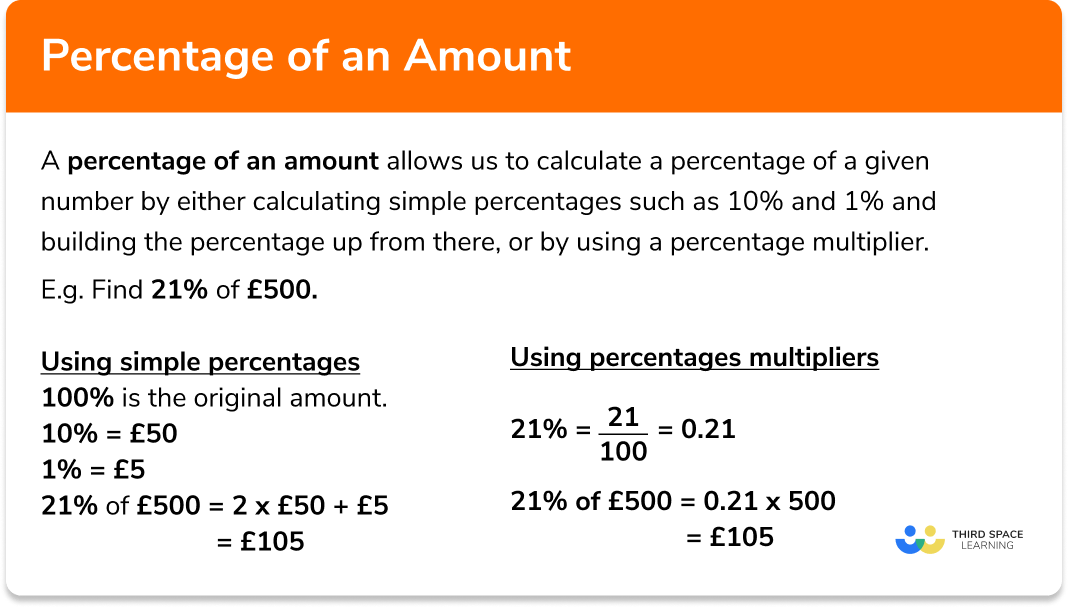
This is perhaps the most common percentage calculation. You often need to find out what a certain percentage of a given amount is.
Formula: (Percentage / 100) * Whole Number
Example 1: Calculating a Tip
You had a $75 dinner bill and want to leave a 15% tip.
(15 / 100) * $75 = 0.15 * $75 = $11.25. Your tip would be $11.25.
Example 2: Down Payment on a House
You’re buying a $300,000 house and need a 20% down payment.
(20 / 100) * $300,000 = 0.20 * $300,000 = $60,000. Your down payment is $60,000.
Determining the Percentage Change: Growth, Loss, and Fluctuations
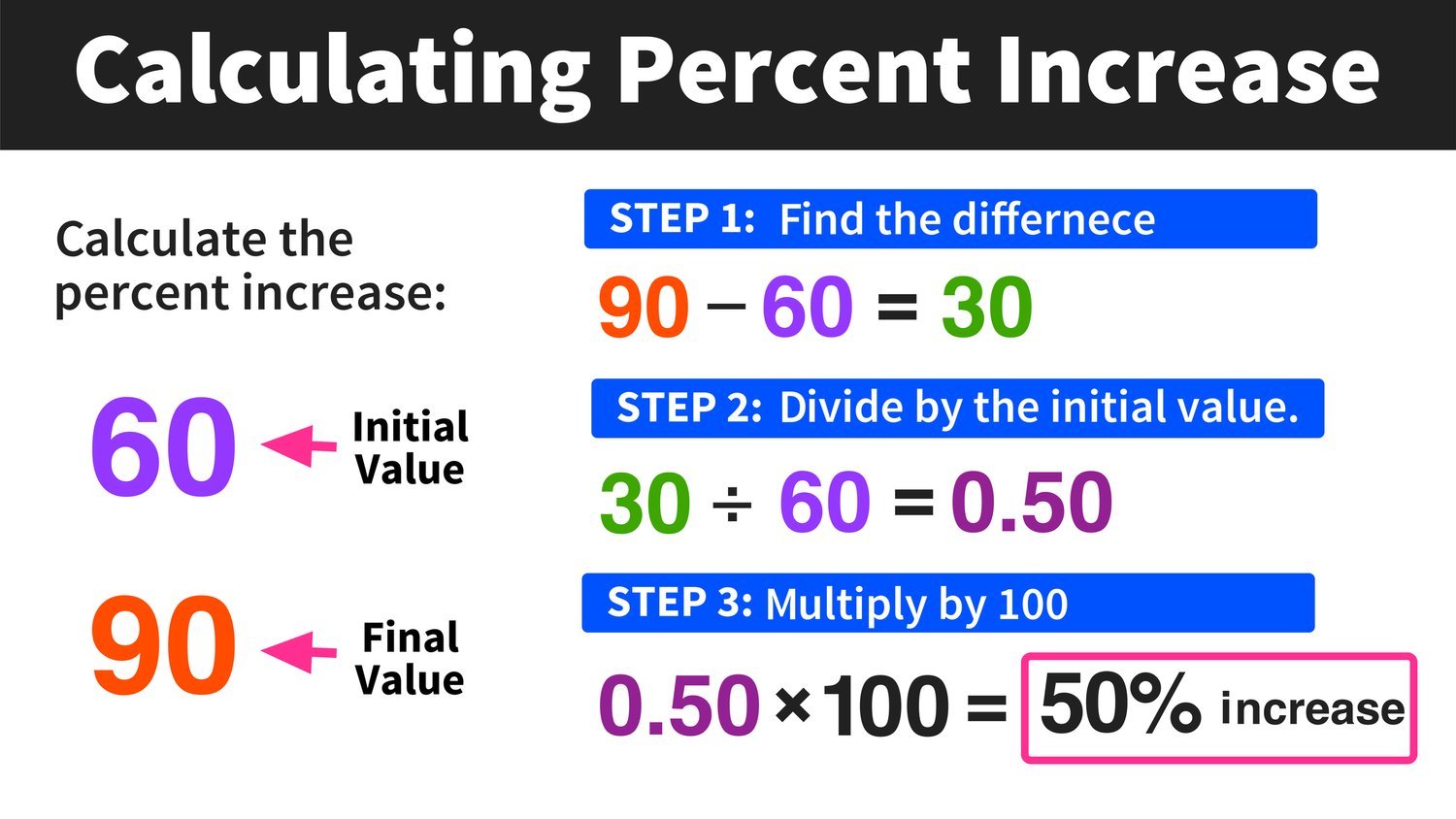
Understanding how values change over time is crucial for analyzing investments, tracking income growth, or measuring inflation. Percentage change allows you to quantify increases or decreases relative to an initial value.
Formula: ((New Value – Old Value) / Old Value) * 100%
Example 1: Investment Portfolio Growth
Your investment portfolio was worth $50,000 last year and is now worth $55,000.
(($55,000 – $50,000) / $50,000) * 100% = ($5,000 / $50,000) * 100% = 0.10 * 100% = 10%. Your portfolio grew by 10%.
Example 2: Decline in Asset Value
A stock you own dropped from $120 per share to $90 per share.
(($90 – $120) / $120) * 100% = (-$30 / $120) * 100% = -0.25 * 100% = -25%. The stock’s value declined by 25%. (Note the negative sign indicates a decrease).
Finding the Whole from a Part and its Percentage: Reverse Engineering
Sometimes you know a part of an amount and the percentage it represents, and you need to figure out the original total. This is common when dealing with discounts or commissions.

Formula: Part / (Percentage / 100)
Example 1: Original Price Before Discount
You bought a shirt for $35, which was on sale for 30% off. What was the original price?
If it was 30% off, you paid 100% – 30% = 70% of the original price.
$35 / (70 / 100) = $35 / 0.70 = $50. The original price of the shirt was $50.
Example 2: Total Sales from Commission
You earned a $1,500 commission, which represents 5% of your total sales. What were your total sales?
$1,500 / (5 / 100) = $1,500 / 0.05 = $30,000. Your total sales were $30,000.
Practical Applications: Discount vs. Mark-up, and Effective Interest Rates
These calculations are not just theoretical; they have immediate financial implications:
- Discounts and Sales Tax: When you see an item “25% off,” you calculate the discount using “percentage of a number.” Then, when sales tax is applied (e.g., 7%), you again calculate a percentage of the discounted price to find the final cost.
- Compound Interest: While complex to calculate manually over many periods, the concept fundamentally relies on percentages. Interest is earned not only on the initial principal but also on the accumulated interest from previous periods, leading to exponential growth. Understanding this “interest on interest” effect, driven by percentage rates, is crucial for long-term saving and investing.
- Effective Interest Rates: Sometimes, an advertised interest rate (nominal rate) doesn’t tell the whole story. Fees, compounding frequency, and other charges can result in a higher “effective” interest rate or Annual Percentage Yield (APY) for savings, and Annual Percentage Rate (APR) for loans, which incorporate these factors. These percentages offer a truer picture of the cost or benefit.
Leveraging Percentages for Informed Financial Decision-Making
Beyond the mechanics of calculation, the real power of percentages lies in their ability to inform and guide your financial strategies.
Budgeting and Saving: Allocating Your Income Wisely
Percentages offer a flexible and scalable framework for managing your income and expenses. The popular 50/30/20 rule suggests allocating:
- 50% of your after-tax income to Needs: Housing, utilities, groceries, transportation.
- 30% to Wants: Dining out, entertainment, hobbies, shopping.
- 20% to Savings & Debt Repayment: Emergency fund, retirement, investments, extra debt payments.
By framing your budget in percentages, you create a system that adjusts automatically with income fluctuations. If your income increases, your absolute spending in each category increases proportionally, maintaining your financial balance. Similarly, setting savings goals as percentages (e.g., “I want to save 15% of every paycheck”) ensures consistent progress towards financial independence.
Investing and Wealth Building: Analyzing Returns and Risk
Percentages are the primary language of investment performance.
- Return on Investment (ROI): This percentage quantifies the efficiency of an investment by comparing the gain or loss relative to the initial cost. A higher positive ROI indicates a more profitable investment.
- Portfolio Performance: When an investment advisor reports your portfolio “returned 8% last year,” this percentage allows you to compare it against benchmarks (like the S&P 500’s return) or other investment options to assess its effectiveness.
- Diversification: Asset allocation, often discussed in percentages (e.g., “60% stocks, 30% bonds, 10% cash”), is critical for managing risk and maximizing returns over time. Understanding these proportions is key to a balanced portfolio.
- Dividend Yields: For income-focused investors, dividend yield (annual dividends per share as a percentage of the share price) is a crucial metric for evaluating the income-generating potential of a stock or fund.
Debt Management: Unpacking Interest Rates and Repayment Strategies
Understanding percentage-based interest rates is paramount for effective debt management.
- Comparing Loan Offers: Different loans come with varying APRs. A slight difference in percentage points can translate into thousands of dollars over the life of a loan. Comparing these percentages allows you to choose the most cost-effective borrowing option.
- The Cost of Credit: High credit card interest rates (often 15-25% or more) mean that a significant portion of your minimum payment goes towards interest, not principal. Recognizing this helps motivate accelerated repayment strategies.
- Impact of Extra Payments: Knowing that even a small extra percentage of your minimum payment can drastically reduce the total interest paid and shorten the loan term highlights the power of compound interest working against you (with debt) or for you (with savings).
Consumer Savvy: Decoding Sales, Discounts, and Hidden Costs
For the everyday consumer, percentage mastery translates into smarter spending:
- True Savings: When confronted with “50% off!” sales, you can quickly calculate the actual dollar savings and compare prices across different retailers.
- Understanding the Final Price: From sales tax to service charges and gratuities, many additional costs are percentage-based. Calculating these ensures you’re never surprised at the checkout.
- Comparing Financing Deals: Sometimes a “0% interest for 12 months” offer sounds great, but understanding the percentage rate it jumps to after the promotional period, or if there are origination fees (a percentage of the loan amount), helps you evaluate the true long-term cost.
Common Pitfalls and How to Avoid Them
While percentages are powerful tools, misinterpreting them can lead to costly financial errors.
The Difference Between Percentage and Percentage Point
This is a critical distinction, especially in economic and financial news.
- Percentage: A relative value expressing a part of a whole.
- Percentage Point: The absolute difference between two percentages.
Example: If an interest rate increases from 2% to 3%, it’s an increase of 1 percentage point. However, it’s also a 50% increase in the rate itself ((3-2)/2 * 100% = 50%). Confusing these can lead to underestimating or overestimating the magnitude of a change. For instance, a news headline stating “Interest Rates Rise by 1 Percentage Point” sounds less dramatic than “Interest Rates Jump by 50%,” but both refer to the same event.
Misinterpreting Base Values
Always be clear about what the “whole” or the “original value” is when calculating percentages.
- Sequential Discounts: A “20% off, plus an additional 10% off” sale does not mean a 30% discount. The second discount is applied to the already discounted price. For a $100 item: 20% off makes it $80. Then, 10% off $80 is $8, bringing the price to $72. The total discount is $28, or 28%, not 30%.
- Comparing Different Base Numbers: When comparing different financial metrics (e.g., profit margins of two companies), ensure you are comparing them on an apples-to-apples basis relative to their respective revenue or costs.
Overlooking Compounding Effects
Both positive and negative compounding (like with compound interest on investments or debt, and inflation) are percentage-driven phenomena that can have a massive impact over time. Underestimating the power of compound interest in wealth accumulation or ignoring the corrosive effect of even low inflation on your purchasing power can significantly derail long-term financial plans. Small percentage changes, compounded over decades, lead to exponential results.
Conclusion
The ability to “figure out percent” is far more than a basic math skill; it’s a financial superpower. From the daily decisions of budgeting and shopping to the long-term strategies of investing and debt management, percentages provide the clarity, context, and comparative insights necessary to make intelligent financial choices. By mastering the core concepts, understanding common calculations, and avoiding typical pitfalls, you unlock a deeper level of financial literacy. This mastery empowers you to confidently navigate the complex financial landscape, optimize your resources, and ultimately, achieve your personal and business financial goals with greater precision and control. Embrace percentages as your invaluable tool for financial independence.
aViewFromTheCave is a participant in the Amazon Services LLC Associates Program, an affiliate advertising program designed to provide a means for sites to earn advertising fees by advertising and linking to Amazon.com. Amazon, the Amazon logo, AmazonSupply, and the AmazonSupply logo are trademarks of Amazon.com, Inc. or its affiliates. As an Amazon Associate we earn affiliate commissions from qualifying purchases.