
Understanding how to calculate a percentage increase is far more than just a mathematical exercise; it’s a cornerstone of astute financial analysis. Whether you’re tracking your investment portfolio’s growth, evaluating a business’s sales performance, dissecting a salary raise, or simply monitoring changes in your household budget, the ability to quantify growth in percentage terms provides invaluable insight. It allows for standardized comparison, helps contextualize changes, and empowers you to make informed decisions about your money. This comprehensive guide will not only walk you through the precise mechanics of finding a percentage increase but also delve deeply into its critical applications across personal and business finance, ensuring you can leverage this powerful tool to better manage and grow your wealth.
The Core Formula: Understanding the Mechanics of Growth
At its heart, finding a percentage increase involves comparing a new value to an old value and expressing that change as a proportion of the original, scaled to a hundred. This fundamental calculation is the bedrock for evaluating progress, efficiency, and returns in countless financial scenarios.
Deconstructing the Percentage Increase Formula
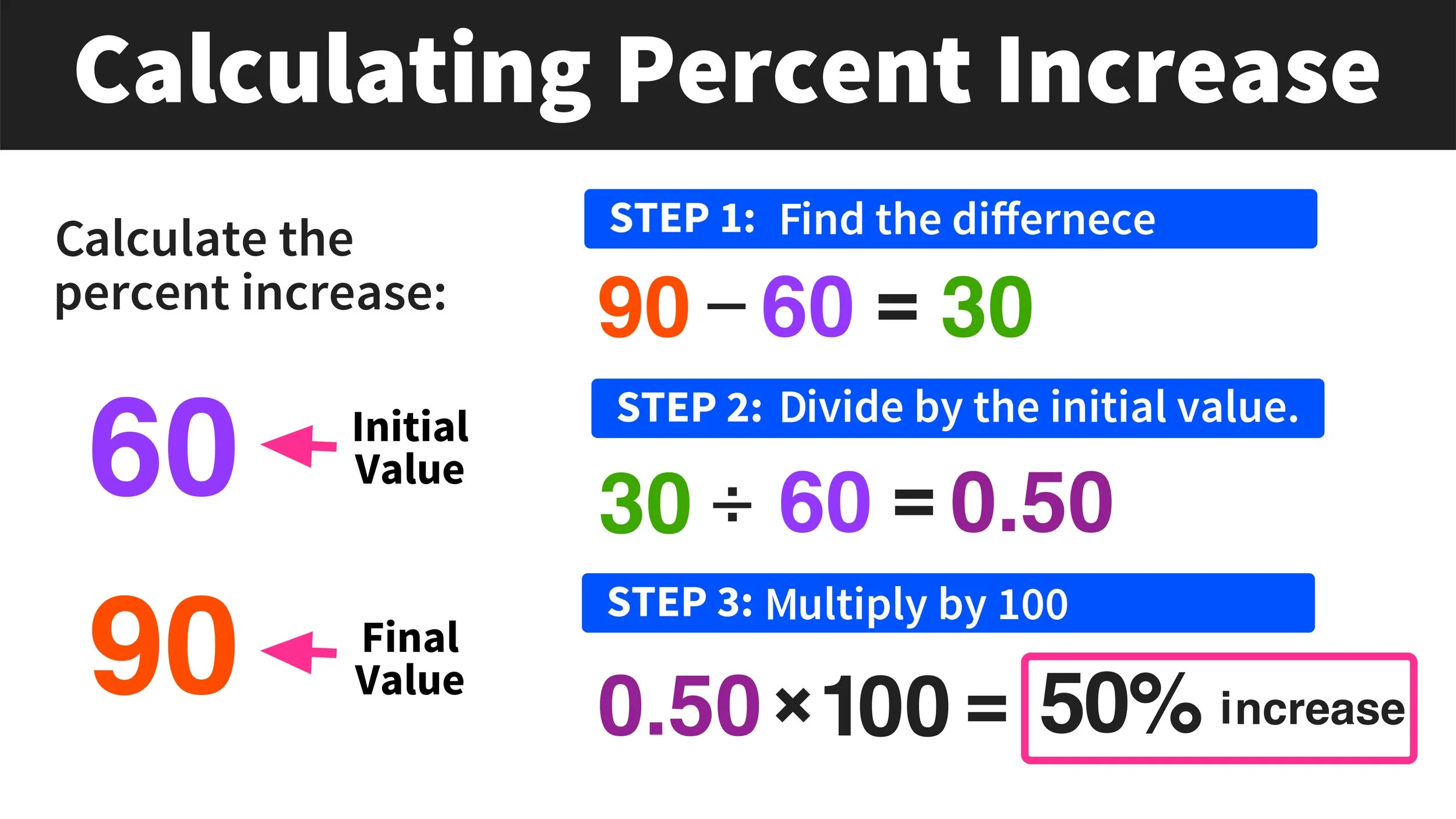
The standard formula for calculating percentage increase is straightforward:
Percentage Increase = ((New Value – Old Value) / Old Value) * 100%
Let’s break down each component of this formula with a financial lens:
- Old Value (Starting Value): This is your baseline, the number you are comparing against. In finance, this could be your initial investment, last year’s revenue, last month’s expense, or the stock price at the beginning of a period. It’s crucial to identify this correctly as the denominator of your fraction.
- New Value (Ending Value): This is the value after the change has occurred, the number you are comparing to the old value. This might be your current portfolio value, this year’s sales figures, this month’s expense, or the current stock price.
- New Value – Old Value (Absolute Change/Difference): This step calculates the raw numerical increase. It tells you how much the value has gone up in absolute terms. For instance, if a stock went from $50 to $60, the absolute change is $10.
- ** (New Value – Old Value) / Old Value (Proportional Change):** Dividing the absolute change by the old value yields the proportional or fractional increase. This shows the change relative to the starting point. Using our stock example, $10 / $50 = 0.20. This indicates that the stock increased by 0.20 times its original value.
- ** * 100% (Converting to Percentage):** Multiplying the proportional change by 100 converts it into a percentage. This makes the figure easily digestible and comparable. So, 0.20 * 100% = 20%. The stock experienced a 20% increase.
Example: Suppose your savings account balance increased from $5,000 (Old Value) to $5,750 (New Value) over a year.
Percentage Increase = (($5,750 – $5,000) / $5,000) * 100%
Percentage Increase = ($750 / $5,000) * 100%
Percentage Increase = 0.15 * 100%
Percentage Increase = 15%
Common Pitfalls and How to Avoid Them
While the formula is simple, misapplication can lead to erroneous conclusions.
- Incorrectly Identifying Old vs. New Values: A common mistake is flipping the old and new values, particularly when dealing with decreases. Always remember the “old” value is your starting point, and the “new” value is your end point.
- Confusion with Percentage Point Change vs. Percentage Increase: If a market share goes from 10% to 12%, that’s a 2 percentage point increase. However, the percentage increase in market share is (12-10)/10 * 100% = 20%. Be precise in your terminology, especially in financial reports.
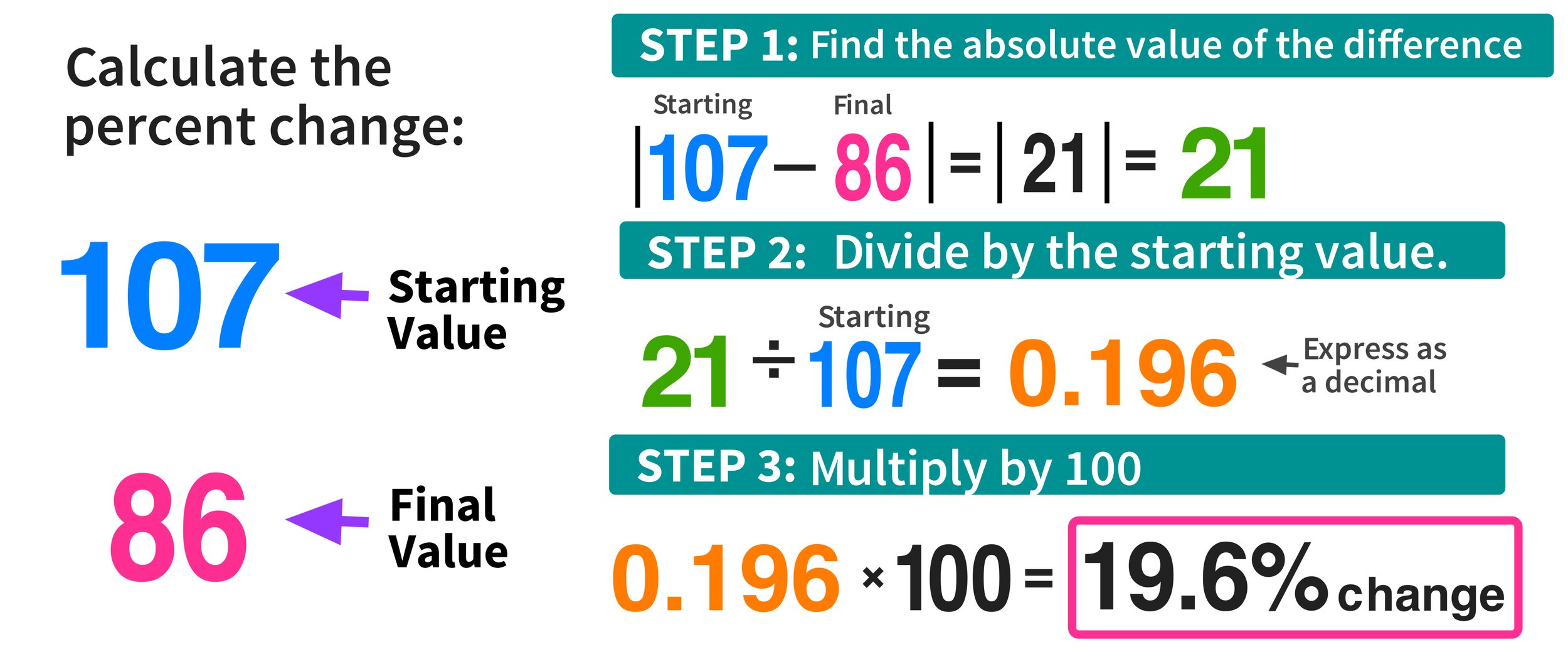
- Negative Results (Percentage Decrease): If the new value is less than the old value, your calculation will naturally yield a negative percentage. This simply indicates a percentage decrease. While the formula remains the same, understanding that a negative result signifies a loss or reduction is crucial for interpretation. For consistency, some prefer to calculate percentage decrease with a slightly altered formula (e.g.,
((Old Value - New Value) / Old Value) * 100%) to yield a positive number, then explicitly state “decrease.” However, using the increase formula will correctly produce a negative percentage.
Applications in Personal Finance: Tracking Your Financial Journey
For individuals managing their money, the percentage increase calculation is an indispensable tool for understanding progress, identifying trends, and making prudent personal finance decisions.
Monitoring Investment Returns and Portfolio Growth
One of the most powerful applications of percentage increase is in evaluating investment performance. It allows you to:
- Calculate Individual Asset Growth: See how a specific stock, bond, or mutual fund has performed over a given period. If you bought shares of XYZ Corp for $100 and they are now worth $125, that’s a 25% increase.
- Assess Overall Portfolio Performance: Track the growth of your entire investment portfolio year-over-year or quarter-over-quarter. This helps you gauge if you’re on track to meet your financial goals and compare your portfolio’s returns against benchmarks.
- Compare Investment Opportunities: When deciding where to allocate new funds, comparing the historical percentage increases of different investment vehicles (e.g., a stock fund vs. a real estate investment) can guide your choices.
Analyzing Budget Changes and Savings Progress
Managing a personal budget and growing savings are critical for financial health. Percentage increase helps here by:
- Identifying Spending Trends: If your grocery bill jumped from $400 to $480 in a month, you’ve seen a 20% increase in that expense category. This signals a need for review.
- Measuring Savings Rate Growth: Are you consistently increasing the percentage of your income you save? Tracking your total savings balance’s percentage increase month-to-month or year-to-year provides a clear picture of your progress towards financial independence.
- Evaluating Debt Reduction: While technically a decrease, understanding the inverse helps. If you reduced a loan balance from $10,000 to $8,000, that’s a 20% reduction.
Understanding Salary Raises and Income Growth
Your income is your most powerful financial asset. Quantifying its growth is essential:
- Calculating Real Pay Raises: A $5,000 raise on a $50,000 salary is a 10% increase. On a $100,000 salary, it’s a 5% increase. Understanding the percentage helps you contextualize the raise’s impact on your overall financial picture.
- Tracking Side Hustle Income: If your online income from a side hustle grew from $500/month to $700/month, that’s a substantial 40% increase, showing encouraging progress.
- Benchmarking Against Inflation: While not a direct percentage increase calculation, understanding your income’s percentage growth against the percentage increase in the cost of living (inflation) is crucial for assessing your purchasing power.
Business Finance Insights: Fueling Strategic Decisions
For businesses, calculating percentage increase is fundamental to nearly every aspect of financial management, from operational efficiency to strategic planning and stakeholder communication. It provides a standardized metric for growth, performance, and change.
Gauging Revenue and Sales Growth
The health of any business is often measured by its ability to grow its top line. Percentage increase is vital here:
- Year-over-Year (YoY) and Quarter-over-Quarter (QoQ) Growth: Businesses routinely track the percentage increase in total revenue, net sales, or gross sales to understand their trajectory. A 15% YoY revenue growth signifies strong market penetration or demand.
- Product Line Performance: Identifying which products or services are experiencing the highest percentage growth (or decline) can inform product development, marketing spend, and inventory decisions.
- Market Share Expansion: If a company’s market share grows from 5% to 6%, while this is only a 1 percentage point increase, it represents a 20% increase in their market presence, a significant achievement.
Assessing Profitability and Cost Efficiency
Beyond top-line growth, a business’s ability to increase its profit margins and control costs is paramount.
- Gross Profit and Net Profit Growth: Tracking the percentage increase in gross profit (revenue minus cost of goods sold) and net profit (the bottom line after all expenses) is crucial for assessing overall business health and efficiency.
- Operational Cost Management: If the cost of raw materials increased by 8% but your production output only increased by 3%, this flags a potential issue with cost efficiency that needs addressing. Conversely, a decrease in operating expenses in percentage terms indicates improved efficiency.
- Return on Investment (ROI): While ROI has its own formula, it is essentially a percentage increase calculation comparing the gain from an investment to its cost. For example, if a marketing campaign cost $10,000 and generated an additional $25,000 in profit, the ROI is (($25,000 – $10,000) / $10,000) * 100% = 150%.
Interpreting Key Performance Indicators (KPIs)
Many business KPIs are inherently expressed or evaluated through percentage changes.
- Customer Acquisition Cost (CAC) and Customer Lifetime Value (CLTV): Understanding the percentage change in these metrics helps businesses optimize their marketing and sales strategies. A decreasing CAC percentage or an increasing CLTV percentage are positive indicators.
- Conversion Rates: If your website’s conversion rate (visitors to customers) increased from 2% to 2.5%, that’s a significant 25% increase in efficiency, directly impacting revenue.
- Employee Productivity: Measuring the percentage increase in output per employee can inform staffing levels, training needs, and operational improvements.
Practical Tools and Resources for Calculation
While the formula is simple enough for manual calculation, leveraging technology can significantly enhance efficiency, accuracy, and scalability, especially when dealing with large datasets or complex financial models.
Leveraging Spreadsheets for Financial Analysis
Spreadsheet software like Microsoft Excel, Google Sheets, or Apple Numbers are indispensable tools for financial professionals and personal finance enthusiasts alike.
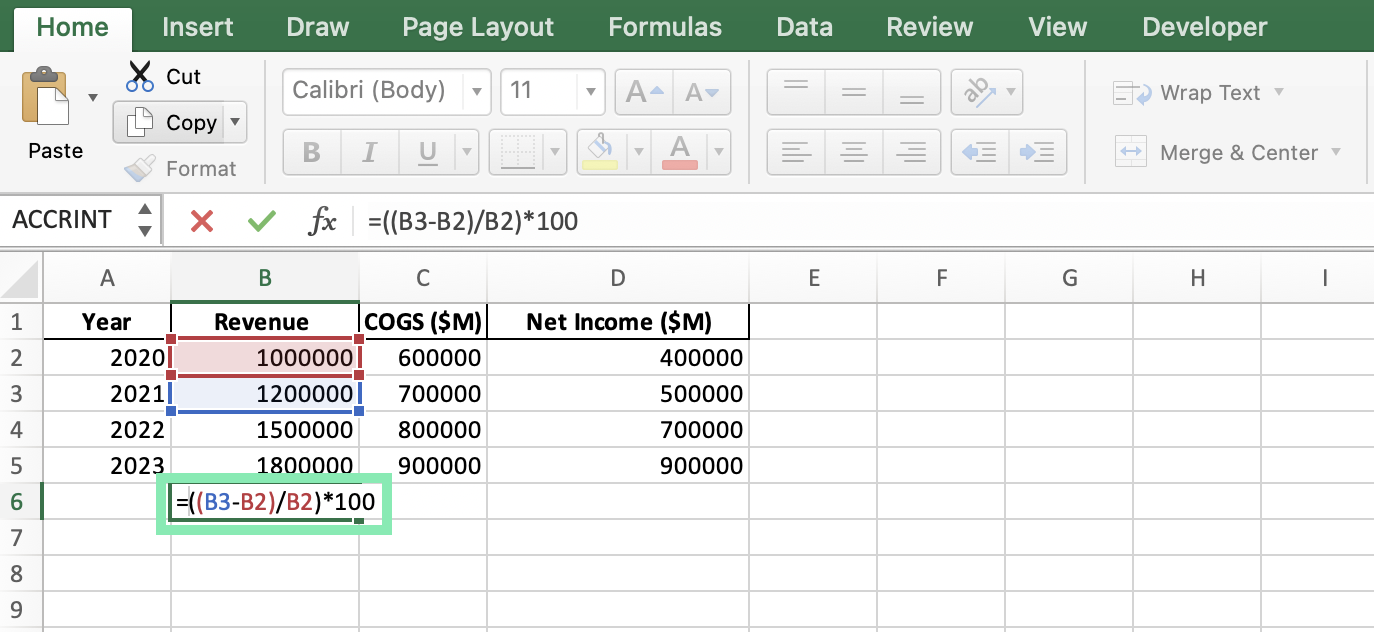
- Formula Application: You can easily input the percentage increase formula into a cell. If your Old Value is in cell A2 and your New Value is in cell B2, the formula would be
=( (B2-A2)/A2 ) * 100. Remember to format the cell as a percentage to automatically display the ‘%’ symbol and potentially fewer decimal places. - Batch Calculations: Spreadsheets excel at applying the same calculation across multiple rows or columns, allowing you to quickly analyze dozens or hundreds of financial data points (e.g., monthly sales figures for various products, year-over-year expenses for different categories).
- Visualizations: Once calculated, percentage increases can be readily visualized using charts and graphs within spreadsheets, making trends and performance changes immediately apparent.
Online Calculators and Financial Software
For quick, one-off calculations or specific financial scenarios, a plethora of online tools and dedicated financial software exist.
- General Percentage Calculators: Many websites offer simple tools where you input the old and new numbers to get the percentage increase (or decrease).
- Investment Return Calculators: Financial news sites and brokerage platforms often provide specialized calculators to determine the percentage return on investments, sometimes accounting for dividends, fees, and compounded interest.
- Budgeting Software: Modern personal finance apps and budgeting software frequently include features that automatically calculate percentage changes in spending categories, income, and net worth, helping you track progress without manual calculations.
Manual Calculation: When and Why it Matters
Despite the prevalence of digital tools, understanding how to perform the calculation manually remains crucial.
- For Quick Checks: Sometimes you just need to do a back-of-the-envelope calculation during a meeting or while reviewing a document.
- Enhancing Understanding: Performing the steps manually reinforces your grasp of the underlying mathematical concept, making you more adept at interpreting the results and spotting potential errors in automated calculations.
- When Tools Aren’t Available: In situations where you don’t have access to a computer or smartphone, a basic understanding of the formula ensures you can still derive critical financial insights.
Conclusion: Empowering Your Financial Understanding
The ability to accurately calculate a percentage increase between two numbers is not merely a quantitative skill; it’s a foundational financial literacy component that empowers better decision-making. From charting your personal wealth accumulation and optimizing your household budget to driving strategic business growth and evaluating investment opportunities, this single calculation provides a clear, standardized metric for change and progress. By mastering the core formula, understanding its diverse applications in both personal and business finance, and leveraging appropriate tools, you unlock a deeper understanding of your financial world. Regularly applying this insight will not only clarify where you’ve been but also illuminate the path forward, enabling you to navigate financial landscapes with greater confidence and precision.
aViewFromTheCave is a participant in the Amazon Services LLC Associates Program, an affiliate advertising program designed to provide a means for sites to earn advertising fees by advertising and linking to Amazon.com. Amazon, the Amazon logo, AmazonSupply, and the AmazonSupply logo are trademarks of Amazon.com, Inc. or its affiliates. As an Amazon Associate we earn affiliate commissions from qualifying purchases.