
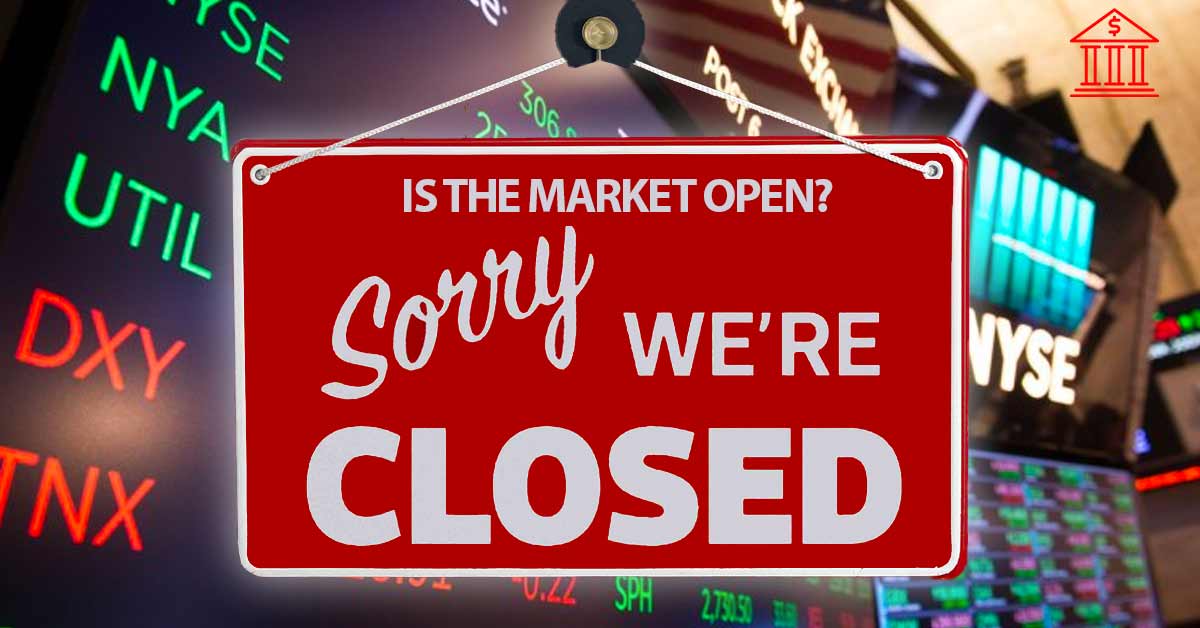
The sudden realization that the financial markets are closed can often be met with a mix of surprise and mild inconvenience for active investors. Whether it’s a scheduled holiday or an unexpected event, a market closure means a temporary halt to buying and selling, prompting questions about the underlying reasons and implications. Far from being arbitrary, these closures are integral to the efficient, fair, and stable operation of the global financial system. They serve multiple purposes, ranging from acknowledging national observances to ensuring operational integrity and preventing undue market chaos.
Understanding why markets close offers a deeper insight into the mechanics of finance and provides investors with valuable periods for reflection and strategy adjustment. This comprehensive guide will delve into the various reasons behind market closures, exploring both the predictable and the exceptional, and shed light on how these periods of inactivity ultimately contribute to the health and resilience of our economic infrastructure.
The Rationale Behind Market Holidays and Observances
Market closures are not merely days off for brokers and traders; they are deliberate decisions rooted in a confluence of cultural, operational, and regulatory imperatives designed to maintain a robust financial ecosystem. These scheduled pauses allow the complex machinery of the markets to reset, reconcile, and adapt, ensuring that when trading resumes, it does so on a foundation of clarity and fairness.
A Nod to National and Cultural Significance
Perhaps the most universally understood reason for market closures is the observance of national and cultural holidays. Financial markets, deeply intertwined with the broader economy and society, typically align their calendars with federal holidays. In the United States, for instance, this includes days like New Year’s Day, Memorial Day, Independence Day, Labor Day, Thanksgiving, and Christmas. These closures are not just about giving participants a break; they reflect a collective societal recognition of important dates, ensuring that market operations do not overshadow national celebrations or periods of remembrance. Beyond federal holidays, some markets may also observe culturally significant religious holidays, depending on the predominant practices of their respective nations, further embedding market operations within the cultural fabric of a country. This practice fosters national unity and allows market participants to fully engage in broader societal rituals without the pressure of live trading.
Operational Efficiency and System Maintenance
Beneath the frenetic pace of daily trading lies an intricate web of technological infrastructure, clearing houses, and settlement systems. Market closures provide essential downtime for these critical components. During these periods, exchanges and financial institutions can perform vital system maintenance, software upgrades, security patches, and data reconciliation processes that are difficult or impossible to execute during active trading hours. Think of it as a necessary pit stop for a high-performance vehicle; without these routine checks and overhauls, the system risks inefficiencies, glitches, or even catastrophic failures. These closures also allow for the final settlement of transactions that occurred on previous trading days, ensuring that all accounts are properly balanced before the next trading session begins. This meticulous back-end work is paramount for maintaining the integrity, speed, and reliability of financial transactions.
Ensuring Fair and Orderly Markets
Market holidays also play a crucial role in maintaining fairness and order. Periods leading up to major holidays often see reduced trading volumes, which can lead to thinner liquidity. In such environments, even small trades can disproportionately impact prices, leading to erratic price swings and potential market manipulation. By closing the markets entirely, regulators aim to prevent such scenarios, ensuring that price discovery remains robust and less susceptible to undue volatility caused by low participation. It also allows time for market participants to absorb significant news or economic data released during the holiday period without an immediate, potentially overreactive, trading response, contributing to a more considered and orderly reopening. This proactive measure safeguards against distorted market behavior and promotes a more level playing field for all investors.
Common Reasons for Scheduled Market Closures
While the underlying rationales are sound, the specific occasions for scheduled market closures are often predictable and publicly announced well in advance. These closures are an established part of the financial calendar, enabling investors and institutions to plan accordingly.
Federal and National Holidays
The most frequent reason for market closures stems from the observance of federal or national holidays. In the United States, the New York Stock Exchange (NYSE) and NASDAQ typically follow the schedule of U.S. federal holidays. This includes a full day off for holidays such as Martin Luther King, Jr. Day, Washington’s Birthday (Presidents’ Day), Good Friday, Columbus Day, and Veterans Day, in addition to the major holidays mentioned previously. Other countries’ exchanges follow their own national holiday calendars. For example, the London Stock Exchange observes UK bank holidays, and the Tokyo Stock Exchange closes for Japanese public holidays. These dates are generally fixed, making them easy for investors to anticipate.
Specific Exchange-Mandated Holidays
Beyond national holidays, some exchanges may have specific days they choose to close that are unique to their operations or traditions. While less common than federal holidays, these might include days related to the exchange’s founding, specific local observances, or for critical internal operational reviews. These are typically published far in advance, giving market participants ample notice. For instance, sometimes a stock exchange might close for a day if a major national election falls on a weekday, to allow market participants to vote and avoid potential volatility surrounding the event.
Half-Day Sessions and Early Closures
Not all market holidays result in a full day’s closure. Sometimes, markets will operate on a half-day schedule or close early. This is common on days immediately preceding or following a full holiday, such as the day after Thanksgiving (Black Friday) or Christmas Eve. These shortened sessions allow for some trading activity while still providing a partial break for market participants and enabling institutions to manage operations and reconciliation in a slightly relaxed environment. It also serves as a transition period, allowing traders to wind down or ramp up operations gradually. These instances of early closures or half-day sessions are also meticulously scheduled and announced by the respective exchanges.
Unscheduled and Exceptional Market Halts
While most market closures are predictable, there are rare occasions when events of significant magnitude necessitate an immediate and unscheduled halt to trading. These extraordinary circumstances underscore the market’s vulnerability to external shocks and its capacity to prioritize stability and safety above all else.
Extreme Weather Events
Nature’s fury can sometimes force markets to close. Hurricanes, blizzards, or other severe weather events can disrupt power, transportation, and communication systems, making it impossible for market participants to conduct business safely and efficiently. For example, Superstorm Sandy in 2012 forced the NYSE and NASDAQ to close for two consecutive days – the first weather-related multi-day closure in decades – due to damage and the inability of critical staff to reach the trading floor or operational centers. Such closures are primarily for the safety of personnel and to prevent chaotic trading in a compromised environment.
Major National Emergencies and Crises
The most profound reasons for unscheduled market closures are often national emergencies or crises. These events can range from acts of terrorism to profound political instability or the death of a national leader. The most prominent modern example is the closure of U.S. markets for four trading days following the September 11, 2001, terrorist attacks. This unprecedented pause was necessary to ensure the safety of personnel, assess damage to infrastructure, and provide time for authorities to understand the full scope of the tragedy before markets reopened. Similarly, market closures have occurred in other countries following assassinations or periods of intense civil unrest. These closures are not just about physical safety; they also serve to prevent panic-driven selling and allow for a period of national mourning and reflection, enabling a more measured response when markets eventually resume.

Circuit Breaker Triggers
Beyond full-day closures, financial markets employ “circuit breakers” – automatic trading halts designed to temporarily pause trading during periods of extreme volatility. These mechanisms are triggered when major stock indexes fall by a predetermined percentage within a single trading day (e.g., 7%, 13%, and 20% drops for the S&P 500 in the U.S.). The purpose is to give investors time to absorb information, reconsider their positions, and prevent a cascading freefall that could destabilize the entire system. While not a full closure, a circuit breaker halt can stop trading for 15 minutes or, in severe cases, for the remainder of the trading day. These were notably triggered multiple times during the market sell-off in March 2020 due to the COVID-19 pandemic’s economic shockwaves.
Technical Glitches and Operational Issues
Although rare and usually quickly resolved, technical glitches or operational issues within an exchange’s systems can also lead to temporary trading halts or, in extreme cases, a full closure. These could involve software malfunctions, connectivity problems, or cybersecurity incidents. Exchanges invest heavily in redundant systems and robust security, but unforeseen issues can arise. Such incidents underscore the reliance of modern markets on complex technology and the constant need for vigilance and rapid response protocols to maintain continuous operation.
The Impact of Market Closures on Investors and the Economy
When markets close, the immediate effect is an inability to buy or sell securities. However, the ramifications extend beyond mere transactional stoppage, influencing liquidity, settlement processes, and broader economic sentiment.
Halting Trading, Not Investing
The most direct impact is the temporary cessation of trading. Investors cannot execute new trades, adjust positions, or react to breaking news during the closure. This can be frustrating for active traders or those who need immediate liquidity. However, it’s crucial to distinguish between halting trading and halting investing. A market closure is often an opportune time for long-term investors to step back from the daily noise and engage in strategic planning, research, and portfolio reassessment. It forces a pause, potentially preventing impulsive decisions based on short-term volatility.
Liquidity and Price Discovery
Market closures inherently remove liquidity from the system. With no buyers or sellers, price discovery — the process by which the market determines the fair value of an asset — is temporarily suspended. This can lead to increased volatility when markets reopen, especially if significant news has emerged during the closure. The pent-up demand or supply, coupled with accumulated information, can result in “gap openings,” where prices open significantly higher or lower than the previous closing price. This is a crucial factor for day traders and short-term investors to consider as reopening can present both opportunities and risks.
Operational Deadlines and Settlement Cycles
Financial transactions involve complex settlement cycles. For instance, stock trades often settle in “T+2” days (trade date plus two business days). Market closures can impact these timelines, potentially delaying the receipt of funds from sales or the final ownership of purchased shares. Dividends, corporate actions, and other financial operations also adhere to specific ex-dates and record dates that can be affected by market holidays, requiring careful attention from investors to ensure they understand revised schedules. Brokerages and investment firms need to adjust their internal processing and communication to account for these shifts.
Economic Signaling and Investor Sentiment
Prolonged or unscheduled market closures can sometimes signal underlying economic or political instability, which can influence investor sentiment. While scheduled holidays are generally benign, an unexpected closure due to a national crisis can heighten anxiety and uncertainty, potentially leading to increased selling pressure upon reopening. Conversely, the market’s ability to close and reopen smoothly after a crisis can also be a testament to its resilience, helping to restore confidence. The way a market handles its closures and subsequent reopenings can be a subtle but powerful signal about the strength and stability of the underlying economy.
Navigating Market Downtime: A Strategic Approach for Investors
Far from being a mere hindrance, market closures can be leveraged as strategic opportunities by astute investors. The pause in trading offers a unique window to refine strategies, deepen understanding, and prepare for future market activity.
Leverage the Break for Research and Education
When the markets are closed, the constant stream of live quotes and trading alerts ceases, creating an ideal environment for focused learning. This is an excellent time to delve into financial news, read investment books, analyze market trends, or explore new investment tools. Investors can research potential new companies, review economic forecasts, or study different investment strategies. For those looking to improve their financial literacy, these periods offer an invaluable opportunity for self-education without the pressure of needing to act immediately on new information.
Rebalancing and Reassessing Your Portfolio
Market downtime provides a perfect opportunity for a portfolio check-up. Investors can review their asset allocation, evaluate the performance of individual holdings against their original investment theses, and assess their overall risk exposure. Is your portfolio still aligned with your long-term goals? Have certain sectors become overweighted or underweighted? Are there any underperforming assets that might warrant further investigation? This strategic rebalancing, done away from the heat of trading, can help ensure your portfolio remains diversified and aligned with your personal financial objectives, rather than reacting impulsively to daily market fluctuations.
Preparing for Reopening Volatility
As mentioned, markets often reopen with increased volatility, especially if significant news has transpired during the closure. Savvy investors use the downtime to anticipate potential scenarios. This might involve reviewing upcoming economic reports, analyzing international market performance during the closure, or assessing company-specific news. Developing a tentative plan for how to react to various opening price movements can help investors act decisively and rationally when trading resumes, rather than being caught off guard. This preparation can involve setting mental price targets for buys or sells, or identifying key indicators to watch in the initial hours of trading.

Utilizing After-Hours Trading (where applicable) and International Markets
While major exchanges might be closed, some limited trading opportunities may still exist. After-hours trading, though typically with lower liquidity and wider spreads, allows some market participants to place orders outside regular trading hours. Additionally, for globally diversified investors, a closure in one market (e.g., U.S. markets) doesn’t mean all global markets are closed. Foreign exchanges will operate according to their own schedules, offering insights into global sentiment and potentially allowing for trading in international assets. Understanding these alternatives, and their inherent risks, can be part of a sophisticated investor’s strategy during domestic market closures.
In conclusion, understanding “why are the markets closed today” is about more than just knowing a date on a calendar; it’s about appreciating the intricate balance between societal needs, operational demands, and the inherent desire for fair and orderly financial markets. From scheduled national holidays facilitating societal observance to unscheduled halts safeguarding against crises, each closure serves a vital purpose in maintaining the integrity and stability of our economic framework. For investors, these periods of inactivity are not just breaks but strategic windows – opportunities to reflect, research, and refine their approach, ultimately contributing to more informed and resilient investment decisions. By recognizing the multifaceted reasons behind market closures, we gain a deeper appreciation for the complex ecosystem that underpins our financial world.
aViewFromTheCave is a participant in the Amazon Services LLC Associates Program, an affiliate advertising program designed to provide a means for sites to earn advertising fees by advertising and linking to Amazon.com. Amazon, the Amazon logo, AmazonSupply, and the AmazonSupply logo are trademarks of Amazon.com, Inc. or its affiliates. As an Amazon Associate we earn affiliate commissions from qualifying purchases.