
For anyone involved in the dynamic world of finance, from seasoned institutional investors to budding individual traders, understanding the operational hours of the US stock market is fundamental. It’s not just a trivial detail but a critical piece of information that dictates trading strategies, risk management, and the timing of financial decisions. The core question, “what time does the US stock market close?” might seem straightforward, but its implications extend far beyond a simple clock-watching exercise.
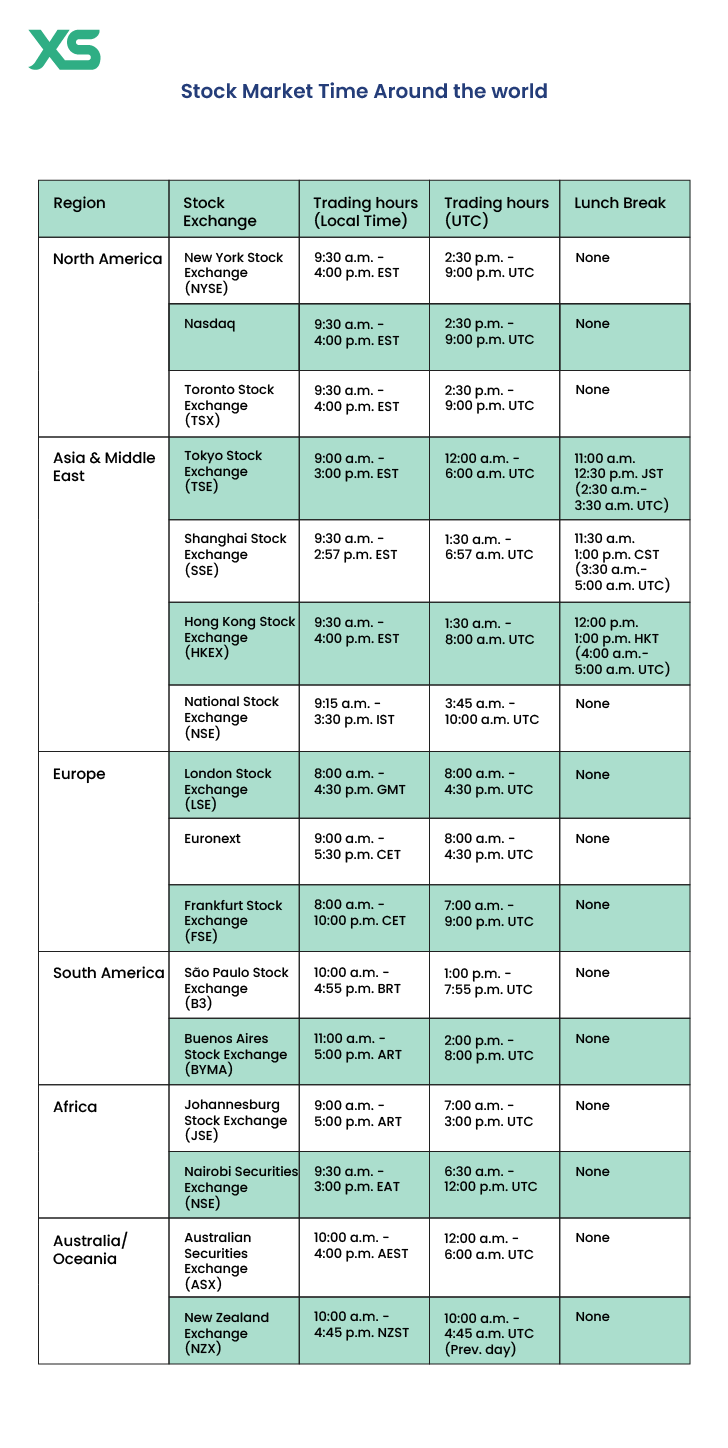
The primary US stock exchanges, the New York Stock Exchange (NYSE) and the NASDAQ, operate on a standard schedule. For equities, the regular trading session concludes daily at 4:00 PM Eastern Time (ET). This end-of-day bell signifies the close of the most liquid and active trading period, but it’s far from the absolute cessation of market activity. To truly grasp the pulse of the market, one must delve into the nuances of time zones, extended trading hours, market holidays, and the broader financial ecosystem that continues to churn even after the main gates have shut. This comprehensive understanding empowers investors to navigate the markets more effectively, align their strategies with market realities, and ultimately make more informed financial decisions in their pursuit of wealth creation and management.
The Standard Trading Hours: NYSE and NASDAQ
The backbone of US equity trading is anchored by the regular operating hours of its two largest exchanges: the New York Stock Exchange (NYSE) and the NASDAQ Stock Market. These hours define the period when the vast majority of trading volume occurs, characterized by high liquidity and tight bid-ask spreads.
Regular Trading Session Defined
The standard trading day for the NYSE and NASDAQ begins at 9:30 AM Eastern Time (ET) and concludes at 4:00 PM ET, Monday through Friday. This 6.5-hour window is considered the “regular” or “core” trading session. During these hours, market participants, including individual investors, institutional traders, and automated trading systems, execute buy and sell orders for a vast array of stocks, exchange-traded funds (ETFs), and other securities. The intensity of trading activity often peaks at the opening and closing bells, with significant price movements and volume as traders react to overnight news, economic data, and position themselves for the day ahead or the next session. This period is also when market makers and specialists ensure an orderly and efficient market, providing liquidity and facilitating transactions.
Understanding Time Zones (EST/EDT)
The designation “Eastern Time (ET)” is crucial for investors located in different geographical regions. The US observes both Eastern Standard Time (EST) and Eastern Daylight Time (EDT) depending on the time of year.
- EST (Eastern Standard Time): UTC-5. This is observed during the winter months.
- EDT (Eastern Daylight Time): UTC-4. This is observed during the summer months when Daylight Saving Time is in effect.
While the absolute time relative to Greenwich Mean Time (GMT) or Coordinated Universal Time (UTC) shifts, the market’s trading hours relative to the local time in New York remain consistent at 9:30 AM to 4:00 PM. This means that investors in California (Pacific Time) would open their trading day at 6:30 AM PT and close at 1:00 PM PT, while investors in London would see the market open at 2:30 PM GMT/BST and close at 9:00 PM GMT/BST. Misunderstanding these time zone shifts can lead to missed opportunities or unexpected market exposure, particularly for international investors.
Differentiating Equity vs. Other Markets
It’s important to recognize that while the 9:30 AM to 4:00 PM ET schedule governs US equity markets (stocks and ETFs), other financial markets often operate on different, sometimes longer, schedules.
- Options and Futures Markets: These derivatives markets typically have extended hours compared to equities. For instance, many futures contracts trade nearly 24 hours a day, five days a week, allowing participants to react to global events in real-time. Equity options often track the underlying stock’s regular hours but may have slightly different pre-market or after-hours rules.
- Bond Market: The US bond market generally closes earlier than the stock market, often around 3:00 PM ET, though trading can continue informally.
- Foreign Exchange (Forex) Market: The forex market is truly global and operates 24 hours a day, five days a week, as currency trading shifts across major financial centers worldwide.
- Cryptocurrency Markets: These markets are decentralized and operate 24/7, without traditional market closures or holidays, presenting a continuous trading environment.
This distinction is vital for investors with diversified portfolios. While their stock positions may be locked in at 4:00 PM ET, their other investments might still be exposed to market movements.
Beyond Regular Hours: Pre-Market and After-Hours Trading
The 4:00 PM ET closing bell doesn’t signal a complete halt to trading activity. Modern electronic trading systems facilitate continuous price discovery and transaction execution outside of the regular trading session through pre-market and after-hours trading.
The Mechanics of Extended Hours Trading
Pre-Market Trading typically runs from 4:00 AM ET to 9:30 AM ET.
After-Hours Trading generally extends from 4:00 PM ET to 8:00 PM ET.
These extended hours are facilitated by Electronic Communication Networks (ECNs) and alternative trading systems (ATSs) rather than the physical exchange floors or traditional market makers. ECNs match buy and sell orders electronically, bypassing the need for human intermediaries. Investors can place limit orders (orders to buy or sell at a specific price or better) during these periods, but market orders (orders to buy or sell immediately at the best available price) are often restricted due to lower liquidity. Not all brokers offer extended hours trading, and those that do may have specific rules, order types, and time frames for participation.
Why Investors Participate in Extended Hours
There are several compelling reasons why investors choose to participate in trading outside of regular hours:
- Reacting to News: Major corporate announcements, such as earnings reports, mergers and acquisitions, or FDA approvals, are often released after the market closes or before it opens. Extended hours trading allows investors to react to this news immediately, rather than waiting for the next regular session, potentially capitalizing on early price movements or mitigating risk.
- Convenience and Flexibility: For investors with busy daytime schedules or those in different time zones, extended hours offer greater flexibility to manage their portfolios.
- Access to Specific Pricing: Sometimes, a security might trade at a more favorable price during extended hours due to temporary imbalances in supply and demand that resolve once the regular session begins.
Risks and Opportunities of After-Hours Trading
While extended hours trading offers flexibility, it comes with a unique set of risks and opportunities:
Opportunities:
- First-Mover Advantage: Being able to trade immediately after news breaks can provide a significant advantage, allowing traders to enter or exit positions before the broader market reacts.
- Potential for Large Price Swings: Lower liquidity can sometimes lead to more dramatic price movements, which, if predicted correctly, can result in substantial gains.
Risks:
- Lower Liquidity: Fewer participants mean fewer buyers and sellers. This can lead to wider bid-ask spreads (the difference between the highest price a buyer is willing to pay and the lowest price a seller is willing to accept), making it harder to execute trades at desired prices.
- Higher Volatility: With less liquidity, even small orders can have a magnified impact on a stock’s price, leading to increased volatility.
- Price Discrepancies: The price of a stock during extended hours may differ significantly from its opening price during the next regular session.
- Limited Order Types: As mentioned, market orders are often restricted, forcing investors to use limit orders, which may not always be filled.
- Lack of Price Transparency: With multiple ECNs operating, it can be harder to get a consolidated, real-time view of all available prices, potentially leading to less favorable execution.
Understanding these dynamics is crucial for anyone considering trading outside the standard 9:30 AM to 4:00 PM ET window.
Market Holidays and Early Closures
The US stock market does not operate every weekday. It observes a number of national holidays and sometimes closes early on specific days, which can significantly impact trading strategies and financial planning.
Recognizing US Stock Market Holidays
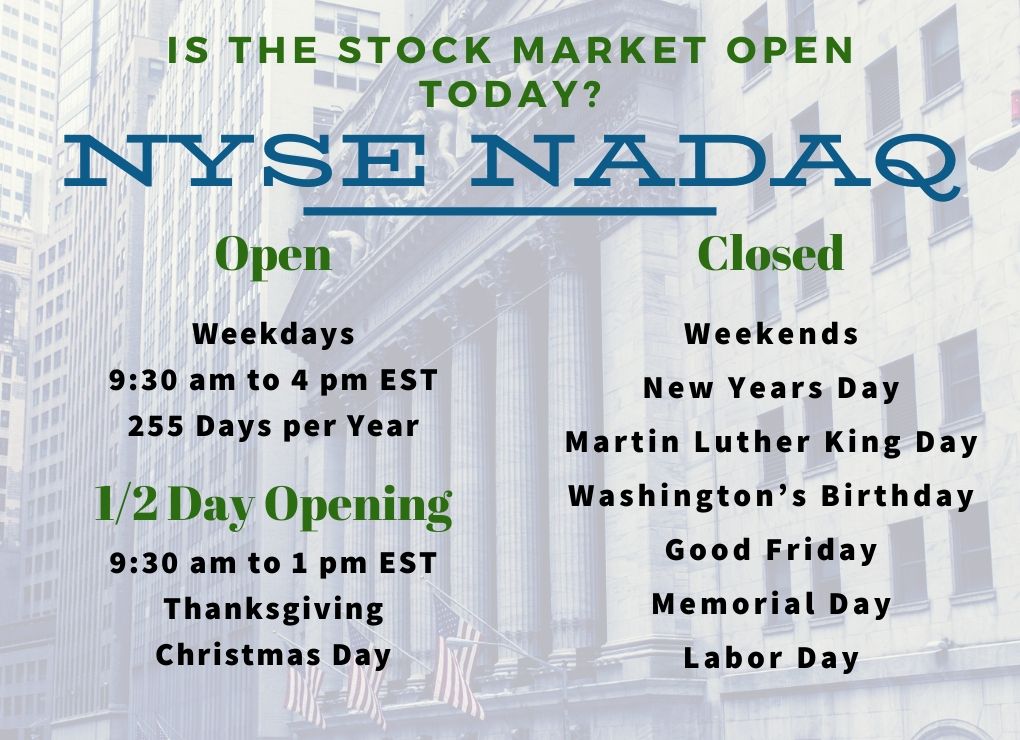
The NYSE and NASDAQ typically close on ten federal holidays throughout the year. These closures allow time for market participants to observe national holidays and prevent trading on days with significantly reduced liquidity. The primary market holidays include:
- New Year’s Day (January 1st)
- Martin Luther King, Jr. Day (Third Monday in January)
- Presidents’ Day (Third Monday in February)
- Good Friday (Friday before Easter)
- Memorial Day (Last Monday in May)
- Juneteenth National Independence Day (June 19th)
- Independence Day (July 4th)
- Labor Day (First Monday in September)
- Thanksgiving Day (Fourth Thursday in November)
- Christmas Day (December 25th)
If a holiday falls on a weekend, the market typically observes it on the preceding Friday or the following Monday. For instance, if Independence Day falls on a Saturday, the market might close on the preceding Friday. If it falls on a Sunday, the market might close on the following Monday. It is imperative for investors to consult the official holiday schedules published by the NYSE and NASDAQ at the beginning of each year to avoid any surprises.
The Impact of Half-Day Sessions
In addition to full-day closures, the US stock market also has a tradition of early closures or “half-day sessions” on certain days. On these days, the market typically closes at 1:00 PM ET instead of the usual 4:00 PM ET. Common days for early closures include:
- The day before Independence Day (if it falls on a weekday)
- The day after Thanksgiving (Black Friday)
- Christmas Eve (if it falls on a weekday)
These early closures, while less frequent than full holidays, can still impact trading strategies, especially for day traders or those executing time-sensitive transactions. The reduced trading window means a condensed period of activity and potentially less time to react to any breaking news during the shortened session. Liquidity might also decrease significantly in the hours leading up to the early close.
Planning Around Non-Standard Trading Days
For investors, planning around market holidays and early closures is crucial for several reasons:
- Order Execution: Orders placed on a holiday or after an early close will not be executed until the next trading day. This delay can expose investors to overnight market risk if significant news breaks during the non-trading period.
- Settlement Dates: The settlement period for stock trades (typically T+2, meaning trade date plus two business days) is affected by holidays. A trade executed on a Wednesday before a Friday holiday would settle on the following Tuesday, not Monday.
- Economic Data Releases: While markets are closed, economic reports or corporate earnings announcements may still be released. This can lead to significant gaps in stock prices when the market reopens.
- Dividend Payments and Corporate Actions: The ex-dividend date or other corporate actions might fall on or around a holiday, affecting eligibility for dividends or rights.
Being aware of these non-standard trading days allows investors to adjust their strategies, place orders in advance, or prepare for potential market volatility upon reopening.
Implications for Different Investor Types
Understanding stock market closing times is not a one-size-fits-all requirement; its importance varies significantly depending on an investor’s strategy, time horizon, and geographic location.
Day Traders and Active Investors
For day traders and active investors, who rely on short-term price movements and often hold positions for minutes or hours, the exact opening and closing times are paramount.
- Precision Timing: Knowing the precise 9:30 AM ET open and 4:00 PM ET close is critical for planning entry and exit points, especially during the often volatile opening and closing hours.
- Risk Management: Active traders typically close out all their positions before the 4:00 PM ET bell to avoid “overnight risk” – the risk of adverse price movements occurring while the market is closed.
- Liquidity Focus: The regular trading hours offer the highest liquidity, which is essential for day traders to execute large orders without significantly impacting the price and to ensure tight spreads.
- Extended Hours Consideration: While some active traders participate in extended hours, they do so with a keen awareness of the reduced liquidity and increased volatility, often using specific strategies and smaller position sizes.
Long-Term Investors
Long-term investors, who focus on fundamental analysis and hold investments for months or years, are less affected by the minute-to-minute fluctuations around market closing times.
- Less Time-Sensitive: For these investors, the exact closing time is less critical for daily operations. They might place orders that execute at the opening bell or during the day, with less urgency about when the market officially shuts down.
- Portfolio Rebalancing: When rebalancing a portfolio or making new long-term investments, the primary concern is the underlying value and future prospects of the asset, not the specific hour of execution.
- Impact of Holidays: While daily closing times are less important, long-term investors still need to be aware of market holidays, as these affect settlement dates for trades and can impact the timing of corporate actions like dividend payments.
- Earnings Release Timing: Long-term investors monitor earnings reports, which are often released after market close, to gauge the health and prospects of their holdings, but they typically don’t feel compelled to trade immediately based on these releases.
International Investors and Time Zone Challenges
Investors located outside the Eastern Time zone face unique challenges and considerations regarding US market hours.
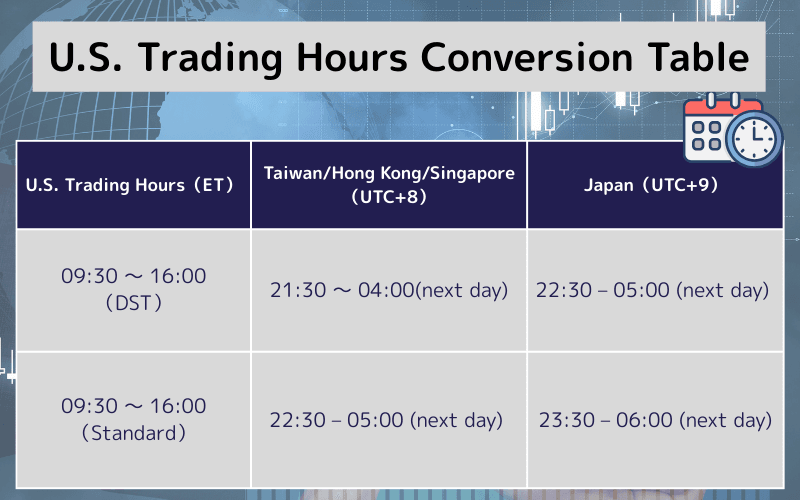
- Time Zone Conversion: The most obvious challenge is converting 9:30 AM – 4:00 PM ET into their local time. This requires careful attention, especially with Daylight Saving Time shifts. For instance, an investor in Hong Kong (UTC+8) would see the US market open at 9:30 PM HKT and close at 4:00 AM HKT (during EST), requiring overnight monitoring or reliance on automated trading tools.
- Overnight Risk: For international investors, “overnight risk” can mean price movements during their waking hours, making it difficult to actively manage positions in real-time.
- Access to Brokers: Many international brokers offer access to US markets, but their support hours and order execution capabilities might be aligned with their local time zones, creating potential delays or limitations during US market hours.
- Global News Flow: International investors must also contend with the continuous flow of global news that can impact US stocks even when the US market is closed, especially news from major Asian or European markets.
These implications highlight the diverse needs within the investor community and underscore why a nuanced understanding of market timing is essential for all participants.
The Broader Financial Ecosystem and Market Closure
The closing of the US stock market at 4:00 PM ET is a significant event that triggers a cascade of activity and considerations throughout the broader financial ecosystem, extending beyond mere trading.
How Closures Affect Economic News and Earnings Releases
The timing of market closure heavily influences when critical financial information is disseminated to the public.
- Earnings Reports: A common practice for publicly traded companies is to release their quarterly earnings reports after the market closes (post-market) or before it opens (pre-market). This strategy aims to give investors and analysts ample time to digest the information and for company executives to conduct conference calls, without the immediate, potentially volatile reaction that could occur during live trading. Such releases often drive significant price movements in extended hours or at the next day’s open.
- Economic Data: Key economic indicators, such as inflation reports, unemployment figures, or GDP growth, are often released before the market opens (e.g., 8:30 AM ET). This allows the market to price in the data efficiently at the open, contributing to the typical volatility seen at the 9:30 AM ET bell. Other reports might come out during the trading day, but the open and close are strategically used for maximum impact management.
- Federal Reserve Announcements: Decisions from the Federal Open Market Committee (FOMC) regarding interest rates or monetary policy are usually released at 2:00 PM ET, allowing two hours of regular market trading for initial reactions, followed by deeper analysis in after-hours trading.
The strategic timing of these releases underscores the importance of market hours in managing information flow and market stability.
The Role of Regulators and Market Integrity
Market hours are not arbitrary; they are established and overseen by regulatory bodies like the Securities and Exchange Commission (SEC) and the Financial Industry Regulatory Authority (FINRA).
- Ensuring Fair and Orderly Markets: Regulators play a crucial role in setting the rules for trading, including market hours, to ensure fairness, transparency, and investor protection.
- Maintaining Stability: Consistent trading hours help maintain market stability by concentrating liquidity and reducing fragmentation. While extended hours exist, they operate under different regulatory scrutiny due to their inherent risks.
- Preventing Manipulation: The defined trading windows, along with robust surveillance systems, help regulators monitor for unusual activity and potential market manipulation, upholding market integrity.
- Settlement and Clearing: The defined market close is essential for the smooth functioning of settlement and clearing processes, ensuring that transactions are finalized and funds/securities are transferred correctly.
These regulatory functions are vital to maintaining confidence in the US financial markets.
Tools and Resources for Tracking Market Hours
Given the complexities of standard hours, extended hours, holidays, and time zones, investors have a wealth of tools and resources at their disposal to stay informed:
- Exchange Websites: The official websites of the NYSE and NASDAQ are the most authoritative sources for regular trading hours, holiday schedules, and early closures.
- Brokerage Platforms: Most online brokerage platforms clearly display market status (open/closed) and provide calendars for upcoming holidays and early closures.
- Financial News Websites: Reputable financial news outlets (e.g., Wall Street Journal, Bloomberg, Reuters, CNBC) frequently publish articles and calendars outlining market hours and holiday schedules.
- Trading Apps and Software: Many dedicated trading applications and charting software include real-time market status indicators and integrated calendars.
- Calendar Tools: Generic online calendars can be subscribed to that automatically update with market holidays.
Leveraging these resources ensures that investors, regardless of their location or trading style, can remain informed about when the US stock market is open for business.
Conclusion
The seemingly simple question, “What time does the US stock market close?” unlocks a sophisticated understanding of financial market mechanics. While the straightforward answer for the NYSE and NASDAQ is 4:00 PM Eastern Time (ET) on weekdays, this point in time is merely a gateway to a broader ecosystem of pre-market and after-hours trading, carefully planned holiday closures, and the strategic timing of critical financial announcements.
For every investor, from the hyper-focused day trader to the patient long-term holder, a nuanced grasp of market hours is indispensable. It dictates the rhythm of active trading, shapes risk management strategies, informs the timing of major investment decisions, and even influences how global investors interact with the US market across different time zones. Moreover, these defined periods are crucial for the regulatory bodies that ensure market integrity and for the efficient dissemination of economic and corporate news.
In a world of constant digital connectivity and instantaneous information, the structure provided by clear market operating hours remains a cornerstone of orderly financial markets. By staying informed about these times, utilizing available resources, and understanding the implications for their specific investment goals, market participants can navigate the US stock market with greater confidence, precision, and strategic foresight. The clock not only marks the end of a trading day but also signals the beginning of preparation for the next.
aViewFromTheCave is a participant in the Amazon Services LLC Associates Program, an affiliate advertising program designed to provide a means for sites to earn advertising fees by advertising and linking to Amazon.com. Amazon, the Amazon logo, AmazonSupply, and the AmazonSupply logo are trademarks of Amazon.com, Inc. or its affiliates. As an Amazon Associate we earn affiliate commissions from qualifying purchases.