
The beating heart of global commerce, financial markets are intricate ecosystems where trillions of dollars change hands daily, shaping economies and individual fortunes. For anyone looking to participate, whether as a seasoned investor, a curious beginner, or a professional trader, understanding the operating hours of these markets is fundamental. It’s not merely a matter of knowing when to place an order; it’s about comprehending liquidity, volatility, and the strategic implications tied to specific trading windows. This guide delves into the specifics of market opening and closing times, exploring the nuances that govern these crucial periods and how they impact the world of finance.
Understanding Standard Stock Market Hours
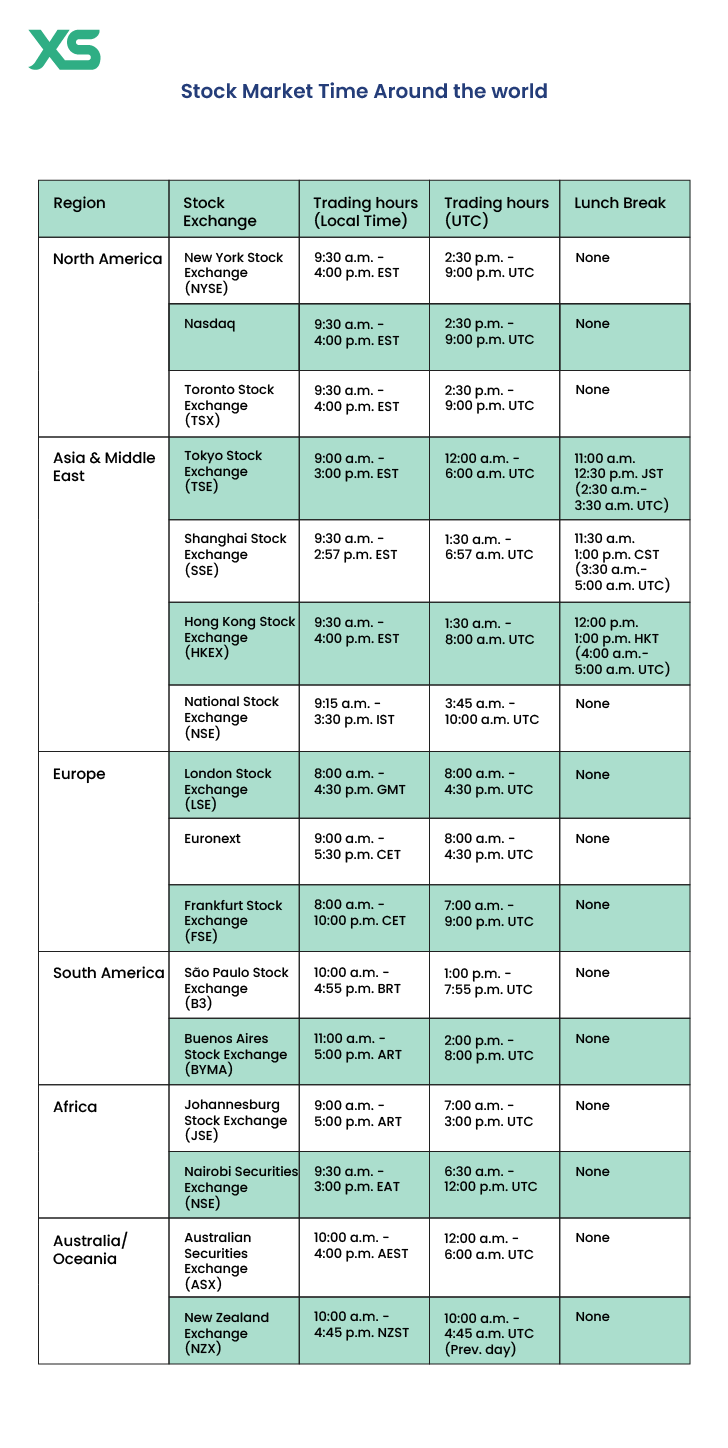
The most common inquiry regarding market hours typically refers to the major stock exchanges, particularly those in the United States, which set a global benchmark. These hours are meticulously structured to ensure fairness, efficiency, and adequate liquidity for all participants.
New York Stock Exchange (NYSE) and NASDAQ
The two primary stock exchanges in the United States, the New York Stock Exchange (NYSE) and the NASDAQ, operate on a synchronized schedule. Their standard trading hours are from 9:30 AM to 4:00 PM Eastern Time (ET), Monday through Friday. This seven-and-a-half-hour window is often referred to as “regular trading hours” or “cash market hours.” During this period, the vast majority of trading activity occurs, characterized by high liquidity and tight bid-ask spreads, making it the most active and efficient time to buy and sell securities.
The NYSE, known for its iconic trading floor and listing of many industrial giants, and NASDAQ, a technology-centric electronic exchange, both adhere to these hours. These times were historically established to allow market makers and specialists sufficient time to manage orders, facilitate price discovery, and ensure an orderly market, while also giving participants across different time zones a reasonable window to engage.
The Rationale Behind Fixed Hours
The concept of fixed trading hours is deeply rooted in the history of financial markets. Originally, exchanges were physical locations where traders gathered, making fixed hours a logistical necessity. Today, even with the advent of electronic trading, fixed hours serve several critical purposes:
- Liquidity Concentration: By confining trading to specific hours, market activity and order flow are concentrated, leading to higher liquidity. This allows for more efficient price discovery and reduces the impact of individual large orders on prices.
- Orderly Market Operation: Fixed hours provide a structured environment, allowing for settlement processes, reconciliation, and the dissemination of information. It also gives market participants time to digest news and research outside of active trading, leading to more informed decisions when the market opens.
- Investor Protection: By having defined periods, regulators can monitor activity more effectively, and mechanisms like circuit breakers can be implemented to halt trading during extreme volatility, protecting investors from rapid, uncontrolled price swings.
- Work-Life Balance for Professionals: While modern technology allows for constant connectivity, fixed hours provide a demarcation, enabling financial professionals to manage their lives and strategize without the expectation of 24/7 engagement with the cash equity markets.
Beyond Standard Hours: Extended Trading Sessions
The conventional 9:30 AM to 4:00 PM ET window represents the core of market activity, but it’s not the only time trading occurs. In the age of electronic communication networks (ECNs) and globalized finance, investors have opportunities to trade outside these standard hours through extended trading sessions.
Pre-Market Trading Explained
Pre-market trading refers to the period before the regular market open. For US equities, this typically runs from 4:00 AM to 9:30 AM ET. During this session, investors can place orders that are executed before the main market opens. Volume is generally lower, and liquidity can be significantly thinner compared to regular hours. This means that price movements can be more exaggerated, and bid-ask spreads wider.
Pre-market trading is often utilized by institutional investors and active traders looking to react quickly to news that breaks overnight or before the official opening bell. Earnings announcements, significant economic data releases, or geopolitical events that occur outside regular hours can lead to substantial price shifts in the pre-market, giving an early indication of how the stock might perform during the standard session.
After-Hours Trading Dynamics
Conversely, after-hours trading takes place after the regular market close, typically from 4:00 PM to 8:00 PM ET. Similar to pre-market, this period is characterized by lower trading volumes and reduced liquidity. News that breaks after the market closes, such as late-day earnings reports or corporate announcements, often drives after-hours activity.
Both pre-market and after-hours trading are executed through ECNs, which match buyers and sellers electronically. While these extended sessions offer flexibility and the ability to react quickly to new information, they come with elevated risks. The reduced liquidity can lead to higher volatility, making it challenging to execute large orders at desired prices and increasing the potential for significant price gaps between the extended session close and the next day’s regular market open.
Risks and Opportunities of Extended Sessions
While extended hours provide opportunities for agility, particularly for those reacting to immediate news, they also carry inherent risks:
- Lower Liquidity: Fewer participants mean it can be harder to find a counterparty for a trade, leading to wider bid-ask spreads and potentially unfavorable execution prices.
- Increased Volatility: Small order flows can cause disproportionately large price swings, making price discovery less stable.
- Competition with Professionals: Many participants in extended sessions are institutional investors or highly experienced traders with superior access to information and trading tools.
- Limited Order Types: Not all order types available during regular hours may be supported in extended sessions.
Despite these risks, extended sessions offer unique opportunities for astute traders to capitalize on breaking news or position themselves ahead of the official market open or close, provided they understand and manage the associated challenges.
Global Markets and Time Zones
The financial world doesn’t sleep. While one major market is closing, another is typically opening, creating a near 24-hour cycle of trading across different asset classes. Understanding these global market hours is essential for investors with international portfolios or those involved in markets that transcend single geographical boundaries.
Major International Exchanges
Just as New York serves as a hub, other financial capitals around the world have their own market hours, largely dictated by their local time zones. Here are a few prominent examples:
- London Stock Exchange (LSE): Generally open from 8:00 AM to 4:30 PM GMT (Greenwich Mean Time). London bridges the gap between Asian and American trading hours, often seeing significant activity.
- Tokyo Stock Exchange (TSE): Typically operates from 9:00 AM to 3:00 PM JST (Japan Standard Time), with a lunch break from 11:30 AM to 12:30 PM. It’s one of the first major markets to open each trading day.
- Shanghai Stock Exchange (SSE) / Shenzhen Stock Exchange (SZSE): Both generally open from 9:30 AM to 3:00 PM CST (China Standard Time), also with a lunch break from 11:30 AM to 1:00 PM.
- Euronext (Paris, Amsterdam, Brussels, Lisbon): Trading hours are typically 9:00 AM to 5:30 PM CET (Central European Time).
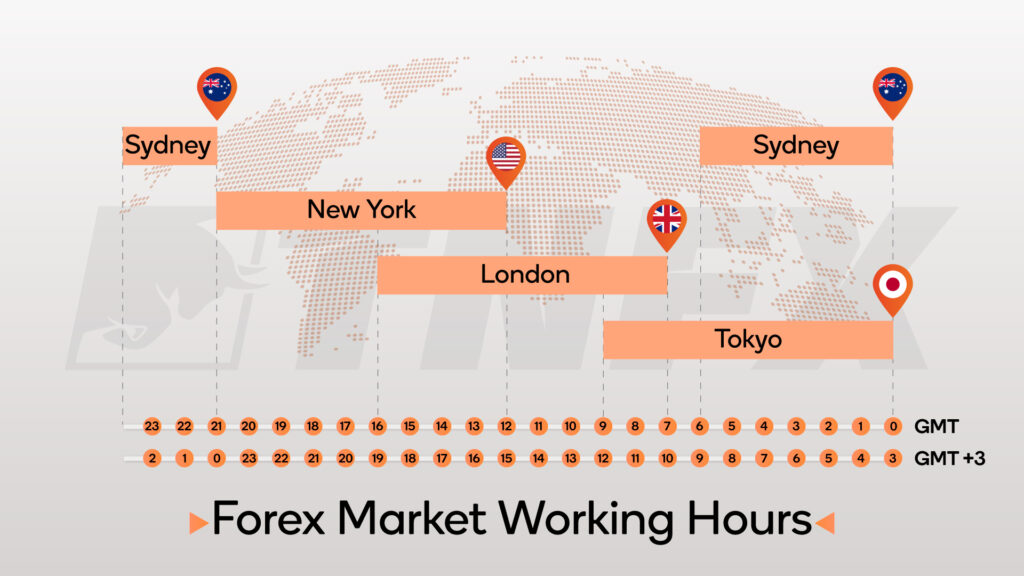
These examples highlight how trading times vary significantly, influencing how global news and economic data ripple through different markets as they open and close.
The Concept of 24/5 Trading (Forex, Futures)
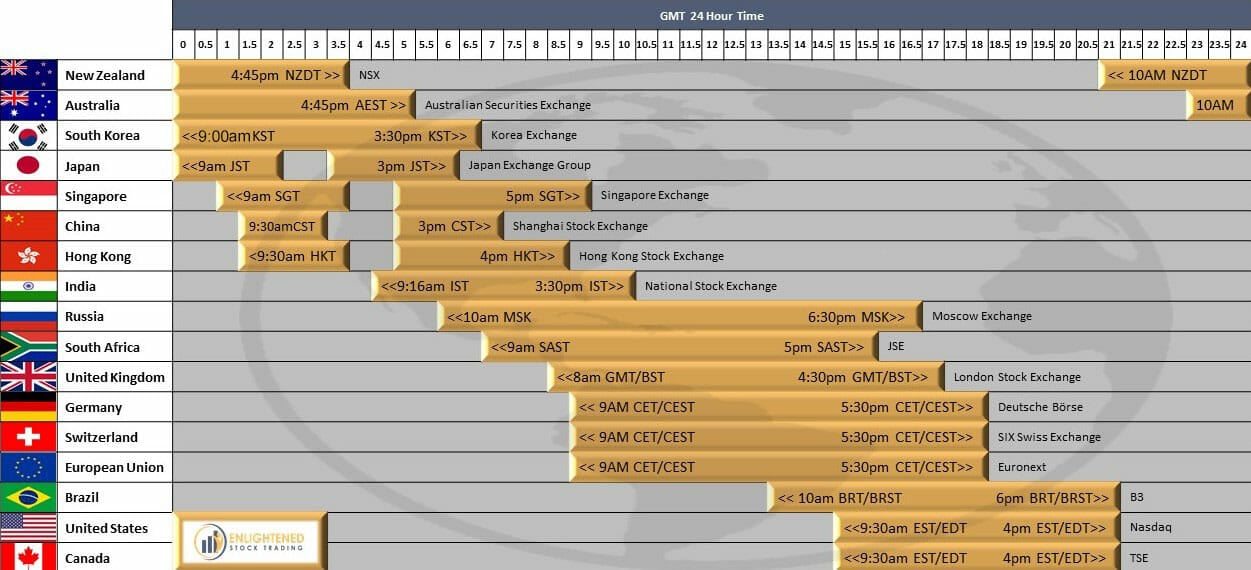
While stock exchanges adhere to fixed daily hours, certain markets operate almost continuously. The most prominent example is the Foreign Exchange (Forex) market. Due to its decentralized, over-the-counter (OTC) nature and global participation, Forex trading occurs 24 hours a day, five days a week, from Sunday evening ET to Friday evening ET. This continuous cycle is possible because as one major financial center closes, another opens (e.g., New York hands off to Sydney, then Tokyo, then London, then back to New York).
Similarly, futures markets for commodities, indices, and currencies also often offer near 24-hour trading, though with brief breaks. This continuous operation caters to the needs of global participants and allows for immediate reactions to economic shifts and geopolitical events, regardless of local time.
Implications for Global Investors
For investors with a global perspective, understanding these overlapping and sequential market hours is crucial.
- Arbitrage Opportunities: Discrepancies in pricing for internationally listed stocks or related assets can emerge as different markets open, offering opportunities.
- Risk Management: Global news can impact an investor’s portfolio even when their domestic market is closed. Staying aware of international market movements helps in preemptively managing risk.
- Diversification: Access to various markets allows for greater diversification and exposure to different economic cycles and growth opportunities.
However, it also requires managing time zone differences and staying informed across multiple geopolitical and economic landscapes.
Impact of Market Hours on Trading Strategies
The specific times when markets open and close, along with the nuances of extended sessions, profoundly influence various trading and investing strategies. Understanding these patterns can provide a competitive edge.
Day Trading vs. Long-Term Investing
- Day Traders: For active day traders, market hours are everything. They typically operate exclusively within regular trading hours, leveraging high liquidity and price volatility to make multiple trades throughout the day, closing all positions before the market closes. The first and last hours of the trading day (the “open” and “close”) are particularly critical, often exhibiting higher volatility and volume.
- Long-Term Investors: While long-term investors don’t typically need to react to minute-by-minute price movements, market hours are still relevant. Major market openings can signal shifts in sentiment, and closures can be a point of reflection. Long-term investors are more concerned with fundamental company performance and macroeconomic trends, which are revealed both during and outside market hours.
Volatility Patterns Throughout the Day
Market volatility isn’t constant; it often follows predictable patterns tied to market hours:
- The Open (First Hour): Often the most volatile hour. Traders react to overnight news, pre-market activity, and economic data released before the open. This period sees high volume and significant price swings as positions are established or closed.
- Mid-Day (Core Hours): Tends to be less volatile. Volume often dips, and price movements are generally smoother, as initial reactions subside and traders await new catalysts.
- The Close (Last Hour): Another period of heightened volatility and volume. Traders adjust positions, “window dress” portfolios, and institutional orders are often executed. This can lead to sharp moves as the market prepares to close.
Recognizing these patterns allows traders to tailor their strategies, whether by seeking opportunities in high-volatility periods or aiming for more stable execution during calmer hours.
Event-Driven Trading (Earnings, News Releases)
The timing of market hours dictates how quickly investors can react to significant corporate and economic events:
- Earnings Reports: Many companies release earnings reports either before the market opens or after it closes. This strategy is employed to give investors and analysts time to digest the information without the pressure of live trading, leading to significant pre-market or after-hours price action.
- Economic Data: Key economic indicators (e.g., inflation reports, jobs data) are often released at specific times, typically before market open (e.g., 8:30 AM ET for many US reports) or mid-day. These releases can immediately influence market sentiment and drive trading activity.
- Geopolitical News: Major political announcements, central bank decisions, or international incidents can have ripple effects across global markets, impacting prices as soon as the relevant regional market opens.
Savvy traders and investors constantly monitor the economic calendar and news feeds to anticipate these events and formulate their trading responses in sync with market hours.
Important Considerations and Exceptions
While standard hours and extended sessions form the backbone of market operation, there are crucial exceptions and external factors that can alter or influence these times.
Market Holidays and Early Closures
Financial markets do not operate every single business day. They observe a number of national holidays, during which they remain closed. In the US, examples include New Year’s Day, Martin Luther King, Jr. Day, Presidents’ Day, Good Friday, Memorial Day, Juneteenth, Independence Day, Labor Day, Thanksgiving Day, and Christmas Day. On certain days preceding or following holidays, markets may also have early closures, often ending trading at 1:00 PM ET. It’s imperative for investors to consult the exchange’s official holiday calendar to avoid unexpected closures or truncated trading days.
Impact of Economic Announcements
Beyond scheduled releases, unscheduled economic announcements or emergency interventions by central banks can also significantly impact trading. While these don’t change market hours, they can cause extreme volatility during open hours or trigger overnight gaps if announced during closed periods. Understanding the potential for such events and their timing is critical for risk management.
Dealing with Market Volatility
Market volatility is an inherent part of investing, but it can be amplified or mitigated by the timing of trading. During periods of extreme uncertainty or crisis, exchanges may implement “circuit breakers.” These automated trading halts are designed to provide a cooling-off period, preventing panic selling or buying and allowing participants to reassess the situation. Circuit breakers can temporarily suspend trading across the entire market or for individual securities, overriding standard market hours in the interest of market stability.
Knowing when markets open and close is more than a simple timetable; it’s a strategic imperative. It informs when to execute trades, when to expect significant price movements, and when to be most vigilant. For any participant in the financial world, mastering the rhythm of market hours is a cornerstone of effective investing and trading.
aViewFromTheCave is a participant in the Amazon Services LLC Associates Program, an affiliate advertising program designed to provide a means for sites to earn advertising fees by advertising and linking to Amazon.com. Amazon, the Amazon logo, AmazonSupply, and the AmazonSupply logo are trademarks of Amazon.com, Inc. or its affiliates. As an Amazon Associate we earn affiliate commissions from qualifying purchases.