
The pursuit of financial security often feels like a marathon, but there are moments in life where a sprint is necessary. Whether you are building an emergency fund, preparing for a major purchase, or simply looking to break the cycle of living paycheck to paycheck, learning how to save money fast is a vital skill. This process is not merely about deprivation; it is about high-level financial engineering and the strategic reallocation of resources. By auditing your current outflows, optimizing your daily habits, and leveraging modern financial tools, you can accelerate your savings rate significantly within a very short timeframe.
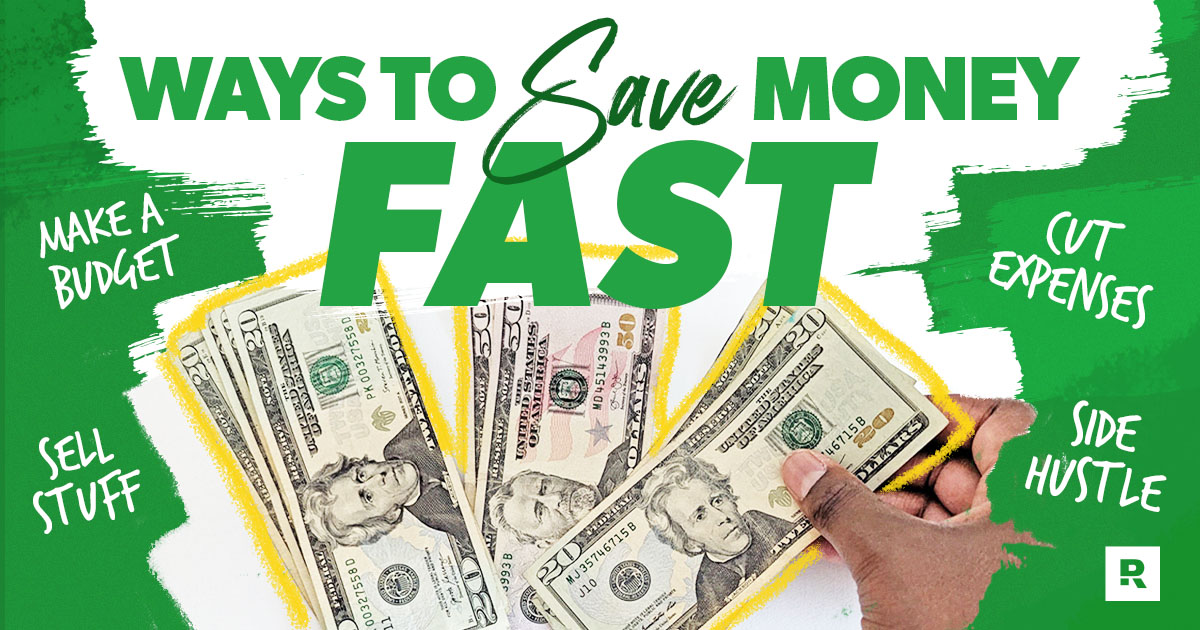
This guide outlines a professional and systematic approach to rapid capital accumulation, focusing on high-impact strategies that yield immediate results.
1. Radical Expense Auditing and Immediate Cost Reduction
The first step in saving money quickly is to stop the “leaks” in your financial bucket. Most individuals are unaware of where a significant portion of their income disappears. A radical audit involves a granular look at every transaction from the past 90 days to identify areas of waste.
The Power of the Subscription Audit
In the modern digital economy, “subscription creep” is a primary driver of invisible wealth erosion. Small monthly charges for streaming services, software, gym memberships, and premium apps often go unnoticed but can aggregate to hundreds of dollars per month. To save money fast, you must adopt a “zero-based” mentality toward subscriptions. Cancel every service you have not used in the last 30 days. If you find you truly miss a service, you can re-subscribe later, but the immediate cessation of these automated drafts provides an instant boost to your monthly cash flow.
Negotiating Recurring Fixed Costs
Many people view their monthly bills—such as internet, insurance, and cell phone plans—as fixed. In reality, these are often negotiable. Service providers frequently offer retention discounts to customers who express an intent to cancel. By spending two hours on the phone negotiating these contracts or shopping for competitive insurance premiums, you can often shave 10% to 20% off your monthly overhead. This is “found money” that requires no change in lifestyle, only a brief investment of time in negotiation.
The “Big Three” Realignment: Housing, Transport, and Food
While small savings are beneficial, the most significant impact comes from addressing the three largest expense categories. While you may not be able to change your rent or mortgage overnight, you can immediately reduce transportation and food costs. Consider carpooling or using public transit for a month to save on fuel and parking. More importantly, focus on food. Eating out and ordering delivery are the fastest ways to deplete a budget. By shifting exclusively to grocery shopping and meal preparation, the average professional can save between $300 and $700 per month instantly.
2. Behavioral Psychology and Spending Control
Saving money fast requires a shift in how you interact with the consumer marketplace. The modern economy is designed to facilitate frictionless spending; your goal is to reintroduce friction into your financial life.
The 48-Hour Rule for Discretionary Purchases
Impulse buying is the enemy of rapid saving. To counter this, implement a mandatory 48-hour cooling-off period for any non-essential purchase. When you feel the urge to buy something—whether it is clothing, electronics, or home decor—place it in an online cart or write it down, then walk away. In the vast majority of cases, the dopamine hit associated with the desire to buy fades within two days, and you will find you no longer want the item. This single habit can prevent hundreds of dollars in unnecessary outflows every month.
Adopting a “No-Spend” Challenge
One of the most effective ways to jumpstart your savings is to commit to a “No-Spend Month” or a “No-Spend Week.” During this period, you commit to spending money only on absolute essentials: rent, utilities, and basic groceries. All social activities must be free, and all luxury purchases are banned. This serves as a financial “detox,” resetting your baseline for what constitutes a “need” versus a “want.” The capital preserved during these intensive periods can be immediately moved into a dedicated savings vehicle.

Strategic Grocery Planning and Bulk Acquisition
Food spending is highly elastic, meaning it is one of the easiest areas to control. To save fast, you must move away from “convenience shopping” and toward “strategic shopping.” This involves planning meals around what is already in your pantry, buying generic brands which are often identical in quality to name brands, and purchasing non-perishables in bulk. By reducing the frequency of your trips to the store, you also reduce the opportunities for impulse purchases to slip into your cart.
3. Leveraging Financial Tools and Automation
In the digital age, manual saving is inefficient. To maximize the speed at which you accumulate capital, you must utilize financial technology to optimize your interest rates and ensure consistency.
High-Yield Savings Accounts (HYSA)
Traditional brick-and-mortar banks often offer dismal interest rates on savings accounts, sometimes as low as 0.01%. To save money effectively, you must move your emergency fund or short-term savings into a High-Yield Savings Account. Many online-only banks offer rates that are significantly higher than the national average. While the interest alone won’t make you wealthy overnight, it ensures that your money is working for you and maintaining its purchasing power against inflation while you continue to add to the principal.
Automating the Savings Process
The most successful savers are those who remove the element of choice from the equation. Set up an automatic transfer that triggers the moment your paycheck hits your account. By “paying yourself first,” you treat your savings like a non-negotiable bill. If the money is moved to a separate account before you have the chance to see it in your checking balance, you are far less likely to spend it. This psychological trick, known as “choice architecture,” is a cornerstone of professional wealth management.
Utilizing Cashback and Optimization Apps
While the focus should always be on spending less, you should also maximize the efficiency of the spending you must do. Use cashback portals and credit card rewards strategically—provided you pay the balance in full every month to avoid interest. Modern apps can also “round up” your purchases to the nearest dollar and invest the change. While these small amounts seem insignificant, they provide a secondary layer of automated saving that builds momentum over time.
4. Expanding the Gap: Income Acceleration
Saving is fundamentally an equation of Income minus Expenses. While cutting costs is the fastest way to start, increasing your income while maintaining a low cost of living allows you to save at an exponential rate.
Monetizing Underutilized Assets and Skills
To boost your savings fast, look for immediate ways to generate “injection capital.” This can include selling unused items—electronics, furniture, or designer clothing—on secondary marketplaces. Additionally, consider the “gig economy” or freelance consulting as a short-term measure. If you have a professional skill such as writing, coding, or graphic design, taking on a single freelance project can provide a lump sum that goes directly into your savings, bypassing your daily checking account entirely.
Maximizing Workplace Benefits
Many professionals leave money on the table by not fully utilizing their employer’s benefits. If your company offers a 401(k) match, ensuring you contribute enough to get the full match is an immediate 100% return on your investment. Furthermore, utilizing Health Savings Accounts (HSAs) or Flexible Spending Accounts (FSAs) can reduce your taxable income, effectively “saving” you the money that would have otherwise gone to the government.
The Mindset of the “Gap”
The key to saving money fast is widening the gap between what you earn and what you spend. When you receive a raise, a bonus, or a tax refund, the temptation is to engage in “lifestyle inflation.” To save rapidly, you must commit to “lifestyle stagnation.” Direct 100% of any unexpected income or raises into your savings. By living on your previous income level while earning more, you create a powerful engine for wealth accumulation that operates with minimal psychological effort.
Conclusion
Saving money fast is not an act of magic; it is the result of disciplined, intentional financial engineering. It requires a two-pronged attack: a ruthless reduction of unnecessary expenses and a systematic automation of your financial inflows. By auditing your subscriptions, negotiating your fixed costs, and mastering the psychology of impulse control, you can reclaim hundreds of dollars every month. When combined with the power of high-yield accounts and income acceleration, these strategies will allow you to reach your financial goals with unprecedented speed. Remember, the discomfort of temporary frugality is a small price to pay for the long-term freedom and security that a robust savings cushion provides.
aViewFromTheCave is a participant in the Amazon Services LLC Associates Program, an affiliate advertising program designed to provide a means for sites to earn advertising fees by advertising and linking to Amazon.com. Amazon, the Amazon logo, AmazonSupply, and the AmazonSupply logo are trademarks of Amazon.com, Inc. or its affiliates. As an Amazon Associate we earn affiliate commissions from qualifying purchases.