
The stock market’s upward trajectory in recent periods has captivated investors, analysts, and the broader public alike. Far from a singular cause, this phenomenon is often the result of a complex interplay of economic fundamentals, corporate performance, monetary policy shifts, technological advancements, and evolving investor sentiment. Understanding the various forces at play is crucial for anyone looking to make informed financial decisions or simply comprehend the dynamics of modern capital markets. While daily fluctuations can be driven by a myriad of factors, sustained upward momentum typically signals underlying strength and optimism about future economic prospects. This article delves into the primary reasons behind the market’s ascent, offering a comprehensive look at the catalysts, sector-specific strengths, and potential considerations for investors.

Understanding the Market’s Recent Momentum
A robust stock market rally doesn’t emerge in a vacuum; it’s usually underpinned by a combination of favorable macroeconomic conditions and strong corporate health. These foundational elements provide the necessary confidence for capital to flow into equities, driving prices higher.
Economic Resilience and Growth Indicators
One of the most compelling narratives supporting the stock market’s rise is the unexpected resilience of the global economy, particularly in major developed markets. Despite initial fears of a deep recession following periods of high inflation and aggressive interest rate hikes, economies have demonstrated remarkable adaptability. Key indicators often paint a picture of enduring strength. Gross Domestic Product (GDP) growth, while perhaps not soaring, has often surprised to the upside, indicating an economy that continues to expand rather than contract. Employment figures, such as low unemployment rates and consistent job creation, further bolster this outlook, signaling a healthy labor market that supports consumer spending. Strong consumer confidence and spending, in turn, form a significant component of economic activity, creating a virtuous cycle where demand fuels business growth and profitability. This sustained economic activity provides a sturdy bedrock for corporate earnings and investor optimism.
Corporate Earnings Exceeding Expectations
Ultimately, the stock market is a reflection of corporate profitability and future earning potential. A significant driver of recent market gains has been the consistent delivery of strong corporate earnings reports, often surpassing analyst expectations. Companies across various sectors have demonstrated an ability to navigate challenging economic conditions, manage costs effectively, and innovate to maintain or grow their revenue streams. When companies report higher-than-anticipated profits, it signals their underlying health and efficiency, which directly translates to increased shareholder value. Positive earnings surprises can trigger upward revisions in future earnings forecasts, further fueling investor interest and stock price appreciation. This trend is particularly evident in sectors where businesses have successfully adapted to new market demands or leveraged technological efficiencies to boost their bottom lines, providing concrete justification for higher valuations.
Investor Sentiment and Confidence
Beyond hard economic data and earnings figures, the psychological aspect of the market – investor sentiment – plays a crucial role. When confidence is high, investors are generally more willing to take on risk, allocate more capital to equities, and hold onto their positions, contributing to an upward trend. This positive sentiment can be driven by a multitude of factors, including a perceived “soft landing” for the economy (avoiding a severe recession), optimism about future technological breakthroughs, or a general belief that the worst of economic challenges has passed. A bullish market often begets more bullishness as investors, observing rising prices, feel more compelled to participate lest they miss out on potential gains (Fear Of Missing Out – FOMO). Conversely, negative sentiment can quickly reverse trends, even in the face of solid fundamentals. Currently, a prevailing sense of optimism about the economic future and corporate adaptability has largely characterized the market’s upward drive.
Key Catalysts Driving Market Performance
While broad economic and corporate health provide the foundation, specific catalysts often ignite and sustain significant market rallies. These factors can range from shifts in monetary policy to groundbreaking technological advancements.
Disinflationary Trends and Interest Rate Expectations
One of the most potent catalysts in recent market performance has been the evolving narrative around inflation and central bank monetary policy. After a period of elevated inflation that prompted aggressive interest rate hikes by central banks globally, disinflationary trends – a slowing down of the rate of inflation – have begun to emerge. This has led to expectations that central banks, particularly the U.S. Federal Reserve, may either pause their rate-hiking cycles or even begin to cut rates in the foreseeable future. Lower interest rates generally reduce the cost of borrowing for companies, stimulate economic activity, and make future earnings streams more valuable in present terms, thus boosting stock valuations. The anticipation of a more accommodative monetary policy environment acts as a powerful tailwind for equity markets, especially for growth stocks whose valuations are more sensitive to interest rate changes.
Technological Advancements and AI’s Impact
The rapid pace of technological innovation, particularly in artificial intelligence (AI), has been an undeniable force propelling market growth. The excitement surrounding AI’s transformative potential has fueled massive investments and significantly driven up the valuations of companies at the forefront of this technology. AI is not just a buzzword; it promises to enhance productivity across various industries, create new products and services, and fundamentally reshape business models. Companies involved in AI development, semiconductor manufacturing for AI chips, software solutions leveraging AI, and data infrastructure have seen their stocks soar. Investors are betting on AI to unlock unprecedented levels of efficiency and growth, viewing it as a long-term structural driver of market appreciation. This wave of innovation transcends mere speculation, pointing to tangible economic benefits and new opportunities for profit generation.
Government Spending and Fiscal Policy
Government fiscal policies and targeted spending initiatives can also inject significant capital into the economy, thereby stimulating growth and supporting equity markets. Large-scale infrastructure projects, incentives for domestic manufacturing, green energy initiatives, or strategic investments in critical technologies can create demand, boost employment, and foster innovation within specific sectors. While the impact of fiscal policy can be debated in terms of long-term sustainability and potential inflationary pressures, in the short to medium term, it can provide a substantial boost to economic activity and corporate revenue. For instance, policies aimed at reshoring supply chains or investing in renewable energy can create new markets and opportunities for companies in those respective sectors, leading to increased stock valuations.
Sectoral Strengths and Leadership
While the overall market may be up, performance is rarely uniform across all sectors. Certain industries often lead the charge, driven by specific trends, innovations, or economic conditions, demonstrating distinct strengths that pull the broader market higher.
Technology and Growth Stocks

Unsurprisingly, the technology sector has been a dominant force in the recent market rally, often leading the charge. This leadership is largely attributable to the transformational impact of artificial intelligence, as discussed earlier, but also includes ongoing innovation in cloud computing, software-as-a-service (SaaS), cybersecurity, and advanced semiconductors. Companies within this sector typically exhibit high growth rates, disruptive potential, and often command premium valuations due to their ability to scale rapidly and capture significant market share. Investors are drawn to tech and growth stocks for their potential to deliver outsized returns, especially in an environment where technological adoption is accelerating across all facets of life and business. This sector’s dynamism and capacity for innovation make it a consistent bellwether for market enthusiasm.
Defensive and Cyclical Plays
Beyond the high-flying tech stocks, other sectors also play crucial roles, albeit with different characteristics. Defensive sectors, such as healthcare, utilities, and consumer staples, often provide stability during volatile periods due to the non-discretionary nature of their products and services. While they may not offer the explosive growth of tech, their steady earnings and dividend payments can attract investors seeking safety and income. Conversely, cyclical sectors like financials, industrials, and discretionary consumer goods tend to perform well during periods of economic expansion, as their fortunes are closely tied to the broader economic cycle. For instance, improving economic conditions can boost loan demand for banks (financials) or increase orders for machinery (industrials). The market’s overall strength is often a testament to a healthy balance, where both growth-oriented and more traditional sectors find reasons to appreciate, indicating broad-based economic health.
Emerging Market Opportunities
While often discussed in terms of domestic market performance, the global nature of investing means that opportunities in emerging markets can also contribute to overall investor optimism and diversification strategies. As global growth prospects improve, and as disinflationary trends potentially allow central banks in developed nations to ease monetary policy, capital can flow into emerging economies. These markets often offer higher growth potential due to younger demographics, rapid urbanization, and industrialization. Furthermore, a weaker dollar (often a consequence of easing U.S. monetary policy) can make emerging market assets more attractive to international investors. While carrying higher risks, the diversification benefits and potential for significant returns in select emerging markets contribute to the broader positive sentiment in the global financial landscape.
Risks and Potential Headwinds to Monitor
While the current market environment has been largely positive, investors must remain vigilant to potential risks that could disrupt the upward trend. A truly insightful perspective demands acknowledging both the drivers of growth and the headwinds that could challenge it.
Geopolitical Instability and Supply Chain Disruptions
Global geopolitical tensions remain a significant wildcard for financial markets. Conflicts, trade disputes, and political instability in key regions can trigger sudden market volatility, disrupt global supply chains, and increase commodity prices, thereby fueling inflation. Events such as ongoing conflicts, trade tariffs, or even diplomatic impasses can create uncertainty, reduce investor confidence, and negatively impact corporate profitability, especially for multinational companies. Supply chain resilience, having been tested significantly in recent years, remains a critical vulnerability. Any new disruptions could lead to higher input costs for businesses and reduced availability of goods, translating into inflationary pressures and slower economic growth, which would likely weigh on equity valuations.
Persistent Inflationary Pressures
Despite recent disinflationary trends, the threat of persistent or re-emerging inflationary pressures remains a significant concern. Factors such as a resurgence in commodity prices (oil, natural gas, food), unexpected wage growth, or continued government spending could reignite inflation. If inflation proves to be more stubborn than anticipated, central banks might be compelled to maintain higher interest rates for longer, or even resume rate hikes. This would increase borrowing costs for businesses and consumers, potentially slowing economic growth and putting downward pressure on corporate earnings and stock prices. The delicate balance between managing inflation and fostering economic growth is a continuous challenge for policymakers, and any misstep could have substantial market implications.
Overvaluation Concerns and Market Corrections
Following a sustained period of market appreciation, concerns about overvaluation naturally emerge. When stock prices rise faster than underlying corporate earnings, valuation metrics such as the price-to-earnings (P/E) ratio can become stretched, indicating that investors are paying a premium for future growth. While some sectors, particularly technology, often trade at higher valuations due to their growth potential, excessively high valuations across the broader market can signal a bubble-like environment. Such conditions increase the risk of a market correction – a significant, but temporary, decline in stock prices. While corrections are a normal part of market cycles, they can be painful for investors and highlight the importance of prudent risk management and a long-term investment horizon.
Navigating the Current Market Environment
For investors, understanding why the market is up is only half the battle. The other half involves strategically navigating this environment to protect capital and seize opportunities effectively.
Importance of Diversification
In any market, and especially one that has seen significant gains, diversification remains paramount. Spreading investments across various asset classes (stocks, bonds, real estate), different industries, and geographical regions helps mitigate risk. If one sector or region experiences a downturn, other parts of a diversified portfolio may perform better, offsetting potential losses. This strategy prevents over-reliance on any single growth driver and can cushion against unexpected market shifts or sector-specific headwinds. A well-diversified portfolio is designed to deliver more consistent returns over the long term, reducing exposure to the volatility inherent in specific segments of the market.
Long-Term Perspective and Dollar-Cost Averaging
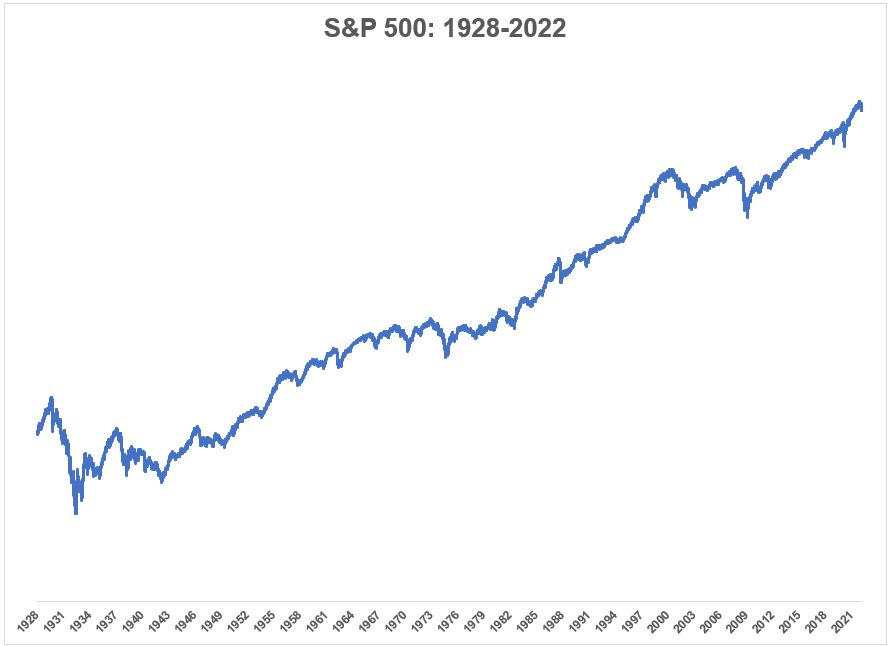
Attempting to time the market – buying at the absolute bottom and selling at the absolute top – is notoriously difficult, even for professional investors. A more effective strategy for most individual investors is to adopt a long-term perspective and utilize dollar-cost averaging. This involves investing a fixed amount of money at regular intervals, regardless of market fluctuations. When prices are high, your fixed investment buys fewer shares; when prices are low, it buys more. Over time, this strategy helps to average out the purchase price and reduces the risk associated with investing a lump sum at an inopportune moment. It also encourages discipline and helps investors avoid emotional decisions driven by short-term market noise, aligning with the often upward long-term trend of well-managed markets.
Staying Informed and Consulting Experts
The financial landscape is dynamic and complex. Staying informed about economic news, corporate developments, and geopolitical events is crucial for understanding market shifts. However, for many, processing this vast amount of information and translating it into actionable investment strategies can be overwhelming. This is where the value of consulting qualified financial advisors becomes clear. Financial professionals can offer personalized advice tailored to individual financial goals, risk tolerance, and time horizons. They can help investors navigate complex market conditions, construct diversified portfolios, and make informed decisions that align with a sound long-term financial plan. Their expertise can be invaluable in filtering out noise and focusing on strategies that are most likely to yield positive outcomes in an ever-evolving market.
The stock market’s current upward momentum is a multifaceted phenomenon, driven by economic resilience, corporate profitability, a hopeful outlook on interest rates, and the transformative power of technological innovation, particularly AI. While these drivers paint a largely optimistic picture, prudent investors must remain aware of potential headwinds such as geopolitical instability, persistent inflation, and valuation concerns. By embracing diversification, maintaining a long-term perspective, and seeking expert guidance, investors can navigate this dynamic environment with greater confidence and position themselves for sustained financial growth.
aViewFromTheCave is a participant in the Amazon Services LLC Associates Program, an affiliate advertising program designed to provide a means for sites to earn advertising fees by advertising and linking to Amazon.com. Amazon, the Amazon logo, AmazonSupply, and the AmazonSupply logo are trademarks of Amazon.com, Inc. or its affiliates. As an Amazon Associate we earn affiliate commissions from qualifying purchases.