
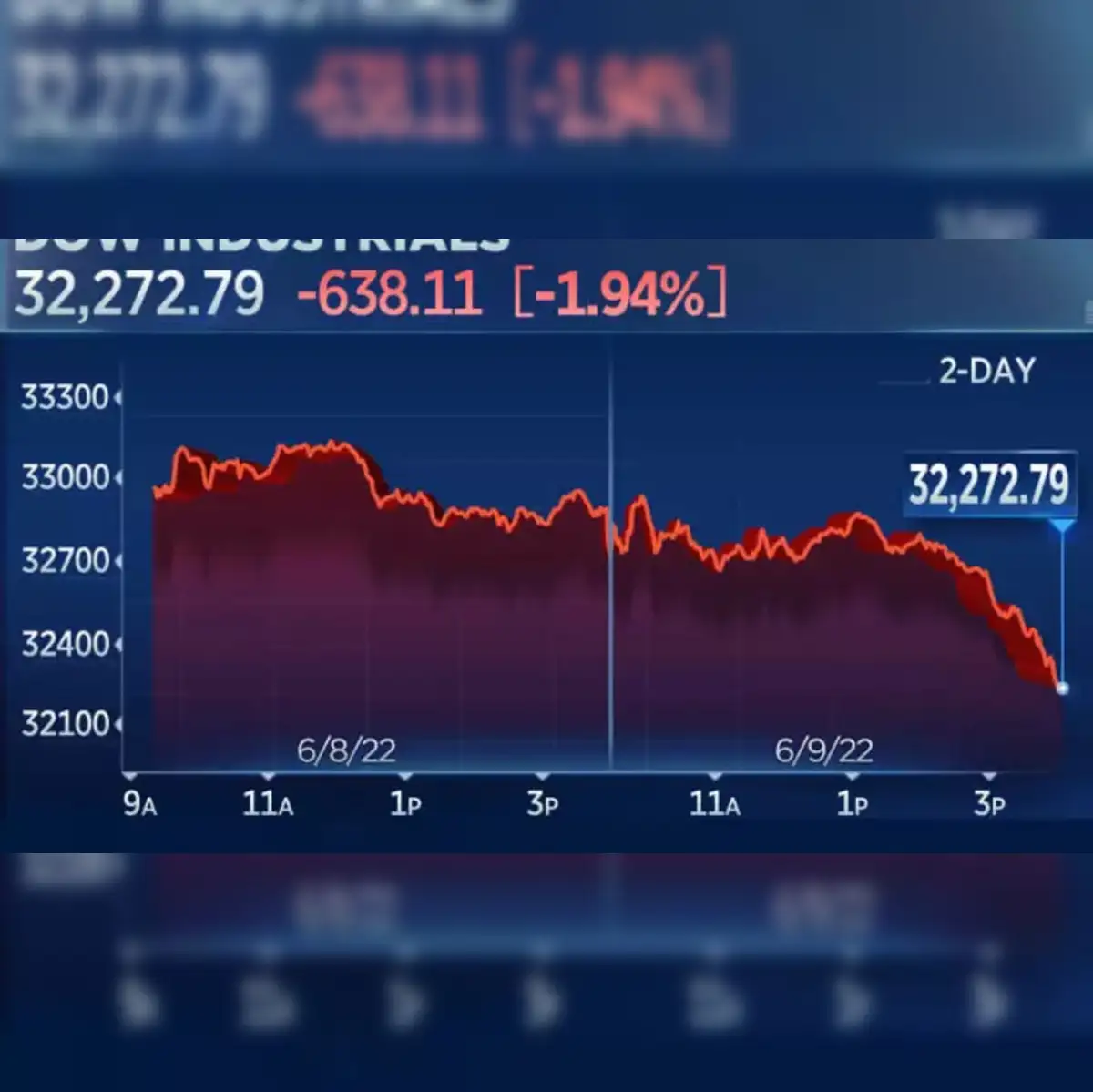
The Dow Jones Industrial Average (DJIA) is more than just a number on a screen; it is a pulse check for the American economy. Comprising 30 prominent, “blue-chip” companies listed on stock exchanges in the United States, the Dow serves as a critical barometer for investor sentiment. When the Dow faces a “red day,” investors, from retail enthusiasts to institutional giants, immediately ask the same question: Why is the Dow Jones down today?
Market fluctuations are rarely the result of a single isolated event. Instead, they are the culmination of complex, interlocking factors ranging from central bank policies to global geopolitical shifts. Understanding why the market is retreating requires a deep dive into the macroeconomic landscape, corporate performance, and the psychological state of the investing public.

The Weight of Macroeconomic Indicators and Monetary Policy
The most frequent catalyst for a downward move in the Dow Jones is the shifting landscape of macroeconomic policy, specifically the actions taken by the Federal Reserve. Because the Dow consists of massive, capital-intensive corporations, any change in the cost of money has an immediate and profound impact on their valuations.
The Role of Interest Rates and the Federal Reserve
In the modern financial era, the Federal Reserve is the primary driver of market direction. When the Fed raises interest rates to combat inflation, it effectively increases the cost of borrowing for both consumers and corporations. For the 30 companies in the Dow—ranging from industrial giants like Caterpillar to financial powerhouses like JPMorgan Chase—higher rates mean higher debt-servicing costs and potentially lower profit margins.
When the Dow is down, it is often because investors are reacting to “hawkish” signals from central bankers. If the Fed suggests that rates will remain “higher for longer,” the discounted future cash flows of these companies become less valuable in today’s terms. This leads to a natural repricing of equities, causing the index to slide as investors move capital into “safer” fixed-income assets like Treasury bonds.
Inflationary Pressures and Consumer Price Index (CPI) Data
Inflation is the silent enemy of a bull market. When Consumer Price Index (CPI) or Producer Price Index (PPI) data comes in higher than analysts expected, the Dow often reacts with a sharp sell-off. High inflation erodes the purchasing power of consumers, leading to decreased demand for the products and services offered by Dow components like Apple, Nike, or Disney.
Furthermore, persistent inflation signals to the market that the Federal Reserve may need to become even more aggressive with rate hikes. This “inflation anxiety” creates a feedback loop: higher prices lead to lower consumer spending, which leads to lower corporate earnings, which ultimately leads to a lower Dow Jones.
Corporate Earnings and Fundamental Performance
While macroeconomic trends set the stage, the individual performance of the companies within the index provides the script. The Dow Jones is a price-weighted index, meaning companies with higher stock prices have a larger influence on the index’s daily movement.
The Impact of Blue-Chip Earnings Reports
During earnings season, the Dow can experience significant volatility based on the quarterly reports of its constituents. If a heavyweight like UnitedHealth Group or Goldman Sachs reports a miss on earnings per share (EPS) or revenue, it can single-handedly drag the entire index down several dozen points.
However, a “down day” isn’t always about the past quarter’s numbers. Often, a company will report record profits, yet its stock price—and consequently the Dow—will fall. This occurs when the company fails to meet the “whisper numbers” (unofficial expectations) of Wall Street or when the underlying data reveals cracks in the business model, such as rising operational costs or shrinking margins due to supply chain inefficiencies.
Guidance and Growth Outlooks
Investors are forward-looking creatures. They buy a stock not for what the company did yesterday, but for what they believe it will earn tomorrow. If a Dow component issues “weak guidance”—a forecast suggesting that future sales or profits will be lower than previously expected—the market reacts swiftly.
A downward revision in guidance from a bellwether company like Microsoft or Boeing serves as a warning sign for the broader sector. It suggests that the “easy growth” phase may be over, prompting institutional investors to trim their positions. When several Dow companies provide cautious outlooks simultaneously, it creates a synchronized sell-off that manifests as a significant decline in the index.
Geopolitical Tensions and Global Market Sentiment

We live in a hyper-connected global economy. The companies that make up the Dow Jones are multinational entities that derive a significant portion of their revenue from overseas markets. Consequently, instability anywhere in the world can lead to a decline in the Dow.
International Conflicts and Supply Chain Disruptions
Geopolitical instability, such as trade wars, regional conflicts, or diplomatic standoffs, introduces uncertainty into the market. Uncertainty is the one thing Wall Street hates more than bad news. When tensions rise in Eastern Europe, the Middle East, or the South China Sea, investors often retreat from “risk-on” assets like stocks.
These conflicts often lead to supply chain disruptions that directly hit the bottom lines of Dow companies. For example, industrial and tech companies in the index rely on a steady flow of raw materials and components from across the globe. If a geopolitical event threatens that flow, the market prices in the risk of increased costs and delayed production, leading to a downward trend in the index.
Energy Prices and Commodity Volatility
The Dow Jones includes energy giants and companies heavily dependent on fuel and raw materials. A sudden spike in oil prices—often caused by geopolitical maneuvering or production cuts by OPEC+—can act as a tax on the entire economy.
While higher oil prices might benefit an energy constituent like Chevron, they hurt almost everyone else. Higher energy costs increase the price of manufacturing, shipping, and travel. For Dow components like American Express (through reduced travel spend) or Walmart (through higher logistics costs), rising energy prices are a major headwind. When the market senses that energy costs will stay elevated, it often results in a broad sell-off across the industrial and consumer sectors of the Dow.
Technical Analysis and Market Psychology
Sometimes, the Dow is down not because of a specific news event, but because of the internal mechanics of the stock market itself. Trading is no longer just humans shouting on a floor; it is dominated by high-frequency trading algorithms and “passive” investment vehicles.
Support Levels and Algorithmic Trading
Traders often look at “support levels”—specific price points where an index has historically found a floor. If the Dow Jones breaks below a key psychological level (such as a round number or a 200-day moving average), it can trigger a wave of automated selling.
High-frequency trading (HFT) algorithms are programmed to sell when certain technical triggers are met. This can lead to “cascading” sell-offs, where a small dip turns into a significant drop as computer programs react to the price action of other programs. On these days, the Dow may be down simply because the “technical setup” turned bearish, creating a self-fulfilling prophecy of downward momentum.
The “Fear Index” (VIX) and Investor Sentiment
Market psychology plays a massive role in daily fluctuations. The CBOE Volatility Index, or VIX, is often called the “fear gauge.” When the VIX spikes, it indicates that investors are buying “put options” to protect themselves against a market crash.
A high level of fear leads to “de-risking.” On days when the Dow is down, it is often a sign that institutional portfolio managers are rebalancing their portfolios, moving away from equities and into cash or gold. This “flight to safety” is a common occurrence during periods of political rhetoric, unexpected economic data, or even just general market exhaustion after a long period of gains.
Strategies for Navigating a Downward Trend
For the individual investor, seeing the Dow Jones in the red can be unsettling. However, understanding the why behind the move is the first step toward maintaining a disciplined investment strategy. Financial success is often determined more by how an investor reacts to “down days” than how they celebrate “up days.”
Diversification and Long-Term Perspective
The Dow Jones is an index of 30 stocks. While it is a great indicator, it is not the entire market. Professional wealth management emphasizes the importance of diversification. When the Dow is down due to industrial or financial sector weakness, other areas—such as small-cap stocks, international markets, or alternative assets—may be performing differently.
Maintaining a long-term perspective is vital. Historically, the Dow Jones has recovered from every single downturn it has ever faced. Whether it was the Great Depression, the 2008 financial crisis, or the 2020 pandemic, the trajectory of the Dow over decades has been upward. A “down day” today is often just a blip in a multi-year growth story.
Risk Management in Volatile Markets
Rather than panicking when the Dow drops, seasoned investors use the opportunity to review their risk tolerance. If a 1% or 2% drop in the Dow causes you significant emotional distress, your portfolio may be too heavily weighted in equities.
Down days are also an opportunity for “dollar-cost averaging.” By continuing to invest a fixed amount of money at regular intervals, you buy more shares when prices are low and fewer when prices are high. In the world of finance, a down market is essentially a “sale” on the world’s most successful companies. Understanding the macroeconomic and corporate factors that drive the Dow down today allows you to stay rational, stay invested, and ultimately, build long-term wealth.
aViewFromTheCave is a participant in the Amazon Services LLC Associates Program, an affiliate advertising program designed to provide a means for sites to earn advertising fees by advertising and linking to Amazon.com. Amazon, the Amazon logo, AmazonSupply, and the AmazonSupply logo are trademarks of Amazon.com, Inc. or its affiliates. As an Amazon Associate we earn affiliate commissions from qualifying purchases.