
For the modern investor, timing is not just a component of strategy; it is the very foundation upon which successful trades are built. Whether you are a day trader looking to capitalize on minute-by-minute fluctuations or a long-term investor checking the health of your retirement portfolio, the question “when does the stock market close today?” is often the first step in a daily financial ritual. However, the answer is rarely as simple as a single timestamp. To truly navigate the financial markets, one must understand the nuances of standard hours, extended sessions, holiday schedules, and the strategic importance of the closing bell.
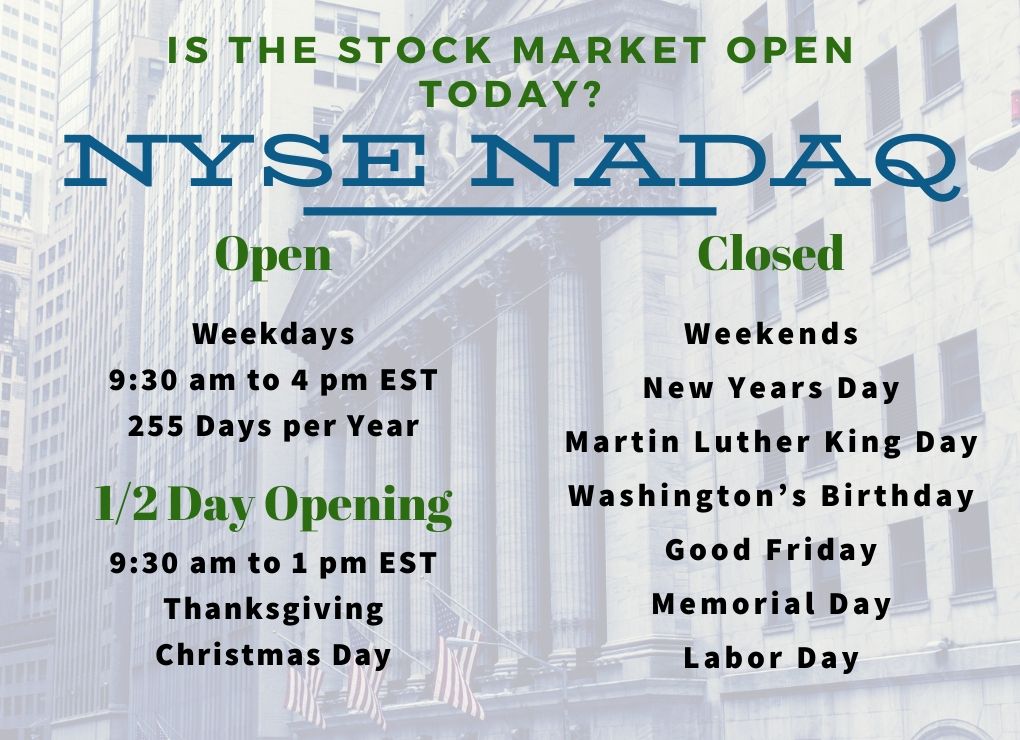
In the United States, the primary equity markets—the New York Stock Exchange (NYSE) and the Nasdaq Stock Market—operate on a synchronized schedule that dictates the flow of global capital. Understanding this schedule is the first pillar of financial literacy for anyone looking to master the “Money” niche.
The Standard Trading Window: NYSE and NASDAQ
The heart of the American financial system beats between 9:30 AM and 4:00 PM Eastern Time (ET), Monday through Friday. These are known as “Core Trading Hours.” During this six-and-a-half-hour window, liquidity is at its peak, spreads are generally at their narrowest, and the vast majority of retail and institutional volume is executed.
The Significance of the “Closing Bell”
The 4:00 PM ET closing bell is more than just a ceremonial sound. It marks the official end of the day’s primary price discovery. At this moment, the “closing price” is established—a figure that will be used by mutual funds to calculate Net Asset Value (NAV), by technical analysts to plot charts, and by media outlets to report the day’s gains or losses. The closing bell represents a consensus of value for that specific trading day.
High Volatility and the “Power Hour”
The final hour of trading, from 3:00 PM to 4:00 PM ET, is colloquially known as the “Power Hour.” This period often sees a massive surge in volume as institutional investors rebalance their portfolios and day traders rush to close out their intraday positions. For a retail investor, understanding that the market “closes” at 4:00 PM means recognizing that the most intense price action often occurs in the sixty minutes leading up to that deadline.
Market-on-Close (MOC) Orders
One of the reasons the 4:00 PM close is so critical is the use of Market-on-Close orders. These are orders submitted by traders to be executed as near to the closing price as possible. Because these orders accumulate throughout the day and are executed right at the finish line, they can cause significant “pumps” or “dumps” in a stock’s price in the final seconds of the session.
Beyond the 4 PM Bell: Understanding After-Hours Trading
While the official “close” is at 4:00 PM, the digital nature of modern finance means that the lights never truly go out. Electronic Communication Networks (ECNs) allow for “Extended-Hours Trading,” which occurs both before the market opens and after it officially closes.
The Post-Market Session
Post-market trading typically runs from 4:00 PM to 8:00 PM ET. This session is particularly vital during earnings season. When a major company like Apple or Microsoft releases its quarterly results at 4:05 PM, the stock price can move violently in the after-hours market. Investors who only pay attention to the 4:00 PM close may wake up the next morning to find their holdings have changed value significantly without a single share being traded during “normal” hours.
Pre-Market Sessions
Similarly, the pre-market session allows for trading as early as 4:00 AM ET, though most retail activity begins around 8:00 AM ET. This session is where the market reacts to overnight news, international economic data, or geopolitical events that occurred while US traders were asleep.
Risks of Extended-Hours Trading
It is crucial for those in the personal finance space to recognize that just because you can trade after the 4:00 PM close doesn’t mean you should. After-hours trading is characterized by significantly lower liquidity. This means there are fewer buyers and sellers, which leads to wider “bid-ask spreads” (the difference between what a buyer will pay and a seller will accept). A stock that is stable during the day might jump 5% on a small trade after hours simply because there wasn’t enough volume to absorb the order.
The Calendar Factor: Holidays and Early Closures

If you find yourself asking “when does the stock market close today?” on a Friday before a long weekend or a holiday, the answer might be “it doesn’t open at all” or “it closes early.” The US stock market follows a specific holiday calendar that every investor should bookmark.
Standard Market Holidays
The NYSE and Nasdaq are closed on several key federal holidays, including:
- New Year’s Day
- Martin Luther King, Jr. Day
- Presidents’ Day
- Good Friday
- Memorial Day
- Juneteenth National Independence Day
- Independence Day (July 4th)
- Labor Day
- Thanksgiving Day
- Christmas Day
Early Closures and Half-Days
There are specific days when the market closes early, typically at 1:00 PM ET. These usually occur on the day after Thanksgiving (Black Friday) and sometimes on Christmas Eve or July 3rd, depending on which day of the week the holiday falls. Trading on these half-days is often characterized by very low volume, as many institutional “market makers” are away on vacation.
The “T+1” Settlement Rule
The closing time also dictates the settlement of trades. As of 2024, the US has moved to a “T+1” settlement cycle. This means that if you sell a stock before the 4:00 PM close today, the transaction officially settles, and the cash becomes available, on the next business day. Understanding the daily close is therefore essential for managing cash flow and liquidity within a personal brokerage account.
Global Perspectives: How International Markets Impact the US Close
The US stock market does not exist in a vacuum. Because we live in a globalized economy, the “close” of the US market is often influenced by what is happening in London, Tokyo, or Hong Kong.
The European Overlap
The London Stock Exchange and other major European markets are open during the early morning hours of the US session. The “overlap” period (roughly 9:30 AM to 11:30 AM ET) is often the most liquid time of the day globally, as both European and American traders are active simultaneously. When the European markets close (usually around 11:30 AM ET), the US market often experiences a “mid-day lull” in volume.
The Asian Opening
As the US market closes at 4:00 PM ET, markets in Asia—such as the Tokyo Stock Exchange and the Hang Seng in Hong Kong—are preparing to open for their next day. News that breaks during the US after-hours session often sets the tone for the Asian open, which in turn creates a feedback loop that affects the US pre-market the following morning.
The 24-Hour Cycle of Futures
While individual stocks have a hard close at 4:00 PM (with extended hours until 8:00 PM), stock index futures (like the S&P 500 E-mini) trade nearly 24 hours a day, five days a week. For serious investors, watching the futures market after the 4:00 PM close provides a “temperature check” on where the market is likely to head the next day.
Strategic Considerations for the Closing Bell
Knowing when the market closes is one thing; knowing how to act during those final minutes is what separates amateur investors from professionals. The close is a period of high emotion and high stakes.
The Closing Auction
At 4:00 PM, the NYSE and Nasdaq conduct a “Closing Auction.” This is a highly regulated, automated process designed to match as many buy and sell orders as possible at a single price. This auction is the primary mechanism for institutional “rebalancing.” For instance, if a stock is being added to an index like the S&P 500, billions of dollars of that stock must be bought exactly at the closing price. This makes the final seconds of the trading day some of the most technologically intensive moments in the world of finance.
Price Discovery vs. Noise
Many retail investors make the mistake of overreacting to “noise” at the close. Because of the aforementioned MOC orders and auctions, a stock might see a sudden 1% spike or drop in the final 30 seconds. Often, this move is purely mechanical and has nothing to do with the company’s fundamental health. Successful money management requires the discipline to look past the “closing print” and analyze the broader trend.
Managing Emotions and “Revenge Trading”
The approaching close can trigger a psychological phenomenon known as “FOMO” (Fear Of Missing Out). Traders who haven’t made a profit during the day might feel a desperate urge to “force” a trade before the 4:00 PM deadline. This is often when the most expensive mistakes are made. In personal finance, the goal is consistent, disciplined growth. Sometimes, the best move to make when the market is closing is to simply close your laptop and wait for the next day’s opening bell.
In conclusion, the question “when does the stock market close today?” is the gateway to a much deeper understanding of market mechanics. Whether it is the standard 4:00 PM ET finish, the extended volatility of after-hours trading, or the quietude of a holiday early-close, every timestamp in the financial world carries its own set of rules and opportunities. By mastering these hours, you position yourself not just as an observer of the markets, but as a sophisticated participant in the world of money.
aViewFromTheCave is a participant in the Amazon Services LLC Associates Program, an affiliate advertising program designed to provide a means for sites to earn advertising fees by advertising and linking to Amazon.com. Amazon, the Amazon logo, AmazonSupply, and the AmazonSupply logo are trademarks of Amazon.com, Inc. or its affiliates. As an Amazon Associate we earn affiliate commissions from qualifying purchases.