
For investors, traders, and anyone engaged with the financial world, knowing the precise operating hours of the stock market is not merely a matter of trivia; it’s a fundamental aspect of strategy, risk management, and effective decision-making. The rhythm of the market, marked by the opening and closing bells, dictates when trades can be executed, when news will have its most immediate impact, and when the financial landscape shifts. While the question “When does the stock market close today?” seems straightforward, the answer often involves nuances ranging from standard operating hours and official holidays to less common early closures and the ever-present extended trading sessions. Understanding these intricacies is crucial for navigating the dynamic world of equities and optimizing your investment approach, ensuring you’re always prepared for when the market is live and when it rests.
Understanding Regular Stock Market Operating Hours
The heartbeat of the financial world often resonates from Wall Street, where the major U.S. stock exchanges set the pace for global markets. Knowing these core hours is the first step in aligning your financial activities with market movements.
The Standard Wall Street Schedule: NYSE and NASDAQ
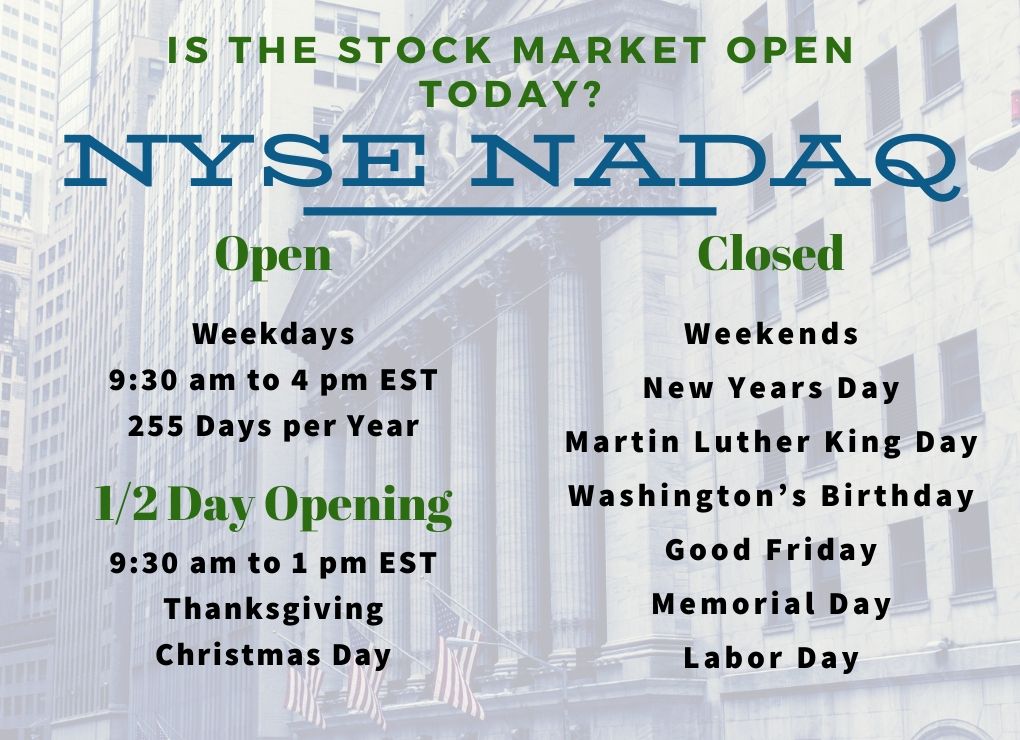
In the United States, the two primary stock exchanges, the New York Stock Exchange (NYSE) and the Nasdaq Stock Market (NASDAQ), largely adhere to the same trading schedule for their regular sessions. Both exchanges open their doors to general trading at 9:30 AM Eastern Time (ET) and conclude the regular trading day with the closing bell at 4:00 PM ET. This six-and-a-half-hour window is when the vast majority of trading volume occurs, characterized by intense activity, price discovery, and the execution of millions of orders.
The NYSE, known for its iconic opening and closing bell ceremonies, facilitates trading in a significant portion of the world’s largest companies. NASDAQ, on the other hand, is famous for listing technology giants and operates purely as an electronic exchange. Despite their operational differences and the types of companies they attract, their regular trading hours are harmonized to ensure consistency and liquidity across the U.S. market. For investors, this synchronized schedule simplifies planning, allowing them to track and react to market movements within a clearly defined timeframe.
How Time Zones Impact Global Market Closures
While the focus for many U.S.-based investors is naturally on domestic exchanges, it’s vital to recognize that financial markets operate globally, around the clock, thanks to different time zones. When Wall Street closes, other major markets are either just opening or have been active for hours. For instance:
- London Stock Exchange (LSE): Typically operates from 8:00 AM to 4:30 PM Greenwich Mean Time (GMT).
- Tokyo Stock Exchange (TSE): Generally runs from 9:00 AM to 3:00 PM Japan Standard Time (JST), with a lunch break.
- Shanghai Stock Exchange (SSE): Trades from 9:30 AM to 3:00 PM China Standard Time (CST), also with a lunch break.
The staggered nature of these global market hours means that financial news and events occurring while U.S. markets are closed can significantly influence investor sentiment and stock prices once the NYSE and NASDAQ reopen. Understanding this global interconnectedness, even if you’re not directly trading international stocks, provides a broader perspective on potential market catalysts and the overall financial climate. It underscores that “today’s” market closing is just one part of a continuous, worldwide financial conversation.
Navigating Market Holidays and Special Closures
The regular 9:30 AM to 4:00 PM ET schedule is the norm, but there are specific days and situations when the market deviates from this routine. Recognizing these exceptions is paramount for investors to avoid missed opportunities or unexpected portfolio movements.
Official Market Holidays: When the Doors Remain Shut
Both the NYSE and NASDAQ observe a set of official holidays throughout the year, during which the exchanges are completely closed for trading. These typically align with U.S. federal holidays, giving market participants a pause to observe national events or spend time with family. Key market holidays include:
- New Year’s Day: January 1
- Martin Luther King, Jr. Day: Third Monday in January
- Presidents’ Day (Washington’s Birthday): Third Monday in February
- Good Friday: The Friday before Easter
- Memorial Day: Last Monday in May
- Juneteenth National Independence Day: June 19
- Independence Day: July 4
- Labor Day: First Monday in September
- Thanksgiving Day: Fourth Thursday in November
- Christmas Day: December 25
If a holiday falls on a weekend, the market typically observes it on the preceding Friday or the following Monday. For instance, if July 4th is a Saturday, the market might be closed on Friday, July 3rd. It’s crucial for investors to consult the official calendars published by the NYSE and NASDAQ at the beginning of each year, as exact observance dates for weekend holidays can vary and are subject to official announcements. During these full market closures, no regular trading occurs, and any pending orders are typically held or canceled, depending on their type and your broker’s policy.
Half-Day Sessions and Early Closures
Beyond full holidays, there are specific occasions when the stock market operates on a reduced schedule, closing earlier than the standard 4:00 PM ET. These half-day sessions are less frequent but equally important to note. The most common examples include:
- The Day After Thanksgiving (Black Friday): The market often closes at 1:00 PM ET. This early closure allows market participants to observe the holiday weekend, though it’s typically a day with reduced trading volume.
- Christmas Eve: If Christmas Eve falls on a weekday, the market usually closes early, often at 1:00 PM ET, leading into the Christmas holiday.
- New Year’s Eve: Similarly, if New Year’s Eve falls on a weekday, the market may also have an early close, typically at 1:00 PM ET, to usher in the New Year.
These early closures can affect market liquidity and volatility. With fewer hours for trading, price movements can sometimes be exaggerated, and it’s essential for day traders and active investors to adjust their strategies accordingly. Financial news outlets and brokerage platforms typically provide ample warning regarding these shortened trading days, making it easier for investors to plan their activities. Staying informed about these non-standard hours is a critical component of successful market navigation.
Beyond the Bell: Exploring Extended Trading Hours
The belief that stock trading strictly adheres to the 9:30 AM to 4:00 PM ET window is an oversimplification in today’s electronic age. Modern financial markets offer avenues for trading outside these traditional “regular” hours through what are known as extended trading sessions. These include pre-market and after-hours trading, enabling investors to react to news and execute trades at virtually any time.
Pre-Market Trading: Getting a Head Start
Pre-market trading refers to the period before the regular market opens. While specific hours can vary slightly by brokerage, pre-market sessions typically begin as early as 4:00 AM ET and run until the opening bell at 9:30 AM ET. This window allows investors and institutions to trade based on news, earnings reports, or global market movements that occur overnight or early in the morning, before the broader market reacts.
For instance, if a company announces its quarterly earnings at 7:00 AM ET, investors can begin buying or selling shares in the pre-market session in anticipation of how the regular market will react. However, pre-market trading is generally characterized by lower liquidity and wider bid-ask spreads compared to regular hours. This means it can be harder to execute trades at desired prices, and volatility can be significantly higher due to thinner trading volumes. It is predominantly used by institutional investors and experienced traders who can leverage its potential for early action, but it carries increased risks for less experienced participants.
After-Hours Trading: Post-Market Activity
Conversely, after-hours trading takes place once the regular market closes at 4:00 PM ET. These sessions typically extend until 8:00 PM ET, though some platforms may offer slightly different windows. Similar to pre-market, after-hours trading provides an opportunity for investors to respond to company announcements, economic data, or geopolitical events that are released after the closing bell.
Many companies schedule their earnings reports or significant news releases to occur after the regular market closes, aiming to allow investors time to digest the information before the next day’s opening. After-hours trading platforms facilitate this immediate reaction. Like pre-market trading, after-hours sessions often suffer from lower liquidity and increased volatility. Institutional traders and market makers dominate these periods, making it challenging for individual retail investors to get favorable prices. Understanding the dynamics of both pre-market and after-hours trading is crucial for those who wish to extend their market engagement beyond traditional hours, but it necessitates a careful consideration of the inherent risks.
Why Extended Hours Matter for Modern Investors
The existence of extended trading hours fundamentally changes the landscape of investing. It provides flexibility and opportunities to react promptly to information, but it also introduces new complexities and risks.
For active traders, extended hours can be a strategic advantage, allowing them to capitalize on immediate price movements driven by fresh news. For long-term investors, monitoring extended hours might simply be about understanding how major news could impact their portfolio the next day, rather than actively trading. Regardless of your investment style, being aware of these sessions is essential. They highlight the 24/7 nature of financial information flow and the continuous evolution of market access, underscoring that the market’s influence extends far beyond the traditional 9:30 AM to 4:00 PM ET window.
The Strategic Importance of Knowing Market Hours
Beyond mere scheduling, understanding when the stock market opens and closes carries significant strategic weight for investors. It influences how orders are processed, how risk is managed, and even the psychological approach to trading and investing.
Impact on Order Execution and Trade Planning
Market hours directly dictate the validity and execution of various trade orders. A market order, for instance, is an instruction to buy or sell immediately at the best available current price. If placed during regular hours, it usually executes swiftly. However, placing a market order when the market is closed can lead to unexpected outcomes. Many brokers will hold such orders until the next opening, where the execution price might be significantly different from the closing price of the previous day.
Limit orders, which specify a maximum buying price or minimum selling price, and stop orders, designed to limit potential losses, also interact uniquely with market hours. Orders placed with “good-till-canceled” (GTC) status can remain active across multiple trading days, including through extended hours if specified. However, orders designated “day orders” will expire at the end of the regular trading session if not filled. For day traders, aligning their strategies with the specific market hours is paramount, as the entire framework of their operations revolves around the real-time execution of trades within those windows. Strategic planning, therefore, must incorporate market hours to avoid delays, unexpected prices, or expired orders.
Managing Risk and Volatility During Off-Hours
The periods when the regular market is closed are often when significant news breaks – be it corporate earnings, economic reports, or geopolitical developments. These events can trigger substantial price movements in pre-market or after-hours trading, which then translate into “gap” openings or closures when the regular market resumes. A stock might close at $100 on Monday and open at $95 on Tuesday if negative news emerged overnight.
Understanding these dynamics is crucial for risk management. Holding a position overnight or over a weekend means exposing your portfolio to the risk of such gap movements. Investors must decide whether to close out positions before the market closes to mitigate overnight risk or to hold on, potentially benefiting from positive news but also risking adverse reactions. This is particularly relevant for options traders, where time decay and volatility can drastically alter option values during off-hours. Actively tracking news schedules and market calendars allows investors to anticipate these periods of potential volatility and adjust their positions or hedging strategies accordingly.
Psychological Aspects: The Urge to Trade vs. Patience
The defined boundaries of market hours also play a psychological role in investing. For many, the market’s closure provides a natural pause, an opportunity to step away, reflect on the day’s events, and avoid impulsive decisions driven by real-time price fluctuations. The “fear of missing out” (FOMO) can be intense during market hours, pushing some investors into hasty trades. The closure forces a moment of contemplation, encouraging a more disciplined and patient approach.
Conversely, the lure of extended hours can sometimes lead to over-trading or emotional decisions based on limited liquidity and heightened volatility. Disciplined investors often use market closures to process information calmly, conduct research, and formulate strategies for the next trading day without the pressure of live market movements. This mental separation is vital for maintaining objectivity and preventing emotional trading, reinforcing the idea that sometimes the best decision is no decision at all until the appropriate time.
Staying Informed: Your Resources for Market Hours
Given the dynamic nature of market schedules, relying on memory alone is ill-advised. Fortunately, a wealth of resources is available to keep investors updated on current and future market operating hours.
Official Exchange Websites and Financial News Outlets
The most authoritative sources for market hours are the exchanges themselves. The New York Stock Exchange (NYSE) and Nasdaq Stock Market (NASDAQ) websites publish detailed calendars outlining regular trading days, official holidays, and any scheduled early closures for the entire year. These are the definitive references for U.S. market participants.
In addition, reputable financial news outlets such as Bloomberg, Reuters, The Wall Street Journal, and CNBC consistently report on upcoming market holidays and special trading hours. They often feature dedicated sections or articles that serve as convenient reminders for their readership, ensuring that investors are well-informed about any deviations from the standard schedule.
Brokerage Platforms and Financial Calendars
Your chosen brokerage platform is another excellent and often integrated source of information. Most online brokerage accounts display the current market status (open/closed) and provide alerts or notifications for upcoming holidays and early closures. Many platforms also incorporate comprehensive financial calendars that not only show market holidays but also highlight earnings release dates, economic data announcements, and other events that could impact trading activity.
Beyond brokerage-specific tools, numerous third-party financial apps and websites offer global market calendars. These tools are particularly useful for investors with diversified portfolios that include international equities, as they provide an overview of operating hours for exchanges worldwide, helping to track global financial flows and potential influences on domestic markets.

The Dynamic Nature of Market Schedules
While standard hours and holidays are generally predictable, it’s important to remember that market schedules can occasionally be subject to change due to unforeseen circumstances. Extremely rare events such as severe weather emergencies, national mourning periods, or significant technical glitches can prompt unscheduled early closures or even full-day cancellations. While these occurrences are highly uncommon, they underscore the importance of staying abreast of real-time financial news, especially during periods of elevated uncertainty. Always double-check official sources or your brokerage’s announcements if there’s any doubt, ensuring you are operating with the most current and accurate information available.
In conclusion, understanding “when the stock market closes today,” and indeed every day, is far more than a simple time check. It’s a foundational element of effective investing, encompassing strategic planning, risk mitigation, and emotional discipline. By leveraging the available resources and staying attuned to both regular schedules and special circumstances, investors can navigate the market with greater confidence and make more informed decisions, regardless of whether the bells are ringing or resting.
aViewFromTheCave is a participant in the Amazon Services LLC Associates Program, an affiliate advertising program designed to provide a means for sites to earn advertising fees by advertising and linking to Amazon.com. Amazon, the Amazon logo, AmazonSupply, and the AmazonSupply logo are trademarks of Amazon.com, Inc. or its affiliates. As an Amazon Associate we earn affiliate commissions from qualifying purchases.