
For over a century, the question “What did the Dow close at?” has served as the shorthand for “How is the economy doing?” Whether it is shouted across a busy trading floor or typed into a smartphone search bar at the end of a workday, the closing price of the Dow Jones Industrial Average (DJIA) remains one of the most influential metrics in the world of finance. For the individual investor, understanding this number goes beyond simple curiosity; it is an essential component of tracking market sentiment, evaluating portfolio health, and making informed decisions about long-term wealth accumulation.
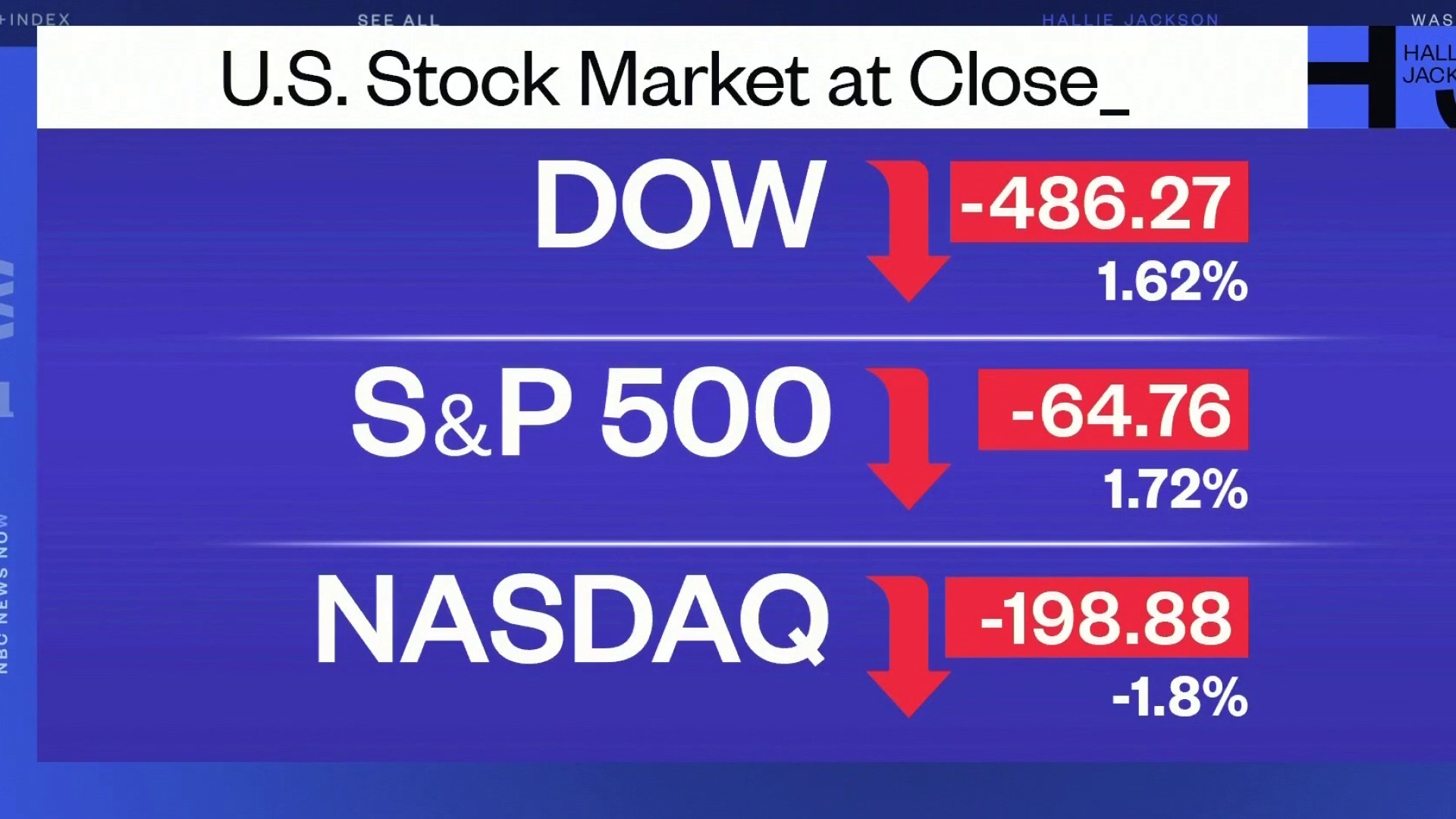
In this comprehensive guide, we will explore the mechanics of the Dow, why its daily closing price dictates the rhythm of global markets, and how you can use this data to refine your personal investment strategy.
The Anatomy of the Dow Jones Industrial Average
To understand why the closing price matters, one must first understand what the index actually represents. Created by Charles Dow and Edward Jones in 1896, the DJIA was designed to provide a snapshot of the health of the American industrial sector. Today, while the “industrial” label remains, the index has evolved to include companies from diverse sectors, including technology, healthcare, and retail.
The Price-Weighted Methodology
Unlike the S&P 500 or the Nasdaq, which are market-capitalization-weighted, the Dow is a price-weighted index. This means that companies with higher stock prices have a greater influence on the index’s daily movement than those with lower prices, regardless of the company’s actual total size. For example, a $5 change in a high-priced stock like UnitedHealth Group will move the Dow much more than a $5 change in a lower-priced stock like Coca-Cola. Understanding this nuance is critical for investors who wonder why the Dow might be “down” even when most stocks in their portfolio are “up.”
The Selection of the “Blue-Chip” Thirty
The Dow consists of only 30 stocks, often referred to as “Blue-Chip” companies. These are large, well-established, and financially sound corporations that represent a cross-section of the U.S. economy. Because the membership is so exclusive, being added to or removed from the Dow is a major corporate event. The selection is handled by a committee at S&P Dow Jones Indices, which looks for companies with an excellent reputation, sustained growth, and interest to a large number of investors.
The Dow Divisor: Decoding the Math
You might notice that the Dow is currently valued in the tens of thousands, yet the 30 stocks it tracks are priced much lower. This is due to the “Dow Divisor.” To ensure that stock splits, spin-offs, and other structural changes don’t artificially move the index, a mathematical constant—the divisor—is used. Every time a component stock splits, the divisor is adjusted to maintain historical continuity, ensuring that the closing price today is comparable to the closing price decades ago.
The Psychological Impact of the Daily Close
The “closing bell” at the New York Stock Exchange is more than just a tradition; it marks the finality of the day’s sentiment. When an investor asks what the Dow closed at, they are often looking for a psychological anchor. The daily close represents the collective consensus of millions of buyers and sellers at a specific point in time.
Market Sentiment and the “Closing Bell”
The final minutes of trading, often called the “power hour,” are frequently the most volatile. Institutions and hedge funds often wait until the end of the day to finalize their positions. Therefore, a “strong close”—where the Dow finishes at its highs of the day—suggests bullish momentum that may carry over into the next morning. Conversely, a “weak close” can signal that investors are nervous and prefer to hold cash overnight.
Points vs. Percentages: A Critical Distinction
Financial news headlines often scream that the Dow is “up 500 points.” To a novice investor, this sounds like a massive shift. However, as the index grows larger, a 500-point move represents a smaller percentage of the total than it once did. Professional investors focus on the percentage change. A 1% move is significant; a 3% move is rare and noteworthy. Learning to look past the point totals to the percentage change helps maintain a rational perspective on market volatility.
The Friday Effect and Weekend Risk
The closing price on a Friday holds particular weight. Because markets are closed on Saturday and Sunday, investors must decide if they are comfortable holding their positions through the weekend, during which geopolitical events or economic data could break. A strong Friday close often indicates high confidence in the underlying economic stability, while a “sell-off” into a Friday close suggests a “risk-off” environment where investors are seeking safety.
Fundamental Drivers Behind the Numbers

The Dow does not move in a vacuum. When you see a significant change in the closing price, it is usually a reaction to specific economic catalysts. Identifying these drivers is key to transitioning from a passive observer to an informed investor.
Monetary Policy and the Federal Reserve
The single most influential driver of the Dow in the modern era is the Federal Reserve. Interest rates dictate the cost of borrowing for corporations and the attractiveness of stocks versus bonds. When the Fed signals a “dovish” stance (lower rates), the Dow typically closes higher as investors anticipate cheaper capital and higher earnings. When the Fed is “hawkish” (raising rates to fight inflation), the Dow often faces downward pressure.
Corporate Earnings Reports
Four times a year, during “earnings season,” the Dow’s closing price becomes a scoreboard for corporate America. Because the Dow only tracks 30 companies, a single disappointing earnings report from a heavyweight like Goldman Sachs or Apple can drag the entire index down. Investors analyze these reports not just for profit numbers, but for “forward guidance”—the company’s prediction of future performance.
Inflation and Macroeconomic Indicators
Data points such as the Consumer Price Index (CPI), unemployment rates, and Gross Domestic Product (GDP) growth are the fuel for market movements. If inflation is higher than expected, the Dow might close lower as investors fear a squeeze on consumer spending and a potential response from the Fed. Monitoring the economic calendar allows you to anticipate why the Dow might be experiencing a volatile closing session.
How to Use Daily Market Data in Your Investment Strategy
While the daily closing price of the Dow is a vital pulse check, it should be used as a tool, not a master. Successful personal finance management requires integrating this data into a broader, long-term framework.
Avoiding the Noise of Daily Fluctuations
For the long-term investor, the daily close is often “noise.” It is easy to get caught up in the drama of a 400-point drop, but in the context of a 20-year retirement plan, that drop is usually a minor blip. The danger of checking the Dow’s close too frequently is the temptation to “panic sell” or time the market. History shows that those who stay invested through the Dow’s various peaks and valleys tend to outperform those who try to jump in and out based on daily headlines.
Using the Dow as a Benchmark
When you review your personal portfolio, you should compare your performance to a benchmark like the Dow. If the Dow closed up 10% for the year, but your portfolio only grew by 2%, it may be time to re-evaluate your asset allocation. However, remember that the Dow is purely equity-based. If you have a balanced portfolio of stocks, bonds, and real estate, you should not expect to mirror the Dow’s movements exactly.
Dollar-Cost Averaging and Market Volatility
Investors can use the Dow’s closing prices to implement a dollar-cost averaging (DCA) strategy. By investing a fixed amount of money at regular intervals—regardless of whether the Dow closed “up” or “down”—you buy more shares when prices are low and fewer when prices are high. This removes the emotional burden of the “closing price” and leverages market volatility to your advantage over time.
Modern Tools for Financial Literacy and Tracking
In the digital age, finding out what the Dow closed at is instantaneous, but finding quality analysis is more difficult. To be a successful investor, you must utilize tools that provide context beyond the raw number.
Real-Time vs. Delayed Quotes
Most free websites provide stock quotes with a 15-minute delay. While this is fine for a casual check, active investors use real-time data feeds. Financial dashboards like Bloomberg, CNBC, or Yahoo Finance provide not just the closing price, but a “heat map” of which sectors contributed most to the day’s movement.
Understanding the After-Hours Market
The “closing price” is the price at 4:00 PM EST, but trading doesn’t stop there. Electronic Communication Networks (ECNs) allow for “after-hours” trading. Often, a company will release major news at 4:05 PM, causing the stock to swing wildly. While the official “Dow close” won’t change until the next morning, the after-hours market provides a “sneak peek” at how the index might open the following day.
The Role of Financial News Aggregators
To understand the why behind the Dow’s close, utilize aggregators that synthesize global news. A sudden drop in the Dow might be linked to a currency fluctuation in Europe or a supply chain disruption in Asia. Developing a habit of reading a daily market summary ensures that you are not just tracking numbers, but building a deep understanding of the global financial ecosystem.
In conclusion, “What did the Dow close at?” is more than a question about a number. It is a gateway to understanding the health of the economy, the sentiment of the global investment community, and the trajectory of your own financial future. By looking past the daily points and understanding the mechanics, drivers, and strategic implications of the Dow Jones Industrial Average, you empower yourself to build a more resilient and informed investment portfolio.
aViewFromTheCave is a participant in the Amazon Services LLC Associates Program, an affiliate advertising program designed to provide a means for sites to earn advertising fees by advertising and linking to Amazon.com. Amazon, the Amazon logo, AmazonSupply, and the AmazonSupply logo are trademarks of Amazon.com, Inc. or its affiliates. As an Amazon Associate we earn affiliate commissions from qualifying purchases.