
The financial world is a vast, intricate ecosystem, constantly evolving with new instruments and strategies. Among the myriad of investment vehicles, futures contracts stand out as a powerful, albeit complex, tool for both hedging and speculation. When these contracts are linked to one of the most iconic market indices, the Dow Jones Industrial Average, they become particularly significant, offering a unique window into market sentiment and an opportunity for leveraged trading. Understanding “what is Dow Jones Futures” is crucial for anyone looking to navigate the more advanced echelons of financial markets, whether they are institutional investors, seasoned traders, or curious individuals seeking to expand their financial literacy.
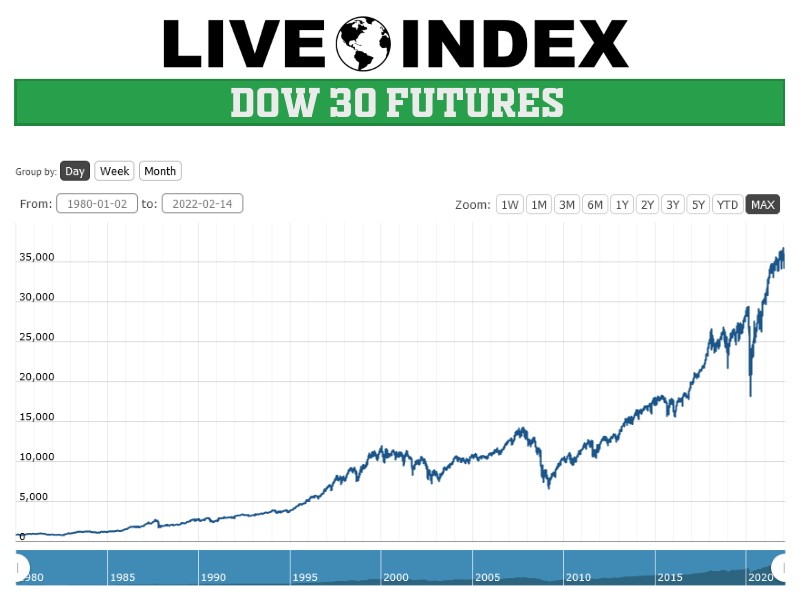
At its core, Dow Jones Futures are standardized, exchange-traded derivative contracts that allow participants to bet on the future value of the Dow Jones Industrial Average (DJIA) at a specified price and date. They are not direct investments in the individual stocks that comprise the DJIA, but rather a contractual agreement whose value is derived from the index itself. This distinction is vital for grasping their utility and inherent risks. To truly comprehend Dow Jones Futures, we must first dissect their foundational components: the Dow Jones Industrial Average and the concept of futures contracts.
Understanding the Dow Jones Industrial Average (DJIA)
Before delving into futures, it’s imperative to have a solid grasp of the underlying asset: the Dow Jones Industrial Average. Often simply referred to as “the Dow,” it is one of the oldest and most frequently quoted market indexes globally.
A Historical Bellwether
Conceived by Charles Dow and Edward Jones in 1896, the DJIA initially tracked the performance of 12 major American industrial companies. Its creation marked a pivotal moment in financial history, providing a simplified yet effective barometer for the health of the U.S. stock market and, by extension, the broader economy. Over a century later, while its methodology has evolved, its role as a key indicator of market sentiment remains undiminished. It has witnessed countless economic cycles, recessions, booms, and technological revolutions, consistently serving as a shorthand for the market’s pulse.
Composition and Calculation
Today, the DJIA comprises 30 prominent, publicly-traded American companies. These are typically large, well-established corporations from diverse sectors, carefully selected to represent a significant portion of the U.S. industrial economy. Unlike market-capitalization-weighted indexes such as the S&P 500, the DJIA is a price-weighted index. This means that stocks with higher share prices have a greater influence on the index’s value than those with lower share prices, regardless of their total market capitalization. The index value is calculated by summing the prices of the 30 stocks and dividing by a factor known as the “Dow Divisor,” which is adjusted for stock splits, dividends, and other structural changes to ensure historical continuity. This unique weighting methodology makes its movements particularly sensitive to shifts in its higher-priced components.
Significance as an Economic Indicator
Despite criticisms regarding its price-weighting and relatively small number of components compared to broader market indexes, the DJIA holds immense psychological and practical significance. Its movements are often reported as a headline indicator of economic performance and investor confidence. A significant rise in the Dow is frequently interpreted as a sign of economic strength and optimism, while a sharp decline can signal impending economic headwinds or market jitters. For many, it remains the go-to benchmark for understanding how the “blue-chip” segment of the American corporate landscape is performing.
Demystifying Futures Contracts
With a foundational understanding of the DJIA, we can now turn our attention to the second core element: futures contracts themselves. Futures are a class of financial derivatives, meaning their value is derived from an underlying asset.
The Concept of Futures
A futures contract is a legal agreement to buy or sell a particular asset at a predetermined price at a specified time in the future. Crucially, both the price and the future date are agreed upon at the time the contract is initiated. This contrasts with options contracts, where the buyer has the option to buy or sell, but not the obligation. In a futures contract, the obligation is firm for both the buyer (who is “long” the contract) and the seller (who is “short” the contract). While futures contracts originated in commodity markets to allow producers and consumers to hedge against price fluctuations (e.g., a farmer selling corn futures to lock in a price before harvest), their application has expanded significantly to include financial assets like stock indexes, interest rates, and currencies.
Key Components of a Futures Contract
Every futures contract is standardized, meaning its terms are uniform across all market participants. Key components include:
- Underlying Asset: The asset upon which the contract’s value is based (e.g., crude oil, gold, the S&P 500, or in our case, the Dow Jones Industrial Average).
- Contract Size: The specific quantity of the underlying asset covered by one contract (e.g., 100 barrels of oil, $10 times the index value).
- Expiration Date: The specific date in the future when the contract matures and must be settled.
- Delivery/Settlement Method: How the contract is finalized. For most financial futures like index futures, settlement is cash-based, meaning the difference in value between the contract price and the market price at expiration is paid, rather than physical delivery of the underlying asset (which would be impractical for an index).
- Tick Size and Value: The minimum price fluctuation and the monetary value of that fluctuation.
Purpose and Participants in Futures Markets
Futures markets primarily serve two types of participants:
- Hedgers: These are entities looking to mitigate risk from adverse price movements in the underlying asset. For instance, an institutional investor holding a large portfolio of stocks similar to the DJIA might sell Dow futures to hedge against a potential market downturn. If the market falls, the loss in their stock portfolio is offset by gains in their short futures position.
- Speculators: These participants aim to profit from anticipating future price movements. A speculator might buy Dow futures if they believe the DJIA will rise, or sell them if they expect a fall. Speculators often use leverage (borrowed capital) to amplify their potential returns, though this also amplifies potential losses.
Futures markets are highly liquid and transparent, operating on regulated exchanges like the Chicago Mercantile Exchange (CME Group).
The Intersection: Dow Jones Futures Explained
Bringing these two concepts together, Dow Jones Futures contracts provide a way to gain exposure to the price movements of the Dow Jones Industrial Average without buying all 30 underlying stocks.
What are E-mini Dow Futures?
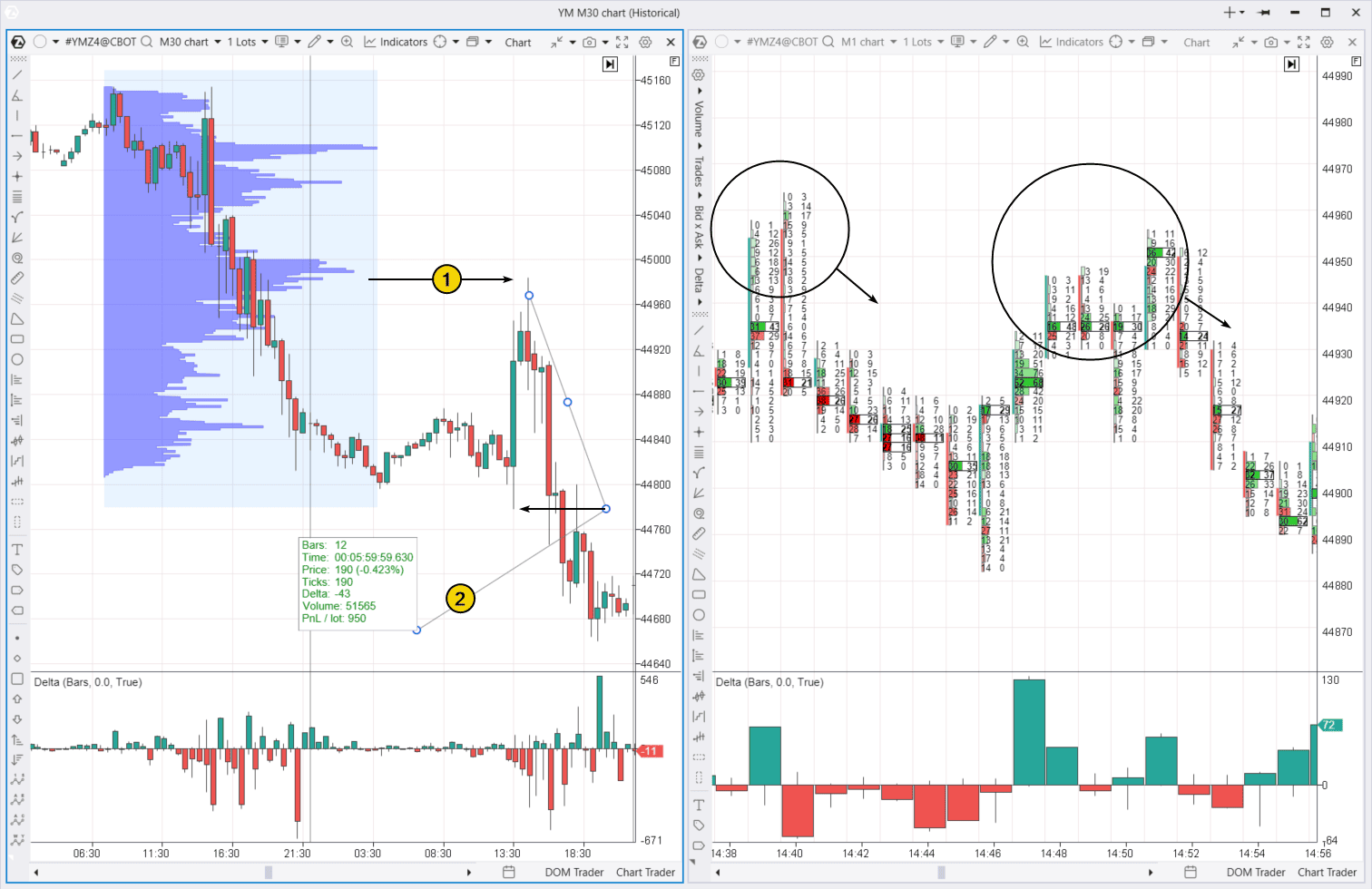
While there are full-sized Dow Jones futures contracts, the most popular and liquid contracts are the E-mini Dow futures (ticker symbol: YM). The “E-mini” designation indicates that these contracts are electronically traded and are a fraction of the size of the original “full-sized” contracts, making them more accessible to individual traders and smaller institutions due to lower margin requirements. Each E-mini Dow futures contract is typically valued at $5 multiplied by the current value of the DJIA. So, if the DJIA is at 35,000 points, one E-mini Dow contract would represent $175,000 worth of exposure (35,000 x $5). The minimum price fluctuation, or “tick,” is 1 point, meaning each 1-point movement in the DJIA translates to a $5 change in the contract’s value.
How Dow Jones Futures are Traded
Dow Jones futures are traded on organized futures exchanges, primarily the CME Group’s Globex electronic trading platform, which operates nearly 24 hours a day, five days a week. This extended trading window often allows traders to react to global economic news and events outside of traditional U.S. stock market hours.
When you buy (go long) a Dow Jones futures contract, you are essentially agreeing to buy the index at a specific price on a future date. If the DJIA rises above that price, your contract gains value. Conversely, if you sell (go short) a contract, you are agreeing to sell the index, and you profit if the DJIA falls. Most futures traders do not hold their contracts until expiration, but rather close out their positions before the settlement date, profiting or losing from the difference between their entry and exit prices.
Leverage and Margin Requirements
A defining characteristic of futures trading is the significant leverage it offers. Traders are not required to put up the full notional value of the contract. Instead, they deposit a smaller amount, known as “margin,” with their broker. There are two types of margin:
- Initial Margin: The amount required to open a new futures position. For E-mini Dow futures, this might be several thousand dollars, representing only a small percentage (e.g., 2-5%) of the contract’s total notional value.
- Maintenance Margin: A minimum balance that must be maintained in the account. If the account balance falls below this level due to adverse price movements, the trader will receive a “margin call,” requiring them to deposit additional funds to bring the account back up to the initial margin level. Failure to do so can result in the automatic liquidation of the position.
This leverage is a double-edged sword: it can amplify gains dramatically with relatively small capital, but it can also magnify losses just as quickly, potentially exceeding the initial investment.
Why Trade Dow Jones Futures?
Despite their complexities, Dow Jones futures offer several compelling advantages for certain market participants.
Hedging Against Market Volatility
For portfolio managers or large institutional investors holding substantial equity portfolios that correlate closely with the DJIA, futures contracts provide an efficient means of hedging. If they anticipate a short-term market downturn but do not wish to liquidate their underlying stock holdings (which can incur transaction costs and tax implications), they can sell Dow futures. A decline in the broader market would likely lead to losses in their stock portfolio, but these losses would be offset, at least partially, by gains in their short futures position. This allows them to protect their portfolio’s value without disrupting their long-term investment strategy.
Speculation and Price Discovery
Speculators are drawn to Dow Jones futures due to their high liquidity and leverage. With a relatively small amount of capital, traders can gain significant exposure to the movements of the entire Dow Jones index. This allows them to express their directional views on the market, whether bullish or bearish, efficiently. The continuous trading of futures also contributes to “price discovery,” where the futures price often reflects market participants’ collective expectations about the future direction of the underlying index, sometimes even leading the cash index during periods of uncertainty or news events.
Diversification and Portfolio Management
While seemingly counterintuitive for an index derivative, futures can sometimes be used as a component of a diversified strategy. For instance, a trader might use futures to gain exposure to a broad market index like the Dow without having to select and manage individual stocks. They can also be used to quickly adjust market exposure, either to increase equity exposure when bullish or decrease it when bearish, without directly buying or selling numerous individual stocks. For those seeking exposure to the performance of large-cap U.S. equities, Dow Jones futures offer a streamlined and capital-efficient avenue.
Risks and Considerations in Dow Jones Futures Trading
While attractive, Dow Jones futures trading is not without significant risks, demanding a robust understanding and disciplined approach.
The Double-Edged Sword of Leverage
As highlighted earlier, leverage is the primary risk factor. While it magnifies profits, it also dramatically amplifies losses. A small adverse price movement, when magnified by leverage, can quickly deplete an account, potentially leading to losses greater than the initial margin deposit. It’s crucial for traders to understand the precise leverage they are employing and its implications for their capital.
Market Volatility and Gaps
The Dow Jones Industrial Average, like all stock indexes, can experience periods of extreme volatility. Geopolitical events, economic data releases, or unexpected corporate news can cause rapid and significant price swings. Futures markets can also experience “gaps,” where the market opens significantly higher or lower than its previous close, especially after overnight news. These gaps can trigger stop-loss orders at prices far worse than intended, leading to larger-than-expected losses.

The Importance of Risk Management and Education
Successful trading of Dow Jones futures requires meticulous risk management. This includes:
- Position Sizing: Limiting the number of contracts traded relative to account size.
- Stop-Loss Orders: Utilizing stop-loss orders to limit potential losses on any given trade.
- Capital Allocation: Never risking more capital than one can comfortably afford to lose.
- Continuous Learning: Staying informed about market dynamics, economic indicators, and the intricacies of futures trading.
Prospective traders should engage in extensive education, perhaps even paper trading (simulated trading) for a significant period, before committing real capital. Understanding margin calls, contract specifications, and the various factors influencing the Dow Jones Industrial Average is paramount.
In conclusion, Dow Jones Futures represent a powerful and sophisticated financial instrument. They offer opportunities for significant gains through leverage, efficient hedging for large portfolios, and a means for active speculation on the direction of one of the world’s most watched stock market indexes. However, their inherent leverage and susceptibility to market volatility underscore the critical need for comprehensive knowledge, diligent risk management, and a disciplined trading strategy. For those who invest the time and effort to master their nuances, Dow Jones Futures can be an invaluable addition to their financial toolkit within the complex landscape of global markets.
aViewFromTheCave is a participant in the Amazon Services LLC Associates Program, an affiliate advertising program designed to provide a means for sites to earn advertising fees by advertising and linking to Amazon.com. Amazon, the Amazon logo, AmazonSupply, and the AmazonSupply logo are trademarks of Amazon.com, Inc. or its affiliates. As an Amazon Associate we earn affiliate commissions from qualifying purchases.