
In the dynamic world of investing, few concepts offer the blend of simplicity, efficiency, and long-term potential as an S&P 500 index fund. For many, it represents a foundational pillar in building a robust financial future, a powerful tool for passively tapping into the growth engine of the U.S. economy. Yet, despite its widespread recognition, the intricacies of what an S&P 500 index fund truly entails, how it functions, and why it holds such a prominent place in personal finance often remain shrouded in jargon. This comprehensive guide aims to demystify this essential investment vehicle, providing clarity for both novice and seasoned investors alike. We will explore its underlying components, unravel its operational mechanics, examine its compelling advantages, and discuss the critical considerations necessary for integrating it wisely into your investment strategy.
Understanding the S&P 500 Index
Before diving into the fund itself, it’s crucial to grasp the bedrock upon which it’s built: the S&P 500 Index. This index is far more than just a number; it’s a meticulously constructed barometer of the U.S. stock market’s health and performance.
What is the S&P 500?
The S&P 500, officially known as the Standard & Poor’s 500, is a stock market index that tracks the performance of 500 of the largest publicly traded companies in the United States. Established in 1957, it is a market-capitalization-weighted index, meaning that companies with larger market values have a greater impact on the index’s overall performance. These 500 companies are selected by a committee at S&P Dow Jones Indices based on criteria such as market size, liquidity, and sector representation, ensuring that the index is a broad and accurate reflection of the U.S. economy. The list includes iconic names from virtually every sector—technology, healthcare, finance, consumer goods, energy, and more—making it a diversified snapshot of American corporate prowess. When you hear financial news outlets report on “the market” moving up or down, they are most often referring to the performance of the S&P 500.
Why the S&P 500 Matters
The S&P 500 holds significant importance for several reasons. Firstly, it serves as the most widely recognized and respected benchmark for the overall U.S. equity market. Its performance is often used to gauge the health of the American economy and the broader investment landscape. For fund managers, it’s the gold standard against which their performance is measured; beating the S&P 500 is a mark of superior active management, while lagging behind indicates underperformance. Secondly, its broad diversification across sectors and industries makes it a reliable indicator of long-term market trends, smoothing out the volatility that might affect individual stocks or narrower indices. For investors, understanding the S&P 500 is the first step towards understanding how to capture the growth of the U.S. economy effectively and efficiently through instruments like index funds.
Demystifying the Index Fund Concept
With a clear understanding of the S&P 500 index, we can now turn our attention to the “index fund” component. This is where the magic of passive investing truly begins to unfold for the average investor.
How Index Funds Work
An index fund is a type of mutual fund or exchange-traded fund (ETF) with a portfolio constructed to match or track the components of a market index, such as the S&P 500. Instead of employing active managers to pick individual stocks they believe will outperform the market (a strategy that often fails), an index fund simply buys all the securities in a specific index—or a representative sample thereof—in the same proportions as the index itself. The goal is not to “beat” the market, but to mirror its performance. If the S&P 500 goes up by 1%, the S&P 500 index fund aims to go up by approximately 1% (before fees). This passive approach is rooted in the belief, widely supported by decades of financial research, that consistently outperforming the broad market over the long term is exceedingly difficult for even professional investors.
Active vs. Passive Management
The distinction between active and passive management is fundamental to understanding index funds. Actively managed funds involve portfolio managers making continuous decisions about which stocks to buy, hold, or sell, attempting to generate returns superior to a specific benchmark. This involves extensive research, analysis, and trading, all of which incur significant costs. These costs are passed on to investors through higher expense ratios (the annual fee expressed as a percentage of your investment).
In contrast, passive management, as exemplified by index funds, aims to replicate the market’s performance rather than outperform it. Because decisions are largely automated—the fund simply adjusts its holdings to match the index changes—the need for expensive research teams and frequent trading is significantly reduced. This translates directly into much lower expense ratios for investors. While actively managed funds might promise the allure of superior returns, studies consistently show that a vast majority fail to beat their benchmark after fees, making the low-cost, broadly diversified approach of index funds a compelling alternative for most long-term investors.
The Mechanics of an S&P 500 Index Fund
Understanding the ‘what’ and ‘why’ sets the stage; now let’s explore the ‘how’—how these funds are structured and the different forms they can take.
How S&P 500 Index Funds Replicate the Index
To track the S&P 500 Index, an index fund must hold the underlying assets of that index. The most straightforward method is full replication, where the fund purchases every single stock in the S&P 500 in the same proportion as their weighting in the index. This ensures highly accurate tracking but can be cumbersome for very large or illiquid indices. For the S&P 500, full replication is common due to the liquidity of its constituent stocks.
Alternatively, some funds might use sampling or optimized sampling, particularly for indices with thousands of components or less liquid assets. This involves purchasing a statistically representative sample of stocks from the index, carefully chosen to mimic the overall risk and return characteristics of the full index. The goal remains the same: to minimize “tracking error,” which is the deviation between the fund’s performance and the index’s performance. Advanced algorithms and sophisticated rebalancing strategies ensure that these funds stay closely aligned with the S&P 500 as its composition and weightings change over time.
Types of S&P 500 Index Funds: Mutual Funds vs. ETFs
S&P 500 index funds typically come in two main structures: mutual funds and Exchange-Traded Funds (ETFs). While both aim to track the S&P 500, they have distinct operational differences.
- Mutual Funds: These are investment vehicles that pool money from multiple investors to invest in a diversified portfolio of securities. When you invest in an S&P 500 index mutual fund, you purchase units (shares) directly from the fund company, usually once per day after the market closes, at the net asset value (NAV). They are often suitable for regular, automated contributions and are common in retirement accounts like 401(k)s and IRAs.
- Exchange-Traded Funds (ETFs): ETFs are also diversified portfolios of securities, but they trade on stock exchanges like individual stocks throughout the trading day. You can buy or sell ETF shares at any point during market hours, and their prices fluctuate based on supply and demand, potentially differing slightly from their underlying NAV. ETFs generally offer greater intraday trading flexibility and often have slightly lower expense ratios than their mutual fund counterparts. They are popular for their liquidity and ease of trading.
Both types offer excellent exposure to the S&P 500, and the choice between them often comes down to individual preference regarding trading flexibility, minimum investment amounts, and how one prefers to manage their investment account.

Key Characteristics to Look For
When selecting an S&P 500 index fund, several characteristics warrant careful consideration:
- Expense Ratio: This is arguably the most critical factor. It’s the annual fee charged as a percentage of your investment. Because index funds aim to track the market, a lower expense ratio means more of your returns stay in your pocket. Top S&P 500 index funds often boast expense ratios well below 0.10%.
- Tracking Error: While index funds aim to perfectly mirror their index, small deviations can occur. A lower tracking error indicates a more efficient fund. Reputable fund providers typically disclose this metric.
- Fund Size and Provider: Larger, well-established funds from reputable providers (like Vanguard, Fidelity, iShares, Schwab) tend to offer greater stability, liquidity, and operational efficiency, often translating to lower fees and better tracking.
Why Invest in an S&P 500 Index Fund?
The compelling advantages of S&P 500 index funds make them a cornerstone of many successful investment strategies. Their appeal lies in their simplicity, efficiency, and proven effectiveness over the long term.
Diversification and Risk Reduction
Investing in an S&P 500 index fund immediately grants you exposure to 500 of America’s largest and most influential companies. This inherent diversification is a powerful risk management tool. Unlike investing in a handful of individual stocks, where the failure of one company can severely impact your portfolio, an S&P 500 fund spreads your investment across a broad spectrum of industries and companies. If one company underperforms, its impact on the overall fund is cushioned by the performance of the other 499. This broad exposure mitigates company-specific risk, allowing you to participate in the overall growth of the U.S. economy rather than betting on individual winners.
Lower Costs
As discussed, one of the most significant advantages of S&P 500 index funds is their exceptionally low expense ratios. Actively managed funds often charge 0.50% to 2.00% or more annually, while many S&P 500 index funds charge 0.03% to 0.10%. Over decades, these seemingly small differences in fees compound dramatically, eating away at your returns. For instance, an extra 1% in fees annually on a $100,000 portfolio could cost you tens of thousands, or even hundreds of thousands, of dollars in lost gains over a 30-year investment horizon. By minimizing costs, index funds allow investors to retain a larger share of their investment growth, significantly enhancing long-term wealth accumulation.
Simplicity and Accessibility
S&P 500 index funds are remarkably simple to understand and manage. There’s no need to research individual companies, analyze financial statements, or constantly monitor market news. The strategy is straightforward: invest in the fund, hold it for the long term, and let the market do its work. This simplicity makes them highly accessible to new investors who might be intimidated by the complexities of stock picking. Furthermore, they are widely available through most brokerage accounts, retirement plans, and financial advisors, making it easy for nearly anyone to get started.
Historical Performance
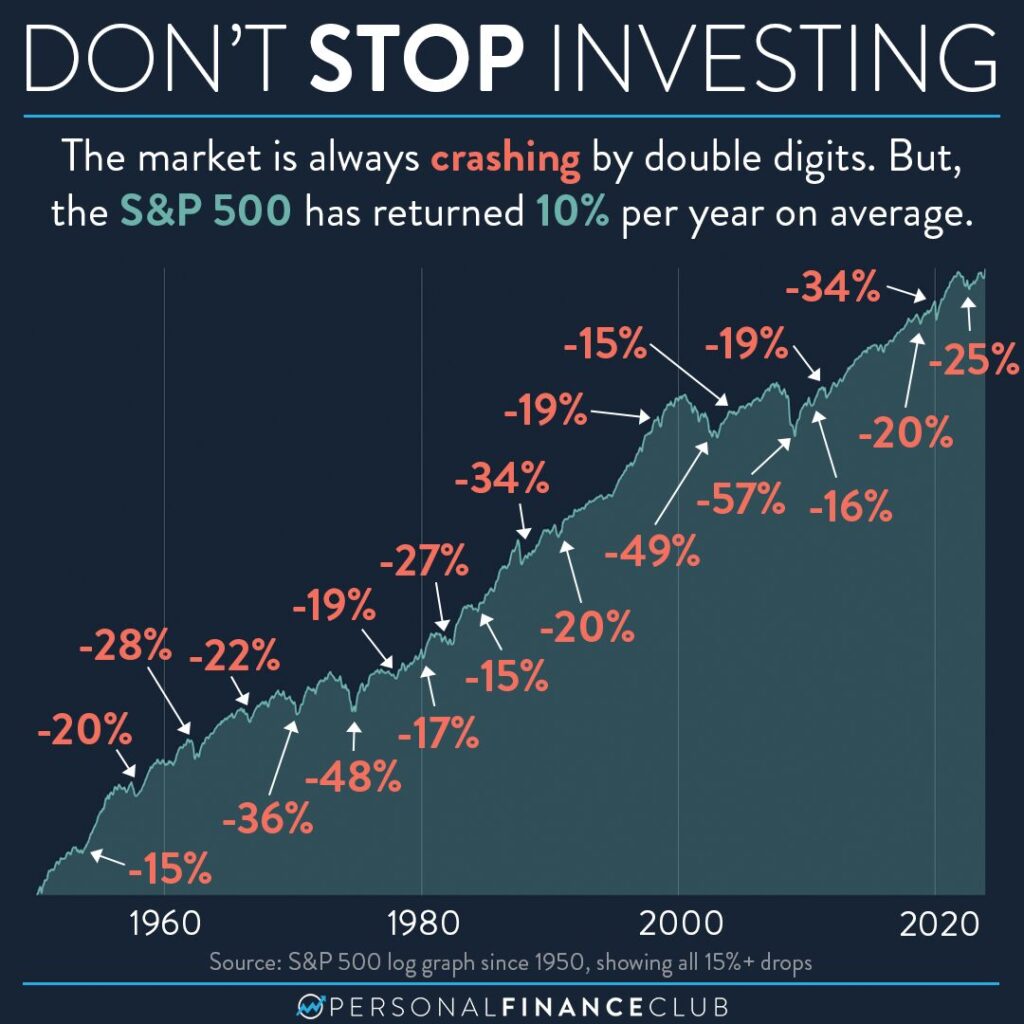
While past performance is never a guarantee of future results, the S&P 500 has a robust track record of delivering substantial returns over the long run. Historically, the average annual return of the S&P 500 has been approximately 10-12% over extended periods. This consistent long-term growth, driven by the innovation and productivity of America’s leading companies, highlights the power of investing in the broad market. By consistently tracking this index, S&P 500 funds allow investors to capture these powerful long-term trends and benefit from the magic of compounding, where earnings generate further earnings over time.
Considerations Before Investing
While S&P 500 index funds offer numerous benefits, a balanced perspective requires acknowledging certain considerations and ensuring they align with your broader financial plan.
Market Volatility and Downturns
It’s crucial to understand that investing in an S&P 500 index fund is not without risk. While diversified, these funds are still subject to market volatility. Stock markets experience cycles, including significant downturns or “bear markets.” During such periods, the value of your S&P 500 fund will decline, sometimes sharply. There are no guarantees of returns, especially in the short term. Investors must be prepared for these fluctuations and resist the urge to panic sell during downturns, as doing so often locks in losses and prevents participation in subsequent recoveries.
The Importance of a Long-Term Horizon
Given the inherent volatility of the stock market, S&P 500 index funds are best suited for long-term investment horizons, typically 5-10 years or more. Over short periods, market performance can be unpredictable. However, over decades, the compounding effect of returns and the general upward trend of the U.S. economy tend to smooth out short-term fluctuations and reward patient investors. A long-term perspective allows you to weather market storms and fully capitalize on the power of compounding.
Fitting It Into Your Portfolio
While an S&P 500 index fund is an excellent core holding, it should generally be part of a broader, diversified portfolio. Investing solely in the S&P 500 means you are entirely exposed to U.S. large-cap equities. For optimal diversification, consider adding other asset classes such as international stocks, small-cap stocks, bonds, and potentially real estate. Your ideal asset allocation will depend on your age, risk tolerance, financial goals, and time horizon. An S&P 500 index fund can serve as a robust foundation, but building a complete portfolio requires looking beyond just one index.

Tax Implications
Investors should also be aware of the tax implications of S&P 500 index funds. Dividends paid by the underlying companies are generally distributed to fund shareholders and are taxable in non-retirement accounts. Similarly, if the fund sells some of its holdings for a gain (even if you don’t sell your shares), these capital gains can be distributed to shareholders and are also taxable. ETFs, due to their unique creation/redemption mechanism, often generate fewer capital gains distributions than traditional mutual funds, making them potentially more tax-efficient in taxable brokerage accounts. Holding these funds in tax-advantaged accounts like IRAs and 401(k)s can defer or eliminate taxes on growth and distributions until retirement.
An S&P 500 index fund offers an elegant, low-cost, and effective way for virtually any investor to participate in the long-term growth of the U.S. stock market. By providing broad diversification and harnessing the power of passive investing, it empowers individuals to build wealth without the complexities and higher costs often associated with active management. While understanding market volatility and embracing a long-term perspective are crucial, the S&P 500 index fund stands as a testament to the enduring principle that sometimes, the simplest approach is indeed the most powerful for achieving financial success.
aViewFromTheCave is a participant in the Amazon Services LLC Associates Program, an affiliate advertising program designed to provide a means for sites to earn advertising fees by advertising and linking to Amazon.com. Amazon, the Amazon logo, AmazonSupply, and the AmazonSupply logo are trademarks of Amazon.com, Inc. or its affiliates. As an Amazon Associate we earn affiliate commissions from qualifying purchases.