
In the fast-paced world of global finance, few phrases carry as much weight as “What is the Dow doing?” The Dow Jones Industrial Average (DJIA), often simply referred to as “the Dow,” remains the most iconic barometer of the American economy. Comprising 30 prominent, “blue-chip” companies listed on stock exchanges in the United States, its movements are scrutinized by retail investors, institutional fund managers, and policymakers alike. Understanding what the Dow is doing “right now” requires more than just looking at a flashing green or red number on a screen; it requires a comprehensive analysis of macroeconomic trends, corporate earnings, and investor psychology.

Current market behavior suggests a complex tug-of-war between resilient economic data and the looming shadow of monetary policy. To truly grasp the present state of the Dow, we must deconstruct the forces driving its volatility and identify the underlying patterns that govern its trajectory.
Decoding the Current Market Dynamics and Macroeconomic Pressures
The Dow Jones Industrial Average does not move in a vacuum. Its performance is inextricably linked to the broader macroeconomic environment. Currently, the index is navigating a period of significant transition as the global economy attempts to find its footing in a post-inflationary era.
The Federal Reserve and the “Higher for Longer” Narrative
Perhaps the single most influential factor affecting the Dow right now is the Federal Reserve’s stance on interest rates. For the past several cycles, the central bank has utilized aggressive rate hikes to combat stubborn inflation. When the Dow fluctuates today, it is often a direct reaction to “Fed speak” or the release of minutes from the Federal Open Market Committee (FOMC). Higher interest rates typically put downward pressure on stocks because they increase the cost of borrowing for corporations and make fixed-income assets, like bonds, more attractive relative to equities. Investors are currently weighing the possibility of a “soft landing”—where inflation cools without triggering a recession—against the risk that rates will remain elevated for longer than previously anticipated.
Inflationary Trends and Consumer Spending Power
The Dow is heavily weighted toward companies that rely on consumer discretionary and staple spending. Right now, the Consumer Price Index (CPI) and Producer Price Index (PPI) are the North Stars for market direction. If inflation data comes in hotter than expected, the Dow often retreats as investors fear a reduction in consumer purchasing power and higher input costs for manufacturers. Conversely, signs of moderating inflation provide a tailwind for the index, suggesting that the “cost of living” crisis may be easing, thereby allowing the blue-chip giants within the Dow to maintain their profit margins.
The Impact of the Strength of the U.S. Dollar
Because the 30 companies in the Dow are multinational powerhouses—think Coca-Cola, Apple, and Caterpillar—the strength of the U.S. Dollar (USD) plays a pivotal role in their “right now” performance. A strong dollar makes American goods more expensive for overseas buyers and reduces the value of international earnings when converted back into greenbacks. Currently, the Dow is sensitive to fluctuations in the currency markets; a surging dollar can act as a silent headwind for these industrial giants, even if their domestic operations remain robust.
Sector Performance: The “Old Guard” vs. Modern Growth
Unlike the Nasdaq 100, which is heavily skewed toward technology, the Dow Jones is a price-weighted index that offers a broader cross-section of the “traditional” economy, including financials, healthcare, and industrials. Understanding what the Dow is doing involves looking under the hood at these specific sectors.
The Resurgence of Value and Industrial Stocks
In recent months, we have seen a rotation back toward “value” stocks—companies with steady earnings and reliable dividends. As the “AI hype” occasionally takes a breather in the tech sector, investors often park their capital in the Dow’s industrial heavyweights. Companies involved in infrastructure, aerospace, and heavy machinery are currently benefiting from government spending bills and a global push for manufacturing independence. This provides the Dow with a layer of defense that more volatile, tech-heavy indices might lack.
Financials and the Yield Curve
Financial institutions like Goldman Sachs and JPMorgan Chase are integral components of the Dow. Their performance “right now” is closely tied to the yield curve. A steepening yield curve—where long-term interest rates are significantly higher than short-term rates—is generally positive for these banks, as it allows them to increase their net interest margins. However, the Dow often faces pressure if there are concerns about credit defaults or a slowdown in investment banking activity, making the financial sector a critical “check engine light” for the index’s overall health.
Healthcare as a Defensive Anchor
The Dow includes healthcare titans like UnitedHealth Group and Johnson & Johnson. In periods of market uncertainty, these stocks often act as a stabilizing force. Because demand for healthcare is relatively “inelastic”—meaning people need medical care regardless of the economy—these components often keep the Dow from plummeting during broader market sell-offs. Observation of the Dow right now shows a clear trend: when the economic outlook turns cloudy, money flows into these defensive healthcare positions, propping up the index.
Technical Analysis and Market Sentiment: Reading the Charts
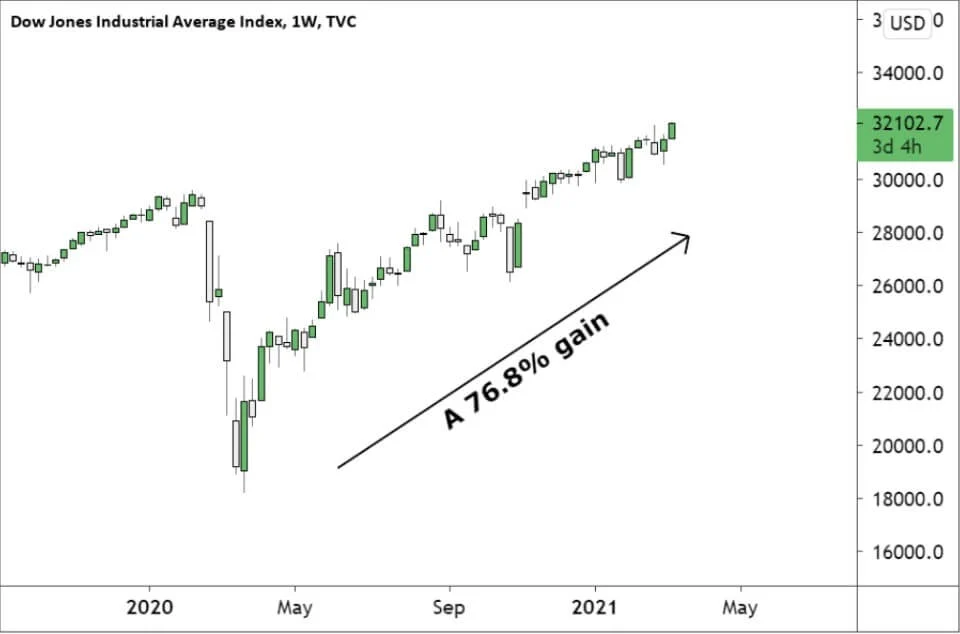
Beyond the fundamentals, the Dow’s current behavior is often driven by technical milestones and the collective psychology of the trading floor. Technical analysis helps investors understand whether the “right now” movement is a temporary blip or the start of a new trend.
Support and Resistance Levels
Traders are currently watching key psychological levels, such as the 35,000 or 40,000 marks, depending on the current cycle. When the Dow approaches a “resistance” level, it often struggles to break through as investors take profits. Conversely, “support” levels act as a floor where buyers typically step in. Right now, the Dow is frequently testing its 50-day and 200-day moving averages. Staying above these averages is seen as a “bullish” sign, indicating that the long-term uptrend remains intact despite short-term noise.
The Volatility Index (VIX) and Investor Fear
Often called the “Fear Gauge,” the VIX measures the market’s expectation of 30-day volatility. While the VIX is based on the S&P 500, its movements are highly correlated with the Dow. When the Dow experiences sharp intraday swings, it is usually accompanied by a spike in the VIX. Currently, market sentiment is characterized by “cautious optimism.” Investors are looking for reasons to buy, but they are also quick to hedge their positions at the first sign of geopolitical tension or disappointing economic data.
The Role of Institutional “Big Money”
What the Dow is doing right now is also a reflection of institutional rebalancing. At the end of quarters or months, large pension funds and mutual funds adjust their holdings to maintain specific asset allocations. This “program trading” can cause the Dow to move in ways that seem disconnected from the day’s news. Understanding these flows is essential for interpreting why the index might be rallying or dipping on a seemingly quiet news day.
Actionable Strategies for Navigating the Current Market
For the individual investor, knowing what the Dow is doing is only half the battle; the other half is knowing how to react. Current market conditions require a disciplined approach to capital preservation and growth.
The Importance of Diversification within Equities
While the Dow represents 30 great companies, it is not the entire market. Investors should use the Dow’s current performance as a guide for their “large-cap” exposure but ensure they are diversified across mid-cap and small-cap stocks, as well as international markets. If the Dow is stagnant because of high interest rates affecting large industrials, other sectors might be thriving.
Dollar-Cost Averaging (DCA) in Volatile Times
Since the Dow can be prone to “fake-outs” and sudden reversals based on a single news headline, trying to “time the bottom” is a risky strategy. Many successful investors are currently utilizing Dollar-Cost Averaging—investing a fixed amount of money at regular intervals. This strategy reduces the impact of volatility by buying more shares when prices (and the Dow) are low and fewer shares when prices are high.
Focusing on Dividend Yields and Quality
One of the unique aspects of the Dow is the high quality of its dividend-paying components. Right now, as investors seek “real” returns in a fluctuating environment, the Dow’s “Dogs of the Dow” strategy—focusing on the highest-yielding members of the index—remains a popular way to generate income while waiting for capital appreciation. In a “sideways” market, these dividends provide a crucial cushion for total returns.
Conclusion: The Resilience of the Blue Chips
In summary, what the Dow Jones is doing right now is navigating a complex landscape of cooling inflation, shifting interest rate expectations, and corporate adaptation. It remains a symbol of American industrial might, showing remarkable resilience even in the face of global economic headwinds.
For the savvy observer, the Dow is more than just a number; it is a narrative of how the world’s largest companies are responding to the challenges of the 21st century. Whether the index is hitting all-time highs or undergoing a necessary correction, its movements offer invaluable insights into the health of the financial system. By staying informed on macroeconomic trends, sector shifts, and technical indicators, investors can look past the daily fluctuations and build a robust, long-term financial strategy that stands the test of time.
aViewFromTheCave is a participant in the Amazon Services LLC Associates Program, an affiliate advertising program designed to provide a means for sites to earn advertising fees by advertising and linking to Amazon.com. Amazon, the Amazon logo, AmazonSupply, and the AmazonSupply logo are trademarks of Amazon.com, Inc. or its affiliates. As an Amazon Associate we earn affiliate commissions from qualifying purchases.