
The question “How much Tesla stock?” can be interpreted in several nuanced ways, each leading to a different facet of investment analysis. For a prospective investor, it might mean: “How much does a single share cost?” “How much should I invest given my financial goals?” or “What is the true underlying value of Tesla stock?” This query delves into the very heart of investment strategy, risk assessment, and understanding a company often seen as both a revolutionary technology giant and a highly volatile investment vehicle.
Tesla, Inc. (TSLA) has been a phenomenon in global financial markets, captivating investors with its ambitious vision for sustainable energy, electric vehicles, artificial intelligence (AI), and robotics. Its stock performance has been nothing short of extraordinary at times, creating immense wealth for early investors while also presenting significant challenges for those who bought at peak valuations or were unprepared for its characteristic volatility. This article aims to unpack the complexities surrounding Tesla stock from a purely financial perspective, guiding you through the considerations necessary to answer the elusive question of “how much” within the context of your personal investment journey.
Understanding Tesla’s Valuation and Market Dynamics
Tesla’s stock price is a complex interplay of current financial performance, future growth expectations, and ever-shifting market sentiment. Unlike many traditional automakers, Tesla is frequently valued more like a technology company, with its stock price reflecting not just current vehicle sales but also the perceived potential of its innovations in AI, advanced battery technology, energy storage, and autonomous driving capabilities.
The Current Share Price and Market Capitalization
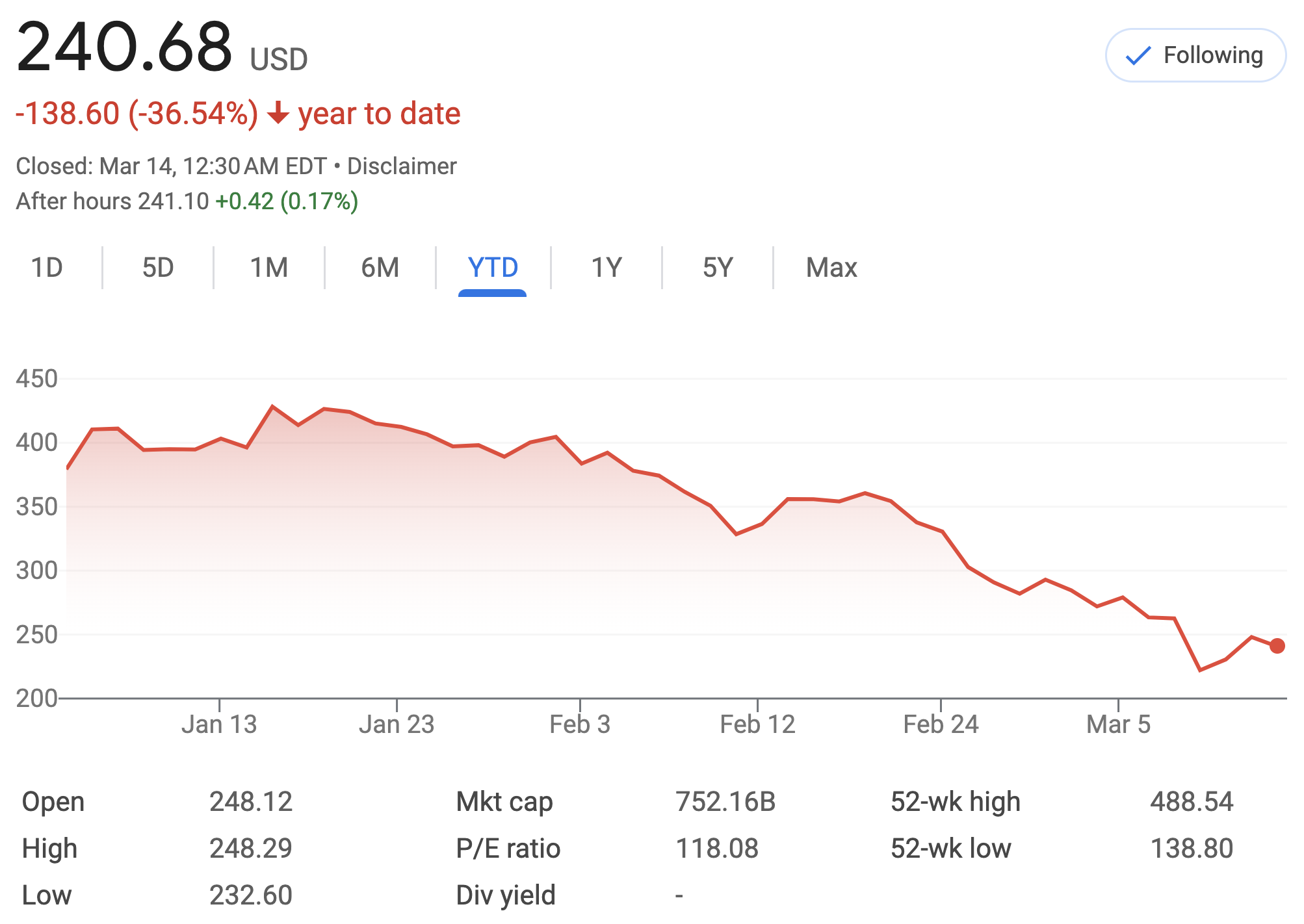
At any given moment, the price of a single share of Tesla stock (TSLA) reflects the immediate supply and demand on public exchanges. This price can fluctuate dramatically, sometimes by several percentage points within a single trading day, let alone over weeks or months. While the individual share price is a visible metric, it’s often less significant than Tesla’s market capitalization – the total value of all its outstanding shares. This figure provides a broader measure of the company’s size and its standing relative to its peers. For instance, a consistently high market cap relative to sales or earnings often indicates that investors have very high expectations for future growth and profitability, effectively “pricing in” a lot of future success.
Factors Driving Historical Growth and Volatility
Tesla’s journey to becoming one of the most valuable companies globally has been fueled by several interconnected factors:
- Pioneering EV Adoption: Tesla played a critical role in popularizing electric vehicles, pushing past early skepticism with appealing designs, high performance, and the development of its proprietary Supercharger network.
- Relentless Technological Innovation: Continuous advancements in battery technology, software capabilities, and autonomous driving features have consistently positioned Tesla at the forefront of automotive innovation.
- Potent Brand Strength and Visionary Leadership: Elon Musk’s charismatic, albeit sometimes controversial, leadership and the company’s strong brand identity have cultivated a dedicated global following among both customers and investors.
- Inclusion in Major Indices: Its highly anticipated addition to major stock market indices like the S&P 500 led to forced buying by passive index funds, further propelling its valuation during certain periods.
However, this impressive growth has been accompanied by extreme volatility. Tesla’s stock is highly sensitive to news regarding production figures, regulatory scrutiny, competitive product launches, macroeconomic conditions, and even Elon Musk’s public statements or personal ventures outside of Tesla. This characteristic makes it a high-beta stock, meaning its price movements are typically more exaggerated than the overall market.
Assessing Tesla as an Investment Opportunity
For potential investors, the decision to allocate capital to Tesla stock requires a thorough assessment that transcends mere enthusiasm. It necessitates a deep dive into financial fundamentals, a rigorous competitive analysis, and a realistic evaluation of future projections.
Key Financial Metrics and Their Implications
Traditional valuation metrics offer a mixed, and often challenging, picture for Tesla:
- Price-to-Earnings (P/E) Ratio: Tesla’s P/E ratio has historically been significantly higher than that of traditional automakers. This disparity reflects the market’s expectation of robust future earnings growth rather than simply current profits. A persistently high P/E ratio can indicate that a stock is “expensive” if that expected growth doesn’t materialize or slows down.
- Revenue Growth: Tesla has consistently demonstrated impressive year-over-year revenue growth, primarily driven by increasing vehicle deliveries, expanding sales of energy storage solutions, and rising software-related revenue. Sustaining this high growth rate as the company scales operations is crucial for justifying its premium valuation.
- Profitability and Margins: While Tesla has achieved consistent profitability, its margins can be influenced by a myriad of factors, including production costs, raw material prices, competitive pricing pressures, and significant investments in new technologies and factories. Investors closely scrutinize trends in gross and operating margins for signs of sustainable and expanding profitability.
- Free Cash Flow: Strong and consistent free cash flow is vital for funding future expansion plans without relying excessively on debt financing or issuing new shares, which can dilute the ownership stake of existing shareholders. Positive free cash flow indicates the company’s ability to generate cash after accounting for capital expenditures.
Competitive Landscape and Future Prospects
Tesla operates in an increasingly competitive global environment. Traditional automotive giants like Volkswagen, Mercedes-Benz, BMW, Ford, and General Motors are rapidly expanding their electric vehicle offerings, often leveraging existing manufacturing capabilities, vast supply chains, and established dealer networks. Simultaneously, a new wave of EV startups, particularly from China (e.g., BYD, Nio, XPeng), are also vying aggressively for market share. Tesla’s continued dominance hinges on:
- Sustained Innovation: Particularly in core areas like battery technology, AI (especially Full Self-Driving capabilities), and advanced robotics (such as the Optimus humanoid robot).
- Cost Leadership: The ability to produce EVs more efficiently and at lower costs than competitors, thereby enabling wider market penetration and maintaining healthy margins.
- Global Expansion and Execution: Successfully navigating the diverse regulatory landscapes and market preferences in key regions like China, Europe, and emerging markets.
- Diversification Beyond Automotive: The successful growth of its energy generation and storage business, along with other ambitious ventures, to broaden its revenue base and mitigate reliance on a single sector.
Determining “How Much” to Invest: A Personal Finance Framework
The question of “how much” to invest in any single stock, including Tesla, is fundamentally a personal finance decision driven by individual circumstances, unique risk tolerance, and specific financial goals. There is no universally applicable “right” answer.
Risk Tolerance and Investment Goals
Before considering any specific stock, a thorough self-assessment of your personal financial situation is paramount:
- Time Horizon: Are you investing for the short-term (typically less than 5 years) or the long-term (10+ years)? Tesla’s inherent volatility makes it less suitable for short-term speculation unless you are an experienced and active trader. Long-term investors are generally better positioned to ride out significant market fluctuations.
- Risk Tolerance: Can you emotionally and financially withstand significant drops in value? Tesla stock has experienced drawdowns of 30-50% or more multiple times in its history. If such dramatic swings cause severe anxiety or would force you to sell at a loss, it might not be the right fit for a large portion of your portfolio.
- Financial Goals: What are you trying to achieve with your investments? Whether it’s retirement savings, a down payment on a house, wealth accumulation for future generations, or something else, your goals will dictate the appropriate level of risk you can afford to take.
The Indispensable Importance of Diversification
Perhaps the most crucial advice for any investor is to diversify their portfolio. Placing all or a disproportionately large amount of your investment capital into a single stock, no matter how promising, exposes you to extreme concentration risk. If Tesla faces unforeseen challenges, severe setbacks, or a sustained market downturn, your entire portfolio could suffer catastrophic losses. A well-diversified portfolio typically includes:
- Different Asset Classes: A mix of stocks, bonds, and potentially real estate or other alternative assets.
- Different Economic Sectors: Spreading investments across technology, healthcare, consumer staples, financials, industrials, etc., to avoid overexposure to any single industry’s fortunes.
- Different Geographies: Investing in both domestic and international markets to capture global growth opportunities and mitigate country-specific risks.
- Low-Cost Index Funds/ETFs: These vehicles offer instant diversification across hundreds or even thousands of companies, including Tesla if it’s a component of the chosen index, providing broad market exposure with minimal effort.

Financial experts often recommend that no single stock should comprise more than 5-10% of a well-diversified portfolio, even for high-conviction investments. For a particularly volatile stock like Tesla, a more conservative allocation might be prudent, especially for those with lower risk tolerance.
Strategies for Entry: Dollar-Cost Averaging
Given Tesla’s characteristic volatility, attempting to “time the market” – buying at the lowest point and selling at the highest – is exceedingly difficult and often counterproductive for most investors. Dollar-Cost Averaging (DCA) is a powerful strategy where you invest a fixed amount of money at regular intervals (e.g., $100 every month or quarter) regardless of the stock’s current price. This approach automatically averages out your purchase price over time, reducing the significant risk of buying all your shares at an inopportune peak. DCA helps remove emotion from the investment process and can be particularly effective for building a long-term position in volatile growth assets like Tesla stock.
Factors Influencing Tesla’s Future Stock Performance
Tesla’s future stock performance will be shaped by a complex confluence of internal operational execution, external market forces, and broader technological and societal shifts. Understanding these dynamic drivers is key for investors assessing the company’s long-term trajectory.
Technological Advancements and Innovation Pipeline
Tesla’s valuation heavily discounts future innovation. Key areas to monitor closely include:
- Full Self-Driving (FSD): The successful, widespread, and regulatory-approved deployment of truly autonomous driving technology could unlock massive new revenue streams (e.g., robotaxi networks) and fundamentally change the economics and utility model of vehicle ownership, significantly boosting profitability.
- AI and Robotics: Beyond FSD, Tesla’s ambitious investments in general AI, particularly humanoid robots like Optimus, represent audacious long-term bets that could open entirely new markets, albeit with substantial execution risk and a very long development horizon.
- Battery Technology: Continued improvements in battery energy density, cost reduction, and charging speed are absolutely critical for maintaining a competitive edge, extending vehicle range, and enabling new vehicle segments (e.g., smaller, more affordable EVs).
- Manufacturing Innovation: Enhancements in Gigafactory efficiency, the development of new production methodologies (e.g., gigacasting), and further vertical integration efforts can lower manufacturing costs and increase output, directly impacting gross and operating margins.
Production, Deliveries, and Global Expansion
The core of Tesla’s automotive business remains its ability to scale production efficiently and deliver vehicles to customers across the globe.
- Factory Expansion and Ramp-up: The successful and timely ramp-up of new Gigafactories (e.g., in Mexico or India) and the expansion of existing ones are crucial for meeting growing demand and reducing order lead times.
- Model Lineup Expansion: The introduction of new, highly anticipated models (e.g., Cybertruck, the next-generation mass-market EV) and strategic refreshes of existing ones will be key drivers of future sales volumes and market share.
- Market Penetration: Sustained growth in emerging markets and deeper penetration in established markets (e.g., Europe, China, North America) are essential for achieving and sustaining high delivery growth rates.
Regulatory Environment and Geopolitical Factors
External factors beyond Tesla’s direct control will also play a significant role in its stock performance:
- Government Incentives and Policies: Policies promoting EV adoption (e.g., tax credits, charging infrastructure investment, emission standards) can significantly boost sales. Conversely, their reduction or removal can create headwinds.
- Safety and Environmental Regulations: Stricter regulations for autonomous driving technology could slow down FSD deployment or increase development costs. Similarly, evolving environmental regulations, while generally favoring EVs, can also impact carbon credit markets and operational compliance.
- Supply Chain Resilience: Geopolitical tensions, trade disputes, and unforeseen global events (like pandemics) can disrupt critical supply chains for batteries, semiconductors, and other essential components, directly impacting production volumes and profitability.
- Macroeconomic Headwinds: Broader economic factors such as inflation, rising interest rates, or a global recession could dampen consumer demand for big-ticket items like new vehicles, affecting Tesla’s sales and financial performance.
Risks and Key Considerations for Prospective Investors
While Tesla undeniably offers compelling growth potential, it also carries substantial and often unique risks that demand careful consideration. Ignoring these risks would be a disservice to a prudent and responsible investment strategy.
High Valuation and Lofty Market Expectations
Tesla’s stock price often embodies a significant “growth premium,” meaning a substantial portion of its current valuation is based on aggressive expected future performance rather than just current financials. If the company fails to meet these exceptionally lofty expectations – whether due to slower-than-anticipated growth, increased competitive pressures, or internal execution missteps – the stock could experience significant and rapid corrections. This makes Tesla particularly vulnerable to any negative news or perceived slowdowns in its growth trajectory.
Intense Competition and Margin Pressures
The electric vehicle market is rapidly becoming intensely crowded. Established automakers are pouring billions into their EV divisions, often leveraging vast existing customer bases and dealer networks. New entrants, particularly from China, are also rapidly expanding their reach and offerings. This intensifying competition could lead to pricing wars, which would inevitably compress Tesla’s profit margins – a critical metric for long-term valuation and sustainable profitability. Furthermore, significant advancements by competitors in battery technology, charging infrastructure, or autonomous driving could erode Tesla’s perceived technological lead.
Regulatory and Product Development Risks
The automotive industry is one of the most heavily regulated sectors globally, and the nascent fields of autonomous driving and AI robotics face evolving legal, ethical, and safety frameworks. Delays in obtaining regulatory approvals for FSD, the imposition of stricter safety standards, or unforeseen legal challenges related to its technologies could significantly impede Tesla’s ability to monetize these ambitious ventures. Moreover, the production ramp-ups for new models or the construction of new Gigafactories are incredibly complex undertakings, carrying inherent risks of unforeseen delays, production bottlenecks, and substantial cost overruns.
Supply Chain Volatility and Macroeconomic Headwinds
Tesla’s global manufacturing footprint and reliance on complex international supply chains make it inherently susceptible to disruptions. Shortages of critical components (like semiconductors), rising raw material costs (e.g., lithium, nickel, cobalt), or escalating geopolitical events can impact production volumes and profitability. Furthermore, broader macroeconomic factors such as persistent inflation, rising interest rates, or a global economic recession could dampen overall consumer demand for high-value discretionary purchases like new vehicles, thereby affecting Tesla’s sales and financial outlook.

Conclusion
The question “How much Tesla stock?” is not about finding a simple price tag or a definitive quantity; it’s an invitation to engage in a thorough, personalized financial analysis tailored specifically to your individual investment philosophy and circumstances. Tesla remains a company with immense disruptive potential, leading innovation in several high-growth sectors, from electric vehicles and battery technology to artificial intelligence and robotics. However, its stock also embodies significant risk due to its premium valuation, the intensely competitive landscape, and its sensitivity to both internal execution and a wide array of external factors.
For those considering an investment, the emphasis should always be on prudent portfolio management. Diversification across different asset classes and sectors, a realistic understanding of your personal risk tolerance, and employing disciplined strategies like dollar-cost averaging are absolutely paramount. Approach an investment in Tesla not as a guaranteed path to instant riches, but rather as a potentially high-growth, high-volatility component of a carefully constructed and well-balanced overall investment strategy. Ultimately, “how much Tesla stock” is a deeply personal decision that only you, informed by diligent research and an honest assessment of your financial situation, can truly make.
aViewFromTheCave is a participant in the Amazon Services LLC Associates Program, an affiliate advertising program designed to provide a means for sites to earn advertising fees by advertising and linking to Amazon.com. Amazon, the Amazon logo, AmazonSupply, and the AmazonSupply logo are trademarks of Amazon.com, Inc. or its affiliates. As an Amazon Associate we earn affiliate commissions from qualifying purchases.